
SkyWest Cancels Four Flights at Phoenix Sky Harbor, Disrupts Routes to Philadelphia, Chicago, and San Jose
SkyWest Airlines cancelled four flights at Phoenix Sky Harbor International Airport on June 30, 2026, triggering delays across 19 additional flights and disrupting connections to major US cities and international destinations.

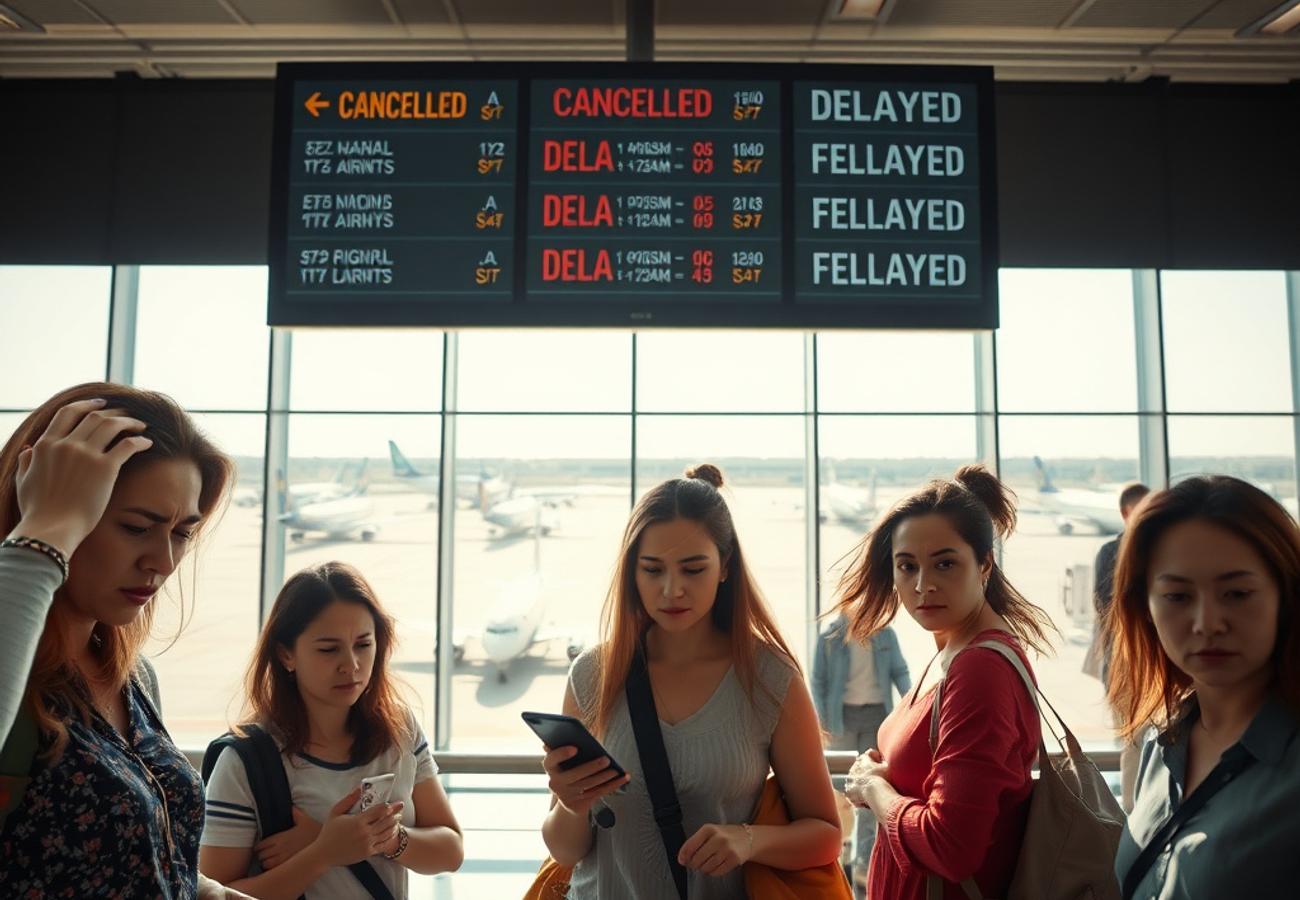
Image generated by AI
When Regional Airlines Stumble, Entire Networks Feel the Shock
On June 30, 2026, SkyWest Airlines ground to a halt at one of America's busiest aviation hubs. The regional carrier cancelled four flights and recorded 19 additional delays at Phoenix Sky Harbor International Airport, creating a cascading domino effect that rippled across North America and beyond.
What started as a localized operational challenge became a textbook example of how fragile modern air travel networks truly are. When a small regional carrier stumbles, thousands of passengers pay the price.
The Numbers Behind the Chaos
According to FlightAware, the damage report was stark but concentrated:
Phoenix Sky Harbor International Airport absorbed the heaviest blow, with two flight cancellations out of its massive daily schedule. While two cancellations might sound minimal in absolute terms, the airport's sheer traffic volume meant thousands of connecting passengers faced schedule changes.
Flagstaff Pulliam Airport in northern Arizona took the proportional hit hardest: two cancelled flights represented 40 to 50 percent of its daily SkyWest service — essentially crippling the airport's regional connections for the day.
Reddit: "Regional carriers are the backbone of US aviation, but when they fail, there's no backup plan. Suddenly you're stuck." — r/travel
A Network Spanning Three Countries
The operational disruption wasn't confined to Arizona. SkyWest's extensive route network meant passengers heading to the following destinations experienced delays or cancellations:
Domestic US cities: Durango, Philadelphia, Chicago, San Jose, Burbank, Denver, Dallas, Houston, Atlanta, Las Vegas, Miami, Seattle, San Francisco, Los Angeles, Detroit, Minneapolis, Nashville, Austin, New Orleans, and over two dozen other major and secondary markets.
International connections: Toronto and Vancouver in Canada, London in the United Kingdom, and Mexican gateways including Mexico City, Cancún, Puerto Vallarta, and Mazatlán all reported cascading delays as SkyWest passengers struggled to reach onward flights.
This wasn't just a Phoenix problem. This was a continental problem.
What Happens When Your Flight Disappears
For the passengers caught in the June 30 disruption, the immediate steps mattered enormously:
Stay plugged in. The moment your airline notifies you of a cancellation — via text, email, or app notification — monitor for rebooking options. SkyWest and partner airlines were actively reassigning passengers to later departures, but seats filled quickly.
Get to the airline immediately. Whether you're already at the airport or still at home, contacting SkyWest's customer service became critical. In-person service desk visits moved faster than phone lines, but the airline's mobile app offered real-time rebooking options for passengers willing to try alternative routing.
Know what you're entitled to. In the United States, domestic flight cancellations don't automatically trigger compensation the way they do under European Union regulations. However, airlines must rebook you on the next available flight at no additional charge. If you choose to book independently with another carrier, the original airline may or may not reimburse you — check your ticket terms.
Explore alternatives. For shorter distances — Denver to Phoenix, San Francisco to Los Angeles — passengers considered train services like Amtrak or rental cars as viable alternatives. Ground transportation became the unsung hero of the day for hundreds of stranded travellers.
The Vulnerability of Regional Air Networks
This incident underscores a structural reality in American aviation: the system depends heavily on regional carriers like SkyWest to feed passengers into major airline hubs. When regional operations break down, even briefly, the entire network convulses.
FlightAware data reveals that operational disruptions of this scale — four cancellations triggering 19 additional delays — follow predictable patterns. Single-point failures at Arizona airports, whether mechanical issues, crew scheduling problems, or weather-related challenges, propagate outward to every connected destination.
For passengers planning travel through Phoenix Sky Harbor, particularly on SkyWest flights, this incident serves as a reminder: build buffer time into tight connections, monitor your airline's operational status obsessively, and maintain flexibility in your travel itineraries.
What Airlines Actually Owe You
Most passengers misunderstand their legal protections. In the United States, the Department of Transportation requires airlines to rebook passengers on alternative flights at no additional cost, but compensation for cancelled flights depends entirely on whether the cancellation resulted from circumstances within the airline's control.
By contrast, the European Union's Regulation EC 261/2004 mandates compensation of between €250 and €600 per passenger for most cancellations, regardless of the reason — a protection US passengers don't enjoy.
If you were affected by the SkyWest disruption and booked through a major carrier like Delta, United, or American Airlines (which codeshare extensively with SkyWest), those carriers' rebooking policies would have applied. Your recourse depends on your original booking and ticket conditions.
The Fragile Reality of Modern Air Travel
This June 30 incident at Phoenix Sky Harbor isn't an anomaly. It's a pattern. Regional airline disruptions cascade across state lines and international borders because aviation networks are designed for efficiency, not resilience.
Every cancelled flight triggers compensation claims, rebooking demands, and customer service backlogs. Every delayed flight erodes passenger goodwill and creates missed connections upstream.
The real lesson for nomadic professionals and frequent flyers: build redundancy into your travel plans. Stay informed in real time. And remember that the airline industry's greatest vulnerability isn't mechanical — it's operational.
When small cracks appear in the foundation, entire buildings can shake.
Related Travel Guides
Disclaimer
This article is for informational and educational purposes only. It does not constitute legal, financial, or professional advice. While we strive to provide accurate and up-to-date information, travel policies, regulations, and conditions change rapidly. Always verify information with official sources before making travel decisions. Nomad Lawyer makes no representations about the accuracy, reliability, completeness, or suitability of the information provided. Readers should consult qualified professionals for advice specific to their circumstances. The views expressed in this article are those of the author and do not necessarily reflect the views of Nomad Lawyer.
Kunal K Choudhary
Co-Founder & Contributor
A passionate traveller and tech enthusiast. Kunal contributes to the vision and growth of Nomad Lawyer, bringing fresh perspectives and driving the community forward.
Learn more about our team →