
Aviation Updates: Malaysia Airlines and Singapore Airlines Launch Joint Fares to Shield Passengers from Southeast Asian Travel Chaos
In a massive strategic partnership, Malaysia Airlines and Singapore Airlines introduce joint fare products to eliminate booking friction and combat regional airport disruptions.

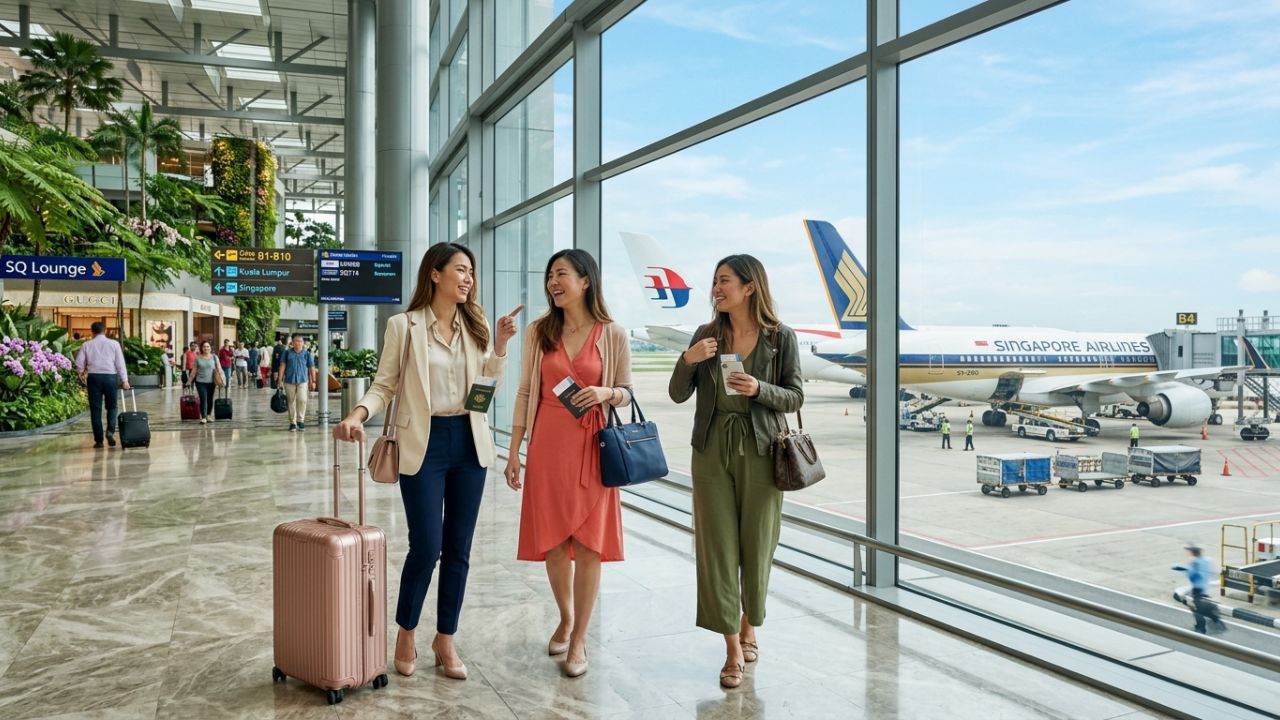
Image generated by AI
Aviation Updates: Malaysia Airlines and Singapore Airlines Launch Joint Fares to Shield Passengers from Southeast Asian Travel Chaos
As Southeast Asia's busiest aviation corridors frequently succumb to severe weather and rolling terminal congestion, Malaysia Airlines and Singapore Airlines have aggressively launched a massive joint fare network, establishing a highly integrated strategic partnership designed to completely neutralize regional travel chaos.
Image generated by AI
As urgent airline news platforms and highly critical aviation updates continuously document the fragile nature of independent airline scheduling, a massive structural shift is officially reshaping Southeast Asian aviation. In a monumental commercial development, Malaysia Airlines and Singapore Airlines have formally launched deeply integrated joint fare products. This highly aggressive move officially solidifies the strategic joint business partnership formalized earlier in January 2026. By completely dissolving traditional booking boundaries, the two massive carriers are allowing leisure and corporate travelers to purchase heavily integrated tickets covering both route networks. For passengers desperately trying to navigate severe airport disruptions and unpredictable regional weather systems, this level of airline cooperation is the ultimate operational shield. By combining network flexibility, the partnership guarantees that travelers have vastly expanded rebooking options, significantly reducing the terrifying threat of being stranded during rolling flight cancellations and severe travel chaos.
Expanded Overview: Beyond Traditional Codesharing
When analyzing the massive macroeconomic forces driving Asian aviation, the shift from basic codesharing to strategic joint business is absolutely critical.
While traditional codeshare agreements merely allow airlines to share flight numbers with limited fare integration, this new strategic partnership executes highly coordinated commercial planning. Instead of forcing passengers to painstakingly purchase separate tickets across two independent carrier systems, the joint fare arrangement allows travelers to build highly flexible, multi-sector itineraries seamlessly. This aggressive integration allows the airlines to collectively optimize aircraft utilization and dynamically shift passenger volumes, creating a massive, deeply unified network capable of absorbing sudden operational shocks without triggering massive terminal congestion.
Section-Wise Breakdown: The Kuala Lumpur–Singapore Corridor
The operational epicenter of this massive commercial alliance is the incredibly dense, high-demand air corridor linking Kuala Lumpur and Singapore.
Singapore Changi Airport operates as one of the most vital global transit centers on the planet, while Kuala Lumpur International Airport has aggressively developed into a primary mega-gateway connecting Southeast Asia with Australia, China, India, the Middle East, and Europe. By deeply integrating their operations across these two specific hubs, the airlines are fundamentally altering regional connectivity. Travelers moving between these two megacities are no longer forced to rely on a single carrier’s fragile daily schedule; they now have unrestricted access to a massive, combined daily frequency that completely insulates them from the devastating travel chaos of localized delays.
Section-Wise Breakdown: A Phased Operational Evolution
This monumental June 2026 joint fare launch did not happen overnight; it is the culmination of a highly calculated, multi-year strategic alignment.
The initial commercial cooperation framework agreement was officially signed back in October 2019, allowing both airlines to aggressively evaluate operational benefits. The partnership matured significantly in 2024 when the carriers successfully introduced reciprocal frequent flyer mileage accrual and redemption, proving that back-end IT integration was fully viable. Following the formal establishment of the strategic joint business in January 2026, this latest introduction of joint fares represents the transition from administrative cooperation directly into tangible, highly lucrative commercial execution.
Aviation Details: Strategic Joint Business Matrix
The exact operational telemetry outlining this highly aggressive commercial partnership, detailing the timeline of integration and the specific passenger benefits being rolled out, has been consolidated into the mandatory matrix below.
Malaysia & Singapore Airlines Strategic Joint Business Matrix (2026)
| Partnership Evolution Phase | Key Deliverables & Passenger Benefits |
|---|---|
| Initial Framework (2019) | Signing of the original commercial cooperation agreement |
| Loyalty Integration (2024) | Implementation of reciprocal frequent flyer mileage accrual |
| Formal Partnership (Jan 2026) | Strategic joint business partnership officially established |
| Commercial Launch (Jun 2026) | Introduction of fully integrated joint fare products |
| Future Strategic Goals | Reciprocal lounge access and coordinated flight scheduling |
Passenger Impact: Weaponizing Network Flexibility
For the international traveler, this deep commercial integration serves as an absolute lifeline during periods of severe operational instability.
When unpredictable monsoon weather triggers sudden flight cancellations in Kuala Lumpur, corporate travelers holding these new joint fare tickets are incredibly protected. Because the airlines are executing coordinated commercial planning, stranded passengers can be rapidly and seamlessly re-accommodated onto the partner airline's aircraft with zero administrative friction. Furthermore, as the airlines push toward fully coordinated schedules and reciprocal premium lounge access, business travelers will experience drastically reduced transfer times and unparalleled comfort, effectively immunizing them against the brutal realities of regional airport disruptions.
Industry Analysis: The Alternative to Mega-Mergers
Aviation economists explicitly highlight that this Malaysia Airlines–Singapore Airlines partnership perfectly encapsulates a massive global trend toward deep strategic alliances.
Across the intensely competitive Asia-Pacific region, full-service carriers recognize that outright corporate mergers and massive acquisitions frequently trigger brutal regulatory battles and terrifying operational meltdowns. Instead, by forming strategic joint businesses, airlines can successfully extract all the financial and operational benefits of a merger—such as greater route coverage, expanded loyalty value, and joint corporate travel programs—while maintaining their fiercely independent national identities. This allows both carriers to radically improve passenger convenience without the horrific administrative travel chaos that destroys post-merger operations.
Conclusion: Securing the Southeast Asian Transit Grid
Ultimately, the official rollout of joint fare products between Malaysia Airlines and Singapore Airlines represents a monumental victory for regional connectivity and passenger resilience. By aggressively coordinating their commercial planning and unifying their massive route networks across Changi and Kuala Lumpur, both national carriers have constructed a formidable defense against systemic operational volatility. As passenger demand across Southeast Asia explodes due to rapidly rising middle-class incomes and aggressive tourism recovery, this deep integration ensures that travelers will enjoy drastically improved itinerary options and premium flexibility. In a market constantly threatened by unpredictable travel chaos, this level of strategic airline partnership is the ultimate guarantee of a flawless, uninterrupted global journey.
Key Takeaways
- Massive Joint Fare Launch: In June 2026, Malaysia Airlines and Singapore Airlines officially launched highly integrated joint fare products for travel across their combined route networks.
- Strategic Joint Business: This launch builds upon the formal strategic joint business partnership established in January 2026, significantly evolving beyond traditional, highly limited codeshare agreements.
- The Mega-Hub Air Corridor: The core operational focus rests squarely on optimizing the incredibly dense, high-demand route linking Kuala Lumpur International Airport and Singapore Changi Airport.
- Mitigating Regional Disruption: By combining schedules and allowing seamless ticket integration, the partnership provides passengers with immense flexibility to survive sudden flight cancellations and airport disruptions.
- Future Premium Upgrades: Beyond joint fares, the airlines are actively developing reciprocal premium lounge access, joint corporate travel programs, and deeply coordinated flight schedules.
FAQ: Malaysia & Singapore Airlines Joint Fares 2026
What is the main benefit of the new joint fares between Malaysia Airlines and Singapore Airlines? The joint fares allow passengers to purchase a single, highly integrated ticket covering itineraries across both airlines' vast networks, drastically simplifying travel planning and providing immense booking flexibility.
When did this strategic partnership officially begin? While the original commercial cooperation framework was signed in 2019 and frequent flyer integration occurred in 2024, the strategic joint business was formally established in January 2026, culminating in the June 2026 joint fare launch.
How does this partnership help passengers during flight cancellations? By deeply integrating their commercial operations and scheduling, the airlines can much more easily and seamlessly rebook passengers onto either carrier's aircraft during severe weather or airport disruptions, significantly reducing travel chaos.
Related Travel Guides
Germany Eurowings Digital Rebranding Travel Chaos 2026
United Airlines UA14 Starlink WiFi London New York Travel Chaos 2026
Asia Regional Flight Disruption Survival Guide 2026
Disclaimer: This article is strictly for informational and aviation commercial analysis purposes. The partnership data, specific integration timelines (including the January 2026 joint business formalization and the June 2026 joint fare launch), and future operational goals are based on official corporate announcements from Malaysia Airlines and Singapore Airlines available at the time of publication. The availability of specific joint fare products, reciprocal frequent flyer mileage accrual, and planned reciprocal lounge access are highly dynamic and subject to immediate modification due to ongoing IT integration, sudden regulatory shifts, or specific airport operational constraints. Passengers must explicitly verify exact fare rules, specific rebooking policies, and current loyalty program benefits directly with their operating carrier prior to purchasing combined itineraries.
Disclaimer
This article is for informational and educational purposes only. It does not constitute legal, financial, or professional advice. While we strive to provide accurate and up-to-date information, travel policies, regulations, and conditions change rapidly. Always verify information with official sources before making travel decisions. Nomad Lawyer makes no representations about the accuracy, reliability, completeness, or suitability of the information provided. Readers should consult qualified professionals for advice specific to their circumstances. The views expressed in this article are those of the author and do not necessarily reflect the views of Nomad Lawyer.
Raushan Kumar
Founder & Lead Developer
Full-stack developer with 11+ years of experience and a passionate traveller. Raushan built Nomad Lawyer from the ground up with a vision to create the best travel and law experience on the web.
Learn more about our team →