Skymark Boosts Tokyo Haneda Winter Flights: 28 Extra Holiday Services Guide 2026-2027

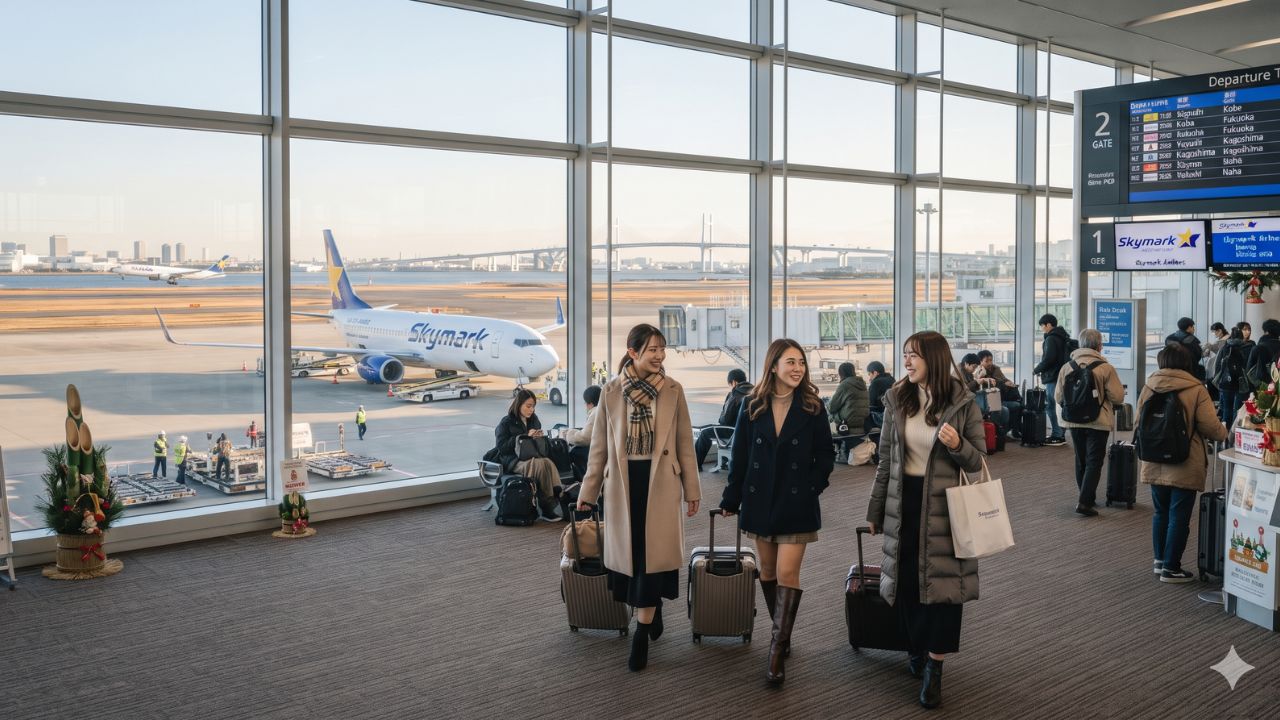
During Japan’s year-end Shōgatsu holiday window, domestic transport networks experience intense travel surges, with Tokyo departures regularly selling out weeks ahead. To relieve bottleneck pressure on peak dates, hybrid carrier Skymark Airlines announced on November 27, 2026, that it will operate 28 extra one-way flights across four domestic routes linking Tokyo International Airport (Haneda) with Kobe, Fukuoka, Kagoshima, and Naha.
Comprising 14 round-trip pairs across December 2026 and January 2027, the program injects 24 extra flights into December and four return flights in early January. These targeted frequencies unlock valuable holiday seats to western Japan, Kyushu, and Okinawa when bullet trains and legacy airlines operate at capacity.
Skymark’s Holiday Flight Allocations Across Four Regional Hubs
Japan's Shōgatsu period triggers kisei, the annual mass migration where millions leave Tokyo for family homes before returning in January. Skymark's extra 28 services address targeted dates rather than daily additions.
Fukuoka and Kagoshima receive 20 of the 24 December flights. The Haneda–Fukuoka route gains 10 one-way flights across December 5, 12, 19, 25, and 28, bringing frequency to 14 daily flights each way. Haneda departures include SKY993 at 09:50 (Dec 5), SKY995 at 09:55 (Dec 12, 19), SKY997 at 16:20 (Dec 25), and SKY991 at 06:50 (Dec 28), with return flights SKY994, SKY998, and SKY992.
Kagoshima gains 10 one-way flights from December 26 to 31, lifting frequency to five flights each way. Departures include SKY971 at 09:55 (Dec 26, 28), SKY969 at 09:40 (Dec 29, 31), and SKY967 at 06:50 (Dec 30), paired with returns SKY970 and SKY968.
Single holiday pairings serve Kobe and Okinawa. On December 31, SKY921 leaves Haneda at 08:30 (arrives Kobe at 09:50), while SKY922 leaves Kobe at 10:25 (arrives Haneda at 11:25). On December 6, SKY983 leaves Haneda at 11:05 (arrives Naha at 14:05), returning as SKY982 from Naha at 16:00 (arrives Haneda at 18:15).
In January 2027, four flights complete the 28-service core schedule. On January 2, SKY971 departs Haneda at 09:40 (arrives Kagoshima at 11:40), returning as SKY972 at 13:25 (arrives Haneda at 15:00). On January 4, SKY995 leaves Haneda at 09:55 (arrives Fukuoka at 12:05), returning as SKY994 at 13:20 (arrives Haneda at 15:00).
A separate notice on November 27 added three flights: evening Haneda–Kobe flight SKY119 on January 21 (departs 20:35, arrives 21:55), and a Kobe–Sapporo New Chitose round-trip on January 22 (SKY961 departs 15:10; SKY962 returns 17:35). Together, both notices total 31 supplementary flight legs.
The table below summarizes the core 28 holiday flight operations:
| Route Corridor | Target Dates | Extra Flights (JST) | Return Services (JST) | Primary Travel Purpose |
|---|---|---|---|---|
| Haneda – Fukuoka | Dec 5, 12, 19, 25, 28 | SKY993/995/997/991 (06:50–16:20) | SKY994/998/992 | Pre-holiday Kyushu departures |
| Haneda – Kagoshima | Dec 26, 28, 29, 30, 31 | SKY971/969/967 (06:50–09:55) | SKY970/968 | South Kyushu year-end homecoming |
| Haneda – Kobe | Dec 31, 2026 | SKY921 (08:30–09:50) | SKY922 (10:25–11:25) | New Year’s Eve Kansai connection |
| Haneda – Naha | Dec 6, 2026 | SKY983 (11:05–14:05) | SKY982 (16:00–18:15) | Early winter Okinawa break |
| Haneda – Kagoshima | Jan 2, 2027 | SKY971 (09:40–11:40) | SKY972 (13:25–15:00) | Post-holiday return to Tokyo |
| Haneda – Fukuoka | Jan 4, 2027 | SKY995 (09:55–12:05) | SKY994 (13:20–15:00) | Early January capital return flow |
What Makes These Four Regional Gateways Unique
Each regional destination offers distinctive winter traditions:
Fukuoka: Urban Gastronomy and Shinto Heritage
As Kyushu's primary metropolis, Fukuoka is celebrated for Hakata tonkotsu ramen served at open-air yatai food stalls along the Nakasu canals. Just outside the city stands Dazaifu Tenmangu, one of Japan's most revered shrines, welcoming thousands of winter visitors for hatsumode (the first shrine visit of the new year).
Kagoshima: Volcanic Panoramas and Thermal Baths
Framed by active Sakurajima volcano across Kinko Bay, Kagoshima offers dramatic geology and geothermal baths. Travelers visit coastal Ibusuki for natural hot sand bathing (sunamushi onsen), while food enthusiasts enjoy Berkshire black pork (Kurobuta) shabu-shabu paired with regional sweet potato shochu.
Kobe: Maritime History and Ancient Springs
Bordered by Osaka Bay and Mount Rokko, Kobe was among Japan's first international trading ports. Beyond marbled Kobe beef, the city hosts Arima Onsen, celebrated for over a millennium. Arima's mineral-rich Kinsen (golden thermal spring) provides warm respite during crisp winter days.
Naha: Subtropical Ryukyu Heritage
Naha, the capital of Okinawa Prefecture, enjoys mild winter temperatures between 18°C and 22°C. Recognized by the UNESCO World Heritage Centre, the Gusuku Sites and Related Properties of the Kingdom of Ryukyu showcase unique stone fortresses and distinct island cultural traditions.
Visitor Insider Tips: Navigating Japanese Holiday Air Travel
- Locate Terminal 1 North Wing at Haneda: At Tokyo Haneda Airport, Skymark counters operate on the second floor of Terminal 1 North Wing. Avoid shuttles to Terminal 2 or 3.
- Allow Luggage Buffers on Separate Tickets: If connecting between international flights and Skymark services, allow at least three hours. Skymark does not transfer checked baggage onto other airlines under separate ticket bookings.
- Follow Local Hatsumode Etiquette: When joining New Year shrine visits on January 1–3, prepare 5-yen coins, drop them into the offering chest, bow twice, clap twice, recite your silent prayer, and bow once.
- Reserve Regional Rail Passes Early: While flights cover long distances quickly, trains link airports to hot springs. Reserve Kyushu or Sanyo Shinkansen seats well before peak holiday dates.
Cultural and Environmental Context: Sustainable Regional Mobility
Japan's domestic air routes complement its Shinkansen rail network. While bullet trains link Tokyo with Kyoto and Osaka, flights to Kagoshima or Okinawa cut transit times by several hours.
According to the Japan National Tourism Organization, dispersing travelers into prefectures like Kagoshima and Hyogo supports local producers, artisans, and historical preservation. Sustainable holiday travel involves respecting neighborhood quiet during temple visits, using public transit, and patronizing locally owned inns (ryokan).
FAQ: Visiting Japan During New Year 2026-2027
What is the Shōgatsu period and why are flights busy?
Shōgatsu is Japan’s New Year celebration. From late December to early January, businesses close as citizens return home, creating peak travel demand nationwide.
Where is Skymark located at Tokyo Haneda Airport?
Skymark check-in counters are located in Terminal 1, on the second floor of the North Wing.
Does Skymark protect missed connections on separate tickets?
No. Passengers traveling on separate tickets receive no connection protection. A buffer of two to three hours is strongly recommended.
Do tourists need a visa for Japan?
Passport holders from over 65 visa-exempt countries (including the US, Canada, the UK, and EU nations) do not require a visa for tourist visits up to 90 days.
Strategic flight additions ensure travelers can reach Japan’s regional hot springs and coastal shrines during the year's most revered holiday season.
Related Travel Guides
This article is for informational purposes. Flight routes, passenger regulations, visa rules, and transit advisories are subject to change by airlines and aviation authorities. Readers are advised to verify schedules and travel documentation with relevant carriers and border agencies before departure.
Related Stories

Lufthansa and Eurowings Resume Germany-Dubai Flights: Schedule and Travel Guide 2026–2027