
Hungary Joins Slovakia, Austria and Slovenia to Boost MICE Tourism at Budapest Business Day 2026
Hungary Joins Slovakia, Austria and Slovenia to Boost MICE Tourism at Budapest Business Day 2026

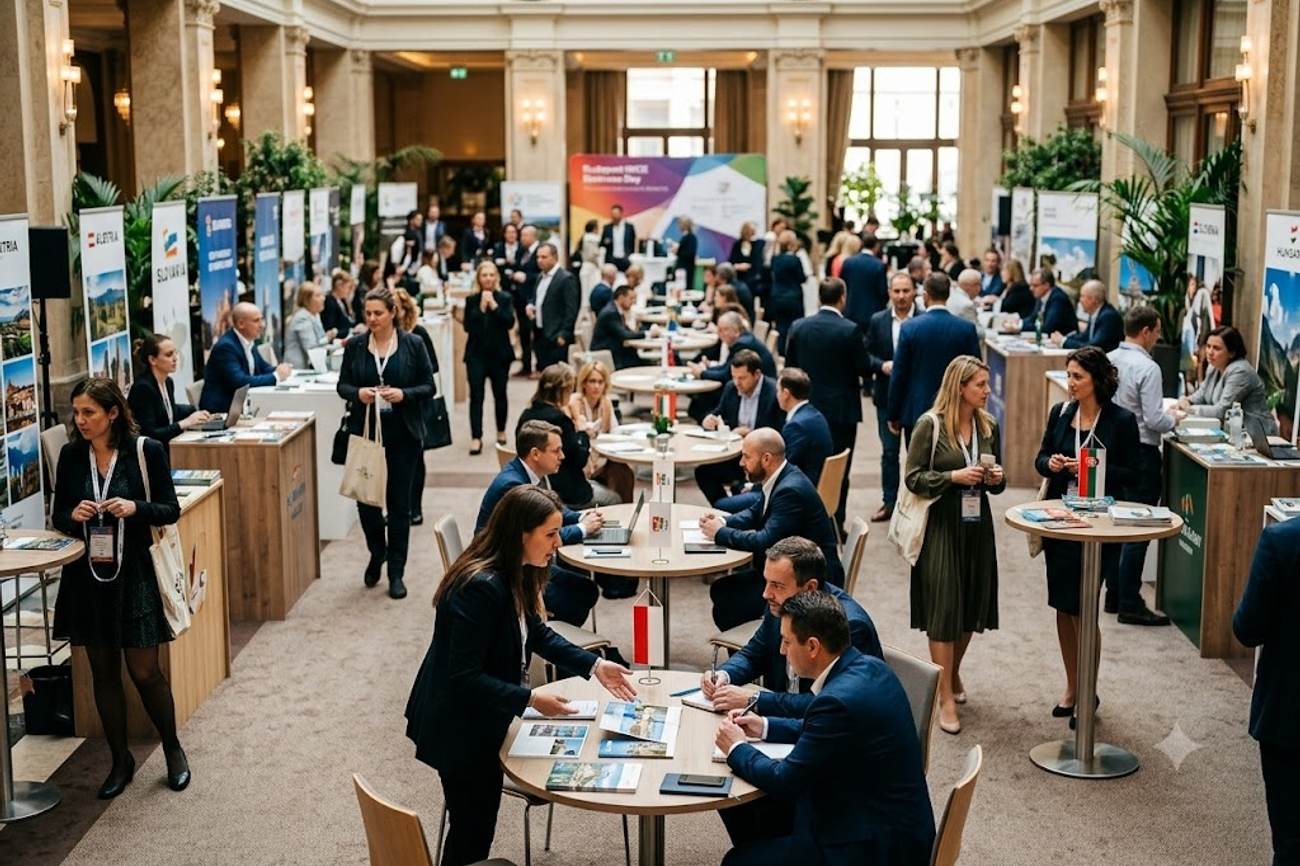
Image generated by AI
Central European MICE capacity has seen a strategic shift toward regional clustering, with Budapest now positioning itself as the primary hub for a multi-nation business tourism corridor. While traditional hubs like London and Paris have historically dominated the Meetings, Incentives, Conferences, and Exhibitions (MICE) sector, the upcoming Budapest Business Day on 20 October 2026 signals a pivot toward "complementary destination" strategies. By integrating suppliers from Slovakia, Austria, Slovenia, and Croatia, Hungary is moving away from isolated competition and toward a regional ecosystem designed to capture a larger share of the corporate event market.
The MICE Pivot in Numbers: Budapest 2026
The scale of Budapest Business Day 2026 reflects a calculated effort to consolidate the Central European business travel supply chain. The event is not a consumer-facing fair but a B2B marketplace focusing on high-yield corporate contracts. The exhibitor directory reveals a concentrated effort to showcase diverse accommodation tiers, from luxury properties like the Corinthia Budapest and Kimpton BEM Budapest to corporate-centric brands such as Danubius Hotels, Accent Hotels, and Barceló Budapest.
Infrastructure is the primary driver of this growth. The inclusion of the Budapest Congress Center and Novotel Budapest City indicates that the city is leveraging its high-capacity venue density to attract large-scale international delegations. This strategy aligns with broader trends tracked by the International Air Transport Association (IATA), where increased regional connectivity often precedes a spike in business event bookings.
The event's reach extends beyond Hungary, integrating key regional players:
- Slovakia: Represented by Visit Košice, Region Vysoké Tatry, and Slevomat Group.
- Austria: Featured via Falkensteiner Hotels & Residences.
- Slovenia: Showcasing LifeClass Hotels & Spa and Postojna Cave Park.
- Additional Reach: Marketing representation from Poland and Malta.
Regional Benchmarking: The Central European Corridor
Historically, MICE tourism was fragmented, with each capital city competing for the same pool of international corporate budgets. The current trend shows a shift toward "itinerary-based" business travel, where a single corporate event may span multiple neighboring countries to provide a mix of urban conference settings and nature-based incentive retreats.
The following table analyzes the strategic positioning of the participating regions based on their current market offerings:
| Destination | Primary MICE Value Proposition | Key Infrastructure/Assets | Strategic Role in 2026 Cluster |
|---|---|---|---|
| Hungary | Urban Hub & Capacity | Budapest Congress Center, Luxury Hotel Tier | Primary Event Anchor |
| Slovakia | Diversified Environments | Visit Košice (Urban), High Tatras (Nature) | Incentive & Retreat Alternative |
| Austria | Premium Hospitality | Falkensteiner Hotels & Residences | High-End Wellness & Luxury |
| Slovenia | Experiential Tourism | Postojna Cave Park, LifeClass Hotels & Spa | Niche/Unique Corporate Experiences |
This clustering allows Central Europe to compete with larger markets by offering a "circuit" of experiences. According to data patterns often highlighted by STR, regional hotel occupancy in business hubs is increasingly tied to the ability of a city to offer "bleisure" (business + leisure) integration, a metric Budapest is currently optimizing.
What This Means for Travelers
For the corporate traveler and the event planner, the consolidation of these markets into a single professional network means a shift in how bookings and itineraries are structured.
1. The Rise of the Multi-Destination Corporate Trip If you are planning a corporate retreat or conference for 2026, the data suggests you should no longer look at Budapest in isolation. The integration of the High Tatras (Slovakia) and the Adriatic-adjacent regions of Slovenia allows for "hybrid itineraries." A typical high-efficiency route now involves a formal conference in Budapest followed by a 3-day executive retreat in the Slovakian mountains or a wellness program in Slovenia.
2. Booking Windows and Capacity With the concentrated promotion of venues like the Budapest Congress Center, peak dates in Q4 (specifically around October) will see heightened demand. For groups exceeding 100 delegates, a booking window of 12-18 months is now recommended to secure the luxury tier (e.g., Corinthia or Kimpton) while maintaining proximity to the primary venue.
3. Diversification of Budget The presence of "alternative" destinations like Košice and the High Tatras provides a hedge against the rising costs of primary hubs. Planners can now maintain high standards of hospitality while reducing overall spend by splitting the event between a primary hub (Budapest) and a secondary regional destination.
Forward Projection: The 2027-2030 Trajectory
The trajectory of Budapest Business Day 2026 suggests that Central Europe is building a "MICE Bloc." Based on current movements, we can project three primary shifts:
First, we will see the emergence of standardized regional corporate packages. Rather than negotiating separate contracts with hotels in Austria and Hungary, planners will likely encounter "Central European Corporate Passes" that bundle accommodation and transport across these borders.
Second, there will be an aggressive push toward "Green MICE." With Slovenia and Slovakia promoting nature-based assets like Postojna Cave Park and the High Tatras, the region is positioning itself to capture the growing demand for sustainable and eco-conscious corporate events, a trend closely monitored by the World Tourism Organization (UNWTO).
Third, the reliance on large-scale international trade shows will decrease. Regional gatherings like the one on 20 October allow suppliers to reach decision-makers for mid-sized conferences and incentive programs without the overhead of global exhibitions. This decentralization of the industry will likely lead to more competitive pricing for the end-user.
FAQ: Central European MICE Trends 2026
Will corporate travel prices in Budapest increase due to this expansion? Short-term volatility is expected during peak event windows. However, the inclusion of Slovakian and Slovenian alternatives creates more supply options, which should stabilize average daily rates (ADR) across the broader region over the next three years.
Is now a good time to book 2026 corporate events in Central Europe? Yes. As Budapest strengthens its role as a regional hub, the most sought-after luxury properties and large-scale venues are seeing their calendars fill faster. Securing dates now prevents the need to settle for secondary-tier accommodation.
Which destinations offer the best value for incentive travel? Slovakia (specifically the High Tatras) and Slovenia currently offer the highest value-to-experience ratio, providing luxury nature retreats at a lower price point than the primary urban centers of Vienna or Budapest.
How does this trend affect the "bleisure" market? It expands it. The regional cooperation makes it easier for business travelers to extend their stay. A professional trip to Budapest can now easily transition into a leisure tour of the Slovenian coast or Austrian resorts.
The era of the single-city business trip is ending; the era of the regional corporate corridor has arrived.
#BudapestMICE2026 #CentralEuropeBusinessTourism #CorporateEventTrends #MICEIndustryGrowth #BudapestHospitalityData #RegionalTourismClustering
Related Travel Guides
Disclaimer
This article is for informational and educational purposes only. It does not constitute legal, financial, or professional advice. While we strive to provide accurate and up-to-date information, travel policies, regulations, and conditions change rapidly. Always verify information with official sources before making travel decisions. Nomad Lawyer makes no representations about the accuracy, reliability, completeness, or suitability of the information provided. Readers should consult qualified professionals for advice specific to their circumstances. The views expressed in this article are those of the author and do not necessarily reflect the views of Nomad Lawyer.
Kunal K Choudhary
Co-Founder & Contributor
A passionate traveller and tech enthusiast. Kunal contributes to the vision and growth of Nomad Lawyer, bringing fresh perspectives and driving the community forward.
Learn more about our team →