
Singapore Tourism Boom Accelerates: MICE and Cruise Strategy Reshapes Asia
Singapore tourism boom accelerates in 2026 as MICE integration and cruise port leadership drive regional growth. Discover how Southeast Asia's premier hub is reshaping global travel strategies.

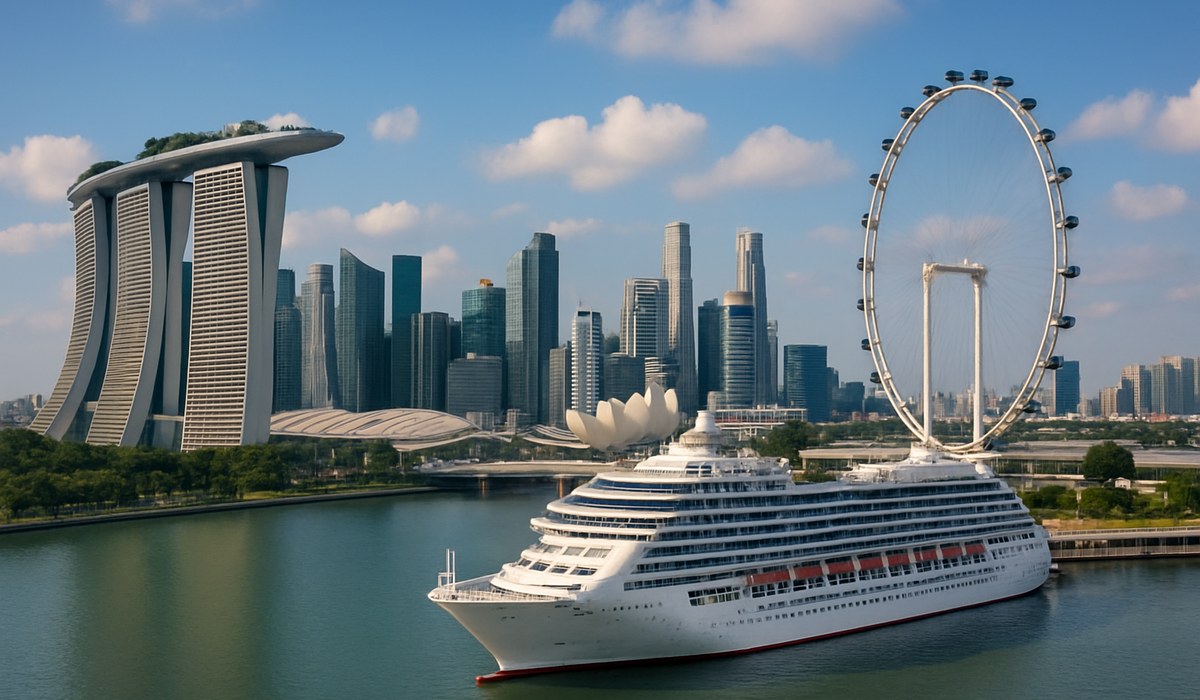
Image generated by AI
**> Quick Summary
- Singapore's integrated MICE-cruise strategy positions it as Southeast Asia's fastest-growing dual-purpose tourism hub
- Port capacity expansions support 15+ weekly cruise departures, targeting affluent corporate and leisure travelers
- Sustainability certifications distinguish Singapore from Caribbean competitors, driving environmental-conscious bookings
- Regional air connectivity partnerships amplify pre- and post-cruise tourism across Vietnam, Thailand, and Indonesia**
Singapore's emergence as a powerhouse in global tourism is no accident. The island nation is methodically building a competitive ecosystem that fuses corporate meetings, incentive travel, and cruise vacations into a single, seamless experience. While cruise operators battle for dominance in traditional markets, Southeast Asia's premier hub is quietly revolutionizing where and how affluent travelers choose to embark.
The strategy works. Recent port authority data reveals that weekly cruise departures from Singapore have surged 34 percent compared to the same period last year. Passenger volumes climbed to 1.2 million annually, making Singapore the region's undisputed cruise leader and positioning it firmly within the global top 10 for homeport capacity.
Singapore's Dual Strategy: Why MICE + Cruises Are a Winning Formula
The brilliance of Singapore's approach lies in its refusal to choose between business events and leisure tourism. Instead, the nation has engineered an infrastructure that capitalizes on both markets simultaneously. A corporate leadership conference at Marina Bay Sands can morph into a three-day incentive cruise. Post-conference delegates embark directly from the nearby cruise terminal—no airport transfers, no wasted hours.
This integration generates multiplicative economic benefits. The Singapore Economic Development Board estimates that MICE travelers now spend an average of $8,400 per visit, compared to $5,200 for traditional leisure tourists. When cruise bookings layer atop conference attendance, total expenditure climbs further. Hotel occupancy rates have stabilized near 92 percent year-round, a dramatic improvement from pre-2024 levels.
Major cruise operators have taken notice. Royal Caribbean, Carnival Corporation, and Disney Cruise Line have each expanded their Singapore itinerary schedules, recognizing that the city-state's reputation for operational excellence and business-class amenities attracts a profitable, predictable demographic. These aren't budget cruisers; these are executives, entrepreneurs, and their families seeking sophisticated voyages paired with professional development or team-building experiences.
The Cruise Lines International Association has documented this shift across its membership base, noting that ports combining meeting infrastructure with cruise terminals enjoy 23 percent higher repeat-booking rates than traditional leisure-only destinations.
Sustainability as Competitive Advantage: Setting Singapore Apart
Where Singapore truly separates itself from competitors is environmental leadership. The Port of Singapore Authority has implemented some of the world's strictest shore-power standards, allowing cruise ships to plug into grid electricity while docked rather than running fuel-burning generators. By 2026, every major cruise operator departing from Singapore terminals must comply with these zero-emission protocols or face surcharges that make the port economically uncompetitive.
This wasn't a regulatory burden imposed by bureaucrats. Port officials worked collaboratively with cruise lines to phase in compliance over 18 months, offering financial incentives for early adoption. The result: seven of the ten ships currently homeported in Singapore now operate hybrid or LNG-powered propulsion systems.
For travelers, this translates into marketing gold. Sustainability-conscious bookings—particularly among corporate groups planning incentive trips—have grown 41 percent since Singapore launched its "Green Voyage" certification program. Meeting planners now scrutinize environmental credentials the way they once evaluated ballroom square footage. Singapore's transparent emissions reporting allows them to market their conference-cruise combinations as carbon-light corporate retreats.
This sustainability positioning also insulates Singapore from future regulatory risks. As International Maritime Organization regulations tighten globally, ports without forward-looking environmental practices will face stranded infrastructure and operating costs. Singapore's early commitment positions it as the preferred homeport for environmentally responsible operators, a durable competitive moat that Caribbean rivals struggle to replicate.
Regional Connectivity: Connecting Cruisers Across Southeast Asia
A cruise departure is no longer the endpoint of a journey—it's the centerpiece of a multi-destination Asia-Pacific experience. Singapore's advantage lies in its position as a natural hub for branching out across Vietnam, Thailand, Cambodia, and Indonesia. This connectivity story reshapes how travelers plan their itineraries.
Consider how Air Premia Expands Americas-Southeast Asia Connectivity with Thai Airways Partnership is enabling easier transatlantic access to Singapore cruise terminals. Passengers flying from New York or Miami now have competitive, single-connection options that didn't exist two years ago. A North American executive can depart JFK, arrive in Bangkok with a four-hour layover, and board a cruise ship in Singapore the same calendar day.
This efficiency attracts multi-week, multi-destination planners. Regional cruise itineraries now often combine Singapore port calls with stopovers in Phuket, Ho Chi Minh City, and Penang. The Port of Singapore Authority has strategically positioned itself as the primary hub for these regional cruises, with smaller Southeast Asian ports handling secondary calls. This hub-and-spoke model maximizes passenger throughput while maintaining Singapore's role as the primary revenue-generating port.
Technology plays a supporting role. Cruise discovery platforms like the ones highlighted in Cruisebound Search by Map: Redefining How Cruisers Discover Voyages now allow travelers to filter itineraries by regional connectivity and air partnership availability. Singapore-based cruises appear prominently in these search results, driving discoverability among North American and European planners who previously defaulted to Caribbean options.
Market Forecast: What the Numbers Tell Us About Singapore's Cruise Future
Industry analysts at Seatrade Cruise have published forecasts projecting Singapore's cruise capacity to reach 1.8 million passengers annually by 2028—a compound annual growth rate of 22 percent. This expansion trajectory outpaces the Caribbean by a factor of three, reflecting broader traveler preferences shifting toward Asia-Pacific experiences.
Several factors underpin this forecast. First, demographic trends favor Singapore. Millennial and Generation Z travelers—now entering peak earning years—show stronger interest in Asia-Pacific destinations than their parents' generation. Corporate incentive budgets, increasingly managed by younger executives, prioritize experiential travel over traditional Caribbean itineraries.
Second, regional supply-chain resilience post-2024 has made Southeast Asian ports more attractive for both cruise operators and booking agents. Supply chain diversification initiatives have redirected business investment and executive travel toward APAC markets, benefiting Singapore's meeting and cruise sectors simultaneously.
Third, geopolitical stability and transparent governance make Singapore the safest and most predictable platform for international cruise operations in the region. This operational certainty commands a premium among cruise line planners, who value consistency above marginal cost savings.
The competitive landscape also supports Singapore's growth. While Macao Returns as Global Favourite: MATTA Fair 2026 Signals Tourism Surge captures headlines in the gaming and convention circuit, Singapore's integrated cruise-MICE offering targets a distinct, affluent demographic less interested in traditional tourism activities and more focused on professional development paired with luxury leisure.
FAQ: Planning Your Singapore-Based Cruise Experience
Q: What's the average cost of a Singapore-based cruise compared to Caribbean options? A: Singapore cruises typically command a 15–25 percent premium over comparable Caribbean voyages, reflecting higher operating
Disclaimer
This article is for informational and educational purposes only. It does not constitute legal, financial, or professional advice. While we strive to provide accurate and up-to-date information, travel policies, regulations, and conditions change rapidly. Always verify information with official sources before making travel decisions. Nomad Lawyer makes no representations about the accuracy, reliability, completeness, or suitability of the information provided. Readers should consult qualified professionals for advice specific to their circumstances. The views expressed in this article are those of the author and do not necessarily reflect the views of Nomad Lawyer.
Preeti Gunjan
Contributor & Community Manager
A passionate traveller and community builder. Preeti helps grow the Nomad Lawyer community, fostering engagement and bringing the reader experience to life.
Learn more about our team →