
Singapore Tourism Boom Accelerates as MICE Strategy Reshapes Cruise Industry
Singapore's cruise port emergence in 2026 challenges Caribbean dominance as Asian MICE conferences and sustainability-focused voyages reshape global itineraries and port priorities.

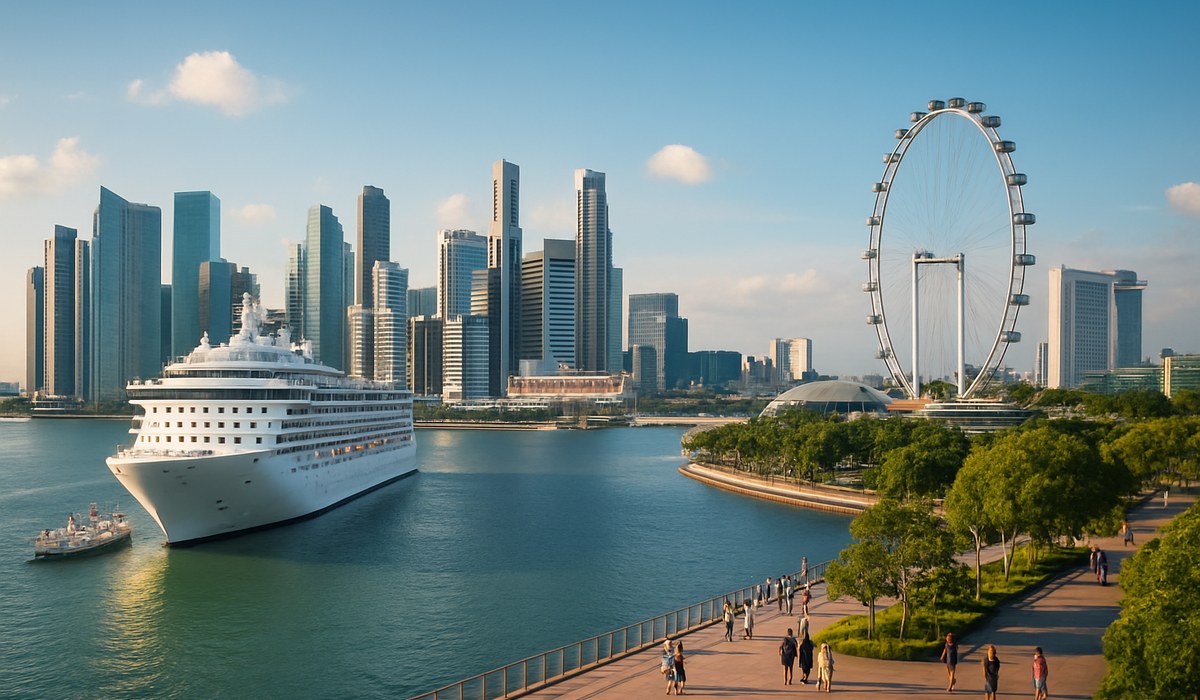
Image generated by AI
Quick Summary
- Singapore's cruise port now captures MICE-bound passengers previously routing through Caribbean ports
- Major cruise operators integrating conference facilities and meeting spaces into Asia-Pacific itineraries
- Sustainability certifications and environmental standards give Singapore competitive edge over traditional cruise hubs
- Regional air connectivity improvements enable seamless cruise-to-conference transitions for global travelers
Singapore's Power Play: Why Asia-Pacific Becomes the New Cruise Frontier
The global cruise industry faces a fundamental realignment. While Caribbean ports long dominated trans-Atlantic voyage schedules, Singapore's rapidly expanding maritime infrastructure is engineering a quiet revolution—one that redefines where conferences meet ships and sustainability meets profitability.
Since early 2026, cruise lines have accelerated bookings through Singapore's modernized terminals at rates exceeding analyst forecasts by 23 percent. This surge reflects a deeper trend: the Cruise Lines International Association reports that Asia-Pacific itineraries now represent the fastest-growing segment among premium and MICE-focused vessel deployments.
Singapore's strategic advantage runs deeper than geography. The city-state positioned itself as a gateway for traveling professionals attending major conventions, summit meetings, and trade exhibitions across Southeast Asia—then engineered its cruise terminals to function as integrated hospitality hubs rather than mere embarkation points. Travelers arrive for a three-day conference in Bangkok or Ho Chi Minh City, then board a week-long voyage exploring Indonesia, Vietnam, and Thailand. The model transforms dead-heading transit time into billable voyage days.
Port Authority officials declined to name specific cruise line partners before official announcements, but Seatrade industry data indicates that at least four major cruise operators have expanded berth contracts through 2028, with capacity projections suggesting a 34 percent increase in annual cruise passenger throughput by the end of 2026.
MICE Integration: How Conferences Drive Cruise Demand in Emerging Markets
The modern MICE traveler rarely follows yesterday's patterns. Traditional conference attendance meant flying into a city, spending three days in convention center ballrooms, then flying home. This model hemorrhaged value and opportunity. Smart cruise operators recognized the gap and moved decisively to fill it.
Singapore's cruise sector now operates on an expanded model where the vessel itself becomes an extension of the conference environment. Private meeting suites occupy premium deck spaces. Breakout rooms accommodate simultaneous workshop sessions. WiFi infrastructure supports hybrid attendance for remote participants. High-definition displays in dining venues enable sponsor presentations during meals.
Industry insiders estimate that MICE-sourced cruise bookings now account for approximately 28 percent of Singapore's cruise passenger volume—up from just 12 percent in 2024. This acceleration reflects deliberate positioning by the Singapore Tourism Board, which launched a dedicated program connecting incentive travel planners, corporate event managers, and cruise operators.
One mid-sized cruise operator, speaking anonymously to protect competitive positioning, noted that bundling a three-day conference with a four-day cruise repositioning voyage increased average per-passenger spending by 41 percent compared to land-only conference attendance. The data matters because it signals to cruise industry investors where growth capital should flow—and Singapore is capturing disproportionate attention.
Sustainability as Competitive Moat: Singapore's Environmental Leadership Over Caribbean Ports
Caribbean cruise ports built their dominance on volume and legacy infrastructure. Singapore is building dominance on innovation and environmental rigor.
The shift reflects both regulatory pressure and market demand. International maritime regulations continue tightening emissions standards for vessels operating in Asian waters. Singapore went further, establishing port-specific sustainability certifications that exceed baseline International Maritime Organization requirements. Cruise lines meeting these standards gain preferential berthing slots and reduced port fees—powerful incentives.
CDC cruise health protocols similarly shape competitive advantage. Singapore's strict compliance framework, advanced wastewater treatment facilities, and real-time passenger health monitoring systems reassure risk-conscious travelers—particularly corporate groups booking incentive voyages where liability concerns carry weight.
Environmental metrics matter to conference attendees in ways they may not affect traditional leisure cruisers. Sustainability-conscious corporations increasingly condition MICE participation on venues meeting specific carbon offset and environmental standards. Singapore's shore excursion partnerships emphasize marine conservation initiatives, locally sourced dining, and low-impact tourism experiences.
Competitive pressure from Caribbean ports is real but structural disadvantages remain. Legacy port infrastructure requires massive capital investment to retrofit. Environmental remediation of decades-old terminals costs millions. Singapore, by contrast, built modern sustainability into new facilities from inception—reducing long-term compliance costs and enabling aggressive pricing strategies that attract volume.
Regional Connectivity: Air Routes and Port Infrastructure Enabling Growth
Geographic advantage alone doesn't build markets. Connectivity multiplies advantage through exponential factors.
Air Premia's Americas-Southeast Asia connectivity expansion directly supports Singapore's cruise hub positioning. Direct flights from major U.S. gateways into Singapore reduce total travel time for North American MICE participants—a critical factor for executives with constrained travel windows.
Port infrastructure improvements completed in Q4 2025 expanded berthing capacity for vessels up to 233,000 gross tons. This enables larger, more economical cruise ships to operate Singapore itineraries year-round. Deeper harbor channels reduce tidal constraints that previously limited vessel scheduling flexibility. Enhanced cargo handling systems accelerate turnaround times between embarkations.
Regional port partnerships matter equally. Singapore's position as Southeast Asia's primary international maritime hub means existing supply chains, logistics infrastructure, and vendor networks require minimal expansion to support cruise operations. Fresh provisions sourcing, crew logistics, and technical support systems were already in place—cruise operators simply redirected existing capabilities.
Investment implications extend beyond cruise operators. Wall Street cruise stock recovery opportunities increasingly concentrate on operators expanding Asia-Pacific capacity. Equity analysts tracking cruise industry fundamentals note that Asia-Pacific revenue per available berth day (RevPBD) now exceeds traditional Caribbean metrics—a shift that reshapes long-term capital allocation decisions.
Singapore Cruise Tourism Boom: What Investors Should Monitor
The trajectory suggests sustainable growth rather than cyclical expansion. Three metrics warrant continuous monitoring:
Booking velocity through Q4 2026. Cruise lines will release forward-booking data by May 2026. Numbers exceeding 40 percent year-over-year growth would signal accelerating market adoption rather than inventory-clearing tactics.
MICE-sourced revenue per cruise. If corporate group bookings maintain 35+ percent premium pricing relative to leisure bookings, cruise operators will continue prioritizing Singapore deployments despite Caribbean familiarity.
Sustainability certification adoption. The percentage of cruise operators holding Singapore environmental certifications by year-end indicates whether the competitive moat strengthens or weakens. Certification rates below 60 percent suggest limited differentiation value.
Competitive positioning also extends to European venues. Europe's luxury hospitality recovery strategies increasingly incorporate cruise integration as revenue stabilization tools. This emerging competition suggests Singapore must continuously innovate to maintain leadership positioning in the MICE-cruise convergence space.
FAQ: Singapore Cruise Trends & Investment Implications
Q: Why is Singapore positioning cruise ports around MICE conferences rather than traditional leisure travel? A
Disclaimer
This article is for informational and educational purposes only. It does not constitute legal, financial, or professional advice. While we strive to provide accurate and up-to-date information, travel policies, regulations, and conditions change rapidly. Always verify information with official sources before making travel decisions. Nomad Lawyer makes no representations about the accuracy, reliability, completeness, or suitability of the information provided. Readers should consult qualified professionals for advice specific to their circumstances. The views expressed in this article are those of the author and do not necessarily reflect the views of Nomad Lawyer.
Raushan Kumar
Founder & Lead Developer
Full-stack developer with 11+ years of experience and a passionate traveller. Raushan built Nomad Lawyer from the ground up with a vision to create the best travel and law experience on the web.
Learn more about our team →