Singapore Stopover Holidays 2027: How the New Sustainable Aviation Fuel Levy Impacts Changi Fares

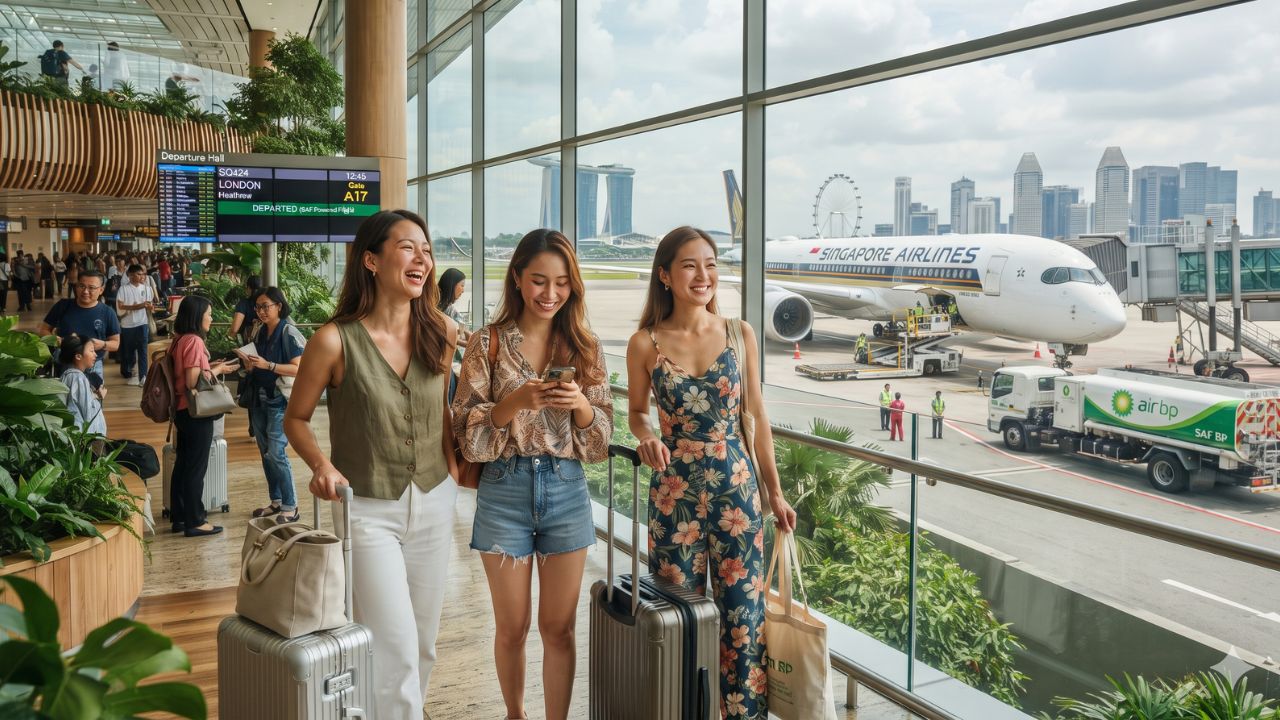
Starting January 1, 2027, an economy traveler flying directly from Singapore Changi to New York will pay an added S$10.40 under the city-state's mandatory Sustainable Aviation Fuel (SAF) levy, while a business-class passenger heading to London incurs S$25.60—yet airside transit passengers connecting between flights pay exactly zero, turning the simple decision to add a downtown hotel stopover into a strategic calculation for international travelers. Introduced by the Civil Aviation Authority of Singapore (CAAS) for tickets issued from October 1, 2026, the policy marks one of Asia's most ambitious aviation decarbonization programs, requiring airlines to display the green charge as a distinct, transparent line item on passenger receipts.
How the SAF Levy Operates: Bands, Cabins, and Delayed Rollouts
The regulatory framework applies exclusively to origin-destination passengers departing Singapore. Following an initial implementation deferral in March 2026—when aviation regulators postponed the start date to relieve cost pressures stemming from Middle Eastern flight reroutings—the policy officially targets passenger flights departing from January 1, 2027.
The levy amount is calculated using two primary variables: destination distance (divided into four geographical bands) and ticketed cabin category. Under CAAS rules, premium economy passengers are categorized within the standard economy tier, while business and first-class travelers pay higher premium rates:
- Band I (Regional Southeast Asia): Covers immediate short-haul destinations such as Bangkok, Kuala Lumpur, and Jakarta. Economy and premium economy passengers pay S$1.00; business and first-class travelers pay S$4.00.
- Band II (East and South Asia): Spans medium-haul hubs like Tokyo, Beijing, and Mumbai. Economy and premium economy pay S$2.80; business and first class pay S$11.20.
- Band III (Long-Haul Europe, Australia, and Africa): Encompasses transcontinental routes like London, Sydney, and Frankfurt. Economy and premium economy travelers pay S$6.40 (a family of four pays S$25.60 collectively); business and first class pay S$25.60.
- Band IV (Ultra-Long-Haul Americas): Targets extended non-stop links to New York, San Francisco, and Los Angeles. Economy and premium economy pay S$10.40; business and first class pay S$41.60.
For multi-leg itineraries departing Changi, the immediate international airport reached after Singapore determines the applicable geographical band, regardless of where the passenger's final baggage tag points.
The Stopover Divide: Transit Exemption vs. City Exploration
The most significant operational distinction for travelers lies in how a booking is ticketed. As confirmed by Singapore Airlines, pure airside transit passengers transferring between flights at Changi without leaving immigration control are completely exempt from the SAF charge.
However, once an international traveler converts a brief connection into a multi-day city break—leaving the terminal to check into a hotel in Marina Bay, Chinatown, or Orchard Road—the journey transitions into an origin-destination departure, triggering the mandatory levy upon outbound flight check-in.
This regulatory dividing line coincides with a broader surge in short-stay visitation. Data compiled by the Singapore Department of Statistics shows that international visitor arrivals climbed 2.3% in 2025 to reach 16.91 million travelers, while overall tourism receipts surged 10% to S$32.755 billion. The average length of stay stood at 3.48 days (compared with 3.56 days in 2024), illustrating that millions of global travelers intentionally build three-day urban adventures into their intercontinental journeys.
Singapore Sustainable Aviation Fuel Levy Rate Structure (2027)
The table below outlines the statutory SAF levy tiers, destination examples, and applicable cabin classes enforced across all commercial flights departing Changi Airport:
| Destination Band | Representative Routes | Economy & Premium Economy Rate | Business & First Class Rate | Operational Rule & Calculation Basis |
|---|---|---|---|---|
| Band I | Bangkok, Jakarta, Kuala Lumpur | S$1.00 | S$4.00 | Determined by immediate outbound destination |
| Band II | Tokyo, Seoul, Mumbai, Delhi | S$2.80 | S$11.20 | Medium-haul regional corridors |
| Band III | London, Paris, Sydney, Frankfurt | S$6.40 | S$25.60 | Standard long-haul intercontinental routes |
| Band IV | New York, San Francisco, Los Angeles | S$10.40 | S$41.60 | Ultra-long-haul direct transpacific services |
| Transit / Airside | Connecting within 24 hours (unbroken) | S$0.00 (Exempt) | S$0.00 (Exempt) | Must remain on single through-ticket itinerary |
| Origin-Destination | Stopover exceeding transit rules | Standard band rate applies | Standard band rate applies | Triggered once passenger clears border immigration |
Visitor Insider Tips: Maximizing a Singapore Stopover Under the New Rules
- Book Your Stopover on a Single Carrier Ticket: When booking through Singapore Airlines or partner alliances, use official multi-city search tools rather than purchasing two separate point-to-point one-way tickets. Single-ticket bookings protect your baggage transfers, eliminate duplicate departure taxes, and guarantee transparent display of applicable SAF line items.
- Take the Free Singapore Tour for Quick Connections: If your connection at Changi is between 5.5 and 24 hours and you wish to avoid hotel costs and levy reclassification, register at the Free Singapore Tour booths in Terminals 2 or 3. Guided bus tours take transit passengers through the Civic District, Chinatown, and Marina Bay, returning you directly to the transit lounge without triggering individual origin taxes.
- Tap Contactless Bank Cards on the MRT: Avoid buying disposable transit cards. Simply tap your foreign contactless Visa, Mastercard, or mobile wallet directly at Changi Airport MRT station turnstiles. The East West Line delivers you into City Hall or Raffles Place in 30 minutes for under S$2.50.
- Feast at Historic Hawker Centers Instead of Hotel Dining: Offset minor airline fees by dining where locals eat. Walk into Old Airport Road Food Centre, Maxwell Food Centre, or Amoy Street Food Centre to savor Michelin Bib Gourmand-recognized Hainanese chicken rice, char kway teow, and laksa for S$5 to S$8 per plate.
- Time the Jewel Rain Vortex Light Show: Before checking in for your outbound flight, visit Jewel Changi Airport. The 40-meter indoor HSBC Rain Vortex waterfall stages spectacular light and sound shows hourly after 7:30 PM. Browse curated city itineraries via Visit Singapore (Singapore Tourism Board).
Cultural and Environmental Context: Green Aviation and the Tourism 2040 Blueprint
Singapore's SAF levy represents a core component of the national Green Plan 2030, which seeks to transform the island into a globally recognized "City in Nature." Unlike voluntary carbon offset programs that suffer from inconsistent consumer uptake, Singapore's centralized model channels all levy proceeds into a statutory SAF Fund managed by SAFCo, the nation's centralized procurement body.
SAFCo aggregates regional airline demand to purchase certified sustainable fuel batches, with the first physical fuel batch scheduled for delivery and uplift at Changi in mid-2027. Concurrently, Singapore Airlines established an agreement with clean-fuel producer Aether to supply up to 4,800 tonnes of SAF over three years starting in 2028, converting industrial waste gases and agricultural biomethane into low-carbon jet propellant.
Alongside environmental initiatives, the government is investing aggressively in visitor infrastructure. In May 2026, Minister in charge of Trade Relations Grace Fu unveiled S$740 million in fresh Tourism Development Fund financing over five years, powering the nation's Tourism 2040 strategy to reach S$47 billion to S$50 billion in annual tourism receipts. Supported by expanded cruise terminals, waterfront cultural precincts, and culinary heritage centers, Singapore demonstrates that transparent green policies can reinforce destination value rather than deterring international exploration.
FAQ: Singapore SAF Levy and Stopovers in 2027
When does the Singapore SAF levy take effect? The levy applies to flights departing Singapore from January 1, 2027, on commercial airline tickets purchased on or after October 1, 2026.
Do transit passengers connecting at Changi Airport pay the levy? No. Pure transit and transfer passengers connecting airside on a continuous flight itinerary are exempt from the SAF levy.
Are premium economy tickets charged at the business-class rate? No. The Civil Aviation Authority of Singapore groups premium economy with standard economy, meaning travelers pay the lower base band rate.
Where do the funds collected from the SAF levy go? Proceeds are directed into a dedicated statutory SAF Fund managed by SAFCo to procure certified sustainable aviation fuel and associated lifecycle emissions attributes.
As Changi Airport charts the future of cleaner flight paths, Singapore proves that investing in a sustainable planet begins with transparency on the runway and wonder in the city.
Related Travel Guides
Northeast Brazil Christmas Travel 2026: Natal, Maceió, and Aracaju Pioneer Tropical Seaside Markets
Puerto Rico Christmas Markets 2026: Ponce, Caguas, Morovis, and Fajardo Light Up Beyond San Juan
The 10 Best Street Food Stalls and Rooftop Bars for a 48-Hour Singapore Layover, According To Reddit (Coming Soon)
This article is for informational purposes. Flight routes, passenger regulations, visa rules, and transit advisories are subject to change by airlines and aviation authorities. Readers are advised to verify schedules and travel documentation with relevant carriers and border agencies before departure.
Related Stories
Singapore Airlines 2026 Route Analysis: Jakarta Dominates as London and Bangkok Capacity Surges

Jin Air Data Security Concerns: What Happens to Passenger Information After Your South Korea Holiday