
Singapore Ranks 13th Globally in WEF Travel and Tourism Index as High Costs Present Challenge
Singapore leads ASEAN and ranks 13th globally in the WEF Travel & Tourism Development Index 2026, balancing top-tier infrastructure against rising transport and lodging expenses.

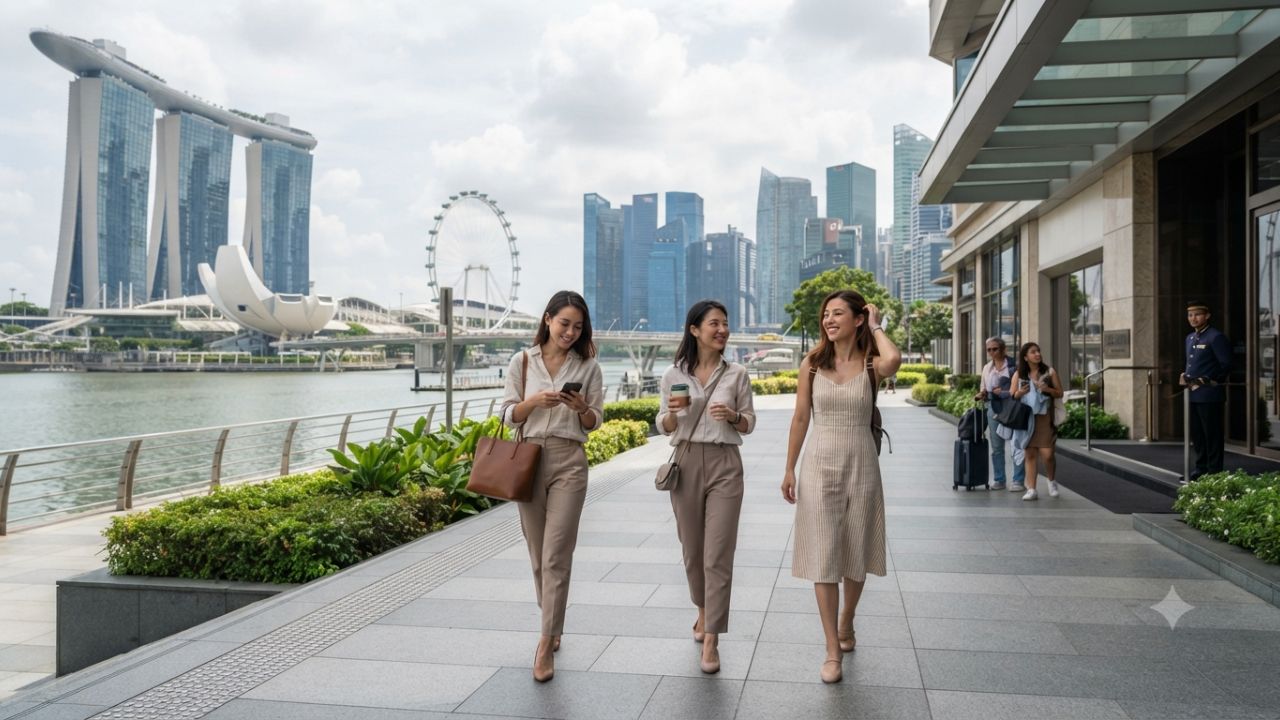
Singapore retained its position as ASEAN's top tourism economy, ranking 13th globally in the WEF 2026 index. Image credit: Visit Singapore
Singapore has secured the 13th spot globally out of 110 economies in the World Economic Forum's Travel & Tourism Development Index 2026, retaining its rank as the top-performing tourism destination in Southeast Asia. While the city-state excels in transport infrastructure, safety, and business environment, rising local prices and airfare inflation present an ongoing challenge.
[Singapore, Oct 6, 2026] — The World Economic Forum (WEF) has released its Travel & Tourism Development Index (TTDI) 2026, placing Singapore 13th worldwide. The result consolidates Singapore's position as the leading tourism economy among the Association of Southeast Asian Nations (ASEAN), finishing ahead of regional competitors Indonesia, Malaysia, Thailand, and Vietnam.
The index evaluates 110 economies across parameters including air and ground transport infrastructure, health and hygiene, business climate, safety, and sustainability. While Singapore scored high marks for international connectivity, advanced healthcare, and urban safety, the report notes that price competitiveness remains a structural vulnerability for mature tourism hubs.
WEF TRAVEL & TOURISM DEVELOPMENT INDEX 2026
| Entity / Route | Metrics | Operational Status |
|---|---|---|
| ASEAN Economy | Global TTDI Rank | Regional Position |
| Singapore | 13th | Rank 1 (ASEAN Leader) |
| Indonesia | 23rd | Rank 2 |
| Malaysia | 26th | Rank 3 |
| Thailand | 38th | Rank 4 |
| Vietnam | 52nd | Rank 5 |
| Philippines | 57th | Rank 6 |
| Laos | 75th | Rank 7 |
Global Top 10 Leaders and ASEAN Regional Comparison
The 2026 TTDI global ranking is led by Japan, followed by the United States, Spain, Australia, France, Germany, the United Kingdom, China, Switzerland, and Italy.
Within Southeast Asia, Singapore maintains a significant gap over regional peers. Its world-class airport infrastructure at Changi, dense Mass Rapid Transit (MRT) rail system, and political stability provide structural advantages over emerging destinations.
| Country / Economy | Global Rank | Primary Infrastructure Strengths | Primary Competitive Challenge |
|---|---|---|---|
| Singapore | 13th | Air transport, safety, business climate, health | High local consumer prices, airfares |
| Indonesia | 23rd | Natural resources, price competitiveness | Ground transport & port infrastructure |
| Malaysia | 26th | Price competitiveness, natural assets | Service infrastructure development |
| Thailand | 38th | Tourism services, cultural resources | Sustainability & air transport capacity |
| Vietnam | 52nd | Price competitiveness, cultural heritage | Health & hygiene systems, infrastructure |
Analyzing Price Pressures and Visitor Affordability
The WEF 2026 assessment highlighted that price competitiveness declined in three-quarters of the 110 economies evaluated. Travel-related prices—including accommodation, dining, and transit—rose faster than broader consumer price index (CPI) rates globally.
Official Singapore inflation statistics for August 2026 illustrate the cost dynamics facing international visitors:
- Headline CPI Inflation: Rose 2.3 percent year-on-year.
- Airfare Inflation: Increased 12.9 percent year-on-year.
- Point-to-Point Transport Services: Rose 12.3 percent year-on-year.
       [ Global Travel Price Pressures ]
                      |
                      v
       [ Singapore August 2026 Inflation ]
                      |
       +--------------+--------------+
       |                             |
       v                             v
[ Airfares Up 12.9% YoY ]  [ Transport Services Up 12.3% YoY ]
                      |
                      v
       [ Shift Toward High-Yield Tourism 2040 Strategy ]
While higher costs create friction for budget-conscious leisure travelers, international visitor volume to Singapore continues to show positive trajectory.
Strong Arrival Statistics and High-Yield Tourism Strategy
Singapore recorded 16.9 million international visitor arrivals in 2025, generating S$32.8 billion in total tourism receipts. For 2026, the Singapore Tourism Board (STB) projects between 17 million and 18 million international visitors, with receipts expected to reach S$31 billion to S$32.5 billion.
During the first quarter of 2026, Singapore welcomed 4.4 million international visitors, representing a 3 percent increase compared to the same period in 2025.
SINGAPORE TOURISM PERFORMANCE DATA
| Metric Period | Visitor Arrivals | Tourism Receipts |
|---|---|---|
| 2024 Full Year | 16.5 million | S$29.8 billion |
| 2025 Full Year | 16.9 million | S$32.8 billion (Record) |
| Q1 2026 | 4.4 million (+3%) | S$8.1 billion (Est.) |
| 2026 Full-Year Target | 17.0M - 18.0M | S$31.0B - S$32.5B |
Rather than focusing solely on mass arrival volume, the Ministry of Trade and Industry is steering Singapore toward high-value visitor segments under its Tourism 2040 roadmap.
To support this strategy, integrated resort operators Marina Bay Sands and Resorts World Sentosa have committed a combined S$10 billion toward expansion projects, adding luxury hotel suites, entertainment arenas, dining concepts, and MICE (Meetings, Incentives, Conferences, and Exhibitions) facilities.
Healthcare Infrastructure and Specialist Medical Travel
Singapore's healthcare system provides additional support to its tourism economy. The Ministry of Health reported that 973 organ transplants were performed in Singapore between 2021 and 2025 (comprising 309 living-donor and 664 deceased-donor procedures).
While healthcare leadership is evaluated as part of broader urban infrastructure rather than a standalone index metric, advanced oncology, cardiology, and transplant capabilities attract international patients seeking specialized medical care.
Regional Competition Dynamics Across Southeast Asia
Singapore faces evolving competition as neighboring destinations invest in tourist infrastructure while offering lower operating costs. Destinations such as Bali (Indonesia), Bangkok (Thailand), and Kuala Lumpur (Malaysia) compete on accommodation affordability, dining value, and long-stay appeal.
Conversely, Singapore maintains its advantage in corporate travel, international event hosting, safety, and seamless transit links.
DESTINATION COMPETITIVE MATRIX
| Category / Entity | Details / Impact |
|---|---|
| Category | Competitive Advantage |
| Singapore | Connectivity, urban safety, luxury MICE, |
| healthcare, high-end entertainment | |
| Neighboring ASEAN Ports | Lower hotel rates, affordable dining, |
| extended leisure stay value, beach resorts |
Traveler Guidance for Visiting Singapore
Travelers planning visits to Singapore in 2026 should account for localized pricing realities:
- Leverage Public Transit: Utilize the EZ-Link or contactless bank cards on the MRT and public bus networks to avoid higher taxi fares.
- Book Accommodation Early: Secure hotel reservations months in advance, particularly around major MICE conventions or Formula 1 events.
- Explore Free Attractions: Combine premium paid attractions (such as Gardens by the Bay conservatories) with public green spaces, heritage trails in Chinatown and Kampong Glam, and free light shows.
- Utilize Changi Transit Perks: Passengers transiting through Changi Airport can access free city tour programs if layover times exceed 5.5 hours.
Frequently Asked Questions
What rank did Singapore achieve in the WEF Travel & Tourism Index 2026?
Singapore ranked 13th globally among 110 economies and 1st among ASEAN member nations.
How many international visitors did Singapore receive in 2025?
Singapore welcomed 16.9 million international visitors in 2025, generating a record S$32.8 billion in tourism receipts.
What are the main challenges facing Singapore's tourism sector?
High travel costs—including a 12.9% rise in airfares and a 12.3% increase in local transport services—represent the primary challenge to price competitiveness.
Which countries lead the WEF Travel & Tourism Development Index 2026?
Japan ranks 1st globally, followed by the United States, Spain, Australia, France, Germany, the United Kingdom, China, Switzerland, and Italy.
Related Travel Guides
- Holland America Line Marks 80 Years in Alaska with Expanded 2027-2028 Itineraries
- Marella Cruises Unveils Summer 2028 Schedule Featuring Patras Maiden Call
- Crystal Serenity to Add Flagship Owner's Suite and Premium Penthouses in 2028
- Emirates Expands European Network with Direct Airbus A350 Dubai to Helsinki Service
Disclaimer
This article is for informational and educational purposes only. It does not constitute legal, financial, or professional advice. While we strive to provide accurate and up-to-date information, travel policies, regulations, and conditions change rapidly. Always verify information with official sources before making travel decisions. Nomad Lawyer makes no representations about the accuracy, reliability, completeness, or suitability of the information provided. Readers should consult qualified professionals for advice specific to their circumstances. The views expressed in this article are those of the author and do not necessarily reflect the views of Nomad Lawyer.
Raushan Kumar
Founder & Lead Developer
Full-stack developer with 11+ years of experience and a passionate traveller. Raushan built Nomad Lawyer from the ground up with a vision to create the best travel and law experience on the web.
Learn more about our team →