
Singapore Passenger Terminal Expo Asia 2026 Puts AI, Smart Airports and Passenger Experience in the Global Spotlight
Singapore Passenger Terminal Expo Asia 2026 Puts AI, Smart Airports and Passenger Experience in the Global Spotlight

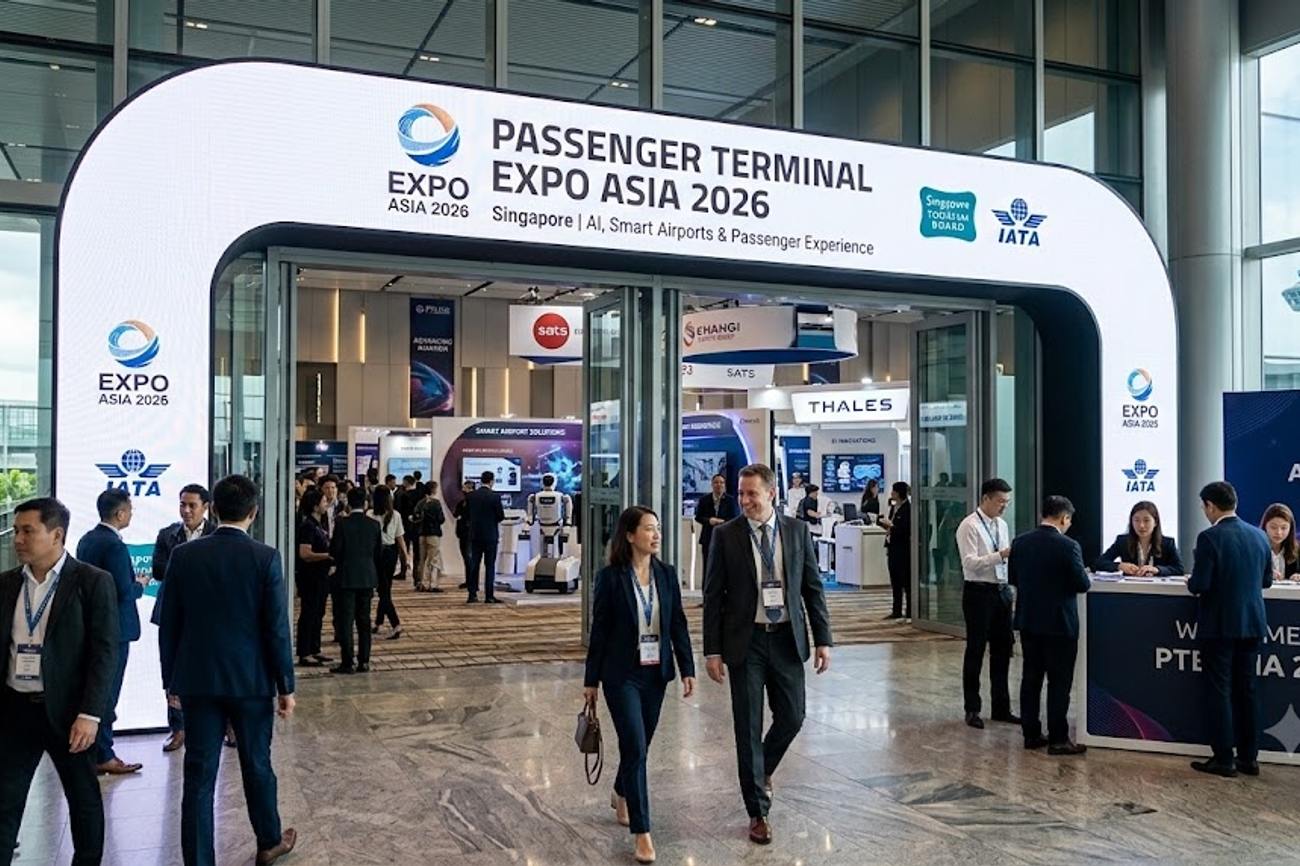
Image generated by AI
Asia-Pacific airport infrastructure investment has historically lagged behind North American and European hubs in terms of digital integration, yet the region is now projected to lead the next decade of "Smart Airport" adoption. The launch of the Passenger Terminal Expo (PTE) Asia 2026 in Singapore marks a pivotal shift, signaling that the Asia-Pacific market is no longer a secondary recipient of Western aviation tech but is instead becoming the primary laboratory for AI-driven passenger processing.
The PTE Asia 2026 Data Profile
The inaugural Passenger Terminal Expo Asia, scheduled for September 23–24, 2026, at the Sands Expo & Convention Centre, is not merely a trade gathering but a quantitative indicator of the region's aviation ambitions. The scale of the event provides a baseline for the current appetite for airport modernization in the Asia-Pacific, Middle East, and Central Asia corridors.
According to the event organizers, the baseline metrics for the debut expo are as follows:
- Industry Professional Attendance: 3,500+ expected participants.
- Exhibitor Presence: 125+ technology and infrastructure companies.
- Expert Contributions: 200+ speakers delivering strategic insights.
These figures suggest a high concentration of decision-making power. When 3,500 professionals—including airport CEOs and government leaders—converge on a single venue, it typically precedes a surge in procurement cycles for airport technology. The focus is squarely on the transition from basic digitalization to integrated AI. The industry is moving toward AI-driven operational decision-making, specifically targeting baggage journeys, resource planning, and passenger flow management to reduce the friction inherent in high-volume hubs.
Comparative Context: The Shift to Asia-Pacific Hubs
Historically, the "Gold Standard" for airport efficiency was defined by European hubs like Heathrow or Schiphol. However, the data now shows a geographic pivot toward Singapore and the broader Asia-Pacific region. Changi Airport serves as the primary benchmark for this shift, integrating biometrics and automated processing at a scale that exceeds most Western counterparts.
The industry is currently witnessing a transition from "Capacity-First" expansion (simply building more terminals) to "Efficiency-First" expansion (optimizing existing footprints through technology). This is particularly evident when comparing the traditional growth models of the 2010s against the projected models for 2026 and beyond.
| Metric | Traditional Expansion Era (2010-2020) | Smart Infrastructure Era (2026 Projection) | Shift Driver |
|---|---|---|---|
| Primary Goal | Increasing Total Square Footage | Increasing Passenger Throughput per Sq Ft | AI & Automation |
| Processing Method | Manual Check-in/Security Queues | Biometric & Contactless Flows | Digital Identity |
| Revenue Focus | Aeronautical Fees/Landing Rights | Non-Aeronautical (Retail/Hospitality) | Commercial Diversification |
| Environmental Approach | Reactive Compliance | Proactive Decarbonization/Net Zero | Sustainability Mandates |
| Tech Implementation | Siloed Digital Tools | Integrated Ecosystems (API-led) | Interoperability |
This shift is supported by global trends tracked by the International Air Transport Association (IATA), which emphasizes the need for seamless, "touchless" journeys to handle the projected surge in Asia-Pacific passenger volumes. The move toward non-aeronautical revenue—turning airports into commercial destinations rather than mere transit points—is a strategy that has seen significant success in Singapore and is now being exported to other regional hubs.
What This Means for Travelers
For the individual traveler, the data coming out of PTE Asia 2026 suggests a fundamental change in the "airport experience" over the next 36 months. The emphasis on AI-driven passenger flows and biometrics means the traditional "queue-and-wait" model is being phased out in favor of predictive processing.
1. The End of the Physical Document: As airports prioritize "automated passenger processing" and biometrics, travelers should expect a transition where passports and boarding passes are replaced by facial recognition. If you are traveling through major Asian hubs in 2026 and 2027, enrolling in digital travel credentials (DTC) will likely be the difference between a 10-minute and a 60-minute transit.
2. Predictive Wait Times: The integration of AI into "operational decision-making" means that airports will soon provide real-time, accurate wait times for security and immigration via mobile apps. Travelers can use this data to time their arrival at the airport more precisely, reducing unnecessary dwell time in terminals.
3. Enhanced Commercial Experiences: Since airports are shifting toward "non-aeronautical revenue," expect terminals to feel more like luxury malls or urban centers. While this means more high-end dining and retail, it also means that the "quiet zone" of the airport may shrink as commercial spaces expand.
4. Sustainability-Linked Transit: With "climate leadership" as a core pillar of PTE Asia, travelers will likely see a rise in sustainable transit options within the terminal, such as electric autonomous shuttles and carbon-neutral lounge environments.
Forward Projection: The Autonomous Terminal
Based on the current trajectory of AI and automation highlighted for the 2026 Expo, we are moving toward the "Autonomous Terminal" model. In this scenario, the airport operates as a self-correcting organism. Using data from OAG, we can see that flight schedules are becoming more volatile due to climate and geopolitical factors. AI-driven airports will respond to these disruptions in real-time, automatically rerouting passengers, updating baggage paths, and adjusting staffing levels without human intervention.
The focus on "interoperability"—ensuring different systems work together—is the final hurdle. Once a passenger's biometric data can move seamlessly from the airline's check-in system to the airport's security gate and then to the border control agency, the "frictionless journey" becomes a reality. The investment patterns discussed at PTE Asia suggest that the capital is already flowing into this integrated infrastructure.
Furthermore, the emphasis on "climate resilience" indicates that future airport investments will not just be about technology, but about physical survival. As sea levels rise and extreme weather events increase, the "Sustainable Terminal Design" mentioned in the expo's program will likely involve floating infrastructure or advanced flood-mitigation systems, particularly for coastal hubs in Southeast Asia.
FAQ: Airport Tech Trends 2026
Will AI-driven airports lead to higher ticket prices? Unlikely. While the initial capital expenditure for AI is high, the long-term goal is to reduce operational costs and increase non-aeronautical revenue (retail/dining), which offsets the cost of infrastructure and can actually keep landing fees stable for airlines.
Is it a good time to invest in aviation tech stocks? The focus on the Asia-Pacific market suggests that companies specializing in biometrics, AI-driven logistics, and sustainable construction are positioned for growth as regional hubs upgrade their infrastructure toward 2030.
Which airlines are leading the charge in "smart" travel? Carriers with strong partnerships with hubs like Changi are typically the first to adopt these technologies. Look for airlines that are integrating "digital identity" into their apps, as they will benefit most from the automated terminals.
Will biometrics replace passports entirely by 2026? No, but they will replace the presentation of the passport. The passport remains the legal document of record, but the biometric scan becomes the primary method of verification for movement through the terminal.
The airport of 2026 is no longer a waiting room; it is a high-frequency data hub where the passenger is the primary data point.
Tags: Asia-Pacific Aviation Growth 2026, Changi Airport Automation, Smart Airport Infrastructure, Biometric Passenger Processing, Non-Aeronautical Revenue Trends
Related Travel Guides
- United Kingdom Joins Canada and More Countries Participating at SAF Global Summit 2026 Bringing Global Aviation Leaders
- Hungary Unites Belgium and More Nations as IATA Cargo Experts Conference 2026 Brings 350+ Air Cargo Specialists to Budapest
- Thailand Unlocks Tremendous Economic Dominance Through Strategic ASEAN Trade and Sustainable Innovation
Disclaimer
This article is for informational and educational purposes only. It does not constitute legal, financial, or professional advice. While we strive to provide accurate and up-to-date information, travel policies, regulations, and conditions change rapidly. Always verify information with official sources before making travel decisions. Nomad Lawyer makes no representations about the accuracy, reliability, completeness, or suitability of the information provided. Readers should consult qualified professionals for advice specific to their circumstances. The views expressed in this article are those of the author and do not necessarily reflect the views of Nomad Lawyer.
Kunal K Choudhary
Co-Founder & Contributor
A passionate traveller and tech enthusiast. Kunal contributes to the vision and growth of Nomad Lawyer, bringing fresh perspectives and driving the community forward.
Learn more about our team →