
Singapore Airlines Resumes Hangzhou Flights: 28-Year Route Revival in 2026
Singapore Airlines restarts service to Hangzhou after 28 years, strengthening Singapore-China connectivity. The route revival marks a major milestone in Asia-Pacific aviation and opens new travel pathways for regional passengers.

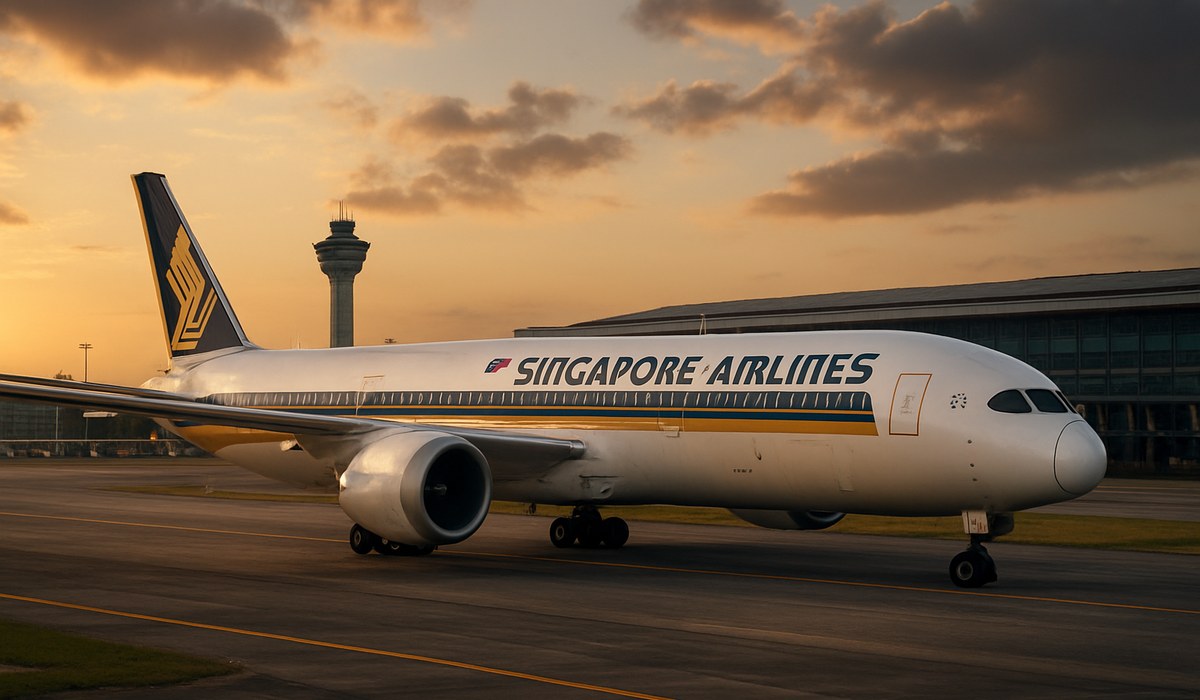
Image generated by AI
Historic Route Revival Strengthens Asia-Pacific Connectivity
Singapore Airlines has officially resumed passenger service to Hangzhou after a 28-year hiatus, marking a pivotal moment in Southeast Asia–China connectivity. The relaunch of this direct route enhances regional travel options and reflects strengthened commercial ties between Singapore and mainland China. The carrier's decision to reconnect with Hangzhou demonstrates renewed confidence in China's domestic travel recovery and growing demand for premium airline service across Asia.
This route resumption positions Singapore as a critical hub for travelers accessing China's eastern economic corridor. The Hangzhou flight strengthens Singapore Airlines' competitive positioning in the Singapore-China market while providing passengers with seamless onward connections throughout the Asia-Pacific region.
Singapore Airlines' Strategic Return to Hangzhou (HGH)
Singapore Airlines reintroduced nonstop service from Singapore Changi Airport (SIN) to Hangzhou Xiaoshan International Airport (HGH) following decades of market absence. The timing reflects post-pandemic recovery momentum and improved air travel demand across Asia. Hangzhou's position as the capital of Zhejiang Province and home to major technology and e-commerce enterprises makes it an attractive destination for business and leisure travelers.
The airline selected modern aircraft for this route, ensuring comfortable accommodations for the approximately 5-hour flight duration. Singapore Airlines maintains rigorous safety and service standards, offering passengers premium cabin configurations with enhanced dining and entertainment options. The carrier's return underscores confidence in bilateral aviation agreements between Singapore and China, which facilitate sustained air connectivity.
For detailed operational information, visit Singapore Airlines official website or check real-time flight status on FlightAware.
Route Connectivity and Frequency Details
The Singapore Airlines Hangzhou service operates on a scheduled weekly frequency, with plans for potential expansion based on demand metrics. Flights depart Singapore Changi during early morning hours, arriving in Hangzhou mid-afternoon, enabling convenient same-day connections throughout China's domestic network.
Hangzhou's strategic location provides seamless connectivity to major Chinese cities including Shanghai, Beijing, Chengdu, and Chongqing. Passengers can access domestic connections through partner airlines and one-stop arrangements. The route specifically serves business professionals in finance, technology, and manufacturing sectors, alongside leisure travelers exploring the Zhejiang region.
Singapore Airlines' network positioning transforms Hangzhou into a gateway for onward Asia-Pacific travel. Passengers can connect to destinations across Southeast Asia, India, Australia, and beyond through Singapore's extensive hub infrastructure.
Market Impact and Regional Connectivity Expansion
The Hangzhou route resumption signals broader aviation recovery across Asia and renewed emphasis on strengthening Asia-Pacific regional connectivity. Singapore's position as Southeast Asia's premier aviation hub gains further reinforcement through this strategic route addition. The reconnection demonstrates airlines' confidence in sustained travel demand between Singapore and eastern China's growing economic zones.
This connectivity expansion benefits multiple stakeholder groups: business travelers require efficient access to Hangzhou's technology parks and manufacturing hubs, while leisure passengers gain new gateway options for exploring China's cultural heritage sites. The route also supports Singapore's role as a transcontinental connection point for international passengers transiting between Europe, Middle East, and Asia-Pacific regions.
Industry analysts project this route expansion will encourage competitive responses from other carriers seeking to strengthen Singapore-China connectivity. The decision reflects long-term market confidence beyond immediate post-pandemic recovery cycles.
Traveler Action Checklist
- Verify current flight schedules on Singapore Airlines' website or FlightAware, as frequencies may expand seasonally
- Book advance tickets through official airline channels to secure premium cabin availability and competitive fares
- Confirm visa requirements with Chinese consular services in Singapore, allowing 4-6 weeks for processing
- Arrange ground transportation in Hangzhou through airport shuttle services, taxis, or ride-sharing applications
- Register baggage preferences during online check-in, noting that baggage allowances vary by cabin class
- Review travel insurance policies covering flight disruptions, medical emergencies, and trip cancellations during international travel
- Download airline mobile applications for real-time flight notifications and boarding pass management
- Confirm connection times if continuing to other Chinese cities, accounting for immigration and baggage reclaim procedures
Route Operations and Service Standards
| Operational Metric | Details |
|---|---|
| Departure Airport | Singapore Changi (SIN) – Terminal 3 |
| Arrival Airport | Hangzhou Xiaoshan International (HGH) |
| Flight Duration | Approximately 5 hours |
| Weekly Frequency | Initial schedule: 2 departures per week |
| Aircraft Type | Modern wide-body configuration with premium seating |
| Cabin Classes | First, Business, Premium Economy, Economy |
| In-Flight Service | Full meal service with regional cuisine options |
| Baggage Allowance | Varies by cabin; premium classes include 2-3 bags |
| Booking Window | Up to 355 days in advance through official channels |
What This Means for Travelers
The Hangzhou route reopening delivers tangible benefits for regional passengers and creates new travel opportunities. Business professionals accessing Zhejiang Province's industrial and technology sectors now enjoy direct premium service without routing through Shanghai or alternative hubs. This eliminates connection time, reduces ground transfer complexity, and improves schedule predictability for corporate travelers.
Leisure travelers gain gateway access to West Lake, historic temples, and Hangzhou's renowned cultural attractions through streamlined connectivity. Families traveling between Singapore and eastern China benefit from straightforward itineraries and reduced total journey time.
The route strengthens Singapore's position as Asia-Pacific's preferred aviation hub. Travelers connecting to Australia, India, Indonesia, Thailand, and Malaysia now access Hangzhou through Singapore's efficient transfer infrastructure. Airlines predict strong demand growth supporting potential frequency increases within 12 months.
Frequently Asked Questions
Will Singapore Airlines add additional flights to Hangzhou in 2026? Singapore Airlines plans to monitor passenger demand throughout 2026, with expansion decisions likely by mid-year. Weekly frequency may increase from two to three or four flights depending on booking metrics and aircraft availability. The airline prioritizes schedule stability during initial operations.
What documents do Singapore travelers need for Hangzhou flights? Singapore passport holders require valid Chinese visas, which typically process in 4-6 weeks through consular channels. Travelers should verify current visa requirements with the Chinese Consulate General in Singapore. Return or onward flight confirmations support visa applications. Valid travel insurance is strongly recommended.
How does the Hangzhou route connect to other Singapore Airlines destinations? Hangzhou serves as a gateway to Singapore Airlines' broader Asia-Pacific network. Passengers can arrange connections through Singapore Changi to destinations including Sydney, Melbourne, Bangkok, Kuala Lumpur, and Mumbai. Partner code-share agreements with Chinese carriers enable onward domestic connections throughout mainland China.
What should travelers know about Hangzhou Xiaoshan International Airport? Hangzhou Xiaoshan (HGH) ranks among China's busier regional airports with modern facilities. Ground transportation includes airport shuttles, taxi services, and ride-sharing applications. Airport restaurants and retail services operate extended hours. Immigration processing typically completes within 30 minutes for international arrivals.
Related Travel Guides
Singapore Changi Airport Guide: Terminals, Lounges, and Ground Transportation East China Regional Travel: Hangzhou, Shanghai, and Zhejiang Destinations Singapore Airlines Route Map: Asia-Pacific Connectivity and Hub Benefits
Disclaimer
This article is for informational and educational purposes only. It does not constitute legal, financial, or professional advice. While we strive to provide accurate and up-to-date information, travel policies, regulations, and conditions change rapidly. Always verify information with official sources before making travel decisions. Nomad Lawyer makes no representations about the accuracy, reliability, completeness, or suitability of the information provided. Readers should consult qualified professionals for advice specific to their circumstances. The views expressed in this article are those of the author and do not necessarily reflect the views of Nomad Lawyer.
Raushan Kumar
Founder & Lead Developer
Full-stack developer with 11+ years of experience and a passionate traveller. Raushan built Nomad Lawyer from the ground up with a vision to create the best travel and law experience on the web.
Learn more about our team →