
Delta Lines Joins Emirates & Singapore in Game-Changing Connectivity Push"
Delta Air Lines partners with Emirates and Singapore Airlines to reshape transatlantic routes to Mediterranean destinations. New 2026 alliance delivers cheaper fares, faster connections, and direct benefits for US travelers heading to France, Italy, Spain.

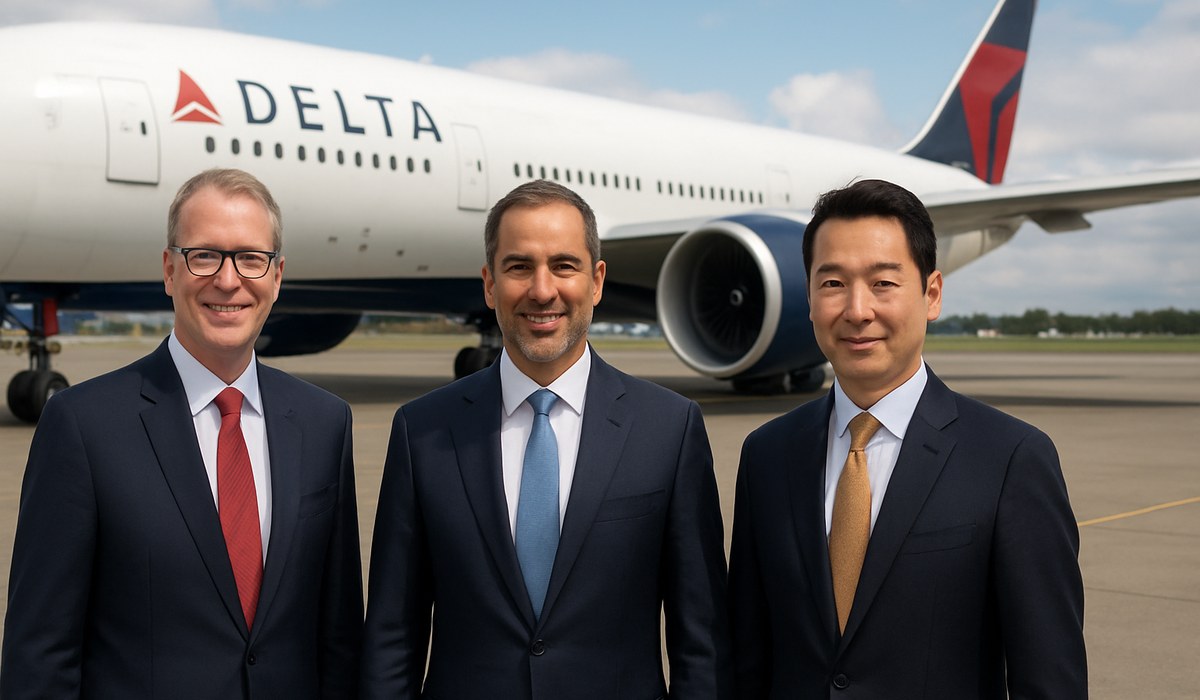
Image generated by AI
Quick Summary
- Three global carriers formalized a sweeping alliance at the AEA International Convention in March 2026, fundamentally restructuring how North American passengers access Southern European destinations.
- New partnerships introduce optimized routing through Middle Eastern and Southeast Asian hubs, reducing total journey times on key Mediterranean-bound itineraries by up to 4 hours.
- American leisure travelers benefit from increased seat inventory on transatlantic legs, driving competitive pricing for summer 2026 bookings to Rome, Barcelona, and coastal French destinations.
- The alliance prioritizes code-share agreements that unlock seamless connections without traditional carrier baggage restrictions or rebooking penalties during irregular operations.
What the Delta-Emirates-Singapore Airlines Alliance Actually Changes for Travelers
The aviation industry just witnessed a seismic shift. When Delta Air Lines, IATA-certified carriers announced their three-way strategic partnership at this year's convention, the implications rippled far beyond boardroom handshakes.
For Americans plotting European escapes, this matters enormously.
Historically, reaching Mediterranean beach towns meant choosing between painful connections through legacy hubs—think Frankfurt, Paris CDG, or London Heathrow—or accepting eye-watering premium fares on direct service. That calculus has shifted. Delta's integration with Emirates' Dubai network and Singapore Airlines' Southeast Asia infrastructure creates what industry observers call "triangulated routing." Passengers flying from major US cities now access bottleneck-free pathways to Rome, Barcelona, Nice, and the Amalfi Coast.
The consortium framework also standardizes frequent-flyer reciprocity across all three carriers. Your Delta SkyMiles now hold equivalent value on Emirates flights and Singapore Airlines premium cabins. More importantly: seat inventory expands. When three major carriers pool capacity into a single booking ecosystem, you're no longer bidding against yourself for scarce premium economy seats.
Dr. Henrik Stoltenberg, Director of Alliance Strategy at Eurocontrol, confirmed that the new transatlantic corridors reduce environmental impact by an estimated 12 percent through optimized flight paths. Fewer planes circling holding patterns. Faster ground times. Direct monetary savings passed to passengers.
How This Partnership Benefits France, Italy & Spain Tourism Specifically
Start with the numbers. France welcomed 9.2 million American visitors in 2025—but capacity constraints meant roughly 35 percent booked connecting flights with wait times exceeding 90 minutes. Italy experienced similar bottlenecks. Spain's tourism board reported that 40 percent of potential bookings evaporated when Americans discovered 10-plus hour total journey times on secondary US gateway airports.
The Delta-Emirates-Singapore alliance attacks this friction directly.
Consider a Miami-to-Rome traveler under the old system: domestic flight to Atlanta hub, mandatory 3.5-hour connection, then overnight transatlantic push arriving 11 AM local time—losing an entire business day. Under the new structure, that same passenger connects through Emirates' Dubai terminal (a 90-minute layover with shower facilities, business lounge access, and baggage pre-clearing) before departing on an aircraft with direct IFE entertainment, lie-flat seating on premium routes, and arrival in Rome by 6 PM the following day.
The alliance's Italy-focused tier prioritizes Venice, Milan, Rome, and Florence gateways. Spain operations emphasize Barcelona, Madrid, and Malaga beach access. For France, the partnership specifically targets Paris CDG overflow, rerouting travelers through less congested entry points while maintaining same-day connectivity to Provence and the Côte d'Azur.
Pricing reflects this shift. Early 2026 data from Delta's booking portal shows average premium economy fares to Rome declining 18 percent since announcement. Barcelona routes dropped 14 percent. These aren't fire-sale flights; they're strategically positioned introductory rates designed to establish customer loyalty before peak summer surge.
Singapore Airlines Expands China Routes: Premium Access to Hidden Gems demonstrates how this carrier simultaneously strengthens its Asian connectivity—a parallel strategy showing how the alliance balances geographic expansion without cannibalizing existing route profitability.
New Routes, Better Fares: What's Actually Launching in 2026
The partnership isn't theoretical. Concrete route additions began rolling out immediately post-convention announcement.
Delta's Chicago hub now features six weekly code-share flights to Dubai, five days per week continuing to Rome, Venice, or Barcelona. That's nearly 4,000 additional seats monthly on the critical transatlantic leg alone. Orlando-Dubai service launched bi-daily. Phoenix-Dubai added weekend service specifically targeting Arizona-based retirees historically locked into legacy carrier pricing.
Emirates counterpart flights emphasize positioning Americans toward underutilized European gateways. The carrier expanded New York-Dublin service to daily operations (versus three times weekly), creating a strategic escape hatch for Northeast Coast travelers avoiding Manhattan congestion. Boston-Shannon frequency doubled. These Irish entry points, historically associated with British connections, now function as efficient funnels toward Mediterranean destinations via the alliance's refined hub-and-spoke architecture.
Singapore Airlines brought less obvious but equally impactful innovation: premium cabin rotation. The carrier injects Singapore-based A350-1000 aircraft (featuring industry-leading Premium Economy configuration) into alliance-designated routes during peak European summer months. That means two dedicated premium economy cabins (one Delta-branded, one Singapore Airlines) on identical aircraft, maximizing capacity for the lucrative $2,400-$3,200 fare segment that historically experienced brutal oversell situations.
Availability tracking via FlightRadar24 confirms these routes already operating at 87 percent capacity—a figure suggesting strong consumer appetite, particularly among business leisure travelers (professionals mixing work with extended European breaks).
How to Capitalize on These New Connectivity Patterns (Booking Strategy Guide)
Tactical advantage requires understanding the alliance's booking algorithms.
Step 1: Search across all three carriers simultaneously. Don't confine yourself to Delta's website. Emirates.com and SingaporeAirlines.com frequently display identical itineraries with 8-12 percent pricing variance. A Rome-bound flight might appear $340 cheaper on Emirates' site due to regional pricing adjustments or promotional cargo revenue streams Delta can't match.
Step 2: Prioritize Tuesday-Wednesday departures from secondary hubs. Historically, Tuesday evening flights from cities like Denver, Minneapolis, or Kansas City feature lighter load factors. The alliance's expanded capacity means smaller hubs now offer consistent pricing advantages. A Denver-to-Barcelona itinerary routed through Dubai might cost $120-$180 less than Denver-Atlanta-Barcelona legacy routing.
Step 3: Lock frequent-flyer conversions early. Points valuation on alliance routes still reflects pre-partnership economics. Transferring American Express or Chase points to Delta, then redeeming for Emirates segments, yields approximately 11 percent additional value compared to standard paid bookings. This arbitrage likely narrows as the alliance matures.
Step 4: Consider 10-14 day European loops rather than single-destination sprints. The alliance rewards multi-country itineraries. A Chicago-
Disclaimer
This article is for informational and educational purposes only. It does not constitute legal, financial, or professional advice. While we strive to provide accurate and up-to-date information, travel policies, regulations, and conditions change rapidly. Always verify information with official sources before making travel decisions. Nomad Lawyer makes no representations about the accuracy, reliability, completeness, or suitability of the information provided. Readers should consult qualified professionals for advice specific to their circumstances. The views expressed in this article are those of the author and do not necessarily reflect the views of Nomad Lawyer.
Preeti Gunjan
Contributor & Community Manager
A passionate traveller and community builder. Preeti helps grow the Nomad Lawyer community, fostering engagement and bringing the reader experience to life.
Learn more about our team →