
Shenzhen Airlines to Densify Cabins on Seven Airbus A320neo Jets to Boost China Domestic Capacity
Shenzhen Airlines is reconfiguring seven Airbus A320neo aircraft with higher-density seating to meet surging domestic demand on China's busiest trunk routes.

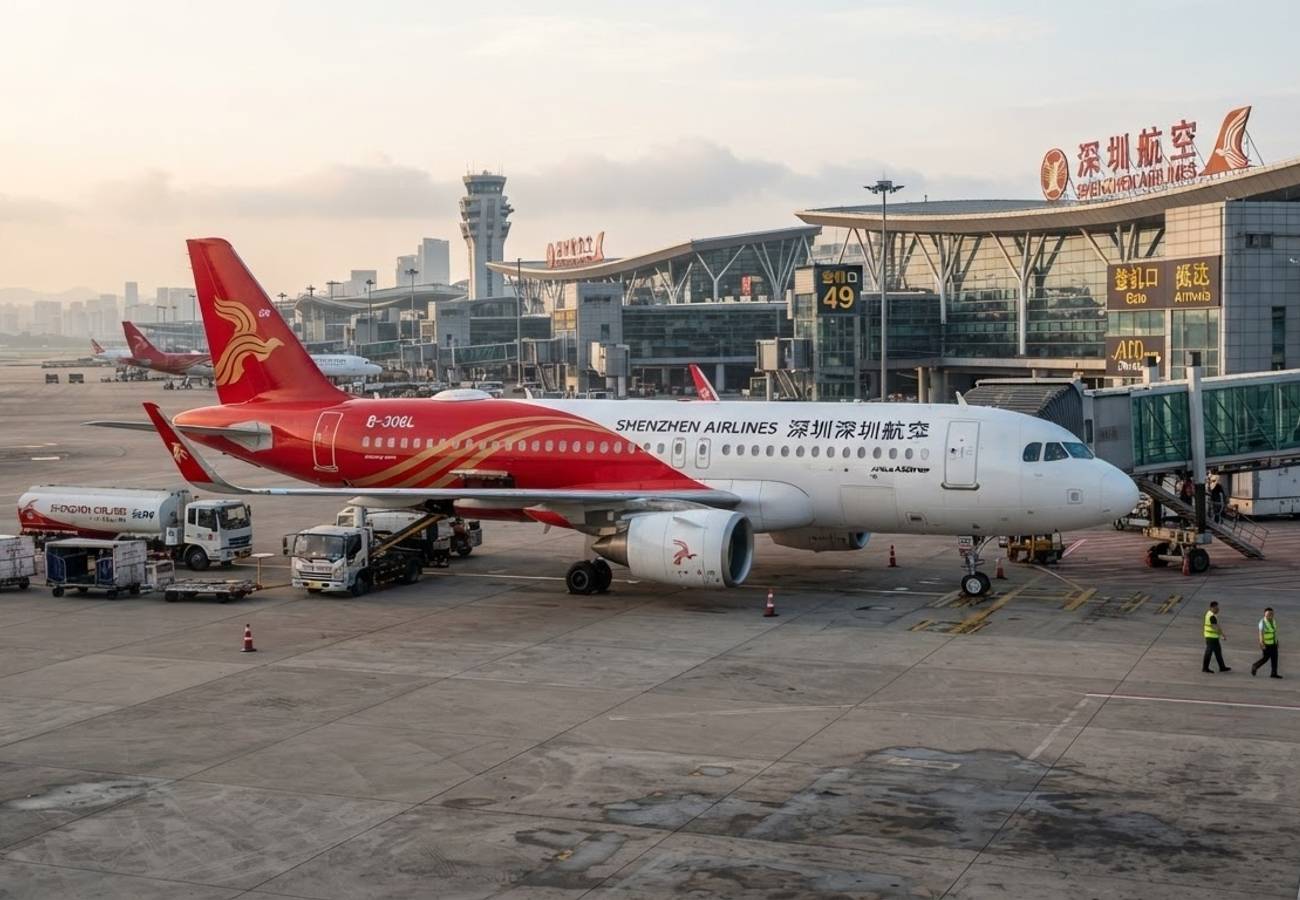
Image generated by AI
Shenzhen Airlines is implementing a higher-density seating layout across seven of its Airbus A320neo aircraft. This strategic move aims to increase passenger capacity on China’s most congested domestic corridors without increasing flight frequencies.
The carrier is targeting a specific subset of its narrowbody fleet to align more closely with high-capacity domestic competitors. This reconfiguration is part of a larger fleet renewal program that replaces older Airbus A320ceo and Boeing 737 models with the more fuel-efficient A320neo family.
By focusing on seven units initially, the airline is adopting a phased rollout. This allows management to monitor revenue impact, operational efficiency, and passenger feedback before deciding whether to apply the layout to the rest of the A320neo fleet.
Fleet and Capacity Integration
The A320neo serves as the backbone of Shenzhen Airlines' domestic and short-haul international network. Because the airline operates out of the Pearl River Delta—a primary hub for traffic to Beijing, Shanghai, and various provincial capitals—small changes in seat count have a significant cumulative effect on weekly capacity.
Key operational drivers for this shift include:
- Slot Constraints: Higher density allows for more passengers per flight at airports where additional takeoff and landing slots are unavailable.
- Market Demand: Domestic air travel in China has rebounded strongly, with trunk route traffic now meeting or exceeding pre-pandemic levels.
- Route Flexibility: The airline can rotate these high-capacity jets onto volume-driven seasonal routes while keeping spacious configurations for high-yield business markets.
The Economics of Cabin Densification
Our analysis of aviation pricing trends indicates that increasing seat density directly lowers unit costs. By spreading fixed operating expenses over a larger passenger base, the airline improves its cost per available seat kilometer (CASK).
To avoid a complete shift to a low-cost carrier (LCC) model, industry data suggests Shenzhen Airlines will likely employ a "calibrated" approach:
- Moderate Pitch Reductions: Slight decreases in legroom in specific economy sections.
- Hardware Optimization: Utilizing slimmer seat designs to reclaim cabin space.
- Interior Tweaks: Minor reconfigurations of galleys and lavatories to maximize usable floor area.
This strategy enables the carrier to offer more competitive fares and introduce additional fare classes and bundled ancillaries, particularly during peak travel windows such as Golden Week and Chinese New Year.
Competitive Positioning in the Chinese Market
Shenzhen Airlines operates in a volatile environment, competing against state-controlled giants and aggressive private LCCs. Many of these rivals have already standardized dense narrowbody layouts to dominate short-haul segments.
The use of the A320neo provides a critical advantage. The aircraft's superior fuel burn and range compared to previous generations offset the increased weight and operational pressure associated with higher passenger loads. Furthermore, as a subsidiary linked to Air China, increasing capacity on domestic feeds improves the overall connectivity of the group's wider network, supporting long-haul widebody services from major hubs.
Passenger Experience Impact
For the traveler, the primary change will be felt in the economy cabin. While exact seat counts remain undisclosed, passengers should expect slightly tighter seating on selected flights.
However, the transition to the A320neo platform offers some mitigation:
- Enhanced Cabin Environment: Newer jets provide quieter cabins and improved air filtration.
- Modern Amenities: Upgraded overhead bin space and advanced lighting systems remain intact regardless of seat pitch.
- Route Deployment: High-density aircraft are likely to be concentrated on shorter, high-frequency sectors, limiting the impact on longer journeys.
Summary of Fleet Adjustment
| Feature | Current Strategy | New Densified Approach |
|---|---|---|
| Aircraft Model | Airbus A320neo | Airbus A320neo |
| Initial Scope | Standard Fleet | 7 Specific Aircraft |
| Primary Goal | Balanced Comfort/Capacity | Maximum Volume/Efficiency |
| Target Routes | Mixed Network | High-Demand Trunk Routes |
| Economic Driver | Standard Yields | Lower CASK / Higher Volume |
Why This Matters
From a logistical perspective, this move signals that the Chinese domestic market has shifted from a "recovery phase" to a "capacity optimization phase." When a full-service carrier begins densifying its newest aircraft, it indicates that demand is so robust that volume now outweighs the premium of passenger space.
For travelers, this means a gradual "commoditization" of short-haul flights in China. We expect to see a widening gap between "standard economy" and "premium economy" as airlines squeeze more seats into the cabin to keep base fares competitive against high-speed rail.
Industry Outlook
If the seven-aircraft pilot proves successful in increasing margins without damaging brand loyalty, Shenzhen Airlines will likely extend this layout to its remaining A320neo fleet. This would standardize maintenance and simplify crew scheduling. We anticipate other regional carriers will follow suit, leading to a standardized "high-density" narrowbody product across the Asia-Pacific region to counter the growth of rail infrastructure.
A calculated trade-off between passenger legroom and network scalability.
Related Travel Guides
Disclaimer
This article is for informational and educational purposes only. It does not constitute legal, financial, or professional advice. While we strive to provide accurate and up-to-date information, travel policies, regulations, and conditions change rapidly. Always verify information with official sources before making travel decisions. Nomad Lawyer makes no representations about the accuracy, reliability, completeness, or suitability of the information provided. Readers should consult qualified professionals for advice specific to their circumstances. The views expressed in this article are those of the author and do not necessarily reflect the views of Nomad Lawyer.
Raushan Kumar
Founder & Lead Developer
Full-stack developer with 11+ years of experience and a passionate traveller. Raushan built Nomad Lawyer from the ground up with a vision to create the best travel and law experience on the web.
Learn more about our team →