
🌍 Your Global Travel News Source
AboutContactPrivacy Policy
Nomad Lawyer
destination news

Seoul Urban Forests Reduce Daytime Temperatures by 1.8°C to Cool Summer Tourism Hotspots in 2026

New data from South Korea's National Institute of Forest Science reveals how Seoul's urban forests lower daytime temperatures by 1.8°C, reshaping summer travel itineraries.

Kunal K Choudhary
By Kunal K Choudhary
7 min read
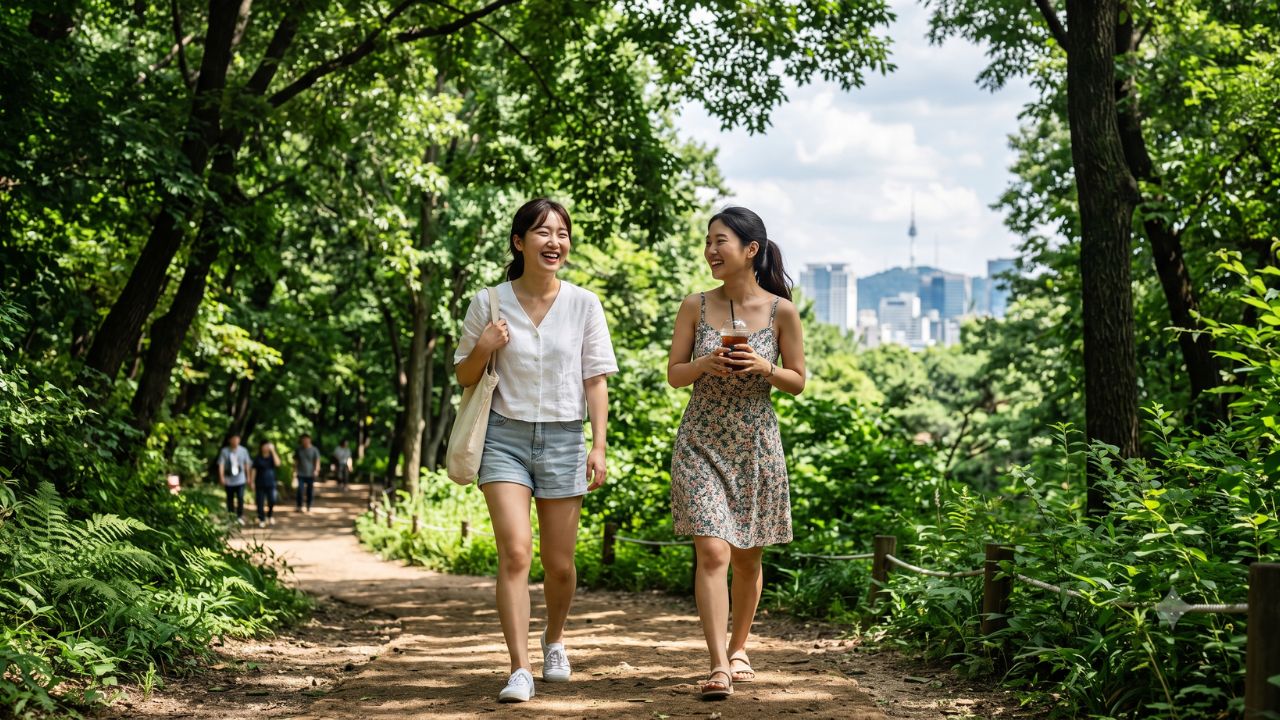
Shaded green forest corridor in central Seoul providing natural cooling

Image generated by AI

Seoul Urban Forests Reduce Daytime Temperatures by 1.8°C to Cool Summer Tourism Hotspots in 2026

Headline Options

  1. Factual/News: Seoul Urban Forests Reduce Daytime Temperatures by 1.8°C to Protect Summer Tourism and Redefine Sustainable Urban Travel in 2026
  2. Curiosity-Gap (Discover): How South Korea's Capital Is Lowering Summer Heat by 1.8°C Without Artificial Cooling Infrastructure
  3. Problem-Solving (Search): How to Beat Extreme Summer Heat in Seoul Using the City's Natural Forest Cooling Network

SEO Title: Seoul Urban Forest Cooling 2026: Sustainable Summer Tourism Guide Meta Description: Discover how Seoul's urban forest networks reduce daytime heat by 1.8°C and night temperatures by 1.6°C, driving a shift toward sustainable summer travel. Slug: seoul-urban-forests-sustainable-summer-tourism-2026 Standfirst: Forest networks across Seoul reduce daytime temperatures by up to 1.8°C and nighttime heat by 1.6°C, providing natural thermal relief for summer visitors navigating extreme urban heatwaves.

Article

Extreme summer heatwaves across East Asia are fundamentally altering how travelers experience major urban centers. In response, municipal authorities and destination managers in South Korea are transforming natural green corridors into essential climate-adaptive tourism infrastructure.

Rigorous environmental research conducted by the National Institute of Forest Science (NIFS) confirms that forested sectors throughout Seoul lower daytime temperatures by up to 1.8°C compared with high-density commercial zones. During nighttime hours, these green environments maintain temperatures between 1.3°C and 1.6°C cooler than surrounding concrete structures.

As rising summer heat limits traditional daytime sightseeing around exposed historic palaces and stone plazas, natural canopy networks allow outdoor cultural tourism to continue safely.

+----------------------------------------------------------------------------------------------------+
|                         SEOUL URBAN FOREST NATURAL COOLING MECHANISMS                              |
+--------------------------+-------------------------------------+-----------------------------------+
| Natural Cooling Function | Ecological Operation                | Direct Visitor Impact             |
+--------------------------+-------------------------------------+-----------------------------------+
| Tree Canopy Coverage     | Dense leaf layers intercept solar   | Provides shaded, comfortable      |
|                          | radiation before hitting pavements  | pedestrian routes                 |
+--------------------------+-------------------------------------+-----------------------------------+
| Evapotranspiration       | Trees transpire moisture, absorbing | Directly lowers ambient air       |
|                          | thermal energy during evaporation   | temperatures                      |
+--------------------------+-------------------------------------+-----------------------------------+
| Reduced Thermal Storage  | Organic foliage retains far less    | Accelerates post-sunset cooling   |
|                          | heat than asphalt and concrete      | across urban sectors              |
+--------------------------+-------------------------------------+-----------------------------------+

Vegetation Architecture and Thermal Mitigation

The cooling capacity of Seoul's green zones varies based on leaf density and forest composition. Data from the NIFS study indicates that broadleaf and mixed forests achieve the highest daytime cooling efficiency, reducing ambient temperatures by 1.5°C to 1.8°C.

Coniferous forests deliver a daytime temperature drop of approximately 1.2°C. Multi-tiered, layered vegetation structures produce the strongest overall thermal defense by blocking solar radiation across multiple canopy heights.

Dense urban surfaces absorb heat throughout the afternoon and release it after dark, elevating nighttime temperatures. Forested zones prevent excessive thermal accumulation, creating comfortable microclimates for evening movement.

+----------------------------------------------------------------------------------------------------+
|                        VEGETATION TYPE VS DAYTIME TEMPERATURE REDUCTION                            |
+------------------------------------+---------------------------------------------------------------+
| Forest Category                    | Measured Daytime Cooling Effect                               |
+------------------------------------+---------------------------------------------------------------+
| Broadleaf and Mixed Forests        | 1.5°C to 1.8°C cooler than concrete urban zones               |
+------------------------------------+---------------------------------------------------------------+
| Coniferous Forests                 | 1.2°C cooler than concrete urban zones                        |
+------------------------------------+---------------------------------------------------------------+
| Multilayered Canopy Systems        | Highest overall thermal mitigation performance                |
+------------------------------------+---------------------------------------------------------------+

Night Tourism Expansion and Tropical Night Offsets

Lower evening temperatures near green corridors are accelerating the growth of Seoul's night tourism market. During peak summer, tropical nights—where temperatures remain uncomfortably high after sunset—frequently restrict outdoor leisure.

Because NIFS data shows forested areas remain 1.3°C to 1.6°C cooler at night, tour operators are expanding evening cultural activities. Key developments include guided night forest walks, evening heritage tours, and outdoor cultural events hosted near shaded green corridors.

  • Guided Night Forest Walks: Nighttime pedestrian itineraries along protected mountain footpaths.
  • Shaded Green Corridors: Continuous walking links connecting urban transit nodes to natural cooling reserves.
  • Extended Evening Hours: Cultural programming scheduled after dark to avoid peak daytime heat.
+----------------------------------------------------------------------------------------------------+
|                        SUMMER ITINERARY TRANSFORMATION IN SEOUL                                    |
+------------------------------------+---------------------------------------------------------------+
| Traditional Sightseeing Pattern    | Emerging Climate-Adaptive Itinerary                           |
+------------------------------------+---------------------------------------------------------------+
| Afternoon visits to open plazas    | Early morning visits to exposed historic sites                |
+------------------------------------+---------------------------------------------------------------+
| Direct walks across paved avenues  | Canopy-shaded forest corridor walks                           |
+------------------------------------+---------------------------------------------------------------+
| Heat-heavy daytime excursions      | Evening forest walks and night cultural events                |
+------------------------------------+---------------------------------------------------------------+

National Green Corridors and Urban Wind-Roads

South Korea is scaling its urban forestry initiatives nationally through large-scale infrastructure projects called "urban wind-road forests." These green channels connect surrounding mountain ecosystems with dense inner-city districts to facilitate cool air circulation.

Wind-road forest networks are actively expanding across major metropolitan centers, including:

  • Seoul: Connecting city-center districts with surrounding mountain ranges.
  • Sejong: Integrating riverine corridors with green residential sectors.
  • Daejeon: Establishing continuous canopy pathways along major transit axes.
  • Ulsan: Linkages between coastal forestry reserves and urban neighborhoods.

South Korea's national forestry policy targets an increase in urban green space from 11.5 square metres per resident in 2021 to 15.0 square metres per resident by 2027.

Environmental Filtration and Air Quality Benefits

Beyond temperature reduction, urban forests act as critical bio-filters that improve urban air quality for residents and travelers alike. Specialized data from Hongneung Forest in Seoul demonstrates the substantial ecological output of mature trees.

One hectare of mature urban forest in Seoul annually delivers:

  • Fine Dust Absorption: Captures approximately 168 kilograms of airborne fine dust per year.
  • Carbon Sequestration: Absorbs roughly 6.9 tonnes of carbon dioxide annually.
  • Air Quality Enhancement: Reduces localized fine dust concentrations by 25% to 40%.

Furthermore, NIFS research reveals that urban forest environments experience 20% to 29.4% fewer heatwave days than concrete-dominated urban districts. These environmental metrics solidify Seoul's reputation as a resilient, climate-ready destination for international travel.

Data Table

+----------------------------------------------------------------------------------------------------+
|                      NATIONAL INSTITUTE OF FOREST SCIENCE (NIFS) BENCHMARKS                        |
+---------------------------------------------------+------------------------------------------------+
| Metric / Environmental Parameter                  | Measured Benchmark                             |
+---------------------------------------------------+------------------------------------------------+
| Daytime Forest Cooling (vs Concrete Zones)        | 1.8°C lower temperature                        |
+---------------------------------------------------+------------------------------------------------+
| Nighttime Forest Cooling (vs Concrete Zones)      | 1.3°C to 1.6°C lower temperature               |
+---------------------------------------------------+------------------------------------------------+
| Broadleaf & Mixed Forest Daytime Reduction        | 1.5°C to 1.8°C cooler                          |
+---------------------------------------------------+------------------------------------------------+
| Coniferous Forest Daytime Reduction               | 1.2°C cooler                                   |
+---------------------------------------------------+------------------------------------------------+
| Fine Dust Captured (Hongneung Forest / Hectare)   | 168 kg annually                                |
+---------------------------------------------------+------------------------------------------------+
| Carbon Sequestration (Hongneung Forest / Hectare) | 6.9 tonnes of CO2 annually                     |
+---------------------------------------------------+------------------------------------------------+
| Local Fine Dust Concentration Reduction           | 25% to 40% lower                               |
+---------------------------------------------------+------------------------------------------------+
| Heatwave Day Reduction in Forest Zones            | 20% to 29.4% fewer heatwave days               |
+---------------------------------------------------+------------------------------------------------+
| South Korea Per-Capita Green Target (2021->2027)  | 11.5 sq m in 2021 to 15.0 sq m by 2027         |
+---------------------------------------------------+------------------------------------------------+

Key Takeaways

  • Natural Temperature Offsets: Seoul's urban forest canopy lowers daytime heat by 1.8°C and maintains nighttime conditions up to 1.6°C cooler than concrete zones.
  • Optimal Vegetation Selection: Broadleaf and multi-tiered forests provide superior shading and cooling performance compared to single-layer or coniferous stands.
  • Night Tourism Surge: Reduced evening temperatures enable travelers to enjoy outdoor cultural events and forest walks during tropical summer nights.
  • National Wind Corridor Policy: South Korea is building wind-road networks in Seoul, Sejong, Daejeon, and Ulsan while raising per-capita urban green space to 15.0 square metres by 2027.
  • Air Filtration Impact: One hectare of mature Seoul forest absorbs 168 kg of fine dust and 6.9 tonnes of CO2 annually, while forest zones face up to 29.4% fewer heatwave days.

FAQ

How do Seoul's urban forests lower summer air temperatures?
Urban forests cool the air by intercepting solar radiation through dense leaf canopies, transpiring moisture into the atmosphere, and absorbing far less heat energy than concrete or asphalt surfaces.

Which green areas offer the best natural cooling in Seoul?
According to NIFS research, broadleaf and mixed forests with multi-layered canopy structures provide the highest cooling capacity, reducing daytime temperatures by 1.5°C to 1.8°C.

What are South Korea's urban wind-road forests?
Wind-road forests are continuous green corridors designed to channel cool air from surrounding mountain ecosystems directly into inner-city districts, reducing urban heat build-up.

What is South Korea's target for urban green space by 2027?
South Korea aims to increase urban green space from 11.5 square metres per resident in 2021 to 15.0 square metres per resident by 2027 across major cities.

Internal Connection

Explore related destination and travel news features:


Related Travel Guides

Disclaimer

This article is for informational and educational purposes only. It does not constitute legal, financial, or professional advice. While we strive to provide accurate and up-to-date information, travel policies, regulations, and conditions change rapidly. Always verify information with official sources before making travel decisions. Nomad Lawyer makes no representations about the accuracy, reliability, completeness, or suitability of the information provided. Readers should consult qualified professionals for advice specific to their circumstances. The views expressed in this article are those of the author and do not necessarily reflect the views of Nomad Lawyer.

Tags:Seoul TourismSouth Korea TravelSustainable TourismClimate Adaptive Travel2026
Kunal K Choudhary

Kunal K Choudhary

Co-Founder & Contributor

A passionate traveller and tech enthusiast. Kunal contributes to the vision and growth of Nomad Lawyer, bringing fresh perspectives and driving the community forward.

Follow:
Learn more about our team →