
Plovdiv Bulgaria's 48-Hour Ancient Culture Route: Roman Theatres, Ottoman Heritage, and Creative Districts in 2026
Plovdiv emerges as Europe's premier short-stay cultural destination, combining millennia-old Roman ruins, restored Ottoman architecture, and thriving creative districts within walking distance.

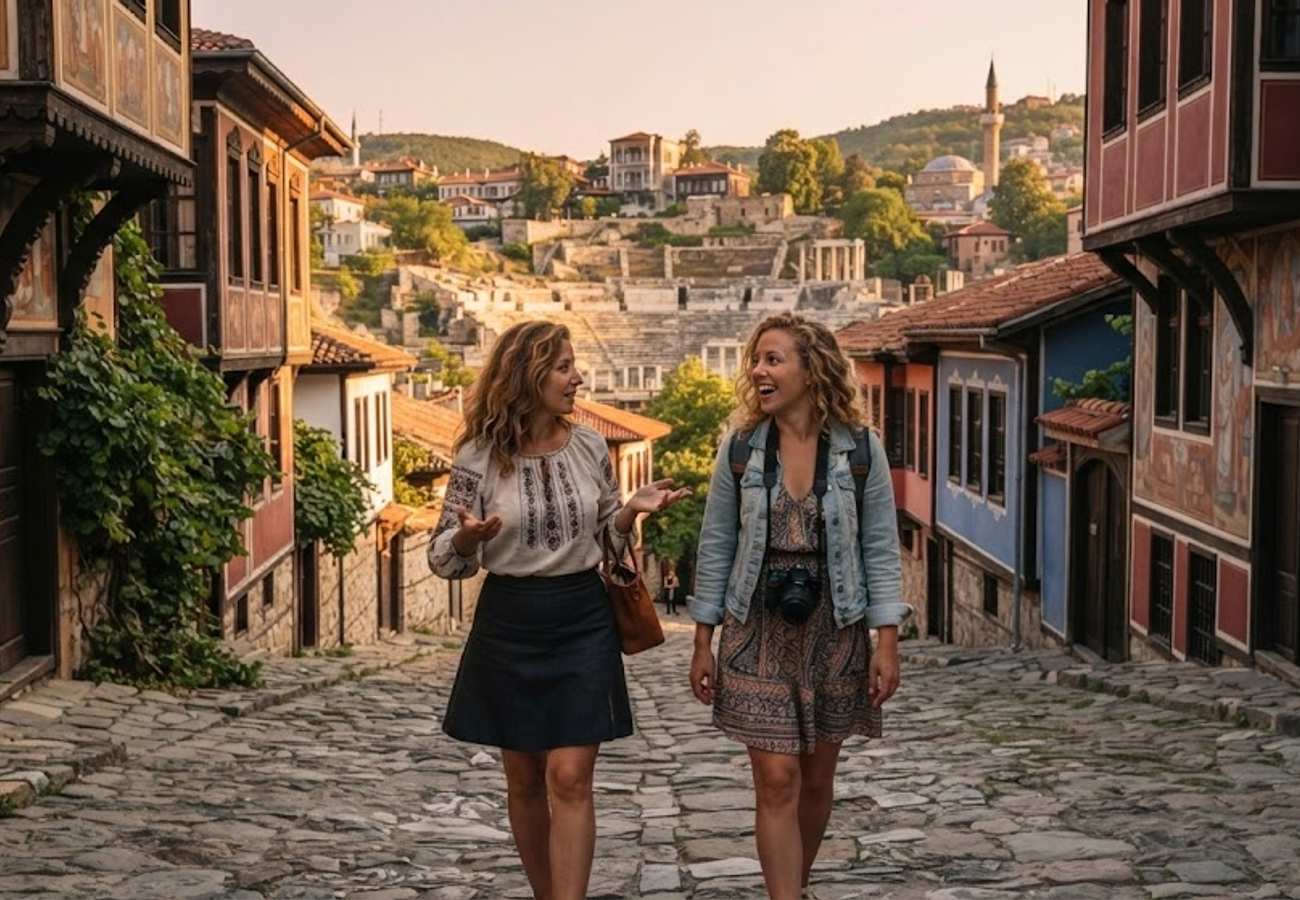
Image generated by AI
Bulgaria's Ancient Hidden Gem Finally Gets Its Due as Europe's Most Walkable Historical City
I watched Plovdiv transform from Bulgaria's overlooked provincial centre into one of Europe's most compelling cultural destinations. What makes this city different isn't flashiness—it's the sheer density of history compressed into a footprint you can traverse on foot in 48 hours.
The city sits as a continuously inhabited settlement spanning millennia, with Thracian, Roman, Ottoman, and modern layers coexisting within walking distance. Bulgaria's national tourism framework now officially recognises Plovdiv as a cultural powerhouse, backed by heritage preservation policies that protect everything from ancient archaeological zones to 19th-century merchant houses.
Reddit: "Plovdiv is what happens when you don't bulldoze history—you walk it." — r/travel
The Old Town: Where Four Civilisations Share One Street
The Plovdiv Old Town forms the beating heart of the city's cultural identity. Officially protected under Bulgaria's national heritage conservation framework, this district preserves architectural and historical assets that reflect continuous urban development from the Thracian period through the Ottoman era and beyond.
The cobblestone streets reveal the transition: ground-level Thracian and Roman foundations, then Ottoman-era street layouts, topped with 18th and 19th-century Bulgarian National Revival merchant houses featuring wood-carved interiors and frescoed walls.
Nebet Tepe, the elevated zone within the Old Town, is crucial. Archaeological evidence shows one of the earliest fortified settlements in the region. Bulgarian cultural heritage authorities classify this as a key stratified archaeological zone where three distinct civilisation layers—Thracian, Roman, and medieval—stack vertically within the same urban landscape.
The preservation isn't sterile. Restored merchant residences now function as museums, galleries, and boutique hotels. You're not walking through a museum replica; you're navigating an actual living neighbourhood where residents still inhabit centuries-old structures.
Roman Philippopolis: The Theatre Still Hosts Shows
Here's what stopped me in my tracks: the Ancient Theatre of Philippopolis, built in the 1st century AD, still hosts live performances. This isn't a ruin cordoned off behind rope. Musicians, theatre companies, and cultural events use it exactly as Roman citizens did two millennia ago.
The theatre ranks among the best-preserved ancient theatres in Southeastern Europe. According to Bulgarian cultural heritage authorities, its dual function—archaeological monument AND active performance venue—demonstrates adaptive reuse principles that balance conservation with contemporary cultural economy.
The Roman Stadium tells a different story about urban layering. Only sections remain visible above ground; the majority lies preserved beneath modern pedestrian zones and commercial developments. This integration model shows Plovdiv's planning approach: you don't erase history, you build intelligently on top of it.
These aren't isolated artifacts. The Roman street grid, public building remnants, and entertainment infrastructure reveal Philippopolis's historical role as a major provincial centre in the Roman Empire. Bulgaria's national cultural heritage legislation manages these zones under strict preservation guidelines—no developer shortcuts here.
Kapana: The Industrial Rebirth Story Nobody Expected
Then comes Kapana, and it's where Plovdiv's future speaks louder than its past.
This former industrial and commercial district has transformed into Bulgaria's leading creative economy zone. Official urban development programmes classify it as a hub for design studios, artisan workshops, independent galleries, and small-scale cultural enterprises. Walking through Kapana, you encounter working artists, contemporary galleries, craft breweries, and design studios literally occupying buildings that processed textiles decades ago.
The narrow interconnected streets encourage pedestrian movement and spontaneous cultural discovery. This structure supports modern experiential travel strategies focused on authentic cultural immersion—the opposite of sanitised heritage tourism.
What impressed me most: Kapana functions as a genuine economic engine, not a theme park. Small business owners here contribute to Bulgaria's broader creative economy initiatives aimed at revitalising urban centres through cultural investment.
Geography as Urban Planning Asset
Plovdiv's hilltop structure isn't accidental—it's a tourism advantage.
The city spreads across multiple hills, particularly Bunardzhika Hill and Sahat Tepe, which provide panoramic views of the surrounding Maritza Valley plains. These elevated zones are integrated into municipal urban planning as protected green spaces and recreational areas.
Tsar Simeon Garden, developed in the late 19th century and maintained by municipal governance, serves as the city's central leisure zone. Landscaped pathways, fountains, and public recreational infrastructure place rest areas within walking distance of every major heritage site.
This geography contributes decisively to Plovdiv's classification as a walkable tourism destination. Cultural, historical, and natural assets concentrate within a compact urban footprint—exactly the opposite of sprawling heritage cities where you need transportation between attractions.
The 48-Hour Model: Compact, Intense, Complete
Here's why 48 hours works for Plovdiv: the city's integrated heritage model allows sequential cultural immersion across multiple historical layers without travel fatigue.
Day one captures the Old Town's architectural chronology and Nebet Tepe's archaeological stratification. Evening brings you to the Roman Theatre or Stadium. Day two transitions through Kapana's creative district while incorporating green spaces and elevated viewpoints.
You're not skipping history. You're experiencing layered civilisation compressed into walkable geography.
Bulgaria positions Plovdiv deliberately within its national tourism strategy as a destination that balances heritage preservation with modern urban development. Its historical depth combined with infrastructure accessibility reinforces its emerging role as a significant European cultural tourism hub—one that respects what came before while building what comes next.
Plovdiv isn't rediscovered yet—that's precisely why you should visit before it is.
Related Travel Guides
Disclaimer
This article is for informational and educational purposes only. It does not constitute legal, financial, or professional advice. While we strive to provide accurate and up-to-date information, travel policies, regulations, and conditions change rapidly. Always verify information with official sources before making travel decisions. Nomad Lawyer makes no representations about the accuracy, reliability, completeness, or suitability of the information provided. Readers should consult qualified professionals for advice specific to their circumstances. The views expressed in this article are those of the author and do not necessarily reflect the views of Nomad Lawyer.
Raushan Kumar
Founder & Lead Developer
Full-stack developer with 11+ years of experience and a passionate traveller. Raushan built Nomad Lawyer from the ground up with a vision to create the best travel and law experience on the web.
Learn more about our team →