Seoul Travel Week 2026 Unveils Interactive Cultural Tourism Program Across K-Pop, K-Beauty, and Traditional Heritage

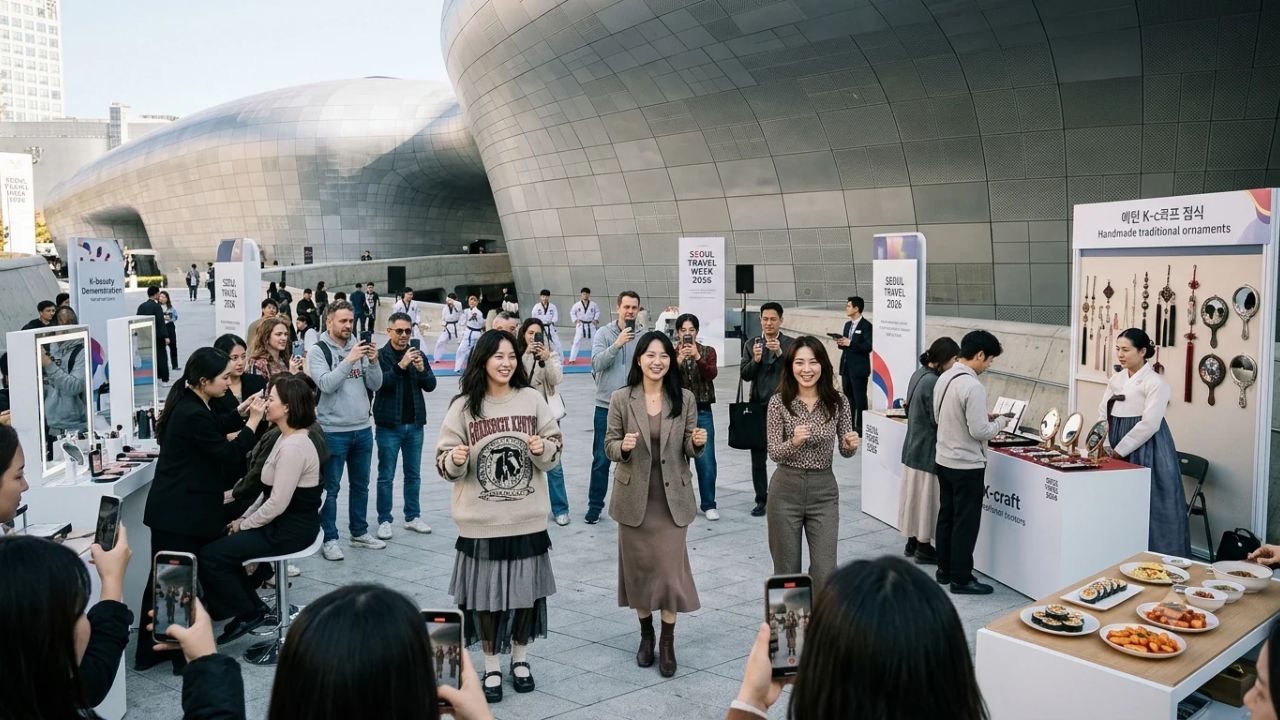
SEOUL — The Seoul Metropolitan Government has officially unveiled the operational blueprint for Seoul Travel Week 2026, launching a seven-day cultural festival from November 14 to November 20 that connects global visitors directly with Korean popular music, beauty aesthetics, gastronomy, and centuries-old artisan traditions. Staged across premier civic and corporate landmarks—including the Gocheok Sky Dome, the Bukchon Traditional Crafts Experience Centre, Amorepacific’s global headquarters in Yongsan, Ottogi’s O’Kitchen Studio, and Dongdaemun Design Plaza (DDP)—the festival represents a strategic evolution in South Korea's destination management strategy. Rather than restricting foreign sightseers to passive sightseeing tours and commercial retail shopping, the municipality is deploying an immersive, participatory curriculum of hands-on workshops, guided celebrity filming tours, and interactive digital showcases.
With online reservations opening to international tourists on November 5, 2026, at 2:00 PM Korea Standard Time (KST) on a first-come, first-served basis, Seoul Travel Week serves as an operational bridge between the global phenomenon of the Korean Wave (Hallyu) and the city's broader visitor economy. By dispersing high-value cultural activities across geographically distinct municipal districts—stretching from Guro in the southwest through the historic royal alleys of Jongno to the neo-futuristic urbanism of Dongdaemun—city planners aim to prolong visitor dwell times, distribute tourist expenditure into neighborhood artisan workshops, and establish a repeatable framework for experience-led urban exploration.
       SEOUL TRAVEL WEEK 2026: SEVEN-DAY CULTURAL EVENT TIMELINE
       =========================================================

       [ OPENING WEEKEND: K-CULTURE PROMOTION & TECH HUBS (NOV 14–15) ]
       * Venue: Gocheok Sky Dome (Guro District)
       * Coincides with 2026 Melon Music Awards (MMA)
       * AR landmark matching, AI-assisted photo booths & Hallyu quizzes
       * Note: Promotion booth access is separate from MMA concert tickets
                                       |
                                       v
       [ MID-WEEK HERITAGE & LIFESTYLE WORKSHOPS (NOV 16–17) ]
       * Nov 16: Bukchon Traditional Crafts Centre (Jongno)
         Crafting silk Norigae tassels & Mother-of-Pearl hand mirrors
       * Nov 17: Amorepacific Global Headquarters (Yongsan)
         K-Beauty masterclasses led by professional celebrity makeup artists
                                       |
                                       v
       [ URBAN CINEMA & NIGHTTIME EXPLORATION (NOV 18) ]
       * Venue: Dongdaemun Design Plaza (DDP) Precinct
       * K-Drama & K-Pop filming location walking tour led by actor Nam Jung-woo
       * Guided night photography expedition across illuminated city landmarks
                                       |
                                       v
       [ CULINARY ARTS & CLOSING SPECTACLES (NOV 19–20) ]
       * Nov 19: Ottogi O’Kitchen Studio (Gangnam/Nonhyeon)
         Hands-on Hansik cooking masterclass: Fermented sauces & seasonal dishes
       * Nov 20: DDP Oullim Square Grand Finale
         Mass K-Pop Random Play Dance & high-flying Kukkiwon Taekwondo performance
The Strategic Paradigm Shift: From Passive Sightseeing to Participatory Tourism
For decades, international leisure travel across East Asian metropolises was anchored to a rigid itinerary: morning palace visits, afternoon motorcoach excursions to government-designated souvenir outlets, and evening duty-free shopping sweeps through high-density commercial strips. While this high-volume model generated substantial retail transactions, it frequently left travelers feeling disconnected from authentic local life, reducing rich cultural traditions to transactional retail encounters.
The launch of Seoul Travel Week 2026 signals a permanent break from this legacy framework. Under the administrative direction of the Seoul Metropolitan Government and the Seoul Tourism Organization (STO), municipal planners are responding to structural shifts in post-pandemic traveler psychology. Modern international tourists—overwhelmingly propelled by the global consumption of Korean television dramas, streaming cinema, digital webtoons, and chart-topping K-pop releases—seek authentic co-creation. They do not merely want to gaze at a Joseon Dynasty palace from behind a velvet rope; they want to learn the intricate embroidery stitches that adorned royal garments. They do not merely want to purchase skincare serums in Myeongdong; they want to master the physiological science of multi-step K-beauty hydration directly from industry cosmetic chemists.
PASSIVE SIGHTSEEING VS. PARTICIPATORY HALLYU TOURISM
| Entity / Facility | Delays | Cancellations | Details |
|---|---|---|---|
| Dimension | Legacy Sightseeing Model | Seoul Travel Week Participatory Model | Long-Term Strategic Benefit |
| Visitor Engagement | Passive viewing of | Active hands-on | Deeper cultural |
| monuments & museums | creation of objects | empathy and connection | |
| Retail Integration | Mass duty-free | Direct corporate & | Disperses expenditure |
| department stores | artisan workshops | to local entrepreneurs | |
| Urban Mobility | Clustered in Gion- | Multi-district | Alleviates overtourism |
| style tourist traps | dispersion network | in historic centers | |
| Content Connection | Screen-based media | Physical immersion | Translates digital fans |
| viewed remotely | at filming sites | into lifetime travelers |
By transitioning to an experience-led model, destination authorities achieve dual economic and societal objectives. For international visitors, participatory workshops transform abstract cultural appreciation into practical, personal skills that persist long after their return flights. For domestic enterprises, partnering with municipal tourism campaigns opens direct marketing pipelines to high-spending global consumer cohorts.
Small-scale heritage artisans operating in historic hanok neighborhoods gain global visibility, while major corporate champions—such as beauty giant Amorepacific and food conglomerate Ottogi—demonstrate their corporate social responsibility and product craftsmanship directly to international brand ambassadors.
Opening Weekend at Gocheok Sky Dome: Entertainment Synergy and Digital Tourism
The opening weekend of Seoul Travel Week—staged on Saturday, November 14, and Sunday, November 15—anchors its promotional apparatus at the Gocheok Sky Dome in southwestern Seoul. As South Korea's premier domed baseball stadium and a premier concert venue with a seating capacity exceeding 16,000 spectators, Gocheok Sky Dome serves as an emblem of modern Korean entertainment production.
The timing of the opening weekend is carefully synchronized with one of the most anticipated events on the Asian music calendar: the 2026 Melon Music Awards (MMA). By staging the official Seoul Travel Week pavilion directly adjacent to the stadium concourse, the Seoul Metropolitan Government directly accesses an influx of tens of thousands of international music fans who have journeyed to the capital specifically for the awards ceremony.
       GOCHEOK SKY DOME: INTERACTIVE DIGITAL TOURISM SUITE (NOV 14–15)
       ==============================================================

       [ AUGMENTED REALITY (AR) LOCATION MATCHING PORTAL ]
       * High-resolution touchscreens map K-pop music video locations
       * Overlays historical urban context onto contemporary filming sites
       * Provides one-click subway transit routes to featured districts
                                       |
                 +---------------------+---------------------+
                 |                                           |
                 v                                           v
       [ AI THEMATIC PHOTO BOOTHS ]                [ INTERACTIVE METROPOLITAN QUIZZES ]
       * Neural-network facial integration         * Gamified municipal exploration
       * Generates personalized souvenir portraits * Tests knowledge of Seoul history & cuisine
       * Styled in K-pop aesthetics & Hanbok sets  * Awards certified experience fast-passes
Rather than distributing passive paper brochures, the Gocheok Sky Dome pavilion deploys cutting-edge digital tourism technologies:
- Augmented Reality (AR) Urban Portals: Visitors interact with high-resolution touchscreen installations that project three-dimensional digital renderings of famous music video and drama filming locations across Seoul. Users can point their smartphones at interactive maps to unlock behind-the-scenes production footage, historical architectural background, and precise transit routes via the Seoul Metropolitan Subway system.
- Artificial Intelligence Photo Experiences: The pavilion features next-generation AI-assisted portrait studios. Using neural-network image synthesis, international visitors can capture high-definition photographs that digitally composite them into cinematic Korean landscapes, traditional palace banquets, or futuristic performance stages styled in contemporary K-pop visual aesthetics.
- Gamified Metropolitan Quizzes: International attendees test their knowledge of Seoul's hidden historical landmarks, culinary traditions, and transit hacks through bilingual digital quiz consoles, competing for promotional prizes, traditional craft vouchers, and fast-track access to weekday workshops.
Importantly, tourism authorities emphasize a clear operational boundary for prospective attendees: the promotional pavilion at Gocheok Sky Dome is accessible to all international travelers, but access to the pavilion does not include admission tickets to the Melon Music Awards ceremony. The awards show operates under separate, strictly regulated commercial ticketing protocols, and visitors must possess verified concert tickets to enter the main performance arena.
Deep Heritage Immersion: Traditional Craftsmanship in Bukchon Hanok Village
Following the high-energy digital spectacles of the opening weekend, Seoul Travel Week pivots decisively toward reflective cultural preservation on Monday, November 16, transferring its programming to the Bukchon Traditional Crafts Experience Centre in Jongno Ward.
Nestled amid the winding stone alleys and tiled roofs of Bukchon Hanok Village—a residential neighborhood that has preserved hundreds of traditional wooden Korean homes dating back to the Joseon Dynasty—the workshop provides a striking artistic counterpoint to contemporary popular music. The full-day curriculum invites international travelers to sit on polished wooden floors and learn two foundational Korean decorative crafts: the creation of silk norigae pendants and the intricate assembly of najeonchilgi (mother-of-pearl lacquerware) hand mirrors.
       BUKCHON CRAFT WORKSHOP: THE ART OF NORIGAE & NAJEONCHILGI
       ========================================================

       [ THE NORIGAE SILK TASSEL EMBROIDERY TRADITION ]
       * Joseon Dynasty decorative pendant worn on Hanbok jackets (*jeogori*)
       * Complex braiding (*maedeup*) symbolizing good fortune, health & longevity
       * Participants dye raw silk threads using natural persimmon & indigo pigments
                                       |
                                       v
       [ THE NAJEONCHILGI MOTHER-OF-PEARL LACQUERING PROCESS ]
       * 1,000-year-old Korean decorative art utilizing iridescent abalone shell
       * Shell sheets cut into micro-geometric patterns using specialized chisels
       * Applied onto wooden mirror frames with natural urushi lacquer
       * Finished with natural charcoal polishing for deep crystalline luster
Under the patient guidance of certified Seoul Intangible Cultural Heritage master artisans, participants explore the cultural symbolism embedded within traditional Korean design. The norigae, historically worn by royal and aristocratic women as a decorative and functional accessory suspended from the breast-tie of their hanbok jackets, incorporates elaborate knotting techniques (maedeup). Each specific knot pattern—resembling lotus blossoms, butterflies, or ginger roots—carries profound philosophical meanings representing marital harmony, protection from malevolent spirits, and familial longevity.
In the mother-of-pearl workshop, international visitors handle delicate slivers of iridescent sea abalone (raden), cutting micro-geometric fragments to compose classic floral and crane motifs across handcrafted wooden mirror frames. The craft requires exceptional manual precision and patience, offering travelers an intimate appreciation of the meticulous labor that defined Korean decorative arts long before the advent of industrial mass production.
Participants retain their finished hand mirrors and silk pendants as personalized, heirloom-grade souvenirs, forging a permanent tangible link between the traveler and Korea’s living artistic heritage.
The Science of Aesthetics: K-Beauty Masterclasses at Amorepacific Headquarters
On Tuesday, November 17, the focus transitions to South Korea’s globally dominant cosmetics and skincare sector. The day’s programming is hosted within the world headquarters of Amorepacific, situated in the central Yongsan district.
The venue itself serves as an architectural masterpiece. Designed by renowned British architect David Chipperfield, the Amorepacific headquarters is a massive, cube-shaped concrete and glass structure organized around serene internal hanging gardens, water courtyards, and open public atriums that evoke traditional Korean courtyard homes. The building represents the physical manifestation of modern Korean corporate innovation, making it a compelling backdrop for international cultural tourism.
AMOREPACIFIC K-BEAUTY PROFESSIONAL WORKSHOP MODULES
| Entity / Facility | Delays | Cancellations | Details |
|---|---|---|---|
| Curriculum Module | Professional Scope | Practical Skill Acquired | Scientific Basis |
| Dermatological Skin | Multi-step layering | Identifying skin | Transepidermal water |
| Prep & Barrier Care | routines & botanical | barrier health; custom | loss prevention; pH |
| active ingredients | essence application | balance restoration | |
| Personal Color | 16-season chromatic | Matching undertones | Optical reflection of |
| Analysis Diagnostics | drape testing | with lip, eye, and | facial pigment undertones |
| foundation palettes | against colored textiles | ||
| "Glass Skin" Base | Lightweight liquid | High-hydration base | Optical diffusion & |
| Application Artistry | foundation buffing | application without | skin micro-texture |
| & cushion compacts | cakiness or settling | smoothing | |
| Natural Brow & Eye | Micro-feathering | Straight soft-arch | Harmonizing facial |
| Symmetry Sculpting | and muted gradient | Korean eyebrow | proportions with soft |
| eyeshadow blending | architectural lines | natural line work |
Led by professional celebrity makeup artists whose portfolios include top-tier K-pop idol groups and award-winning television actors, the workshop demystifies the scientific foundations of the "Korean Glass Skin" aesthetic. Rather than functioning as a commercial sales pitch, the curriculum is structured as an advanced educational seminar.
Participants receive personalized diagnostic evaluations, beginning with "Personal Color Analysis"—a sophisticated chromatic diagnostic method that utilizes standardized fabric drapes across sixteen seasonal palettes to identify an individual's optimal color harmony. The instructors demonstrate how slight shifts in fabric undertones accentuate or subdue facial skin tone, guiding international visitors toward foundation, blush, and lip shades that harmonize naturally with their genetic pigmentation.
The hands-on technical instruction then covers the delicate art of skincare layering and base application. Instructors demonstrate how to prepare the skin barrier using fermented green tea extracts, ginseng root water, and centella asiatica toners, teaching participants the rhythmic patting techniques that maximize product absorption without irritating epidermal tissue. The session concludes with live demonstrations of soft, straight-line eyebrow feathering and gradient lip blending—signature techniques that define contemporary East Asian beauty standards.
Urban Cinematography: Dongdaemun Design Plaza Filming Tours and Night Photography
On Wednesday, November 18, Seoul Travel Week explores the dynamic relationship between urban architecture, screen media, and nighttime visual storytelling around the Dongdaemun Design Plaza (DDP).
Completed in 2014 by visionary Pritzker Prize-winning architect Zaha Hadid, DDP is a landmark of deconstructivist neo-futurism. Characterized by undulating, asymmetrical curves, an absence of sharp interior right angles, and a facade clad in 45,133 individual aluminum panels that reflect shifting daylight, the complex functions as Seoul's epicenter of global design, fashion, and international congresses.
       DONGDAEMUN DESIGN PLAZA (DDP): ARCHITECTURAL & CINEMATIC NODES
       ==============================================================

       [ ZAHA HADID NEO-FUTURISTIC ALUMINUM SHELL (45,133 PANELS) ]
       * Setting for global fashion weeks & sci-fi cinema productions
       * Iconic backdrop for hit dramas: "My Love from the Star", "Vincenzo"
                                       |
                 +---------------------+---------------------+
                 |                                           |
                 v                                           v
       [ GUIDED ACTOR FILMING TOUR ]               [ NIGHTTIME PHOTOGRAPHY WORKSHOP ]
       * Hosted by actor Nam Jung-woo              * Professional long-exposure instruction
       * Deconstructs behind-the-scenes staging    * Captures light trails along futurist ramps
       * Explores subterranean design galleries    * Integrates historic Dongdaemun city wall
The afternoon programming features a guided filming-location walking tour hosted by South Korean actor Nam Jung-woo. Drawing upon his firsthand industry experience, Nam leads international tour groups through specific architectural nodes within and around DDP that have served as the iconic backdrops for globally acclaimed television dramas, including My Love from the Star, Vincenzo, and Record of Youth, as well as high-concept music videos by groups such as BTS and EXO.
The walking tour analyzes how directors utilize Hadid’s sweeping pedestrian ramps, subterranean art chambers, and expansive rooftop grass parks to evoke themes of alienation, temporal displacement, and high-stakes corporate intrigue. By standing on the exact camera marks where famous cinematic scenes were filmed, international fans gain an intimate, three-dimensional appreciation of how Seoul's urban infrastructure inspires global visual media.
As dusk settles over the capital, the program transitions into an intensive three-hour urban night photography workshop led by a certified commercial photographer. Seoul after dark represents an extraordinary visual landscape, where the ancient stone battlements of the 14th-century Seoul City Wall (Hanyangdoseong) stand in dramatic juxtaposition against the glowing neon signage of 24-hour fashion wholesale markets and the flowing LED illumination of DDP’s exterior plazas.
Equipped with their own digital cameras or mobile smartphones, participants receive field instruction in manual exposure balancing, tripod stabilization, and long-exposure light-trail tracking. Instructors teach attendees how to capture the motion blur of passing yellow city taxis against the static curves of the aluminum facade, manage high-contrast shadows along the nearby Cheonggyecheon Stream pedestrian boardwalk, and frame stunning cinematic architectural perspectives that transform ordinary travel snapshots into gallery-grade photographic art.
Culinary Craftsmanship: Hansik Fermentation at Ottogi O’Kitchen Studio
On Thursday, November 19, the cultural curriculum turns toward the rich sensory universe of traditional Korean cuisine (Hansik) at Ottogi’s state-of-the-art O’Kitchen Studio.
While international travelers frequently enjoy Korean barbecue and street food skewers at night markets in Hongdae or Gwangjang Market, few understand the complex biochemical and philosophical principles that govern traditional Korean food preparation. Hansik is fundamentally rooted in the philosophy of yakmeokdongwon (the belief that food and medicine share the same origin) and is powered by centuries-old microbial fermentation traditions centered on jang—the deep, savory foundational pastes comprising doenjang (fermented soybean paste), gochujang (fermented chili paste), and ganjang (artisanal soy sauce).
       OTTOGI O'KITCHEN: HANSIK FERMENTATION & FLAVOR WORKSHOP
       =======================================================

       [ THE SCIENTIFIC FOUNDATION: KOREAN FERMENTED JANG ]
       * Doenjang (Soybean Paste): Deep umami richness from Bacillus subtilis
       * Gochujang (Chili Paste): Balanced sweet-savory heat via glutinous rice & malt
       * Ganjang (Aged Soy Sauce): Salt-cured enzymatic liquid seasoning
                                       |
                                       v
       [ HANDS-ON WORKSHOP PREPARATION STATIONS ]
       * Seasonal Geotjeori Kimchi: Fresh, unfermented Napa cabbage with chili flakes
       * Royal Tteokbokki (Gungjung Tteokbokki): Non-spicy soy-glazed beef & rice cakes
       * Modern Fusion Street-Food Pairings: Balancing umami profiles for global palates
                                       |
                                       v
       [ ALLERGEN MANAGEMENT & COMMENSAL DINING PROTOCOLS ]
       * Dedicated prep bays accommodating vegetarian, vegan & gluten-free diets
       * Communal dining etiquette: Banchan side-dish harmony & rice-bowl placement
Under the supervision of master culinary instructors, international participants don traditional aprons and occupy fully equipped personal prep stations. The curriculum balances heritage technique with approachable modern execution:
First, participants deconstruct the delicate science of seasonal kimchi preparation. Rather than burying clay fermentation jars (onggi) for months, instructors teach the art of geotjeori—a fresh, crisp, unfermented winter cabbage kimchi prepared with coarse solar sea salt, Korean coarse chili powder (gochugaru), minced garlic, fresh ginger, and fermented plum extract (maesil-cheong). The lesson demystifies how salt concentration draws moisture from cabbage leaves without destroying their cellular crunch, allowing participants to master a dish they can easily recreate in their home kitchens abroad.
Second, the workshop explores royal court cuisine by preparing Gungjung Tteokbokki (Royal Court Rice Cakes). Predating the introduction of red chili peppers to the Korean peninsula in the late Joseon era, this historic palace dish utilizes chewy cylinder rice cakes braised with thinly sliced marinated beef, shiitake mushrooms, zucchini, and carrots in a delicate garlic-soy glaze. The mild, deeply savory profile provides a compelling culinary contrast for travelers who mistakenly assume all Korean dishes are aggressively fiery.
The workshop concludes in O’Kitchen’s communal dining salon, where participants enjoy the dishes they have prepared alongside an array of seasonal side dishes (banchan). Instructors utilize this communal meal to explain traditional Korean table etiquette—including the respectful placement of metal chopsticks (sujeo), the cultural significance of shared communal stews, and the harmonious balance of colors representing the five elements (obangsaek: red, green, yellow, white, and black) across the dining table.
The Grand Finale at DDP: Random Play Dance and Martial Arts Mastery
The closing day of Seoul Travel Week—Friday, November 20—transforms DDP’s expansive Oullim Square into a high-energy public performance amphitheater, celebrating the kinetic vitality of modern Korean youth culture alongside the centuries-old discipline of national martial arts.
The afternoon begins with an exhilarating K-Pop Random Play Dance tournament. A beloved global phenomenon cultivated within international fan communities, Random Play Dance challenges participants to respond instantly to random twenty-second musical fragments played through a massive stadium sound system.
As the opening bars of hit choreographies by iconic groups—ranging from NewJeans, SEVENTEEN, and Stray Kids to classic hits by BIGBANG and Girls’ Generation—blast across the plaza, hundreds of international dancers from dozens of nations rush into the center of the square, executing synchronized, razor-sharp choreographies in flawless unison. The event functions as a celebration of global community, proving that music and dance transcend linguistic barriers to unite diverse youth cultures.
       DDP OULLIM SQUARE: GRAND CLOSING CEREMONY (NOV 20)
       ==================================================

       [ MASS K-POP RANDOM PLAY DANCE SPECTACLE ]
       * Hundreds of international dancers gather in central plaza
       * Sudden-drop audio cues test split-second choreography recognition
       * Celebrates global youth solidarity through synchronized movement
                                       |
                                       v
       [ KUKKIWON-STYLE TAEKWONDO MARTIAL ARTS EXTRAVAGANZA ]
       * Poomsae: Masterful execution of ancient technical movement forms
       * Gyeokpa: High-flying aerial acrobatics & multi-target board breaking
       * Dynamic synchronization set to modern cinematic orchestral percussion
                                       |
                                       v
       [ OFFICIAL MUNICIPAL CLOSING DECLARATIONS ]
       * Seoul Metropolitan Government honors international cultural ambassadors
       * Transition into Seoul's winter illumination and festive travel season
Following the dance tournament, the energy shifts to formal martial arts discipline as a premier Taekwondo demonstration team takes the stage. Blending the technical precision of ancient poomsae (patterned defense forms) with theatrical, high-flying aerial acrobatics, the martial artists execute jaw-dropping physical feats: spinning 540-degree mid-air kicks, breaking wooden target boards suspended three meters above the pavement, and demonstrating weapon-disarming defense techniques set to thunderous Korean percussion.
The demonstration honors Taekwondo’s status as Korea's national martial art and an Olympic sport, emphasizing the mental discipline, philosophical balance, and physical resilience that form the bedrock of the Korean national spirit.
Administrative Logistics: Registration Protocols and Traveler Checklist
Because workshop venues operate within physical structural constraints—such as limited seating bays in the Bukchon crafts room and dedicated cooking stations at O'Kitchen Studio—the Seoul Metropolitan Government enforces strict capacity controls.
International travelers planning to attend Seoul Travel Week 2026 must execute their registration with military precision:
SEOUL TRAVEL WEEK 2026 REGISTRATION & ACCESS MATRIX
| Entity / Facility | Delays | Cancellations | Details |
|---|---|---|---|
| Dimension | Official Parameter | Practical Execution | Verification Protocol |
| Registration Date | Thursday, Nov 5, | Synchronize clocks | Portal opens precisely |
| & Exact Time | 2026 at 2:00 PM KST | to Korean Standard | at 14:00 KST |
| Allocation Method | First-Come, First- | High-speed internet | Slots exhaust within |
| Served Online Queue | connection essential | 5 to 15 minutes | |
| Eligibility Window | Foreign Passport | Valid passport | Non-Korean citizens |
| Holders Only | number required | only; verified on-site | |
| Application Policy | Individual Module | Apply separately | Registration for one |
| Applications | for each workshop | does NOT grant all-pass | |
| On-Site Verification | Physical Passport | Match registration | Name spelling must |
| Presentation | details at entrance | match passport exactly |
- Synchronize for the Registration Launch: Applications open promptly at 2:00 PM KST on Thursday, November 5, 2026, through the official Visit Seoul digital portal. International travelers should pre-register user accounts, ensure stable high-speed internet connectivity, and have their valid passport numbers and contact information immediately accessible. High-demand sessions—such as the Amorepacific beauty workshop and the Ottogi cooking class—routinely fill their capacity limits within ten minutes of server launch.
- Apply Separately for Specific Workshops: Understand that registration is conducted on an individual, module-by-module basis. Successfully securing a confirmed seat for the Bukchon craft workshop does not automatically grant admission to the DDP filming tour or the cooking studio. Travelers must submit distinct applications for each specific activity they wish to attend.
- Bring Physical Passports for On-Site Verification: Because these programs are subsidized by municipal taxpayers specifically to promote inbound tourism, admission is legally restricted to foreign passport holders. Event staff will verify physical passports at the entrance of each workshop venue. Digital photocopies or smartphone photos will be rejected, and the name on your registration must match your government travel document precisely.
- Plan Transit Schedules with Adequate Buffers: Seoul is a sprawling metropolis of nearly ten million residents, and moving between distant districts—such as Gocheok Sky Dome in the southwest and Bukchon in the northeast—can take 45 to 60 minutes via the Seoul Subway network. Travelers should utilize transit applications such as KakaoMap or Naver Map, allowing at least thirty minutes of buffer time before scheduled workshop start times, as late arrivals will see their seats surrendered to standby waitlists.
- Dress for Late-Autumn Temperature Plunges: Mid-November in Seoul marks the transition into early winter. While daytime temperatures can reach a crisp 12°C to 15°C under direct sunlight, evening temperatures drop rapidly to 2°C to 5°C, with biting wind chills along the open plazas of DDP and the banks of the Han River. Travelers attending the DDP night photography tour or the closing ceremonies should dress in thermal base layers, packable down jackets, and wind-resistant outerwear.
Seoul Travel Week 2026 proves that the future of urban tourism belongs to deep cultural participation. By welcoming international travelers directly into its artisan workshops, beauty laboratories, culinary kitchens, and performance plazas, Seoul transcends the limitations of conventional sightseeing—inviting the world to experience the living heart of Korean culture from the inside out.
Related Travel Guides
- Australia Scales Up Coral Restoration Tourism as Cairns Deploys Larval Robotics
- Japan Autumn Travel Guide: How to Navigate Tokyo and Kyoto Foliage, Temple Illuminations
- Paris and Brussels Launch Joint European Gastronomy Pass Promoting Organic Dining
- Japan Overhauls Tax-Free Shopping as Tourists Must Pay Upfront Consumption Tax
- European Business Travel Spending to Surge to €404 Billion in 2026 as Germany and UK Lead
This article is for informational purposes. Flight routes, passenger regulations, visa rules, and transit advisories are subject to change by airlines and aviation authorities. Readers are advised to verify schedules and travel documentation with relevant carriers and border agencies before departure.
Related Stories
Estonia Gears Up for Winter Tourism Surge as Jet2 Expands UK Flights and Tallinn’s Historic Christmas Market Returns for 2026

IBTM World 2026 Opens Media Registration: Barcelona to Host 12,000 MICE Professionals