
Senegal Tourism Surge: Petite Côte Resorts and Sine-Saloum Delta Drive West Africa Growth 2026
Senegal is transforming its Atlantic coastline into a premier global destination through the expansion of the Pointe Sarène Integrated Tourism Zone and eco-tourism initiatives in the Sine-Saloum Delta.

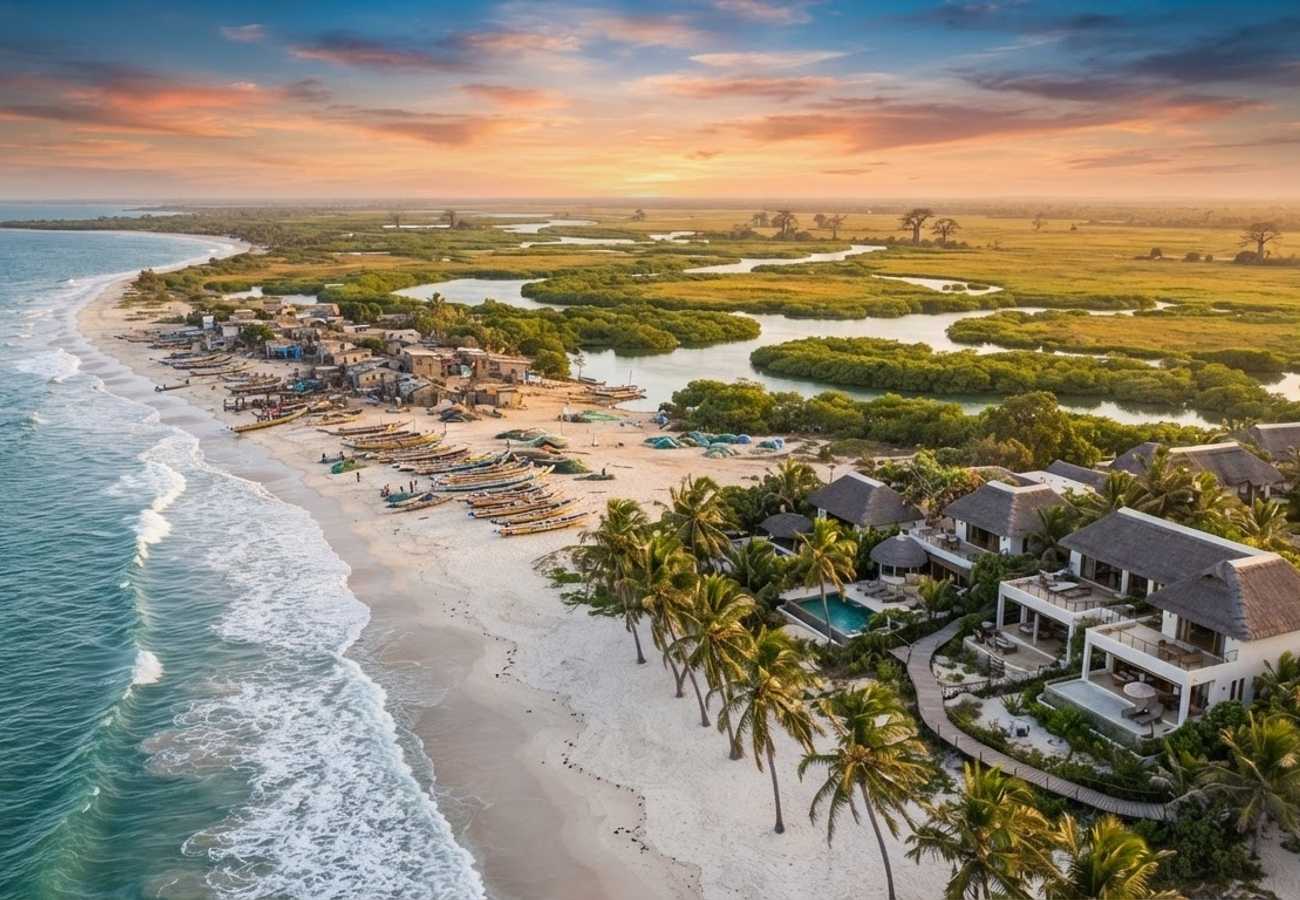
Image generated by AI
Senegal is aggressively scaling its Atlantic Coast infrastructure to cement its status as West Africa's leading tourism hub, leveraging a strategic mix of luxury resort zones and sustainable eco-tourism. The growth is centered on the Petite Côte region and the Sine-Saloum Delta, creating a diversified travel corridor that appeals to both high-end luxury seekers and environmentally conscious explorers.
The national strategy focuses on diversifying the visitor experience beyond traditional city tours of Dakar. By integrating large-scale resort developments with community-led cultural sites, the government and private investors are building a resilient tourism ecosystem. This shift is designed to distribute economic benefits across coastal villages while providing international travelers with a seamless transition from luxury beaches to wild mangroves.
Rapid Expansion of the Pointe Sarène Integrated Tourism Zone
The most visible transformation is occurring at Pointe Sarène, where a new-generation resort model is being implemented. This Integrated Tourism Zone is not merely a collection of hotels but a master-planned coastal ecosystem that blends high-end villas, comprehensive leisure facilities, and modern supporting infrastructure.
The region's viability as a top-tier international destination was largely validated by the success of the Riu Baobab. This property serves as a primary anchor for the area, utilizing a large-scale all-inclusive model that provides the predictability and comfort expected by global tourists—featuring extensive pool complexes, diverse dining options, and beach-centric entertainment.
Beyond the all-inclusive experience, the landscape is shifting toward exclusivity. A surge in luxury villa projects and upscale boutique resorts is increasing the total accommodation capacity. For the modern traveler, this means Pointe Sarène is evolving from a simple hotel destination into a versatile base for exploring the wider Petite Côte corridor.
Sustainable Coastal Development in Mbodiène
Further along the coastline, the focus shifts from luxury scale to sustainable integration. In Mbodiène, the national tourism development agency, SAPCO, is spearheading a model that prioritizes environmental stewardship and community involvement.
Unlike the self-contained nature of traditional resorts, the Mbodiène initiative aims to link beachfront lodging directly with local cultural experiences. The objective is to encourage visitors to step outside the resort perimeter and engage with the surrounding communities. This approach transforms the holiday experience into a hybrid of relaxation and education, where guests can participate in guided village tours, explore traditional Senegalese crafts, and sample authentic local cuisine.
Cultural Integration via Joal-Fadiouth
The coastal narrative is further enriched by the proximity of Joal-Fadiouth. This area provides a critical cultural counterbalance to the modern resorts of Pointe Sarène. Joal is deeply rooted in the maritime history of Senegal, while Fadiouth is world-renowned for its unique island geography and preserved cultural heritage.
By linking the sustainable developments in Mbodiène with the historical attractions of Joal-Fadiouth, Senegal is offering a "depth-of-stay" experience. Travelers are no longer limited to the beach; they can now easily integrate visits to traditional fishing communities and explore distinctive coastal architecture, adding significant intellectual and emotional value to their trip.
Modernization of the Saly Portudal Tourism Hub
While new zones are emerging, the established heart of the Petite Côte—Saly Portudal—is undergoing a significant revitalization. Long a favorite for European vacationers, Saly has historically been the primary gateway for beach tourism in the region.
To maintain its competitiveness, Saly has implemented extensive beach restoration projects and critical infrastructure upgrades. These improvements are timed to meet an increase in regional demand and a rise in international charter flight arrivals. For travelers who prefer a mature tourism ecosystem with a wide array of existing restaurants, excursion operators, and diverse lodging options, Saly remains the most reliable choice.
The Sine-Saloum Delta Eco-Tourism Pivot
Moving beyond the sandy shores of the Petite Côte, the Sine-Saloum Delta is emerging as the centerpiece of Senegal's eco-tourism strategy. This region offers a stark contrast to the resort-heavy Atlantic coast, characterized by its intricate waterways, dense mangrove forests, and diverse avian wildlife.
The experience here is defined by a slower pace. Visitors typically explore the delta via boat, navigating through islands and visiting remote fishing villages. This "wild side" of Senegal appeals to a growing segment of travelers who prioritize nature and authenticity over luxury amenities.
Crucially, the Sine-Saloum model emphasizes community-led tourism. Local guides are the primary facilitators, ensuring that tourism revenue reaches the village level. By connecting guests with traditional fishing practices and indigenous crafts, the delta provides an immersive experience that complements a stay at a coastal resort.
Logistics and International Access via Blaise Diagne Airport
The success of these coastal initiatives is underpinned by the operational efficiency of Blaise Diagne International Airport (DSS). As the primary gateway for the region, the airport's infrastructure is critical for funneling international arrivals toward the Petite Côte and the Sine-Saloum Delta.
Enhanced road connectivity from the airport to Saly and Pointe Sarène has significantly reduced transit times, making the region more attractive for short-stay visitors and winter-sun tourists from Europe. The synergy between aviation accessibility and coastal development is the primary engine driving the current surge in visitor numbers.
Senegal Coastal Tourism Summary 2026
| Destination | Primary Appeal | Key Development/Feature |
|---|---|---|
| Pointe Sarène | Luxury & Integrated Resorts | Riu Baobab & New Luxury Villas |
| Saly Portudal | Established Tourism Hub | Beach Restoration & Infrastructure Upgrades |
| Mbodiène | Sustainable Tourism | SAPCO-led Community Integration |
| Joal-Fadiouth | Culture & Heritage | Traditional Fishing Villages & Island Tours |
| Sine-Saloum | Eco-Tourism & Nature | Mangrove Exploration & Wildlife |
| DSS Airport | Logistics & Access | International Gateway to Coastal Zones |
Why This Matters: The Traveler's Perspective
For the international traveler, the evolution of Senegal's coast means the end of the "single-resort" holiday. The creation of a connected corridor allows for a multi-modal itinerary: a guest can start with the high-energy luxury of Pointe Sarène, transition to the established convenience of Saly, and conclude with a meditative eco-tour of the Sine-Saloum mangroves.
From a logistical standpoint, the integration of SAPCO’s sustainable models ensures that tourism is not an extractive industry but a collaborative one. Travelers now have the opportunity to engage in "conscious travel," where their spending directly supports the preservation of the mangroves and the livelihoods of the Joal-Fadiouth fishing communities. This shift from passive sightseeing to active engagement is what will likely define Senegal's competitiveness in the 2026 global travel market.
Senegal is no longer just a stopover; it is becoming a comprehensive destination where luxury and authenticity coexist on the Atlantic shore.
Related Travel Guides
Disclaimer
This article is for informational and educational purposes only. It does not constitute legal, financial, or professional advice. While we strive to provide accurate and up-to-date information, travel policies, regulations, and conditions change rapidly. Always verify information with official sources before making travel decisions. Nomad Lawyer makes no representations about the accuracy, reliability, completeness, or suitability of the information provided. Readers should consult qualified professionals for advice specific to their circumstances. The views expressed in this article are those of the author and do not necessarily reflect the views of Nomad Lawyer.
Preeti Gunjan
Contributor & Community Manager
A passionate traveller and community builder. Preeti helps grow the Nomad Lawyer community, fostering engagement and bringing the reader experience to life.
Learn more about our team →