
Seattle Port Expansion and Juneau Capacity Caps: The 2026 Alaska Cruise Market Shift
Seattle is projecting 2.1 million passengers for the 2026 Alaska season, while Juneau implements strict berth caps to combat overtourism, signaling a new era of managed growth in North American cruising.

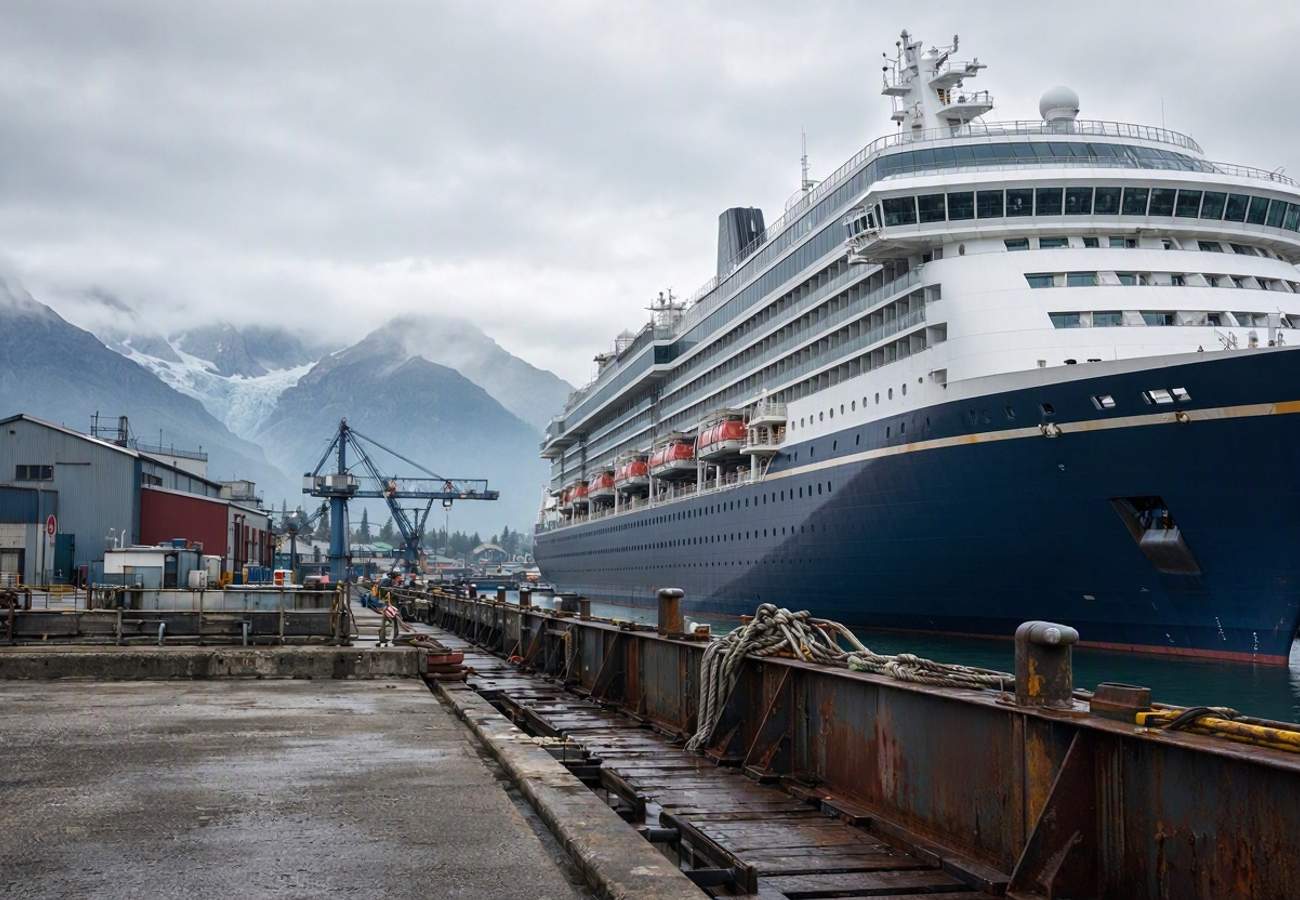
Image generated by AI
Seattle is preparing for 330 vessel calls and 2.1 million revenue passengers in 2026, a volume that stands in stark contrast to the restrictive capacity caps now being enforced in Juneau. This divergence reveals a critical tension in the North American cruise market: the drive for hub expansion versus the urgent need for destination-level visitor management.
The 2026 Alaska Cruise Boom in Numbers
The Port of Seattle has solidified its status as the primary gateway for the Alaska market. The 2026 projections indicate a high-density operation designed to maximize throughput. Beyond the 2.1 million passengers, the economic ripple effect extends to the city's aviation and hospitality sectors, as a significant portion of these travelers utilize Seattle-Tacoma International Airport and local hotels for pre- and post-cruise stays.
However, the growth at the departure point is meeting a "ceiling" at the destination. Juneau has shifted from a growth-oriented model to a management-oriented one. By implementing a formal agreement with cruise operators, the city is now capping the number of available lower berths to prevent infrastructure collapse and resident burnout.
Comparative Analysis: Expansion vs. Regulation
The current state of the Alaska cruise corridor is a study in opposites. While the hub (Seattle) is scaling up to handle millions, the destinations (Juneau) are scaling back to preserve quality of life. This mirrors a global trend seen in cities like Venice and Amsterdam, where the World Tourism Organization (UNWTO) has highlighted the necessity of managing "overtourism" to ensure long-term destination viability.
The following table breaks down the operational divergence between the primary hub and the primary destination for the 2026 season:
| Metric | Seattle (Hub) | Juneau (Destination) |
|---|---|---|
| 2026 Strategic Goal | Volume Expansion | Capacity Management |
| Passenger Volume | 2.1 Million (Projected) | Capped by Berth Limits |
| Vessel Activity | 330 Vessel Calls | Regulated by Daily Caps |
| Daily Capacity Cap | No Cap | 16,000 (Sun-Fri) / 12,000 (Sat) |
| Primary Focus | Infrastructure & Shore Power | Resident Quality of Life |
What This Means for Travelers
The shift toward "managed tourism" in Alaska means the window for booking popular itineraries is narrowing. Because Juneau has fixed its available lower berths, cruise lines cannot simply add more ships to meet demand.
Actionable Advice for 2026-2027 Planning:
- Book 9-12 Months Out: With strict berth caps in Juneau, ship capacity is finite. Unlike previous years where "last-minute" deals were common, the 2026 caps make early booking essential for securing specific dates.
- Plan for "City-to-Wilderness" Buffers: Since Seattle is positioning itself as a full-experience destination, travelers should allocate 48-72 hours in the city prior to embarkation to avoid the logistics stress of arriving on the day of departure.
- Expect Route Adjustments: As Canada implements stricter wildlife protections—specifically speed reductions for the protection of Southern Resident killer whales—travelers should anticipate slightly longer transit times between ports in British Columbia.
The Infrastructure Battle: Shore Power and Sustainability
The industry is currently transitioning from measuring success by passenger counts to measuring it by carbon footprints. Seattle is leading this shift through heavy investment in shore power technology. This allows ships to plug into the local electrical grid, eliminating the need to run diesel engines for climate control and lighting while docked.
However, the transition is uneven. While Seattle moves forward, other ports like Victoria, British Columbia, are encountering the financial and technical hurdles of upgrading aging electrical grids. This creates a fragmented sustainability map where some ports are "green-ready" and others remain dependent on onboard emissions.
For more data on global maritime emission standards, the International Maritime Organization (IMO) provides benchmarks that these ports are currently striving to meet. The ability of a port to provide shore power is becoming a competitive advantage; cruise lines are increasingly prioritizing "green ports" to meet their own corporate ESG (Environmental, Social, and Governance) targets.
Forward Projection: The "Balanced Growth" Era
Based on the 2026 trajectory, the Alaska cruise market is moving toward a "Balanced Growth" model. We expect to see more destinations follow Juneau's lead by implementing berth caps. The era of unlimited ship growth is ending, replaced by a model where the destination's carrying capacity dictates the cruise line's schedule.
Furthermore, the integration of wildlife protection measures in Canada suggests that "slow cruising" will become a marketed feature rather than a regulatory burden. Travelers will likely pay a premium for itineraries that guarantee ethical wildlife encounters and low-emission port stays.
FAQ: Alaska Cruise Trends 2026
Will cruise prices increase due to Juneau's capacity caps? Yes. When supply (berths) is capped but demand (passenger interest) continues to rise, ticket prices typically increase. Expect higher premiums for peak summer dates.
Is it still a good time to book an Alaska cruise? Yes, but the strategy has changed. Book early to secure a spot on ships that utilize shore power and follow sustainable routing to avoid disappointment.
Which ports are the most sustainable in 2026? Seattle is currently the leader in shore power implementation. Travelers seeking the lowest carbon footprint should look for itineraries emphasizing Seattle-based departures and "green-certified" ports.
The battle for the Alaskan coastline is no longer about who can bring the most people, but who can bring them most responsibly.
Related Travel Guides
Disclaimer
This article is for informational and educational purposes only. It does not constitute legal, financial, or professional advice. While we strive to provide accurate and up-to-date information, travel policies, regulations, and conditions change rapidly. Always verify information with official sources before making travel decisions. Nomad Lawyer makes no representations about the accuracy, reliability, completeness, or suitability of the information provided. Readers should consult qualified professionals for advice specific to their circumstances. The views expressed in this article are those of the author and do not necessarily reflect the views of Nomad Lawyer.
Naina Thakur
Contributor & Travel Specialist
Travel enthusiast and legal writer covering visa regulations, responsible tourism, and cultural journeys across global destinations.
Learn more about our team →