
Europe's Micro-Port Cruise Revolution: Santorini and Geiranger Enforce Strict Visitor Caps in 2026
Small European ports with populations under 15,000 are implementing aggressive passenger quotas and zero-emission mandates to survive the displacement of cruise traffic from major hubs like Venice and Barcelona.

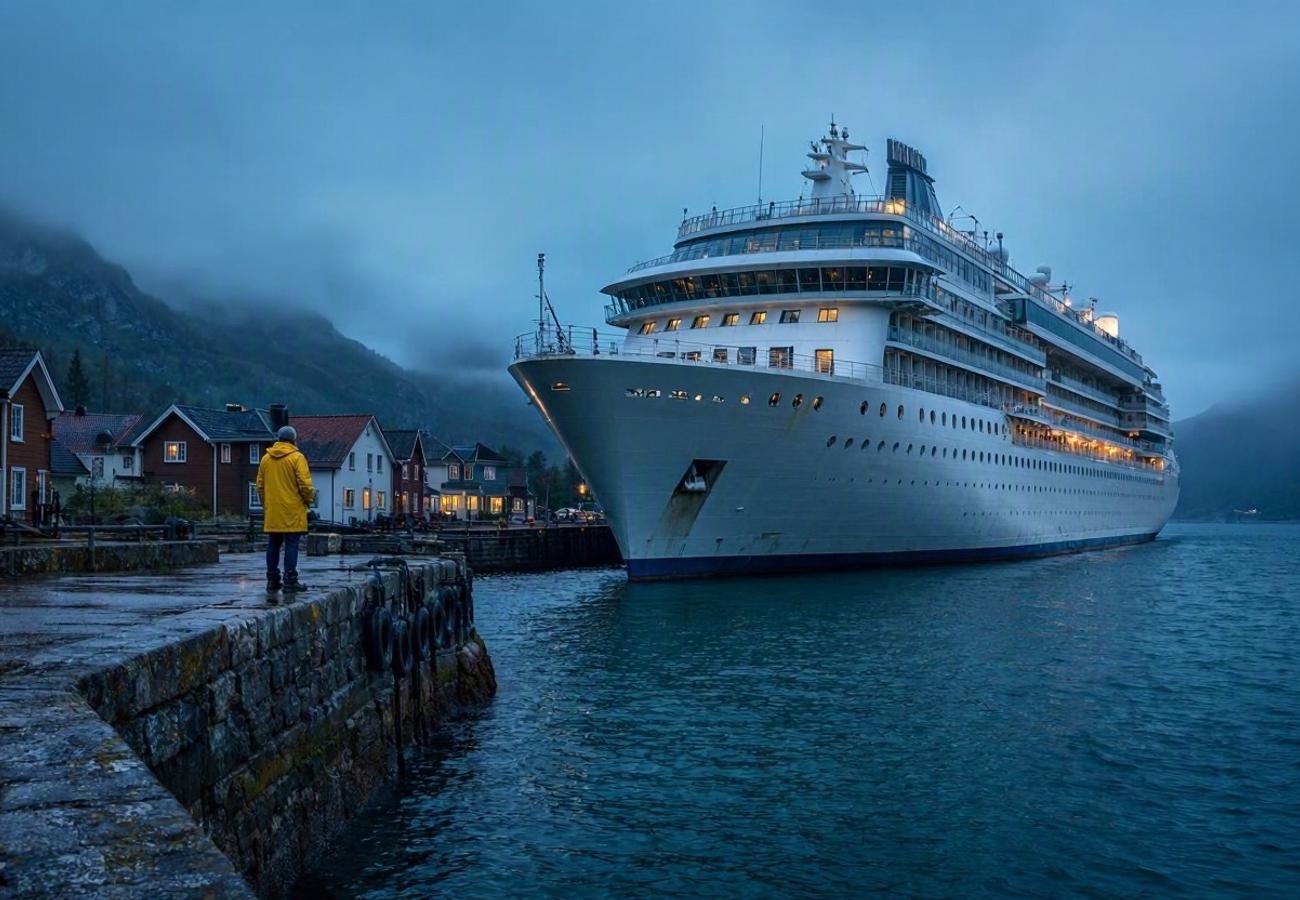
Image generated by AI
A resident population of just 250 people in Geiranger, Norway, now stands in stark contrast to the 10,000 daily passengers that once flooded its shores, signaling a systemic shift in how Europe manages maritime tourism. As primary hubs like Venice and Barcelona implement aggressive defensive measures, a "displacement effect" has pushed massive cruise tonnage toward secondary and tertiary harbors. These "micro-ports"—defined as coastal communities with fewer than 15,000 residents—are now fighting back with statutory carrying capacity limits to prevent structural and social collapse.
The Displacement Crisis in Secondary Harbors
The current crisis is a direct result of market consolidation and regulatory pressure in major Mediterranean and Atlantic gateways. When cities like Palma de Mallorca or Dubrovnik restrict inner-city vessel access, cruise operators do not simply reduce capacity; they redirect it. For a micro-destination, the arrival of a single vessel carrying 3,000 to 5,000 passengers can instantly quadruple the local population, overwhelming utility networks and narrow pedestrian corridors designed for residential use.
Local administrations are no longer passively accepting the schedules of global cruise lines. Instead, they are utilizing International Maritime Organization (IMO) standards and national laws to reassert regulatory autonomy. The focus has shifted from maximizing landing fees to ensuring "overnight economic yield," prioritizing high-spending, long-stay visitors over the high-volume, short-stay crowds typical of day-trip cruise excursions.
Statutory Limits and Operational Quotas
The transition from unregulated growth to strict capping is evidenced by the new operational frameworks across the continent. Authorities are now treating "carrying capacity" as a legal ceiling rather than a suggestion.
European Micro-Port Capacity Constraints (2026)
| Destination | Permanent Population | Former Peak Arrivals | 2026 Statutory Cap | Primary Legal Instrument |
|---|---|---|---|---|
| Geiranger, Norway | ~250 | 10,000/day | 6,000/day | NMA Regulation No. 488 |
| Santorini, Greece | ~15,500 | 18,000/day | 8,000/day | Law 5122/2024 |
| Cavtat, Croatia | ~2,150 | 10,000+ | 5,000/day | "Respect the City" Strategy |
| Visby, Sweden | ~4,000 (Old Town) | 7,000+ | 2 ships max | Region Gotland Covenants |
| Ísafjörður, Iceland | ~2,700 | 8,000/day | 7,000 max | Municipal Env. Strategy |
Expert Analysis: The Legal and Logistical Shift
For travelers booking Mediterranean or Nordic itineraries, the direct consequence of these caps is a significant reduction in "port-hopping" flexibility. The implementation of digital berth management, particularly in Santorini under Law 5122/2024, means that ship arrivals are now strictly sequenced. If a vessel misses its window or exceeds its quota, it may be denied entry entirely, leading to unexpected itinerary changes.
The pricing pressure created by these limits is also manifesting as "Sustainability Levies." Santorini's €20 disembarkation fee is not merely a tax but a regulatory tool to fund the preservation of the caldera. Furthermore, the Norwegian mandate for zero-emission vessels in World Heritage fjords by 2026 creates a massive barrier to entry. Only the newest, most expensive LNG or electric-hybrid ships can now access these routes. This effectively "filters" the market, favoring premium cruise lines that can afford fleet retrofits over budget operators.
From a legal standpoint, the move toward "Spatio-Temporal Tracking" in places like Visby indicates that ports are now monitoring passenger movement in real-time. This allows authorities to shut down access to historic cores the moment a threshold is hit, regardless of whether a ship is still docked.
Key Takeaways
- Strict Volume Caps: Destinations like Geiranger and Santorini have slashed daily passenger limits by nearly 50% to protect infrastructure.
- Environmental Barriers: Norway now requires zero-emission status for all tourist vessels in World Heritage fjords as of 2026.
- Financial Penalties: New sustainability levies, such as Santorini's €20 fee, are being used to offset the cost of mass tourism.
- Operational Shifts: A shift toward "digital berth management" means fewer ships can dock simultaneously, increasing the likelihood of itinerary alterations.
- Population Pressure: Micro-ports with populations under 15,000 are the new frontline of the battle against "overtourism" as major cities ban large ships.
FAQ: European Cruise Caps 2026
Will these visitor caps affect my cruise booking? Yes. You may notice fewer port stops or shorter durations in destinations like Santorini and Geiranger. Some lines may replace a port visit with a "scenic cruise" if berth quotas are full.
What is the Santorini Sustainability Levy? It is a €20 fee charged to cruise passengers disembarking in Santorini to fund the preservation of the island's fragile environment and historic sites.
Why are some ships banned from Norwegian fjords? The Norwegian Maritime Authority requires zero-emission technology by 2026 for World Heritage fjords to eliminate nitrogen oxide and sulfur emissions in narrow mountain basins.
What happens if a port reaches its visitor limit while I am on a ship? Local authorities may restrict access to the historic center or delay disembarkation. In extreme cases, the ship may be diverted to a secondary port.
The era of the uncapped cruise excursion is over; the map of Europe is now defined by what it can afford to lose.
Related Travel Guides
Disclaimer
This article is for informational and educational purposes only. It does not constitute legal, financial, or professional advice. While we strive to provide accurate and up-to-date information, travel policies, regulations, and conditions change rapidly. Always verify information with official sources before making travel decisions. Nomad Lawyer makes no representations about the accuracy, reliability, completeness, or suitability of the information provided. Readers should consult qualified professionals for advice specific to their circumstances. The views expressed in this article are those of the author and do not necessarily reflect the views of Nomad Lawyer.
Raushan Kumar
Founder & Lead Developer
Full-stack developer with 11+ years of experience and a passionate traveller. Raushan built Nomad Lawyer from the ground up with a vision to create the best travel and law experience on the web.
Learn more about our team →