
Seattle Ballard Link Rail Extension Faces 2042 Deadline Amid Billion-Dollar Funding Shortfall
Seattle's ambitious Ballard Link Extension targets a 2042 opening, but a critical funding gap threatens the final connection to Market Street, potentially delaying regional mobility by nearly two decades.

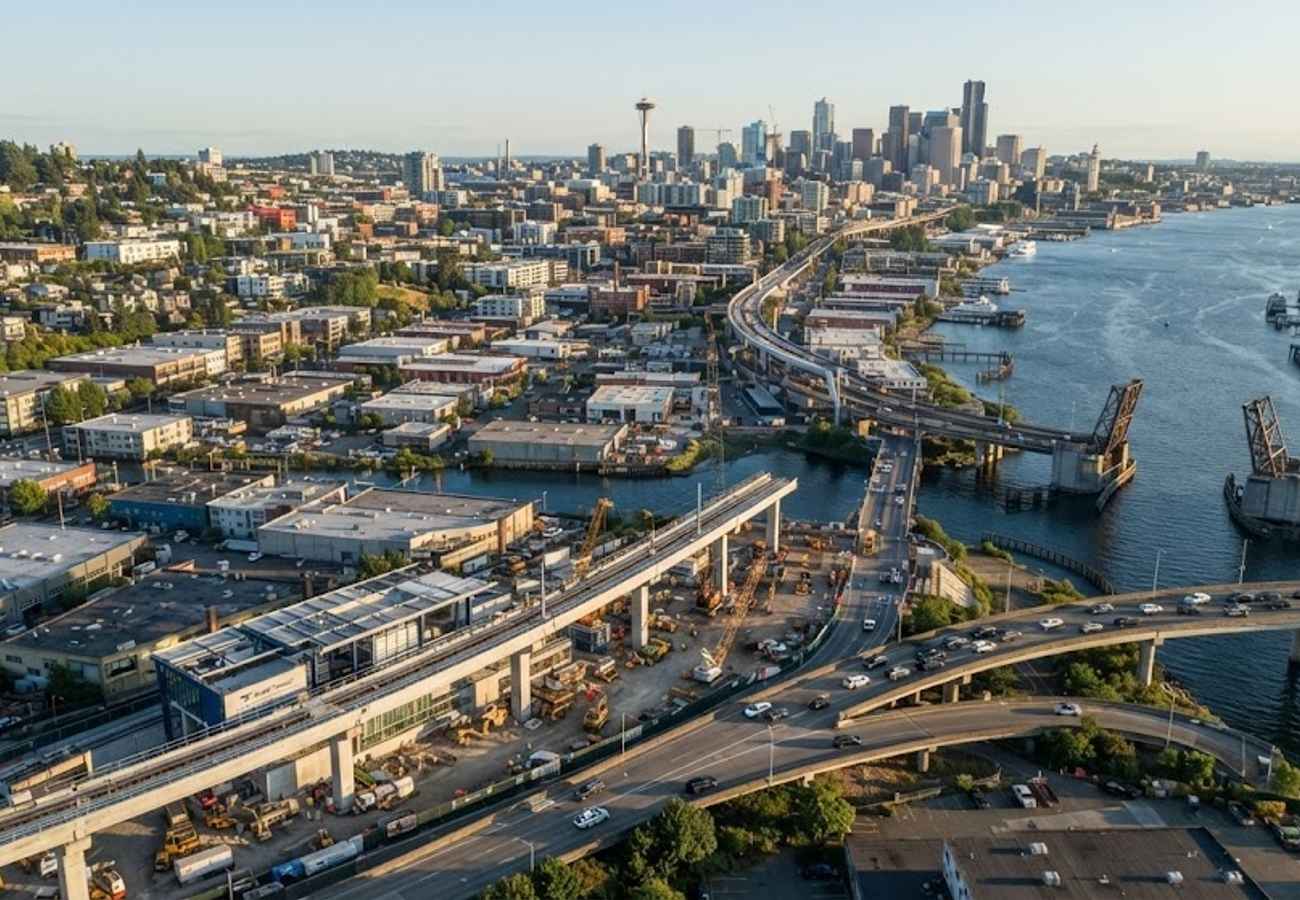
Image generated by AI
Seattle is racing toward a 2042 light rail completion date, but a massive funding deficit now threatens the final leg of the Ballard Link Extension. Without securing approximately $1 billion in new capital by 2030, the connection to Market Street could be delayed until 2060.
The proposed Ballard Link Extension is a cornerstone of Seattle's long-term urban strategy, designed to bridge the gap between the Chinatown-International District and the northern reaches of the city. While the vision is clear, the financial reality is complex. According to updated ST3 System Plan data, Sound Transit has secured the necessary funds to push construction from the existing network toward Seattle Center. However, the segment extending from Seattle Center to Market Street remains financially unsecured.
This creates a bifurcated project timeline: the first stage has a locked-in financial trajectory, while the second stage—the vital link to Ballard—depends entirely on the agency's ability to find new revenue streams or internal savings.
Critical Milestones for the Ballard Corridor Timeline
Sound Transit officials maintain that a 2042 opening is still achievable, but only if specific financial targets are met within the next several years. The viability of the project now hinges on three pivotal dates:
- 2030: The agency must identify roughly $1 billion in additional savings or new financial capacity to trigger property acquisitions between Seattle Center and Market Street.
- 2032: Completion of final design work is expected, which will provide the definitive total cost for the remaining extension.
- 2033: This is the "point of no return" for funding. To keep the 2042 target, full construction funding must be locked in by this date.
For the local economy and the tourism sector, these dates are not merely administrative markers; they are the determinants of how visitors will navigate the city's cultural and commercial hubs without relying on congested road networks.
Transforming Transport into Tourism Infrastructure
While engineering reports focus on track mileage and concrete, the real-world impact of the Ballard Link Extension is about destination accessibility. Seattle is a global hub for cruise passengers, business conventions, and international tourists arriving via Seattle-Tacoma International Airport.
A fully operational rail line would fundamentally change the visitor experience by providing seamless access to northern districts. This infrastructure would specifically benefit:
- International Arrivals: Reducing the friction between the airport and northern city neighborhoods.
- Cruise Travelers: Allowing passengers to extend their stays by easily visiting diverse city districts.
- Corporate Travelers: Facilitating faster movement between hotels and conference centers.
- Domestic Tourists: Encouraging exploration of neighborhoods beyond the standard tourist traps.
Industry observers suggest that transport infrastructure is, in effect, tourism infrastructure. Modern travelers prioritize "mobility ease"—the ability to move between a hotel, a museum, and a restaurant without the stress of ride-share surges or traffic jams.
Economic Risks of Infrastructure Delays
A common misconception is that rail delays only inconveniences daily commuters. In reality, a shift in the completion date from 2042 to 2060 would result in nearly 20 years of lost economic momentum.
| Area Affected | Possible Impact of Delayed Completion |
|---|---|
| Tourism | Slower visitor movement between city districts |
| Local Businesses | Reduced foot traffic and passenger flow to new areas |
| Events Industry | Persistent, heavy dependence on road transport |
| Sustainability | Prolonged reliance on private internal combustion vehicles |
| Urban Development | Stagnation of investment around proposed station areas |
The Ballard project mirrors a global struggle where cities aspire to green mobility but are hampered by escalating construction costs and volatile economic climates.
Analyzing the $35 Billion Systemic Funding Gap
The struggle for the Ballard corridor is a symptom of a larger financial crisis. Sound Transit recently revised its ST3 System Plan after discovering a projected $35 billion funding gap spanning 25 years across its entire program.
To mitigate this, the agency has allocated $18.1 billion to the Ballard corridor, which covers construction to Seattle Center and roughly $300 million for the design work leading to Market Street. Additionally, Sound Transit is hunting for $3 billion in savings by optimizing design choices and construction delivery methods.
To bridge the remaining gap, officials are exploring several aggressive financial strategies:
- Extending the periods for bond repayments.
- Expanding the agency's overall debt capacity.
- Implementing value-capture mechanisms to generate revenue from developments near new stations.
- Seeking third-party financial partnerships.
- Overhauling permitting processes to eliminate costly delays.
The Global Battle for Urban Mobility
Seattle's predicament is not unique. From Asia to Europe, cities are recognizing that rail connectivity is a primary driver of "destination competitiveness." The modern traveler expects a low-carbon, reliable, and integrated transit experience from the moment they land.
The Ballard Link Extension is more than a transit project; it is an attempt to create a connected urban ecosystem. If the city fails to resolve the funding crisis by 2033, it risks falling behind other global cities that have successfully integrated their transit and tourism strategies.
For the travel industry, the stakes are high. The decision made in the next seven years will determine whether Seattle evolves into a seamlessly connected metropolis or remains a city of fragmented neighborhoods separated by traffic.
The future of Seattle's visitor economy may well be decided by a balance sheet in 2033.
Related Travel Guides
Disclaimer
This article is for informational and educational purposes only. It does not constitute legal, financial, or professional advice. While we strive to provide accurate and up-to-date information, travel policies, regulations, and conditions change rapidly. Always verify information with official sources before making travel decisions. Nomad Lawyer makes no representations about the accuracy, reliability, completeness, or suitability of the information provided. Readers should consult qualified professionals for advice specific to their circumstances. The views expressed in this article are those of the author and do not necessarily reflect the views of Nomad Lawyer.
Preeti Gunjan
Contributor & Community Manager
A passionate traveller and community builder. Preeti helps grow the Nomad Lawyer community, fostering engagement and bringing the reader experience to life.
Learn more about our team →