
SeaPort Airlines Expands Fast Regional Flights from Seattle Boeing Field to Portland and Spokane, Challenging Rail Travel
Operating out of Seattle's Boeing Field, SeaPort Airlines offers 60-minute regional flights to Portland and Spokane, competing directly with Amtrak Cascades rail services.

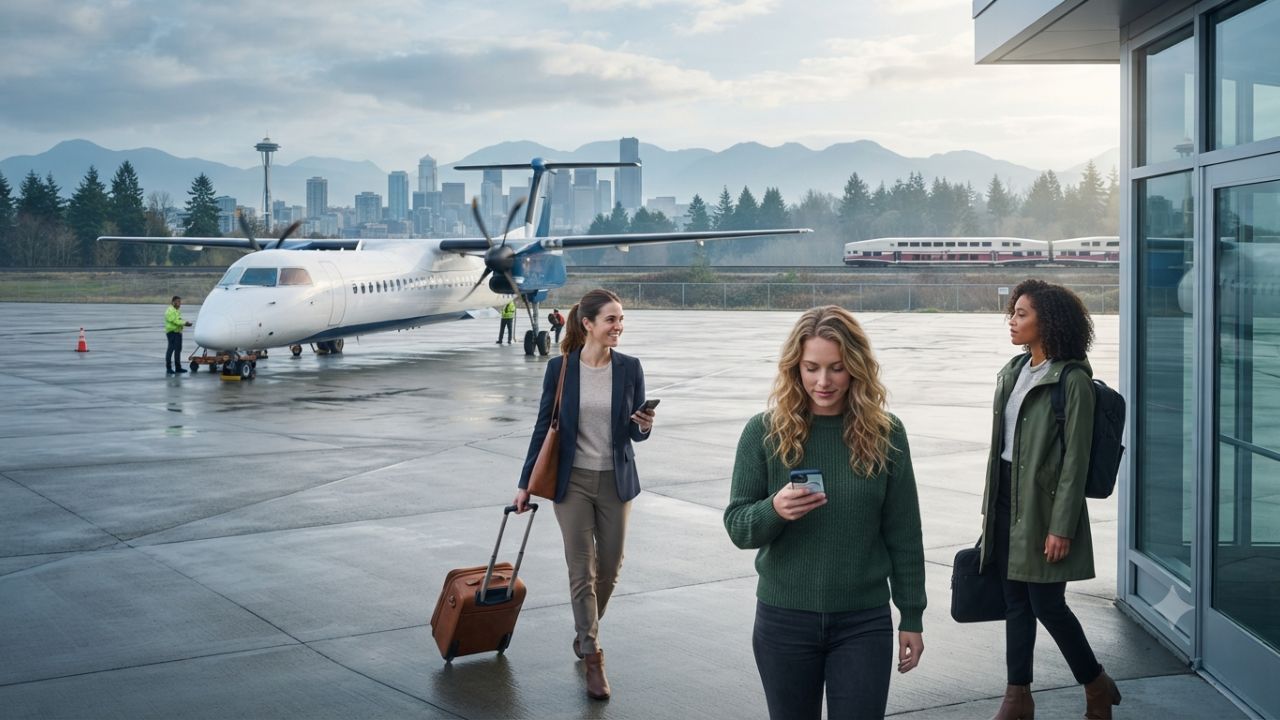
SeaPort Airlines operates regional shuttle flights out of Seattle Boeing Field, offering same-day business travel to Portland and Spokane.
Regional carrier SeaPort Airlines is positioning its short-haul flight network as a high-speed alternative to intercity passenger rail across the Pacific Northwest. Operating out of King County International Airport, commonly known as Boeing Field (BFI) in Seattle, the airline provides non-stop regional shuttles connecting Seattle with Portland, Oregon, and Spokane, Washington. By utilizing smaller secondary airports and streamlined check-in procedures, the carrier delivers 60-minute city-to-city travel times, offering same-day return mobility for business travelers avoiding freight-delayed rail corridors.
[SEATTLE] — Regional transportation competition across the Pacific Northwest is intensifying as regional aviation operators capitalize on infrastructure bottlenecks affecting passenger rail. Operating from Seattle’s Boeing Field (BFI), SeaPort Airlines has expanded daily flight frequencies to Portland International Airport (PDX) and Spokane International Airport (GEG).
The airline’s operational model targets time-sensitive business and leisure travelers who seek to avoid the multi-hour travel times associated with passenger trains operating on shared rail tracks. While passenger rail operators like Amtrak Cascades continue to roll out new equipment such as Amtrak Airo trainsets, rail journeys between Seattle and Portland remain constrained by freight train prioritization along BNSF Railway tracks. In contrast, regional flights complete the intercity hop in approximately one hour.
Business Model: Bypassing Major Airport Congestion at Boeing Field
SeaPort Airlines builds its competitive advantage around secondary airport infrastructure. By operating out of Boeing Field rather than Seattle-Tacoma International Airport (SEA), the carrier eliminates major airport congestion:
- Bypassing TSA Queue Delays: Passengers arriving at Boeing Field benefit from streamlined security screening and expedited check-in, allowing arrival at the terminal 20 to 30 minutes before departure.
- Free Terminal Parking: Unlike major commercial airports charging premium daily parking rates, secondary regional facilities often offer accessible or complimentary parking.
- Rapid Aircraft Turnarounds: Utilizing small turboprop aircraft enables 15-minute gate turnarounds, maximizing daily aircraft utilization and schedule reliability.
| Travel Parameter | SeaPort Airlines (Boeing Field) | Amtrak Cascades (King Street Station) | Major Commercial Airline (Sea-Tac) |
|---|---|---|---|
| Departure Terminal | Boeing Field / BFI (Seattle) | King Street Station (Seattle) | Sea-Tac / SEA (Seattle) |
| Pre-Flight Arrival Time | 20–30 minutes before departure | 30 minutes before departure | 90–120 minutes before departure |
| Transit Time to Portland | ~60 minutes flight time | 3.5 to 4 hours train time | ~50 minutes flight time (+ TSA queues) |
| Track / Airway Clearance | Direct ATC flight routing | Shared track with freight rail | Subject to airspace holding patterns |
| Parking & Accessibility | Expedited parking near terminal | Downtown city center access | High-cost multi-story parking garages |
Comparative Analysis: Aviation Efficiency vs. Regional Rail Infrastructure
The Pacific Northwest corridor illustrates a broader national debate between regional aviation agility and long-term passenger rail investment:
Passenger Rail Infrastructure Limitations
Intercity trains operating between Eugene, Portland, Seattle, and Vancouver, B.C. run primarily on tracks owned by freight railroad corporations. Despite multi-million-dollar state and federal infrastructure grants, passenger trains must frequently yield to long freight trains, resulting in schedule delays and average travel times exceeding 3.5 hours between Seattle and Portland.
Aviation Utilization of Existing Airports
Rather than requiring decades of land acquisition and track construction required for proposed Pacific Northwest high-speed rail megaprojects, regional airlines utilize existing airfield infrastructure managed by the Federal Aviation Administration (FAA).
By flying out of established general aviation hubs like Boeing Field in Seattle and Felts Field or main terminals in Spokane and Portland, regional carriers deliver immediate time savings without multi-billion-dollar public infrastructure outlays.
| Pacific Northwest Route | Flight Duration | Train Journey Duration | Driving Duration (I-5 Corridor) |
|---|---|---|---|
| Seattle (BFI) to Portland (PDX) | ~60 minutes | 3 hours 30 minutes | 3 to 4.5 hours (subject to traffic) |
| Seattle (BFI) to Spokane (GEG) | ~65 minutes | 7 hours 45 minutes | 4.5 to 5.5 hours (Snoqualmie Pass dependent) |
Economic Benefits of Same-Day Business Mobility
The ability to execute same-day business trips between Seattle, Portland, and Spokane represents a major economic driver for regional commerce:
- Elimination of Overnight Lodging Costs: Corporate travelers can attend morning meetings in Portland or Spokane and return to Seattle by evening, eliminating hotel and per-diem expenses.
- Enhanced Executive Productivity: Shorter total transit times reduce lost working hours, enabling professionals to complete round trips in under four total travel hours.
- Flexible Inter-City Commerce: Strengthens commercial links between Seattle’s technology sector, Portland’s manufacturing and sportswear hubs, and Spokane’s healthcare and agriculture industries.
Information published by the Port of Seattle indicates that general aviation hubs like Boeing Field play an essential role in supporting regional corporate mobility and relieving congestion at primary commercial airports.
| Regional Market Linkage | Core Business Industries Supported | Daily Travel Objective |
|---|---|---|
| Seattle – Portland | Technology, sportswear, green energy, legal services | Same-day executive meetings & site visits |
| Seattle – Spokane | Healthcare, agriculture, manufacturing, higher ed | Regional office oversight & government trade |
Actionable Guidance for Travelers Navigating Pacific Northwest Corridors
Travelers choosing between air and rail travel across the Pacific Northwest should evaluate these practical factors:
- Calculate Total Door-to-Door Time: Factor in terminal arrival requirements. A 60-minute flight out of Boeing Field requires roughly 90 minutes of total door-to-door time, whereas train travel requires over 4 hours.
- Consider City-Center Destination Needs: If your final destination is in downtown Portland or downtown Seattle, Amtrak's King Street and Union stations place you directly in the city center. If your meetings are near airport corridors or outer suburbs, flying into PDX or GEG offers faster car rental access.
- Monitor Winter Weather Restrictions: Mountain passes like Snoqualmie Pass affect driving times to Spokane, while winter fog can occasionally delay morning turboprop flights. Check morning weather forecasts when booking winter day trips.
Frequently Asked Questions
Which airport does SeaPort Airlines use in Seattle?
SeaPort Airlines operates out of King County International Airport, commonly known as Boeing Field (BFI), located just south of downtown Seattle.
How fast is the flight from Seattle Boeing Field to Portland?
The flight time between Seattle Boeing Field (BFI) and Portland International Airport (PDX) is approximately 60 minutes, compared to 3.5 to 4 hours by train.
Why is flying from Boeing Field faster than flying from Sea-Tac?
Boeing Field is a smaller regional airport with shorter security lines, free or low-cost parking, and close proximity to the terminal, allowing passengers to arrive just 20 to 30 minutes before departure.
How does SeaPort Airlines compare with Amtrak Cascades trains?
While Amtrak Cascades offers city-center to city-center drop-offs, train travel is subject to freight track delays and takes over 3.5 hours. SeaPort Airlines provides 60-minute flights designed for fast, same-day business travel.
Related Travel Guides
Disclaimer
This article is for informational and educational purposes only. It does not constitute legal, financial, or professional advice. While we strive to provide accurate and up-to-date information, travel policies, regulations, and conditions change rapidly. Always verify information with official sources before making travel decisions. Nomad Lawyer makes no representations about the accuracy, reliability, completeness, or suitability of the information provided. Readers should consult qualified professionals for advice specific to their circumstances. The views expressed in this article are those of the author and do not necessarily reflect the views of Nomad Lawyer.
Kunal K Choudhary
Co-Founder & Contributor
A passionate traveller and tech enthusiast. Kunal contributes to the vision and growth of Nomad Lawyer, bringing fresh perspectives and driving the community forward.
Learn more about our team →