
Delta Flight DL251 Diverts to Porto After Cabin Smoke: Transatlantic Emergency Landing and Passenger Rights Guide

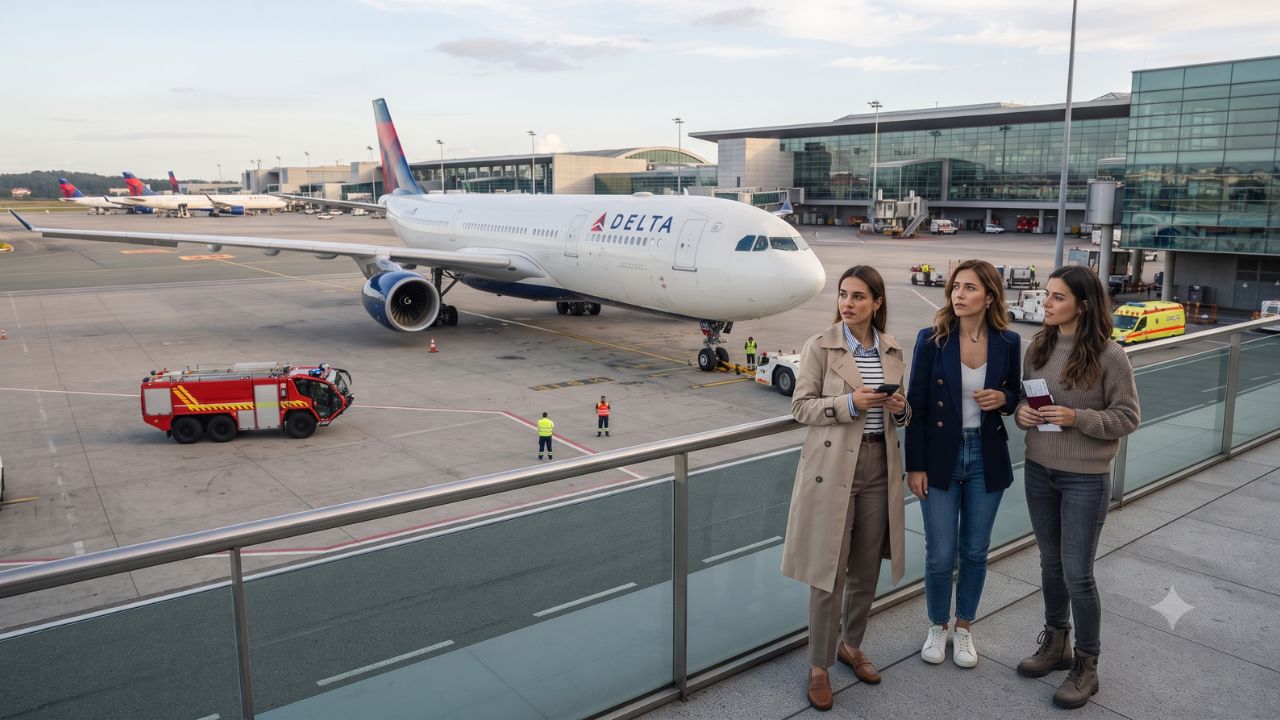
Two and a half hours into an eight-and-a-half-hour transatlantic crossing from Barcelona to Boston, thick fumes in the passenger cabin forced Delta flight DL251 to execute a sharp descent from 32,000 feet into northern Portugal. Carrying 296 passengers and crew aboard an Airbus A330, the aircraft touched down safely at Francisco Sá Carneiro Airport in Porto, where emergency medical teams hospitalized four individuals and administered oxygen to a dozen others on the tarmac.
The Mid-Atlantic Smoke Emergency: Inside Flight DL251’s Diversion
Departing Barcelona-El Prat at 3:15pm on Sunday, the wide-body jet was tracking west across northern Spain toward open ocean when onboard smoke alarms and visible cabin haze forced pilots to declare an emergency. Rather than proceeding into remote North Atlantic airspace where diversion runways are sparse, the flight crew reversed course toward Porto Airport, touching down with emergency ground vehicles waiting on the apron.
Medical teams transported four people to local hospitals—three passengers and one flight attendant—with two adult male passengers treated for mild smoke inhalation. First responders treated eight additional travelers on the ramp and provided supplemental oxygen to twelve passengers who experienced respiratory irritation during the rapid descent.
While Delta Air Lines confirmed the safe diversion of the 296 occupants due to an onboard mechanical issue, the incident triggered cascading schedule disruptions. A replacement departure from Porto scheduled for 1:00pm on Monday was cancelled, leaving travelers waiting for rebooked flights operating from Barcelona at 3:15pm Monday.
What Makes In-Flight Smoke Protocol and Diversions Different
Smoke or fumes aboard a pressurized wide-body aircraft represent an immediate operational emergency requiring instant diversion. As outlined by the Federal Aviation Administration, cabin smoke can originate from multiple mechanical vectors, including air conditioning packs, electrical bus failures, auxiliary power units, or engine oil seal degradation.
Unlike routine turbulence or weather delays, cabin smoke events alter emergency passenger handling:
- Immediate Altitude Loss: Pilots quickly descend to lower altitudes (often 10,000 feet or below) to equalize cabin pressure differentials and exhaust contaminated air through outflow valves.
- Prohibition of Carry-On Retrieval: During smoke evacuations or rapid deplaning, retrieving overhead luggage is strictly prohibited. Baggage slows aisle movement and can puncture evacuation slides.
- Specialized Triage on Arrival: First responders treat smoke inhalation immediately at the gate to prevent delayed respiratory complications from synthetic plastic or hydraulic vapor exposure.
Visitor Insider Tips: Managing Airline Diversions and EU261 Claims
- Enforce EU Regulation 261/2004 Protections: Because flight DL251 departed from an EU member state (Spain), passengers are entitled to statutory 'Duty of Care' under European Commission Air Passenger Rights, covering hotel accommodation, ground transportation, meals, and communications until rerouting is completed.
- Keep Physical Boarding Passes and Medical Reports: Retain all physical baggage tags, boarding cards, and hospital discharge summaries. If submitting claims for out-of-pocket expenses or statutory delay compensation, third-party claim assessors require original digital and paper records.
- Separate Separate-Ticket Risk: If you booked self-connecting flights from Boston Logan to other US cities on a separate carrier, inform the initial operating airline immediately; unlinked onward flights are not automatically protected or rebooked.
- Track Luggage via AirTags: When wide-body aircraft divert to unplanned international airports, baggage offloading can become backlogged. Utilizing personal Bluetooth luggage trackers helps you confirm whether your bags remain in the cargo hold or have been transferred to local customs halls.
Cultural and Environmental Context: Transatlantic Aviation Safety Nets
The rapid diversion of wide-body airliners across the Iberian peninsula highlights the vital role of Portugal and Spain as the westernmost safety threshold for European-American aviation corridors. Gateway airports like Porto handle hundreds of thousands of transatlantic travelers each season, maintaining full Category 9 aircraft rescue and firefighting (ARFF) capabilities.
For long-haul passengers, understanding airline safety protocols and passenger protection frameworks transforms an unexpected emergency stopover into an orderly, rights-protected journey.
FAQ: Delta Flight DL251 Diversion & EU261 Rights 2026
What caused Delta flight DL251 to divert to Portugal?
Delta flight DL251 diverted to Francisco Sá Carneiro Airport in Porto after cabin smoke developed at 32,000 feet during its flight from Barcelona to Boston.
How many people were on board, and were there injuries?
There were 296 passengers and crew on board. Four people (three passengers, one crew member) were hospitalized with mild smoke inhalation, and twelve received supplemental oxygen.
Does EU Regulation 261/2004 apply to this flight?
Yes. Because the flight originated in Barcelona (EU territory), passengers are protected under EU261 for mandatory hotel accommodation, meals, and rerouting care.
When did Delta schedule replacement flights for stranded passengers?
After cancelling a scheduled 1:00pm Monday departure from Porto, Delta organized replacement flights from Barcelona at 3:15pm Monday to transport travelers to Boston Logan.
When unexpected cabin smoke interrupts a transatlantic crossing, swift flight crew actions and clear passenger rights turn an alarming emergency into a safe arrival on European soil.
Related Travel Guides
Disclaimer
This article is for informational and educational purposes only. It does not constitute legal, financial, or professional advice. While we strive to provide accurate and up-to-date information, travel policies, regulations, and conditions change rapidly. Always verify information with official sources before making travel decisions. Nomad Lawyer makes no representations about the accuracy, reliability, completeness, or suitability of the information provided. Readers should consult qualified professionals for advice specific to their circumstances. The views expressed in this article are those of the author and do not necessarily reflect the views of Nomad Lawyer.
Naina Thakur
Contributor & Travel Specialist
Travel enthusiast and legal writer covering visa regulations, responsible tourism, and cultural journeys across global destinations.
Learn more about our team →