
Saudi Arabia Travel Disruption: 7 Flights Cancelled at Dammam and Jeddah
Air Arabia, Kuwait Airways, and Akasa Air cancel multiple flights at King Fahd and King Abdulaziz airports, causing immediate travel disruptions across Saudi Arabia.

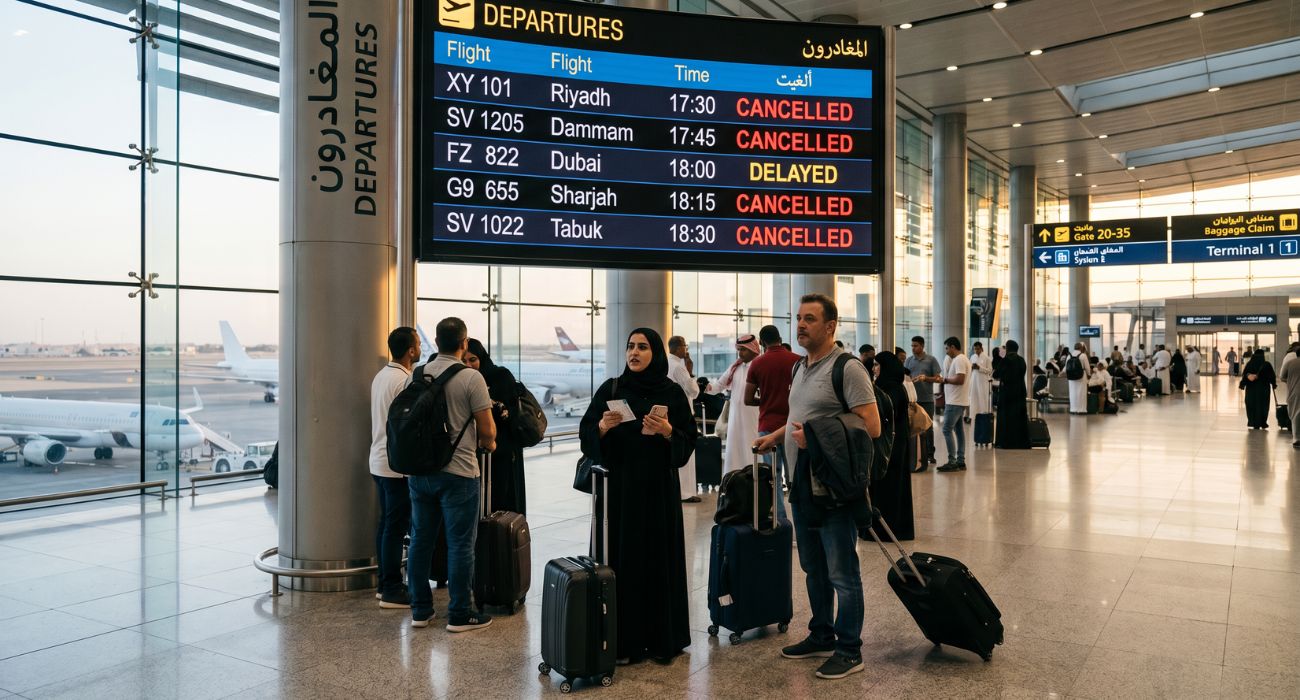
Image generated by AI
Travellers Across Saudi Arabia Face Disruption as Air Arabia, Kuwait Airways Corporation, and Akasa Air Cancel 7 Flights at Dammam and Jeddah Airports
Travellers across Saudi Arabia are encountering sudden travel disruption after Air Arabia, Kuwait Airways Corporation, and Akasa Air grounded a total of seven flights, affecting operations at major airports in Dammam and Jeddah. The cancellations have created inconvenience for passengers moving through two of the kingdom’s busiest aviation gateways, with many forced to revise plans at short notice.
At Dammam’s King Fahd International Airport, passengers reported frustration as Air Arabia cancellations interrupted onward connections and scheduled departures. In Jeddah, similar disruption unfolded at King Abdulaziz International Airport, where Kuwait Airways Corporation and Akasa Air also pulled services, leaving travellers dealing with uncertainty and last-minute itinerary changes. Airport authorities are working to manage the fallout by issuing updates and assisting affected passengers with alternatives where possible.
The disruption once again shows how quickly airline schedule changes can ripple across major travel hubs, especially when cancellations occur without much notice. For travellers, the situation highlights the importance of monitoring live flight status and remaining flexible when operational decisions shift suddenly.
Affected Cities and Airports
The disruption impacted two of Saudi Arabia’s most important cities, each served by a major international airport. Dammam is served by King Fahd International Airport, while Jeddah is anchored by King Abdulaziz International Airport. Both airports saw cancellations involving Air Arabia, Kuwait Airways Corporation, and Akasa Air.
Flight Cancellations
| Airport | Airline | Cancelled Flights | Delayed Flights |
|---|---|---|---|
| King Fahd Int’l | Air Arabia | 4 | 0 |
| King Abdulaziz Int’l | Kuwait Airways Corporation | 2 | 0 |
| King Abdulaziz Int’l | Akasa Air | 1 | 0 |
Overview of the Flight Disruptions
The cancellations placed immediate pressure on operations at both Saudi airports. At King Fahd International Airport in Dammam, Air Arabia cancelled four flights, resulting in a cancellation rate of 66 percent. At King Abdulaziz International Airport in Jeddah, Kuwait Airways Corporation cancelled two flights, reflecting a 100 percent cancellation rate for the affected operation. Akasa Air also cancelled one flight at the same airport, amounting to a 50 percent cancellation rate.
Notably, no delays were reported alongside these disruptions, indicating that airlines chose outright cancellations rather than operating under unstable conditions. Altogether, the seven grounded flights had a clear impact on passenger movement and airport activity in both cities.
What to Do If Your Flight Is Cancelled: Quick Guide
Flight cancellations can quickly derail travel plans, but taking the right steps can help reduce stress and save time.
Stay Updated
Keep checking your email, text messages, and the airline’s app for updates, rebooking notices, or schedule changes. Airlines often issue revised travel information digitally before airport staff can assist every passenger in person.
Stay Calm and Verify the Latest Information
Once you find out your flight has been cancelled, confirm the status directly through the airline’s website or app. Real-time updates are often more reliable than airport rumor or secondhand information.
Contact the Airline
Reach the airline as soon as possible, either through the airport service desk, customer support line, or online chat. If you are already at the airport, getting into the service queue early may improve your chances of securing a faster alternative.
Know Your Passenger Rights
Review the airline’s cancellation and rebooking policies. Depending on the route and cause of cancellation, you may be eligible for a replacement flight, refund, or compensation under applicable regulations.
Consider Alternative Travel Options
If the airline cannot offer a suitable replacement, look into other flights, nearby airports, or even ground transportation if practical. Acting quickly often improves your chances of finding a workable backup.
Final Impact on Travellers
The cancellation of seven flights by Air Arabia, Kuwait Airways Corporation, and Akasa Air caused measurable disruption across two of Saudi Arabia’s key aviation hubs. Dammam and Jeddah both saw passengers scrambling to adapt, underscoring how fragile travel schedules can become when airlines make abrupt operational changes.
With no reported delays and only direct cancellations, airlines appear to have prioritized operational certainty over partial schedule recovery. For travellers, that meant faster clarity, but also more immediate disruption. Going forward, stronger communication and better contingency planning will remain critical for reducing passenger inconvenience when similar situations arise.
All information has been manually compiled from FlightAware’s official platform and remains subject to real-time change. Airlines regularly adjust schedules in response to operational and safety requirements, and passengers are advised not to panic when disruptions occur. Instead, they should monitor live updates, review rebooking policies carefully, and stay flexible with alternate travel arrangements in order to reach their destinations safely.
Disclaimer
This article is for informational and educational purposes only. It does not constitute legal, financial, or professional advice. While we strive to provide accurate and up-to-date information, travel policies, regulations, and conditions change rapidly. Always verify information with official sources before making travel decisions. Nomad Lawyer makes no representations about the accuracy, reliability, completeness, or suitability of the information provided. Readers should consult qualified professionals for advice specific to their circumstances. The views expressed in this article are those of the author and do not necessarily reflect the views of Nomad Lawyer.
Kunal K Choudhary
Co-Founder & Contributor
A passionate traveller and tech enthusiast. Kunal contributes to the vision and growth of Nomad Lawyer, bringing fresh perspectives and driving the community forward.
Learn more about our team →