
US and Canada Issue Severe Saudi Arabia Travel Warnings After Fatal Missile Strike at Riyadh Airport

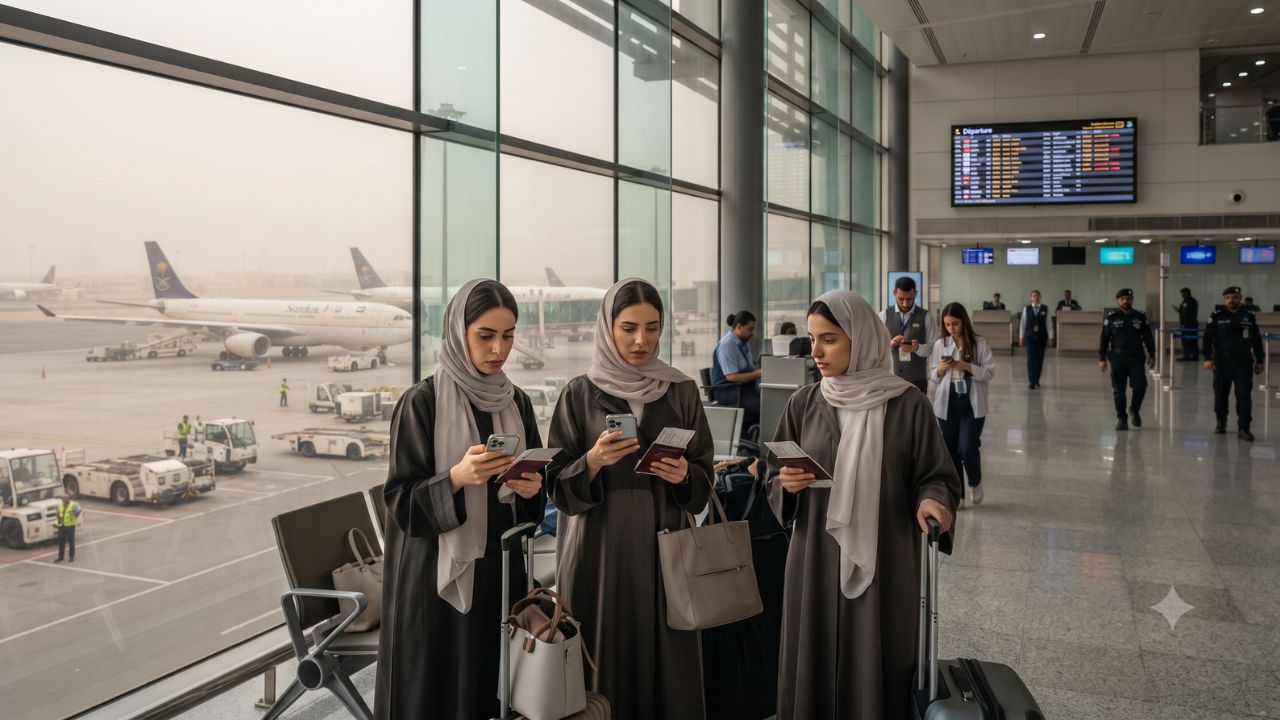
In Saudi Arabia, documenting an aerial missile interception or merely liking an online image of military shrapnel can land a foreign visitor in prison for up to 45 years under national cybercrime statutes. This severe digital enforcement accompanies the latest emergency travel warnings issued by Washington and Ottawa following a catastrophic projectile strike on King Khalid International Airport (RUH) in Riyadh on 10 October 2026. The direct hit on the terminal complex has transformed routine transit through the Kingdom into an operational hazard, grounding hundreds of commercial flights and shifting diplomatic threat assessments to their highest alert levels of the year.
Fatal Missile Strike at King Khalid International Airport
The catalyst for these urgent consular revisions was a deadly strike on 10 October 2026 that breached terminal defenses in northern Riyadh. The projectile directly impacted the concourse facility housing Terminals 3 and 4, which handle heavy volumes of domestic passenger traffic. The blast produced immediate devastation, claiming 12 lives on the scene. Reflecting the international makeup of the Kingdom's transit workforce and passenger flow, the fatalities included four Saudi citizens, two Bangladeshi nationals, and one national each from the United States, Jordan, Palestine, Syria, Sudan, and Egypt. Over 300 individuals suffered blast injuries or trauma from terminal stampedes as dozens of emergency vehicles rushed onto the tarmac.
The lethal incident culminated a week of intense aerial attacks targeting civil aviation infrastructure across the Arabian Peninsula. On 8 October 2026, a commercial Saudia Airbus A320 was burned and destroyed while parked at a passenger gate following a ballistic strike claimed by Houthi forces. That strike succeeded earlier drone and missile barrages launched on 6 and 7 October, which struck civil airport facilities in both Riyadh and Abha International Airport in the southern Asir highlands, inflicting additional casualties.
Aviation Gridlock and Regional Airspace Restrictions
The destruction inside Terminals 3 and 4 triggered an immediate shutdown of civil flight operations across Riyadh. Platforms including Flightradar24 and FlightAware recorded widespread holding patterns and emergency diversions across central Saudi airspace before outbound departures ceased entirely.
Within a single 24-hour window, airlines canceled more than 225 flights scheduled into or out of King Khalid International Airport. European flag carriers, including the Lufthansa Group, withdrew from the route, announcing immediate operational suspensions. Rebel military spokespersons subsequently broadcast statements declaring Saudi airspace an active theater of military engagement, warning global airlines against operating commercial sectors into central or southern hubs.
Both North American diplomatic missions have instructed their citizens not to approach King Khalid International Airport to check ticketing status or search for stranded baggage. Ground concourses remain secured by internal security forces, and congregating near terminal perimeters exposes travelers to secondary impact risks.
| Advisory Category & Facility | United States Directives (State Department) | Canadian Directives (Global Affairs Canada) | Immediate Impact on Travelers |
|---|---|---|---|
| King Khalid Airport (RUH) | Level 3 Advisory; official personnel require high-level security clearance to enter. | Complete Red Zone; mandate to avoid the entire airport facility and perimeter. | Over 225 flights canceled in 24 hours; operations halted; Lufthansa and global airlines suspended. |
| Yemen Border Perimeter | Absolute 20-mile exclusion zone for government personnel. | Strict 30-kilometer buffer zone; avoid all non-essential and official transit. | Heavy military screening; active air defense operations; artillery and cross-border drone hazard. |
| Southwestern Provinces | Advance approval mandatory for Asir, Jazan, and Najran regions. | Blanket "Avoid All Travel" warning covering Asir, Jazan, and Najran. | Elevated falling debris hazards from air defense interceptions around regional airports like Abha. |
| Restricted Saudi Cities | Travel clearance required for Yanbu, Qatif, and Taif. | Caution advised nationwide; recommend deferring non-essential travel. | Increased security checkpoints; random identity checks; localized road transport delays. |
| Emergency Repatriation | Enroll in Smart Traveler Enrollment Program (STEP); independent evacuation. | Enroll in Registration of Canadians Abroad (ROCA); shelter in place mandated. | Commercial airspace subject to snap closure; zero state-guaranteed emergency evacuation flights. |
Washington and Ottawa Issue Severe Travel Directives
The death of an American citizen at Riyadh's terminal prompted the U.S. Embassy in Saudi Arabia and the Department of State to enforce strict movement curbs on official personnel while updating guidance for private citizens. The U.S. continues to classify Saudi Arabia under a Level 3 Advisory (Reconsider Travel). However, internal directives forbid U.S. personnel from traveling within 20 miles of the Yemeni boundary, mandate explicit security clearances before setting foot inside King Khalid International Airport, and demand prior administrative approval to visit Asir, Jazan, Najran, Qatif, Yanbu, or Taif.
For private tourists, corporate professionals, and residents, American authorities published specific survival protocols. Travelers caught in sirens or blasts must move away from exterior glass doors and expansive windows to avoid flying glass shards and shrapnel from Patriot missile interceptions. All public gatherings, demonstrations, and sites exhibiting armed security deployments must be avoided, while mobile devices must remain fully charged and pre-loaded with emergency lines for the Embassy in Riyadh and Consulates General in Jeddah and Dhahran.
Mirroring these measures, Travel Canada upgraded its national travel advisory, warning Canadians against all non-essential travel to Saudi Arabia amid escalating regional instability and spillover hostilities. Canadian authorities designated absolute Red Zones—mandating citizens avoid all travel unconditionally—across King Khalid International Airport, the southwestern provinces of Asir, Jazan, and Najran, and any zone within 30 kilometers of the Yemen border. Ottawa explicitly cautioned citizens that the Canadian government cannot ensure assisted evacuation if commercial airspace closes, advising travelers to maintain independent emergency funds and provisions to shelter in place.
Severe Cybercrime Laws and Shrapnel Regulations
Beyond the kinetic danger of aerial bombardment, international visitors face extreme legal exposure under Saudi Arabia's strict digital security laws. The Ministry of Interior issued stern warnings forbidding civilians from documenting attack damage or emergency responses.
Local statutes make it illegal to take photographs, record video footage, or circulate audio recordings of missile impacts, drone strikes, or active air defense systems engaging targets. Foreign travelers who discover metal debris, drone motors, or unexploded ordnance on highways or desert tracks must keep their distance and contact local emergency teams immediately rather than inspecting or photographing the fragments.
Sharing, reposting, commenting on, or even "liking" unapproved social media content depicting strikes or criticizing emergency responses constitutes a violation of national anti-cybercrime laws. Penalties include immediate detention, substantial fines, deportation, or prison sentences reaching up to 45 years for acts deemed detrimental to public order or state security. Diplomatic missions warn that foreign passports provide no protection from these judicial penalties.
Visitor Insider Tips: Navigating Saudi Travel Risks
- Manage Ticketing Remotely from Your Accommodation: If your flight out of Riyadh, Abha, or Jeddah was grounded, do not take a taxi to the terminal. Customer service counters at King Khalid International Airport are closed to walk-ins. Rebook flights, request refunds, or secure hotel vouchers through digital airline portals, authorized travel agents, or round-the-clock airline call centers from inside your hotel or compound.
- Select Ground-Floor Interior Rooms: When checking into accommodations in Riyadh or southwestern cities, request rooms located on lower floors facing away from main arterial highways, government buildings, or industrial corridors. Ensure your room has heavy blackout curtains and identify interior corridors or windowless bathrooms that can function as reinforced shelters during air defense sirens.
- Clear Your Camera Roll and Social Media Feeds: Saudi security personnel conduct random mobile device checks at highway checkpoints and public plazas. Ensure you have zero saved media depicting military installations, air defense smoke plumes, police convoys, or debris sites. Refrain from publishing real-time commentary about explosions or siren activations on WhatsApp groups, X, or Instagram.
- Keep Cash and Emergency Satellite Reserves Ready: Credit card processing networks can experience localized outages when telecommunications infrastructure suffers collateral disruptions. Carry sufficient Saudi Riyals (SAR) to fund five to seven days of food, fuel, and independent lodging, and store your embassy registration details in offline notes.
- Utilize High-Speed Rail for Western Movement: For travelers currently in Riyadh needing to reach the Red Sea coast, avoid regional domestic flights through affected air corridors. The Haramain High-Speed Railway connects Medina, Jeddah, and Mecca reliably, offering electrified overland transit insulated from regional flight groundings.
Cultural and Environmental Context: Heritage in the Shadow of Regional Conflict
Central Saudi Arabia is home to fragile historical sites that define the cultural revival championed by the Saudi Tourism Authority. Just northwest of Riyadh lies the At-Turaif District in ad-Dir'iyah, a mud-brick citadel recognized by the UNESCO World Heritage Centre as the original seat of power of the House of Saud. The preservation of these earthen palaces requires delicate climate stabilization and protection from physical shockwaves.
Similarly, the southwestern Asir province—celebrated for its dramatic juniper-clad escarpments, historic stone watchtowers, and terraced agricultural villages like Rijal Almaa—has found itself along active drone interception flight paths. Local communities that depend on seasonal tourism and small-scale honey and coffee farming face economic strain as airspace restrictions stall arrivals. Balancing ambitious cultural tourism initiatives with sudden military escalations highlights the acute challenges facing conservationists and hospitality leaders across the region.
FAQ: Traveling to Saudi Arabia During Heightened Security Advisories 2026
What caused the flight cancellations at Riyadh Airport?
On 10 October 2026, a missile strike hit Terminals 3 and 4 at King Khalid International Airport, killing 12 people and injuring over 300, prompting over 225 flight cancellations and widespread carrier suspensions.
Is King Khalid International Airport currently open for international tourists?
Operations were halted following the strike. Both the United States and Canada advise against approaching the airport, instructing travelers to manage bookings remotely through airline websites.
What are the penalties for filming drone or missile attacks in Saudi Arabia?
Documenting strikes, military debris, or air defense systems violates strict cybercrime laws, carrying severe fines, deportation, or prison sentences of up to 45 years.
What regions are on Canada's "Avoid All Travel" list?
Canada advises avoiding King Khalid International Airport, the southwestern provinces of Asir, Jazan, and Najran, and all areas within 30 kilometers of the border with Yemen.
Amid the ancient sands of the Najd, real-time awareness and strict digital caution remain the traveler's most indispensable companions.
Related Travel Guides
Disclaimer
This article is for informational and educational purposes only. It does not constitute legal, financial, or professional advice. While we strive to provide accurate and up-to-date information, travel policies, regulations, and conditions change rapidly. Always verify information with official sources before making travel decisions. Nomad Lawyer makes no representations about the accuracy, reliability, completeness, or suitability of the information provided. Readers should consult qualified professionals for advice specific to their circumstances. The views expressed in this article are those of the author and do not necessarily reflect the views of Nomad Lawyer.
Preeti Gunjan
Contributor & Community Manager
A passionate traveller and community builder. Preeti helps grow the Nomad Lawyer community, fostering engagement and bringing the reader experience to life.
Learn more about our team →