
Saudi Arabia Non-Religious Tourism Crosses 50 Percent Mark
Saudi Arabia's tourism sector shifts as non-religious travel motivations reach 52% of overnight arrivals, generating SAR 176.6 billion in spending.

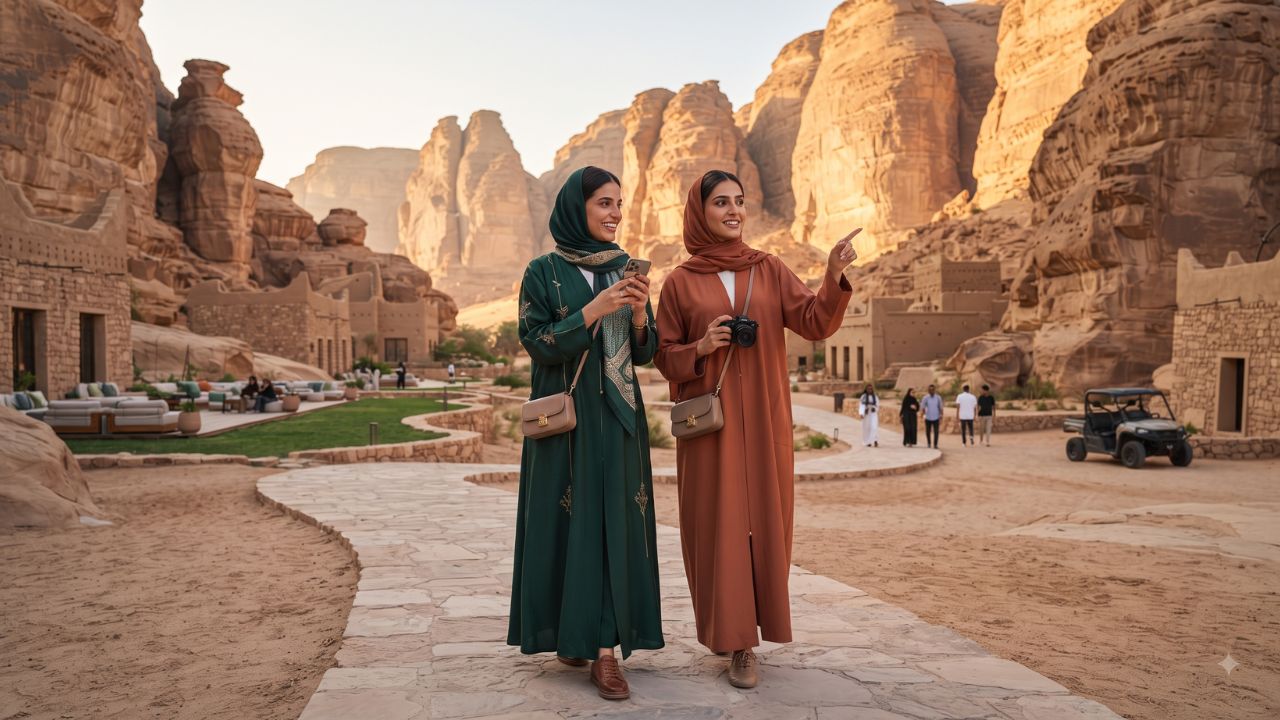
Image generated by AI
Saudi Arabia's tourism sector has crossed a significant threshold, with non-religious motivations accounting for 52 percent of overnight international arrivals in 2025, up from 44 percent in 2019. Backed by a record SAR 304 billion in total domestic and inbound visitor spending, the Ministry of Tourism is establishing multiple leisure hubs outside traditional pilgrimage routes.
Unpacking Saudi Arabia's Changing Inbound Tourism Mix
The travel sector in Saudi Arabia is experiencing a transition as planners build regional destinations to diversify visitor experiences. On 18 June 2026, the Ministry of Tourism released its 2025 Annual Statistical Report, revealing that non-religious motivations accounted for 52 percent of overnight international arrivals.
By establishing these seasonal travel corridors, the airline's management aims to support both business and leisure travel flows. Corporate travelers and travel agencies, which maintain strong relationships with global destination management organizations, benefit from direct seat capacity. This economic integration supports the travel sector, providing service providers with a reliable channel for high-value bookings.
By establishing these seasonal travel corridors, the airline's management aims to support both business and leisure travel flows. Canadian corporate travelers and travel agencies, which maintain strong relationships with European and Asian destination management organizations, would benefit from direct seat capacity. This economic integration supports the travel sector, providing service providers with a reliable channel for high-value bookings.
By establishing these seasonal travel corridors, the airline's management aims to support both business and leisure travel flows. Canadian corporate travelers and travel agencies, which maintain strong relationships with European and Asian destination management organizations, would benefit from direct seat capacity. This economic integration supports the travel sector, providing service providers with a reliable channel for high-value bookings.
By establishing these seasonal travel corridors, the airline's management aims to support both business and leisure travel flows. Canadian corporate travelers and travel agencies, which maintain strong relationships with European and Asian destination management organizations, would benefit from direct seat capacity. This economic integration supports the travel sector, providing service providers with a reliable channel for high-value bookings.
By establishing these seasonal travel corridors, the airline's management aims to support both business and leisure travel flows. Canadian corporate travelers and travel agencies, which maintain strong relationships with European and Asian destination management organizations, would benefit from direct seat capacity. This economic integration supports the travel sector, providing service providers with a reliable channel for high-value bookings.
The country recorded approximately 29.3 million inbound tourists in 2025 (compared to 29.7 million recorded in 2024).
The statistics show that religious tourism accounted for 48.3 percent of the visitor mix. Meanwhile, leisure travel reached 24.1 percent (representing approximately 7 million tourists), business travel made up 7.7 percent (representing 2.3 million visitors), visiting friends and relatives represented 14.9 percent, and other motivations made up 5.1 percent.
Leisure Tourism as a Major Driver: AlUla, Riyadh, and Jeddah
The development of multiple tourism centers has expanded the country's travel portfolio.
This localized disruption also offers a unique opportunity for duty-free retailers and terminal operators to design services suited for stranded passengers. By monitoring passenger comfort levels during long delays, airport customer teams can provide complimentary amenities to ensure guest satisfaction. This proactive approach helps build traveler confidence, ensuring that regional transit routes remain competitive with global hub standards.
This localized disruption also offers a unique opportunity for duty-free retailers and terminal operators to design services suited for stranded passengers. By monitoring passenger comfort levels during long delays, airport customer teams can provide complimentary amenities to ensure guest satisfaction. This proactive approach helps build traveler confidence, ensuring that regional transit routes remain competitive with global hub standards.
AlUla has become a primary cultural destination, combining archaeological remains with desert settings.
Riyadh provides a mix of entertainment festivals and conferences, while Jeddah offers Red Sea coastal access and the historic Al-Balad district. The Red Sea region has also added luxury nature-based projects that extend visitor stays.
The Economic Value of the Inbound Tourism Surplus
The change in visitor demographics has generated record financial returns.
This environmental focus is supported by regional climatologists and conservationists who monitor ecosystem health. By tracking tourist footprint signals, managers can ensure that natural areas remain protected. The integration of carrying-capacity policies with wilderness trails demonstrates how tourism planning can protect biodiversity while offering high-quality educational hikes.
This localized culinary focus also offers a unique opportunity for restaurant associations and culinary schools to design programs suited for premium travelers. By monitoring traveler culinary preferences during long stays, local chefs can provide customized dishes to ensure guest satisfaction. This proactive approach helps build traveler confidence, ensuring that Goan coastal dining remains competitive with global culinary standards.
Saudi Arabia recorded SAR 176.6 billion in inbound tourism spending during 2025.
Domestic tourism spending added another SAR 127.1 billion, bringing total domestic and inbound expenditure to approximately SAR 304 billion (representing a 7 percent increase compared to 2024). The travel surplus reached SAR 49.4 billion in 2025, and tourism contributed 4.9 percent to the national GDP in 2024. Tourism employment also grew, reaching approximately 1.03 million jobs in 2025.
Community Support and Sustainable Desert Tourism
Developing desert resorts supports regional communities and heritage preservation.
By establishing these seasonal travel corridors, the airline's management aims to support both business and leisure travel flows. Canadian corporate travelers and travel agencies, which maintain strong relationships with European and Asian destination management organizations, would benefit from direct seat capacity. This economic integration supports the travel sector, providing service providers with a reliable channel for high-value bookings.
For the visitor, the real impact is experiencing a travel destination where spending directly benefits local guide associations, historical preservation teams, and traditional artisans.
Sustainable practices include water conservation in arid zones, utilizing solar energy at Red Sea resorts, and protecting marine habitats.
Visitor Guide: Local Specialties, Regional Transit, and Cultural Rules
Navigating Saudi Arabia involves using public high-speed rail, complying with decency regulations, and trying regional delicacies.
Sample traditional culinary specialties during your stay. Try Kabsa, a fragrant rice dish served with roasted chicken and local spices. Order Saleeg, a traditional creamy Hejazi rice cooked in broth. Savor fresh organic dates served with cardamom-infused Gahwa (Arabic coffee) at local cafes.
Coordinate your local transport. Book tickets for the Haramain High-Speed Railway via the official HHR booking portal to connect Jeddah and Madinah directly. For remote heritage sites like AlUla, Prince Abdul Majeed bin Abdulaziz Airport (ULH) is the nearest airport, and local car rentals are recommended.
Observe local decency rules. Under the Public Decency Law, dress modestly by keeping shoulders and knees covered in public spaces. While the abaya is not mandatory for foreign women, loose-fitting tops and trousers are required. Avoid public displays of affection, and respect prayer times when shops may briefly close.
Future Outlook: Rebuilding a Resilient Middle Eastern Travel Hub
The long-term expansion of Saudi Arabia's leisure sector depends on integrating infrastructure investments with international flight networks. The Ministry of Tourism is collaborating to expand Saudi Air and Riyadh Air networks.
Sustainable initiatives include building low-emission rail corridors, promoting eco-friendly desert camps, and supporting wildlife preservation projects. By combining technological service upgrades with community-led hospitality, the country aims to support smart tourism development, securing a resilient and connected future for Hejaz and Nejd tourism.
Related Travel Guides
Disclaimer
This article is for informational and educational purposes only. It does not constitute legal, financial, or professional advice. While we strive to provide accurate and up-to-date information, travel policies, regulations, and conditions change rapidly. Always verify information with official sources before making travel decisions. Nomad Lawyer makes no representations about the accuracy, reliability, completeness, or suitability of the information provided. Readers should consult qualified professionals for advice specific to their circumstances. The views expressed in this article are those of the author and do not necessarily reflect the views of Nomad Lawyer.
Raushan Kumar
Founder & Lead Developer
Full-stack developer with 11+ years of experience and a passionate traveller. Raushan built Nomad Lawyer from the ground up with a vision to create the best travel and law experience on the web.
Learn more about our team →