
Trail Pressures: Saudi Arabia Balances Adventure Tourism with Eco-Protection
Saudi Arabia's nature tourism sector is experiencing a massive expansion under Vision 2030, welcoming a record 123 million visitors in 2025.

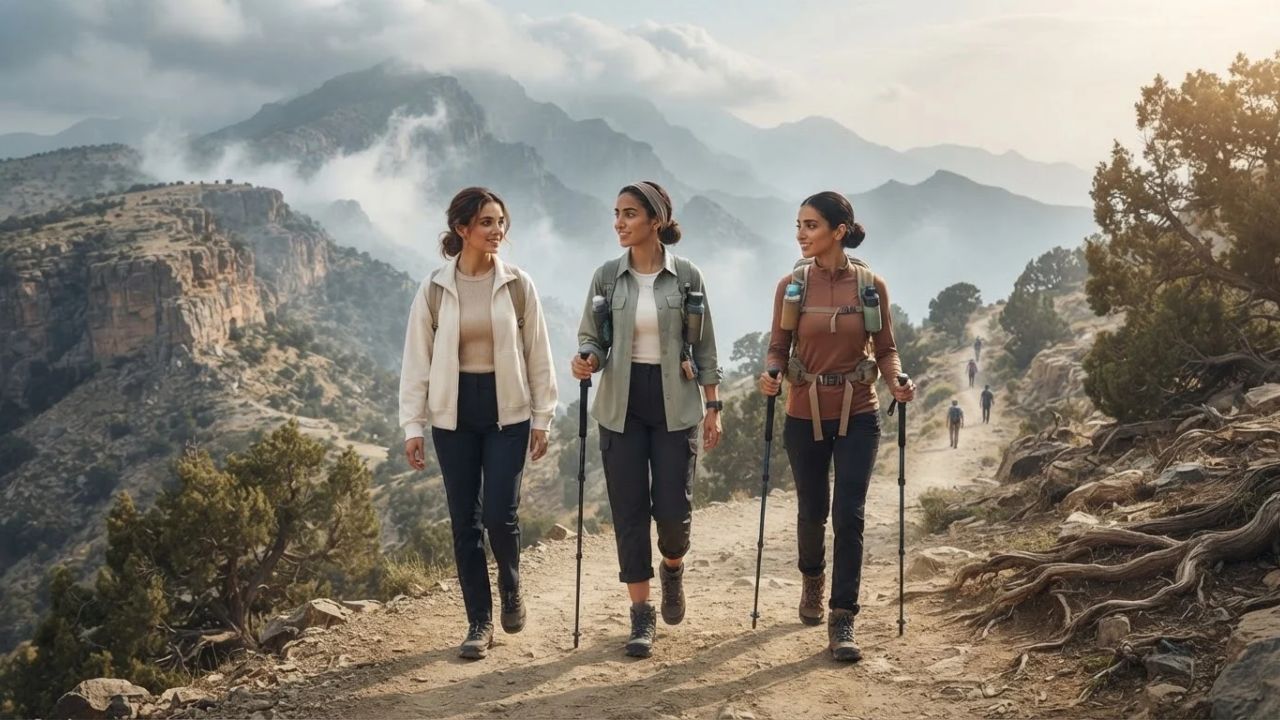
Image generated by AI
Saudi Arabia's nature tourism sector is experiencing a massive expansion under Vision 2030, welcoming a record 123 million visitors in 2025 and generating SAR 304 billion in total expenditure. However, the rapid influx of outdoor enthusiasts has placed significant pressure on the cloud-draped peaks of Asir and the desert canyons of AlUla.
Structural Realignment: Shifting to Non-Religious Travel Flows
A significant trend in Middle Eastern travel is the diversification of national visitor profiles. Historically, Saudi Arabia's inbound travel sector was driven by Hajj and Umrah pilgrimages. Under Vision 2030, the Kingdom has unlocked vast, previously restricted landscapes, promoting cloud forests, desert wadis, and high-altitude hiking trails. Data from the Ministry of Tourism shows that non-religious travel accounted for 52 percent of all inbound overnight stays in 2025, up from a 44 percent baseline in 2019.
While this diversification has generated a travel surplus of SAR 49.4 billion in the balance of payments, it has created a structural paradox: high visitor density is outpacing the ecological carrying capacity of fragile desert and alpine hiking routes.
High-Altitude Pressures in the Asir Mountain Range
The Asir highlands, anchored by the regional capital Abha, serve as the Kingdom's primary high-altitude recreation hub:
- Summit Elevations: The Asir range rises to elevations exceeding 3,000 meters above sea level.
- Jabal Sawda Congestion: Escape from lowlands summer heat drives thousands of daily hikers to Jabal Sawda. The intense foot traffic compresses the soil and prevents rainwater infiltration.
- Juniper Forest Decay: High-altitude cloud forests, dominated by the East African juniper (Juniperus procera), suffer from root exposure, soil compaction, and high sapling mortality.
- Rijal Almaa Path Decay: Cultural group tours along steep slate pathways have accelerated structural wear on terraced stone walls and historic masonry.
These ecological pressures require managed trail limits to prevent long-term environmental degradation.
Sandstone Canyons and Protected Reserves: AlUla and PMBSRR
Northwestern Saudi Arabia features hyper-arid sandstone canyon landscapes populated by ancient acacia groves and protected species:
- Sharaan Nature Reserve: Located in the AlUla governorate, it prioritizes low-impact eco-tourism with guided Acacia treks, though the sandstone formations are highly sensitive to surface abrasion and graffiti.
- Prince Mohammed bin Salman Royal Reserve (PMBSRR): Covers 24,500 square kilometers across 15 ecosystems. It contains over 50 percent of the Kingdom's biodiversity while occupying just 1 percent of its terrestrial landmass and 1.8 percent of its marine area.
- Documented Species: Surveys identify 791 terrestrial species, including 5 species entirely new to global science and 34 global range extensions.
- Red Sea Segment: Manages a marine protected area of 4,000 square kilometers and 170 kilometers of coastline.
- Wadi Al-Disah Trail Damage: Perennial freshwater springs and palm groves inside Wadi Al-Disah face degradation from off-road vehicles polluting stream beds.
- ReWild Arabia Program: Executed by PMBSRR to reintroduce 14 native species. In January 2026, the Asian houbara bustard was reintroduced (marking the 13th species), followed by the Arabian hare in February 2026 (the 14th species).
- Raptor Nesting: Sandstone cliffs in Jabal Qaraqir host confirmed active breeding colonies of the endangered Griffon vulture, which are sensitive to recreational drone noise.
Andrew Zaloumis, CEO of PMBSRR, highlighted the reserve's international significance as a bioclimatic refugium supporting species recovery during global climate changes.
Macroeconomic Indicators and Licensing Growth
The expansion of the tourism economy represents a key driver of non-oil GDP:
- 2024 Performance: Saudi Arabia welcomed 116 million total tourists, with tourism directly contributing 4.9 percent to national GDP (a 14 percent year-on-year growth). Total spending reached SAR 284 billion.
- 2025 Performance: Total visitor volume reached a record 123 million tourists (comprising 29.3 million inbound international visitors and 93.3 million domestic trips). Spending reached a historic high of SAR 304 billion (inbound international spending contributed SAR 176.6 billion, domestic spending generated SAR 127.1 billion).
- Labor Force Growth: Labor force in tourism activities reached 959,175 employees in Q2 2024 (a 5.1 percent increase over Q2 2023), growing to 1.03 million jobs in 2025.
- Women's Empowerment: Saudi women accounted for 47 percent of all Saudi employees in tourism activities in 2025, up from 5 percent in 2018.
- Service Licenses: By the end of 2024, the Ministry of Tourism recorded a 32 percent year-on-year surge, issuing 2,853 licenses nationwide. Official spokesperson Mohammed Al-Rasasimah noted that Riyadh Region issued the highest number of licenses (955), followed by Makkah (792), Eastern Region (472), Madinah (191), and Qassim (116).
- Hospitality Facilities: By Q3 2025, licensed tourism facilities reached 5,622 (a 40.6 percent surge over Q3 2024). Apartments made up 52.6 percent (2,955 facilities), and hotels comprised 47.4 percent (2,667 facilities).
Minister of Tourism Ahmed Al-Khateeb emphasized that the record spending highlights the sector's accelerating role in economic growth and job creation.
Saudi Arabia Tourism Performance and Infrastructure Coordinates
The table below breaks down the key tourist volumes, national spending indicators, licensing outputs, and protected reserve areas established for the tourism sector:
| Tourism Performance Parameter | 2024 Baseline Output | 2025 Record Performance | Year-on-Year Growth | Protected Reserve Dimensions |
|---|---|---|---|---|
| Total Tourist Volume | 116.0 Million visitors | 123.0 Million visitors | +6.0% | 24,500 km² PMBSRR area |
| Inbound International | 30.0 Million visitors | 29.3 Million visitors | -2.3% | 4,000 km² Red Sea waters |
| Domestic Tourist Trips | 86.2 Million trips | 93.3 Million trips | +8.2% | 170 km managed coastline |
| Total Tourism Spending | SAR 284.0 Billion | SAR 304.0 Billion | +7.0% | Inbound: SAR 176.6 Billion |
| Travel Account Surplus | SAR 26.8 Billion (Q1) | SAR 49.4 Billion | +11.7% (Q1 basis) | Domestic: SAR 127.1 Billion |
| Tourism Service Licenses | 2,853 total issued | 32% rise over 2023 | End of 2024 data | Riyadh (955) / Makkah (792) |
| Licensed Facilities (Q3) | 5,622 facilities | 40.6% rise vs Q3 2024 | Q3 2025 data | Apts: 2,955 / Hotels: 2,667 |
| Tourism Labor Force | 959,175 employees | 1.03 Million jobs | +5.1% (Q2 basis) | Female share: 47% (up from 5%) |
These coordinates outline the volumes, expenditures, licenses, and areas established for the adventure tourism sector.
Resource Stewardship and Spatial Zoning Enforcement
For the traveler, the benefit of choosing managed eco-tourism programs is the protection of delicate ecosystems. Operating under timed-entry permits and restricted spatial zoning protects core habitats from vehicle and trail erosion.
Additionally, hiring certified local guides helps keep tourism capital within mountain and desert communities, supporting the regional economy. Following environmental guidelines prevents the wear of ancient petroglyphs and ensures the recovery of reintroduced species, such as the Asian houbara bustard and Arabian hare.
For example, you can explore the changing dynamics of Heritage Ties: Japan Delegation Visits Kashi to Boost Ecotourism to see how other destinations manage heritage corridors. For transit updates, comparing flight routes matches other markets, such as the Aviation Powerhouse: Jin Air Merges Air Busan and Air Seoul updates. This trend is similar to the tourism growth seen in other destinations, as detailed in our guide on how Utica, New York Emerges as an Affordable Northeast Tourism Hub.
Visitor Insider Tips: Hiking Safely in Saudi Arabia
If you are planning to explore Saudi Arabia's mountain and desert trails, keep these practical tips in mind:
- Secure Timed-Entry Permits Online: Access to popular routes like Jabal Sawda requires pre-booked digital permits to manage daily trail capacity.
- Stay on Designated Paths: Avoid walking off-trail to protect fragile juniper root systems and prevent soil erosion.
- Hire Certified Guides for Canyons: Hire licensed local guides when exploring Sharaan or Wadi Al-Disah to ensure safe navigation and heritage protection.
- Avoid Driving in Stream Beds: Keep off-road vehicles out of Wadi Al-Disah's water channels to prevent fuel contamination of perennial springs.
- Limit Noise Near Cliff Zones: Do not operate recreational drones near sandstone cliffs to avoid disturbing breeding Griffon vulture colonies.
Long-Term Outlook for Kingdom Eco-Tourism
The long-term outlook for Saudi Arabia's outdoor travel sector is focused on expanding timed-entry systems, constructing low-impact boardwalks, and deploying environmental ranger patrols. As visitor demand for adventure travel remains high, conservation authorities will rely on carrying-capacity limits to prevent habitat degradation.
By protecting local flora and supporting rewilding initiatives, the tourism sector aims to build a sustainable global eco-tourism model.
FAQ
What was the total tourist spending in Saudi Arabia in 2025?
Total tourism spending reached a record SAR 304 billion in 2025, representing a 7 percent growth compared to 2024.
What is the area of the Prince Mohammed bin Salman Royal Reserve?
PMBSRR covers 24,500 square kilometers, encompassing 15 distinct terrestrial and marine ecosystems.
Which native species have been reintroduced under the rewilding program?
Reintroduced species include the Asian houbara bustard (January 2026), Arabian hare (February 2026), Nubian ibex, Arabian oryx, sand gazelle, and mountain gazelle.
How has female employment in Saudi tourism evolved?
Saudi women accounted for 47 percent of all Saudi employees in tourism activities in 2025, up from 5 percent in 2018.
Stay updated on the environmental regulations and rewilding programs shaping Saudi travel.
Related Travel Guides
Disclaimer
This article is for informational and educational purposes only. It does not constitute legal, financial, or professional advice. While we strive to provide accurate and up-to-date information, travel policies, regulations, and conditions change rapidly. Always verify information with official sources before making travel decisions. Nomad Lawyer makes no representations about the accuracy, reliability, completeness, or suitability of the information provided. Readers should consult qualified professionals for advice specific to their circumstances. The views expressed in this article are those of the author and do not necessarily reflect the views of Nomad Lawyer.
Raushan Kumar
Founder & Lead Developer
Full-stack developer with 11+ years of experience and a passionate traveller. Raushan built Nomad Lawyer from the ground up with a vision to create the best travel and law experience on the web.
Learn more about our team →