Saudi Arabia Expands Tourism Access to 72 Countries: Visa-Free and eVisa Framework Drives Vision 2030 Growth

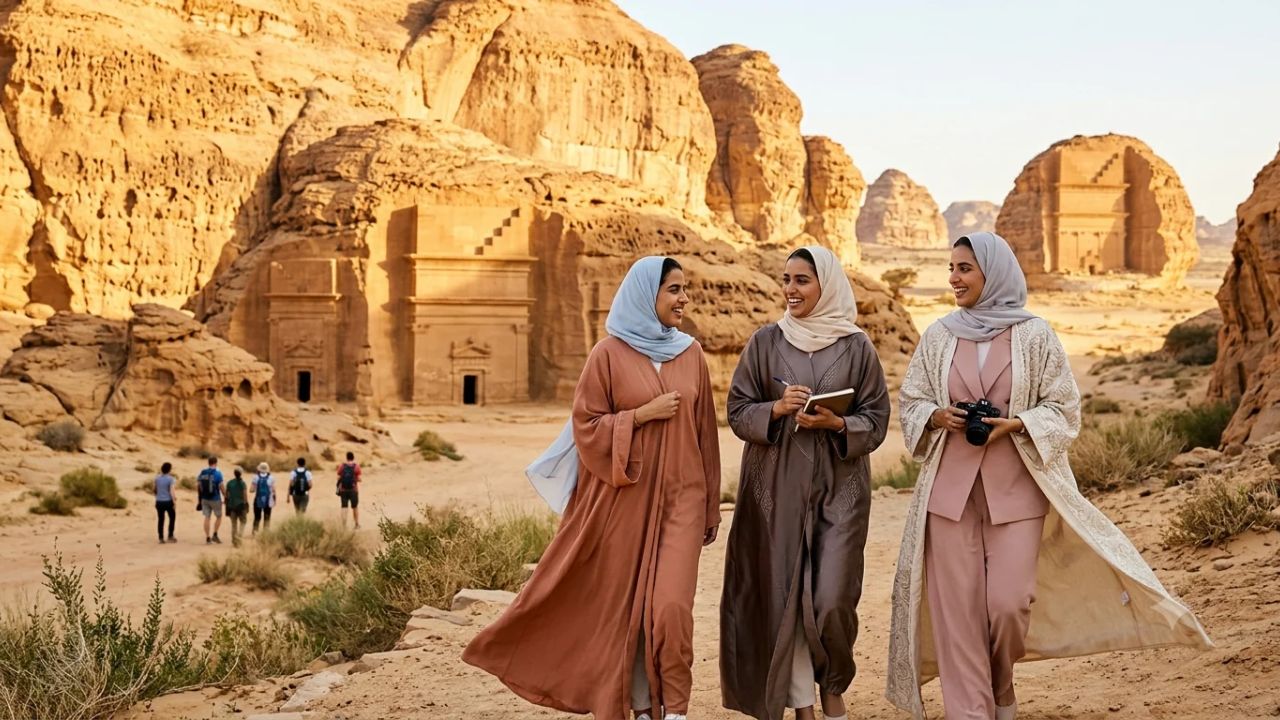
Saudi Arabia has expanded streamlined entry protocols across 72 countries to accelerate international leisure and cultural visits under Vision 2030
[RIYADH, Oct 30, 2026] — Accelerating its economic diversification under Saudi Vision 2030, the Kingdom of Saudi Arabia has consolidated streamlined tourist visa and visa-free travel privileges across 72 countries and territories—adding nations such as Panama, South Africa, and the United Kingdom alongside Gulf Cooperation Council partners—to power its non-oil travel economy.
[!NOTE] Policy & Economic Overview: As of October 2026, passport holders from 72 recognized countries and jurisdictions are eligible for visa-free entry, digital eVisas, or visas on arrival. In the first quarter of 2026, Saudi Arabia recorded 37.2 million combined tourism trips (+8% year-on-year) and SAR 82.7 billion in visitor expenditures. While international tourist arrivals totaled 8.3 million during the quarter, domestic travel expanded by 16% to 28.9 million trips, supported by a projected 2026 nominal GDP of US$1.39 trillion.
SAUDI ARABIA 2026 TOURISM & ENTRY ARCHITECTURE
| [ 72 ELIGIBLE COUNTRIES & TERRITORIES (OCTOBER 2026 STATUS) ] |
|---|
| Streamlined digital eVisa, visa-on-arrival, and reciprocal GCC visa-free movement |
| +----------------------------+-----------------------------+ |
| v [ ECONOMIC SCALE (Q1 2026) ] v [ MACROECONOMIC BASELINE ] |
| - 37.2 Million Combined Trips (+8% YoY) - Nominal GDP: US$1.39 Trillion |
| - SAR 82.7 Billion Visitor Expenditure - PPP GDP: US$2.89 Trillion |
| - 28.9 Million Domestic Trips (+16%) - Nominal GDP Per Capita: $37,810 |
| - 8.3 Million International Arrivals - Non-Oil Growth Projection: +2.6% |
| +----------------------------+-----------------------------+ |
| v v |
| [ FIVE EXPANDING AIRPORT GATEWAYS ] [ COMMERCIAL AIRLINE FLEETS ] |
| - Jeddah (JED): 46-gate T1 & Hajj Complex (>500k sqm) - Saudia (SV): Flagship since 1945 |
| - Riyadh (RUH): 5 Terminals (Expanding to 56M Cap) - flynas (XY): Leading budget carrier |
| - Dammam (DMM): 13.6M Passengers in 2025 - flyadeal (F3): Saudia Group LCC |
| - Madinah (MED): $1.2B Terminal complex - Riyadh Air (RX): PIF new carrier |
| - Abha (AHB): $2B Expansion for Aseer Mountain Tourism - Nesma (NE): Regional connections |
Vision 2030 in Motion: Tourism Economy and Macroeconomic Health in 2026
The expansion of Saudi Arabia's visa-entry framework represents a core component of Vision 2030, the sweeping national roadmap established to diversify the Kingdom's economy away from hydrocarbon dependency. Tourism, aviation, and hospitality have been designated as primary economic engines tasked with generating sustainable non-oil revenue, fostering foreign direct investment, and creating private-sector employment.
Official tourism performance indicators for the first quarter of 2026 highlight the evolving dynamics of the market. During Q1 2026, the Kingdom registered 37.2 million combined tourism journeys, representing an 8% increase compared to the same period in 2025. Total visitor spending reached SAR 82.7 billion.
Q1 2026 TOURISM PERFORMANCE METRICS VS. 2025 BASELINE
| Column 1 |
|---|
| Q1 2026 TOTAL VISITOR EXPENDITURE: SAR 82.7 Billion |
| Q1 2026 COMBINED TOURISM TRIPS: 37.2 Million Trips (+8% Annual Growth) |
| ---------------------------------------------------------------------------------------------- |
| - Domestic Tourism Volume: 28.9 Million Trips (+16% YoY Expansion) |
| - International Visitor Inflow: 8.3 Million Inbound Arrivals (-13% YoY Contraction) |
| 2025 FULL-YEAR BENCHMARKS FOR COMPARISON: |
| - Total Annual International Arrivals (2025): 29.3 Million Foreign Tourists |
| - Combined Domestic & International Trips: Approximately 123 Million Total Journeys |
A detailed look at the data shows that domestic travel served as a powerful stabilizing factor. Domestic trips rose 16% to 28.9 million journeys in Q1 2026, driven by nationwide entertainment initiatives such as Riyadh Season, Red Sea coastal weekend breaks, and cultural festivals in AlUla and Diriyah.
Concurrently, international arrivals recorded 8.3 million visitors—a 13% decline against the record pace of early 2025—reflecting wider regional geopolitical tensions and air corridor shifts across the Middle East. Despite these seasonal headwinds, religious pilgrimage travel (Umrah and Hajj) and corporate travel provided consistent baseline support, while long-term tourism infrastructure projects continued without delay.
On the macroeconomic front, data published by the International Monetary Fund (IMF) in July 2026 projects Saudi Arabia's nominal Gross Domestic Product to reach approximately US$1.39 trillion in 2026. When evaluated on a Purchasing Power Parity (PPP) basis, the Kingdom's economic output reaches an estimated US$2.89 trillion.
Nominal GDP per capita is recorded at approximately US$37,810, rising to US$78,810 on a PPP basis. The IMF projected 1.7% real GDP growth for 2026, with the non-oil economy expanding by 2.6%, demonstrating that structural diversification into hospitality, logistics, and retail continues to generate positive momentum.
| Macroeconomic & Tourism Metric | 2025 Baseline | 2026 Official Projection / Q1 Actual | Primary Economic Driver |
|---|---|---|---|
| Nominal GDP | US$1.33 Trillion | US$1.39 Trillion (Projected) | IMF Economic Outlook |
| Purchasing Power Parity (PPP) GDP | US$2.76 Trillion | US$2.89 Trillion (Projected) | Domestic consumption & non-oil output |
| Nominal GDP Per Capita | US$36,250 | US$37,810 | Workforce expansion & productivity |
| PPP GDP Per Capita | US$75,400 | US$78,810 | Domestic purchasing parity |
| Real GDP Growth Rate | 1.3% | 1.7% (2.6% Non-Oil Growth) | Service sector, tourism & retail expansion |
| Q1 Combined Tourism Volume | 34.4 Million Trips | 37.2 Million Trips (+8% YoY) | Domestic surge offsetting inbound dips |
| Q1 Visitor Expenditure | SAR 76.5 Billion | SAR 82.7 Billion | Higher spend per traveler in luxury sector |
The 72 Eligible Countries: Visa-Free and Streamlined Entry Classification
To counter regional headwinds and sustain long-term tourist inflows, the Ministry of Tourism and the Ministry of Foreign Affairs have established streamlined entry pathways for 72 eligible countries and territories as of October 2026.
SAUDI ARABIA VISA ELIGIBILITY MATRIX: 72 NATIONS
| Column 1 |
|---|
| CATEGORY A: RECIPROCAL GCC FREEDOM OF MOVEMENT (NATIONAL ID / PASSPORT) |
| - Bahrain, Kuwait, Oman, Qatar, United Arab Emirates |
| CATEGORY B: NORTH AMERICA & OCEANIA (DIGITAL EVISA / VISA ON ARRIVAL) |
| - United States, Canada, Australia, New Zealand |
| CATEGORY C: EUROPEAN UNION & SCHENGEN STATES (DIGITAL EVISA / VISA ON ARRIVAL) |
| - Andorra, Austria, Belgium, Bulgaria, Croatia, Cyprus, Czechia, Denmark, Estonia, Finland, |
| France, Germany, Greece, Hungary, Iceland, Ireland, Italy, Latvia, Liechtenstein, Lithuania, |
| Luxembourg, Malta, Monaco, Netherlands, Norway, Poland, Portugal, Romania, San Marino, |
| Slovakia, Slovenia, Spain, Sweden, Switzerland, United Kingdom |
| CATEGORY D: EAST ASIA & PACIFIC CORRIDORS (DIGITAL EVISA / VISA ON ARRIVAL) |
| - Brunei, China, Hong Kong, Japan, Macao, Malaysia, Singapore, South Korea, Thailand |
| CATEGORY E: CENTRAL ASIA & THE CAUCASUS (DIGITAL EVISA / VISA ON ARRIVAL) |
| - Azerbaijan, Georgia, Kazakhstan, Kyrgyzstan, Tajikistan, Uzbekistan |
| CATEGORY F: LATIN AMERICA, CARIBBEAN & AFRICA (DIGITAL EVISA / VISA ON ARRIVAL) |
| - Bahamas, Barbados, Grenada, Panama, Seychelles, St. Kitts and Nevis, South Africa |
| CATEGORY G: WIDER EURASIAN STATES (DIGITAL EVISA / VISA ON ARRIVAL) |
| - Albania, Maldives, Montenegro, Russian Federation, Türkiye, Ukraine |
The 72 approved nations enjoy multiple accessible entry mechanisms:
- GCC Freedom of Movement: Citizens of Bahrain, Kuwait, Oman, Qatar, and the United Arab Emirates require no visa and may enter using their national civil identity cards.
- Instant Digital eVisa: Eligible passport holders can complete their applications online through the official portal (visa.visitsaudi.com) in under ten minutes, receiving a multi-entry tourist visa valid for one full year with stays of up to 90 days per visit.
- Visa on Arrival: Travelers from the 72 nations who prefer in-person processing can obtain their entry stamp at dedicated automated self-service kiosks and passport desks across all major international airports.
The roster balances mature Western leisure markets (such as the United Kingdom, France, and Germany) with emerging economic partners across Latin America (Panama), Africa (South Africa, Seychelles), Central Asia (Uzbekistan, Kazakhstan), and the Caribbean (Barbados, Bahamas, Grenada).
| Sl. No. | Country / Territory | Sl. No. | Country / Territory | Sl. No. | Country / Territory | Sl. No. | Country / Territory |
|---|---|---|---|---|---|---|---|
| 1 | South Korea | 19 | United Kingdom | 37 | Brunei | 55 | Macao |
| 2 | Japan | 20 | Austria | 38 | Czechia | 56 | Panama |
| 3 | Andorra | 21 | Greece | 39 | Lithuania | 57 | Russian Federation |
| 4 | Sweden | 22 | Portugal | 40 | United States | 58 | St. Kitts and Nevis |
| 5 | Belgium | 23 | New Zealand | 41 | Qatar | 59 | Thailand |
| 6 | Denmark | 24 | Iceland | 42 | United Arab Emirates | 60 | Maldives |
| 7 | Finland | 25 | Liechtenstein | 43 | Bulgaria | 61 | Oman |
| 8 | France | 26 | Monaco | 44 | Romania | 62 | Ukraine |
| 9 | Germany | 27 | Hungary | 45 | Malaysia | 63 | Kazakhstan |
| 10 | Italy | 28 | Poland | 46 | Cyprus | 64 | Kuwait |
| 11 | Luxembourg | 29 | Croatia | 47 | Barbados | 65 | Bahrain |
| 12 | Netherlands | 30 | Slovakia | 48 | The Bahamas | 66 | China |
| 13 | Norway | 31 | Slovenia | 49 | Seychelles | 67 | Azerbaijan |
| 14 | Spain | 32 | Latvia | 50 | Grenada | 68 | Uzbekistan |
| 15 | Switzerland | 33 | Estonia | 51 | Montenegro | 69 | Türkiye |
| 16 | Singapore | 34 | Australia | 52 | Hong Kong | 70 | South Africa |
| 17 | Ireland | 35 | San Marino | 53 | Albania | 71 | Kyrgyzstan |
| 18 | Malta | 36 | Canada | 54 | Georgia | 72 | Tajikistan |
Aviation Infrastructure: Five International Gateways Anchoring Visitor Traffic
The physical backbone supporting this expanded visa framework is a modernized national aviation network. Saudi Arabia is directing tens of billions of dollars into terminal construction, runway expansions, and smart passenger processing systems across five key international airports.
SAUDI ARABIA INTERNATIONAL AVIATION INFRASTRUCTURE
| Column 1 |
|---|
| [ KING KHALID (RUH) - RIYADH ] [ KING ABDULAZIZ (JED) - JEDDAH ] |
| - 5 Passenger Terminals - Terminal 1 (46 Gates, 3,000-Cap Mosque) |
| - Feb 2026 Operational Realignment: - North Terminal & Hajj Complex (>500k sqm) |
| * T1 & T2: National Intl Flights - Western gateway for Makkah and Red Sea resorts |
| * T3 & T4: National Domestic Flights - Operator: Jeddah Airports Company |
| * T5: Foreign Airline Intl Flights |
| - Capacity Target: 56M by end of 2026 |
| [ KING FAHD (DMM) - DAMMAM ] [ PRINCE MOHAMMAD (MED) - MADINAH ] |
| - 13.6 Million Passengers in 2025 - Inaugurated July 2015 ($1.2B Development) |
| - SAR 1.6 Billion Master Development Plan - 156,940 sqm Terminal Building; 16 Air Bridges |
| - Eastern Province Industrial & Leisure Hub - 24/7 Pilgrimage Operations (Tibah Operator) |
| [ ABHA INTERNATIONAL (AHB) - ASEER HIGHLANDS ] |
| - Summer 2026: ~10,000 Flights & 1.8M Seats across 15 Year-Round + 3 Seasonal Routes |
| - US$2+ Billion New Airport Project: 13M Annual Capacity Target by 2028 |
| - Dedicated Gateway to Aseer Mountain Tourism & Al Soudah Peaks |
1. King Abdulaziz International Airport (JED) – Jeddah
Serving as the maritime and aviation entrance to the western coast, King Abdulaziz International Airport is the primary gateway for millions of religious pilgrims journeying to the Holy City of Makkah, while also connecting travelers to coastal resorts along the Red Sea.
Managed by the Jeddah Airports Company, the facility features three distinct passenger zones:
- Terminal 1: A modern terminal spanning 46 boarding gates, an integrated transit hotel, premium passenger lounges, and an internal mosque accommodating 3,000 worshippers.
- The North Terminal: Handles dedicated international commercial charter operations and scheduled regional carriers.
- The Hajj and Umrah Terminal Complex: An engineering landmark covering more than 500,000 square meters beneath fabric-canopy roof structures designed to process tens of thousands of pilgrims daily with dedicated immigration, medical, and baggage facilities.
2. King Khalid International Airport (RUH) – Riyadh
Serving the Kingdom's capital, King Khalid International Airport is the center of corporate travel, diplomatic missions, and major entertainment festivals.
In February 2026, the Riyadh Airports Company completed a major operational terminal reorganization:
- Terminals 1 and 2: Dedicated exclusively to international flights operated by national carriers (Saudia and Riyadh Air).
- Terminals 3 and 4: Dedicated to domestic operations operated by national carriers.
- Terminal 5: Designated for international services operated by foreign commercial airlines.
This reorganization supports an aggressive expansion plan designed to increase total annual passenger capacity from 42 million travelers in 2025 to 56 million by the end of 2026.
3. King Fahd International Airport (DMM) – Dammam
Positioned in the Eastern Province, King Fahd International Airport connects commercial hubs across Dammam, Al Khobar, and Dhahran. In 2025, the airport processed a record 13.6 million passengers across a network spanning more than 60 destinations served by over 40 airlines.
In July 2025, aviation authorities announced a comprehensive master development program valued at over SAR 1.6 billion to expand terminal lounges, cargo aprons, and digital processing gates.
4. Prince Mohammad bin Abdulaziz International Airport (MED) – Madinah
Inaugurated in July 2015 following a US$1.2 billion public-private partnership development, Madinah’s airport functions as the religious gateway to the Prophet's Mosque.
Operated 24/7 by Tibah Airports Operation Company, the facility features a three-story, 156,940-square-meter terminal with 16 boarding bridges and six specialized Hajj pavilions, ensuring efficient handling for seasonal pilgrimage surges.
5. Abha International Airport (AHB) – Aseer Highlands
Unlike the coastal and desert airports, Abha International Airport serves the cool mountain highlands of the Aseer region in south-western Saudi Arabia. During the peak summer window of June through August 2026, Abha handled approximately 10,000 flight movements and 1.8 million passenger seats across 15 permanent routes and three summer seasonal links.
Under the Aseer Development Authority, construction is advancing on an entirely new US$2+ billion airport project designed to accommodate 13 million passengers annually upon completion of its initial phase in 2028.
| Airport Gateway | IATA Code | Primary Operating Entity | Key Operational Focus | Expansion & Capacity Target |
|---|---|---|---|---|
| King Abdulaziz (Jeddah) | JED | Jeddah Airports Company | Hajj, Umrah, Red Sea coastal resorts | Terminal 1 and 500k sqm Hajj Complex |
| King Khalid (Riyadh) | RUH | Riyadh Airports Company | Business, conferences, capital tourism | Scaling from 42M to 56M annual capacity |
| King Fahd (Dammam) | DMM | Dammam Airports Company | Corporate, industrial, Gulf maritime | SAR 1.6B modernization; 13.6M passengers |
| Prince Mohammad (Madinah) | MED | Tibah Airports Operation Co. | Pilgrimage tourism to Prophet's Mosque | 156k sqm terminal; 16 passenger air bridges |
| Abha International (Abha) | AHB | Cluster2 Airports Company | Mountain eco-tourism, summer retreats | $2B redevelopment targeting 13M by 2028 |
Airline Powerhouses: Fleet Expansion from Flagships to Low-Cost Carriers
Saudi Arabia’s aviation ambitions are powered by five prominent carriers that bridge domestic regional routes with global long-haul markets.
SAUDI ARABIA COMMERCIAL AIRLINE SECTOR (2026)
| [ SAUDIA (SV) - FLAGSHIP CARRIER SINCE 1945 ] |
|---|
| - Main Hubs: Jeddah (JED) & Riyadh (RUH) |
| - Fleet: Boeing 777-300ER, Boeing 787-9/10 Dreamliner, Airbus A320/A321/A330 |
| - Strategic Focus: Full-service international connectivity, premium cabins, Hajj/Umrah transport |
| [ RIYADH AIR (RX) - DIGITALLY NATIVE INTERNATIONAL CARRIER ] |
| - Main Hub: King Khalid International Airport, Riyadh (RUH) |
| - Backed by: Public Investment Fund (PIF); established March 2023, commercial ops in 2026 |
| - Fleet: Boeing 787-9 Dreamliners with premium interior architecture |
| - Strategic Target: Connect Riyadh to 100+ global business and leisure capitals by 2030 |
| [ FLYNAS (XY) - LEADING LOW-COST OPERATOR ] |
| - Main Base: Riyadh (RUH); secondary hubs in Jeddah, Dammam, and Madinah |
| - Fleet: Airbus A320neo and A321neo narrowbody aircraft |
| - Strategic Focus: Affordable domestic networks and regional Middle East / Europe routes |
| [ FLYADEAL (F3) - SAUDIA GROUP VALUE CARRIER ] |
| - Main Hubs: Jeddah (JED) & Riyadh (RUH) |
| - Fleet: High-density Airbus A320 family |
| - Strategic Focus: Low-fare domestic trunk routes and point-to-point regional leisure links |
| [ NESMA AIRLINES (NE) - REGIONAL CROSS-BORDER CONNECTIONS ] |
| - Operating Base: Egypt (Historically founded within Saudi Arabia) |
| - Strategic Focus: Scheduled and charter links connecting Cairo with Jeddah, Riyadh, and Tabuk |
Saudia: The Historic National Carrier
Founded in 1945, Saudia stands as one of the Middle East’s most established airlines. Headquartered in Jeddah with large operations in Riyadh, Saudia operates a wide-body and narrow-body fleet comprising Boeing 777-300ERs, Boeing 787 Dreamliners, and Airbus A320/A321/A330 airframes.
The carrier serves as the logistics lifeline for annual pilgrimage movements while expanding its international network across Europe, Asia, Africa, and North America.
Riyadh Air: The New Global Competitor
Established in March 2023 by the Public Investment Fund, Riyadh Air commenced scheduled commercial passenger operations in 2026.
Positioned as a full-service carrier utilizing fuel-efficient Boeing 787-9 Dreamliners, Riyadh Air is engineered to transform Riyadh into a global transit hub, with formal plans to link the capital directly to more than 100 international destinations by 2030.
flynas and flyadeal: Democratizing Travel Access
Low-cost travel across the Kingdom is anchored by flynas (founded in 2007) and flyadeal (launched in 2017 as a subsidiary of the Saudia Group). Both carriers operate fuel-efficient Airbus A320-family fleets, lowering the cost of domestic travel between Riyadh, Jeddah, Dammam, Abha, Tabuk, and Jazan, while operating budget-friendly international flights to regional destinations in South Asia, the Middle East, and North Africa.
Five-Star Hospitality Landmarks: Luxury Lodging from Riyadh to Ashar Valley
As tourist arrivals diversify, Saudi Arabia’s luxury hotel sector has expanded rapidly, providing five-star hospitality across commercial skylines, holy sanctuaries, and remote desert canyons.
SAUDI ARABIA LUXURY HOSPITALITY HIGHLIGHTS (2026)
| Column 1 |
|---|
| 1. FOUR SEASONS HOTEL RIYADH AT KINGDOM CENTRE |
| - Location: Central Riyadh (Inside the iconic 302-meter Kingdom Centre skyscraper). |
| - Key Features: 276 renovated rooms and suites, panoramic capital views, luxury shopping mall. |
| - Target: Corporate leaders, international conference delegates, diplomatic guests. |
| 2. THE RITZ-CARLTON, JEDDAH |
| - Location: Southern Corniche, Jeddah (Direct waterfront overlooking the Red Sea). |
| - Key Features: Monumental neoclassical architecture, expansive royal ballrooms, fine dining. |
| - Target: High-net-worth leisure travelers, official state delegations, luxury weddings. |
| 3. MAKKAH CLOCK ROYAL TOWER, A FAIRMONT HOTEL |
| - Location: Abraj Al Bait Complex, Makkah (Adjacent to the Grand Mosque). |
| - Key Features: Direct, unobstructed views of the Holy Kaaba, 76 elevators, prayer facilities. |
| - Target: Hajj and Umrah pilgrims seeking premium comfort adjacent to the sanctuary. |
| 4. BANYAN TREE ALULA |
| - Location: Ashar Valley, AlUla (Nestled within dramatic sandstone rock amphitheaters). |
| - Key Features: Sustainable luxury tented villas with private plunge pools, rock-hewn spa. |
| - Target: Eco-luxury adventurers, cultural heritage explorers, romantic getaways. |
| 5. SHANGRI-LA JEDDAH |
| - Location: Jeddah Waterfront Promenade (Overlooking the Formula 1 street circuit & Red Sea). |
| - Key Features: Contemporary floor-to-ceiling sea terraces, celebrated Shang Palace dining. |
| - Target: Modern leisure vacationers, coastal lifestyle travelers, corporate executives. |
These flagship properties illustrate how the Kingdom combines international luxury hospitality standards with local cultural heritage. In urban hubs like Riyadh and Jeddah, luxury hotels cater to executive business travelers, summit delegates, and coastal leisure vacationers. In spiritual destinations like Makkah, hotels within the Abraj Al Bait complex provide direct sightlines of the Kaaba, while desert resorts like Banyan Tree AlUla offer private pool villas integrated into ancient sandstone formations.
Heritage and Exploration: Five Anchor Attractions Shaping the Visitor Journey
Saudi Arabia's tourism appeal extends across thousands of years of pre-Islamic civilization, Islamic history, and dramatic natural geography. Five anchor attractions highlight the breadth of experiences available to international visitors.
ANCHOR CULTURAL & NATURAL ATTRACTIONS
| Column 1 |
|---|
| [ AL MASJID AL HARAM - MAKKAH ] [ MADAIN SALEH (HEGRA) - ALULA ] |
| - Holiest site in the Islamic world - First UNESCO World Heritage Site (2008) |
| - Surrounds the Holy Kaaba; Tawaf ritual - 111 monumental rock-cut Nabataean tombs |
| - Zamzam well and historic expansion halls - Monolithic Qasr Al Farid & Jabal Ithlib |
| [ HISTORIC YANBU AND PORT - RED SEA ] [ CAVE OF THAWR - JABAL THAWR ] |
| - Restored Hijazi coral stone merchant homes - Historic mountain sanctuary south of Makkah |
| - Intricate wooden mashrabiyya balconies - Shelter used by Prophet Muhammad in 622 CE |
| - Waterfront seafood markets and quiet harbor - Steep rocky trail popular with history hikers |
| [ BIR AL MASHY BEACH - HAQL ] |
| - Famous Red Sea shipwreck of the Georgios G (the "Saudi Titanic", stranded 1978) |
| - Crystal turquoise waters set against the backdrop of the Sinai Mountains |
| - Remote coastal setting ideal for landscape and adventure photography |
1. Al Masjid Al Haram (Makkah)
The Grand Mosque in Makkah is the spiritual epicenter of the Islamic faith. Encircling the Holy Kaaba—revered as the house of God built by Prophet Ibrahim and Ismail—the mosque hosts millions of worshippers annually who perform the Tawaf circumambulation. Recent expansion projects have added state-of-the-art pedestrian air-cooling, marble courtyard extensions, and multi-tier prayer halls capable of accommodating millions of worshippers simultaneously.
2. Madain Saleh / Hegra (AlUla)
Inscribed in 2008 as Saudi Arabia’s inaugural UNESCO World Heritage Site, Hegra was the southern capital of the Nabataean Kingdom, second only to Petra in Jordan. The archaeological park features 111 monumental rock-cut tombs carved into golden sandstone outcrops between the 1st century BC and the 1st century AD.
Highlights include Qasr Al Farid, a single unfinished tomb standing four stories tall from a freestanding rock formation, and Qasr Al Bint, featuring ornate mythological facades, eagle reliefs, and ancient Nabataean inscriptions.
3. Historic Yanbu and Ancient Port
Located along the Red Sea coastline north of Jeddah, Yanbu served for centuries as a vital spice and pilgrim port. The historic district features restored coral-stone houses built with decorative teak woodwork and wooden mashrabiyyas (lattice bay windows). In the evening, the waterfront comes alive with seafood stalls and traditional maritime atmosphere.
4. Cave of Thawr (Makkah)
Located on Jabal Thawr, roughly three kilometers south of Makkah, the Cave of Thawr holds immense historical significance. It is the mountain sanctuary where Prophet Muhammad and his companion Abu Bakr sought shelter for three days in 622 CE during their historic migration (Hijrah) from Makkah to Madinah. The steep, rocky climb to the cave entrance is a popular trek for travelers interested in Islamic history.
5. Bir Al Mashy Beach (Haql)
Situated near the northwestern border town of Haql along the Gulf of Aqaba, Bir Al Mashy Beach is renowned for the stranded wreck of the Greek cargo vessel Georgios G. Stranded on coral reefs in 1978 and later consumed by fire, the half-submerged vessel is known locally as the "Saudi Titanic." The rusting hull set against turquoise water and the distant mountains of the Sinai Peninsula creates one of the Kingdom's most dramatic coastal landscapes.
Practical Traveler Guidelines: Visa Applications, Customs, and Etiquette
Planning a trip to Saudi Arabia under the updated visa framework is straightforward when travelers follow standard procedures.
INTERNATIONAL VISITOR TRAVEL CHECKLIST
| Column 1 |
|---|
| PHASE 1: VISA APPLICATION & DOCUMENTATION |
| [ ] Confirm passport has at least six months of remaining validity. |
| [ ] Submit digital application via official portal (visa.visitsaudi.com) or select Visa on Arrival. |
| [ ] Visa fee automatically includes mandatory medical insurance covering emergency care. |
| [ ] eVisa allows multiple entries for one full year, with a maximum stay of 90 days per visit. |
| PHASE 2: FINANCIAL & TELECOMMUNICATIONS PREPARATION |
| [ ] Currency: Saudi Riyal (SAR); pegged to US Dollar ($1 USD = 3.75 SAR). |
| [ ] Digital Payments: Credit cards, Apple Pay, and Mada are accepted virtually everywhere. |
| [ ] Local SIM / eSIM: High-speed 5G packages available at all airport arrival halls (STC, Zain). |
| PHASE 3: CULTURAL AWARENESS & LOCAL ETIQUETTE |
| [ ] Modest Dress: Men and women should wear modest clothing covering shoulders and knees. |
| [ ] Non-Muslim Access: Note that the holy precincts of Makkah and central Madinah remain |
| restricted to Muslims; all historical, desert, coastal, and urban areas are open to all. |
| [ ] Photography: Always request permission before photographing local residents or family groups. |
Digital Application Protocols
Eligible passport holders can obtain their multi-entry eVisa online prior to departure. The digital platform requires standard passport scans, flight itinerary details, and digital passport photographs.
The application fee includes comprehensive health insurance covering COVID-19 and emergency medical treatment across licensed Saudi hospitals. Upon approval—frequently granted in under an hour—travelers receive a digital PDF visa sent directly to their email.
Financial and Ground Connectivity
Saudi Arabia possesses one of the most cashless commercial ecosystems in the world. Credit cards, debit cards, and contactless mobile payment systems (including Apple Pay) are accepted across hotels, fine dining establishments, supermarkets, and local taxi fleets.
For cash needs at traditional souqs, automated teller machines are widespread. Currency exchange desks at King Khalid and King Abdulaziz airports exchange major currencies, including US Dollars, Euros, and British Pounds, at the stable official peg of 3.75 Saudi Riyals per US Dollar.
Respectful Cultural Etiquette
The Kingdom welcomes international tourists while encouraging respect for traditional customs:
- Public Attire: While female foreign visitors are no longer legally required to wear the black abaya or head covering, loose-fitting, modest clothing that covers shoulders and knees is recommended in public spaces.
- Holy City Regulations: The sacred perimeter of Makkah and the inner sanctuary of the Prophet's Mosque in Madinah are reserved exclusively for Muslims. However, archaeological sites such as Hegra in AlUla, coastal resorts on the Red Sea, and urban attractions in Riyadh, Jeddah, and Dammam are fully accessible to international visitors of all backgrounds.
By combining streamlined digital entry for 72 nations with modern airport gateways, world-class commercial airlines, and luxury hospitality infrastructure, Saudi Arabia continues to turn its Vision 2030 aspirations into reality, establishing itself as a compelling destination on the global tourism map.
Frequently Asked Questions (PAA)
Which countries are eligible for Saudi Arabia's tourist eVisa and Visa on Arrival?
As of October 2026, passport holders from 72 recognized countries and territories are eligible for Saudi Arabia's streamlined digital eVisa and Visa on Arrival. Eligible nations include Panama, the United Kingdom, the United States, Canada, Australia, New Zealand, Japan, South Korea, China, South Africa, all European Union and Schengen member states, and select Central Asian and Caribbean nations. GCC citizens enjoy reciprocal visa-free entry.
How long can tourists stay in Saudi Arabia on an eVisa?
The standard Saudi tourist eVisa is a one-year, multiple-entry travel authorization that allows visitors to stay for up to 90 days per visit, with a maximum cumulative stay of 90 days within the one-year validity window.
Does the Saudi tourist visa fee include medical insurance?
Yes. When applicants pay for their digital eVisa through the official portal (visa.visitsaudi.com), mandatory health insurance coverage from licensed Saudi insurance providers is automatically bundled into the transaction fee, covering emergency hospitalization and medical care during the trip.
What are the main international airports serving tourists in Saudi Arabia?
The Kingdom's primary aviation gateways are King Abdulaziz International Airport (JED) in Jeddah, King Khalid International Airport (RUH) in Riyadh, King Fahd International Airport (DMM) in Dammam, Prince Mohammad bin Abdulaziz International Airport (MED) in Madinah, and Abha International Airport (AHB) in the southern Aseer mountain region.
Can non-Muslim tourists visit historical sites like AlUla and Jeddah?
Yes. Non-Muslim international visitors can travel freely to historical sites across the Kingdom, including the UNESCO World Heritage site of Hegra in AlUla, historic Yanbu, the coastal areas of Jeddah, and all urban attractions in Riyadh. Only the holy city of Makkah and the immediate perimeter of the Prophet's Mosque in Madinah remain reserved exclusively for Muslims.
Related Travel Guides
This article is for informational purposes. Flight routes, passenger regulations, visa rules, and transit advisories are subject to change by airlines and aviation authorities. Readers are advised to verify schedules and travel documentation with relevant carriers and border agencies before departure.
Related Stories

Grenada Approves Visa-Free Entry for Nigerian Passport Holders to Catalyze Caribbean-West Africa Tourism and Trade