
Sashastra Police Praised After Rescuing 89 Stranded Passengers in Nepal Flood
Sashastra police led a dramatic overnight rescue of 89 passengers stranded by sudden Roshi River flooding on Nepal's critical BP Highway in 2026, showcasing rapid emergency response and multi-agency coordination in monsoon season.

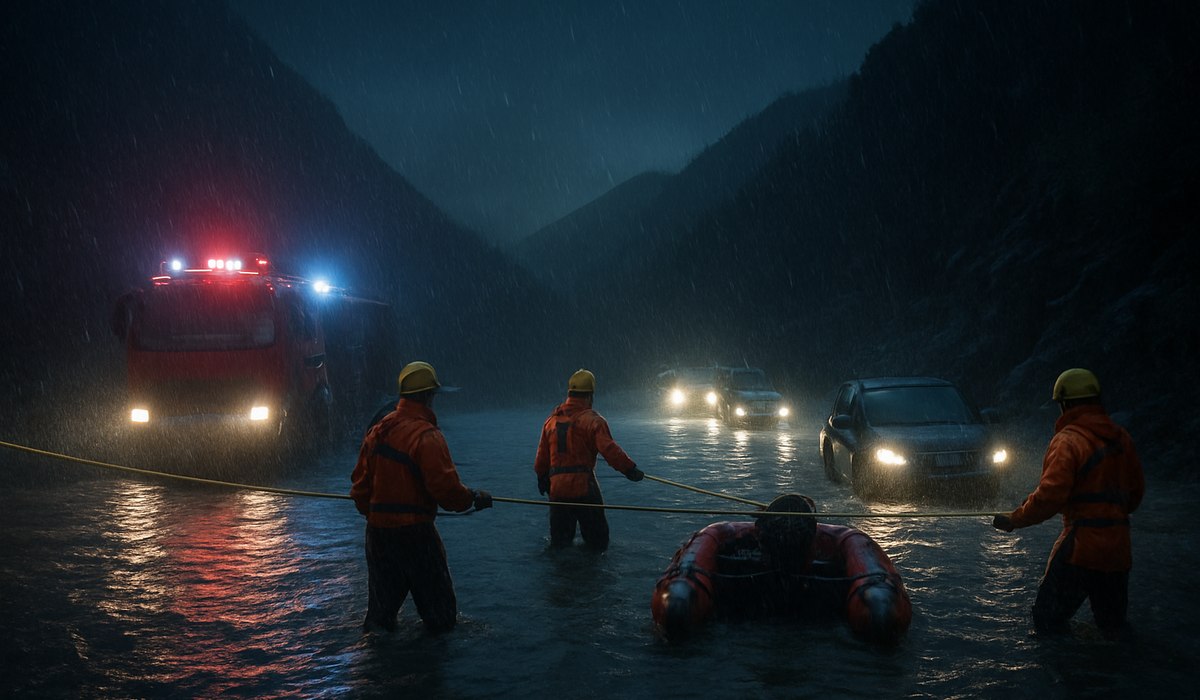
Image generated by AI
Sashastra Police Praised After Dramatic Overnight River Rescue
Sashastra police and armed forces successfully rescued 89 stranded passengers from a sudden Roshi River flood along Nepal's critical BP Highway on May 4, 2026. Heavy rainfall triggered rapid river surges that trapped five microbuses and smaller vehicles in the Kavrepalanchok district, leaving nearly 90 travelers marooned as darkness fell. Working through the night with ropes, rescue boats, and coordinated river crossings, specialized disaster response teams extracted all passengers by 1:00 a.m. local time—a rare outcome in high-risk Himalayan flood scenarios where fatalities often occur.
Overnight Rescue on a Flooded Highway
The dramatic incident unfolded after heavy rain on Monday, May 4, caused the Roshi River to surge along the BP Highway, a vital east-west corridor linking eastern Nepal with Kathmandu. Vehicles became trapped near Laskot and Ghumaune in Roshi Rural Municipality between rising water channels that cut off both escape routes.
A joint multi-agency operation involving Sashastra police, Armed Police Force disaster units, Nepal Army, Nepal Police, and local responders mobilized immediately. Teams deployed specialized equipment including ropes, inflatable rescue boats, and improvised river crossings to reach stranded passengers in deteriorating visibility. Rescue personnel waded through chest-deep muddy water, guided each traveler across precarious crossings, and staged passengers to safety one group at a time.
Regional media reports indicate coordination between security agencies allowed rapid resource deployment from forward posts already positioned in the mountainous district. All 89 passengers reached safety and were transported onward in alternative vehicles without reported fatalities—a testament to rapid emergency response in challenging weather conditions.
Multi-Agency Emergency Response Operation
The rescue exemplified modern disaster response coordination in Nepal's Himalayan regions, where Sashastra forces now lead flood, landslide, and river evacuation operations alongside traditional emergency agencies. Armed Police Force disaster response battalions stationed throughout Kavrepalanchok maintain forward positions closer to vulnerable road segments than civilian agencies, enabling faster deployment during weather emergencies.
Personnel demonstrated specialized water rescue training, rope work, and real-time coordination with Nepal Police and local community responders. Security analysts note that such operations validate ongoing training investments in Himalayan emergency response, particularly for border security units increasingly tasked with civilian disaster relief.
Footage from local outlets showing Sashastra police personnel guiding terrified passengers through raging currents has reinforced public recognition of these forces as front-line responders during peak monsoon season. Observers credit successful outcomes to pre-positioned teams, equipment caches, and established protocols with civilian agencies enabling rapid mobilization when flash floods transform routine journeys into life-threatening emergencies.
Sashastra Police in the Spotlight
The Roshi River rescue has drawn renewed attention to specialized disaster response units within the Sashastra police framework, particularly Armed Police Force battalions operating across vulnerable Himalayan corridors. These forces maintain strategic forward posts in mountainous districts, positioning them closer to critical infrastructure than civilian emergency services—a significant advantage during sudden weather crises.
Recognition of their role has sparked discussion about equipping Sashastra teams with advanced protective gear, inflatable aircraft-grade rescue craft, and early-warning communication systems enabling predictive asset positioning. Current disaster response capabilities have proven effective during acute emergencies, yet analysts argue that investment in prevention and early detection could reduce casualties across Nepal's mountain regions.
The operation also highlighted gaps in temporary highway engineering, where diversion roads running through riverbed corridors remain inherently vulnerable to sudden surges. For travelers, this incident underscores that Sashastra police presence, while crucial during emergencies, cannot fully compensate for fragile infrastructure requiring permanent solutions.
Travel Safety Implications for Nepal Routes
The BP Highway incident carries significant implications for travelers planning journeys between Kathmandu and eastern Nepal districts, particularly during monsoon season. The affected stretch near Laskot and Ghumaune has experienced repeated flooding following damage from earlier weather events, currently operating via temporary diversion running partially within the Roshi riverbed itself.
Travel advisories recommend avoiding this corridor during heavy rainfall and unseasonal storms when flash flood risk peaks. An 18 to 29 kilometer section remains vulnerable to sudden surges, temporary road damage, and emergency closures, making advance planning essential for long-distance passengers and commercial transport operators.
Travelers should monitor regional weather forecasts, check current highway status with local authorities before departure, and maintain flexible scheduling during monsoon months. Alternative routes linking Kathmandu with eastern districts may exist but often require additional travel time. Consider using established transport operators familiar with seasonal risks and equipped with real-time weather monitoring.
Local authorities continue reconstruction efforts toward permanent infrastructure solutions, but timeline uncertainties persist. Humanitarian organizations and travel services recommend passengers carry emergency supplies, communication devices with adequate batteries, and medical kits when crossing vulnerable Himalayan corridors during precipitation events.
| Rescue Operation Details | Information |
|---|---|
| Date of Incident | May 4, 2026 |
| Location | Laskot-Ghumaune, Roshi Rural Municipality, Kavrepalanchok District |
| Highway Corridor | BP Highway (east-west Nepal lifeline route) |
| Passengers Rescued | 89 stranded travelers from 5+ microbuses |
| Rescue Duration | Approximately 6-7 hours (evening to 1:00 a.m.) |
| Cause | Heavy rainfall triggering rapid Roshi River surge |
| Agencies Involved | Sashastra Police, Armed Police Force, Nepal Army, Nepal Police, local responders |
| Equipment Used | Ropes, inflatable rescue boats, improvised river crossings |
| Reported Casualties | Zero fatalities |
| Highway Status | Temporary diversion running through riverbed remains vulnerable |
| Vulnerable Section Length | 18-29 kilometers awaiting permanent reconstruction |
What This Means for Travelers
The Roshi River rescue operation demonstrates both the resilience of Nepal's emergency response systems and the persistent vulnerabilities facing overland travelers in mountainous regions. Consider these actionable safety measures:
1. Monitor weather forecasts: Check meteorological updates before traveling the BP Highway, particularly May through September monsoon season. Heavy rainfall intensifies flash flood risk on temporary diversion routes.
2. Choose established transport operators: Use bus and microbus services operated by companies with safety records, real-time weather monitoring, and established protocols with security agencies.
3. Maintain flexible scheduling: Build buffer time into itineraries during monsoon months. Unexpected closures can extend journey times by several hours or require overnight stops.
4. Carry emergency supplies: Pack water, non-perishable snacks, medications, phone chargers, and first-aid kits when crossing Himalayan corridors. Communication devices with backup power ensure ability to contact emergency services.
5. Register travel plans: Inform hotels, tour operators, or contacts of your intended route and expected arrival time, enabling faster response if emergencies occur.
6. Stay informed on infrastructure: Bookmark regional news sources tracking BP Highway status, ongoing reconstruction timelines, and seasonal advisories issued by Nepali tourism authorities.
7. Avoid traveling during peak rainfall: If possible, schedule journeys during dry seasons or less intense precipitation periods when emergency response capacity is less strained.
Frequently Asked Questions
Q: Is the BP Highway safe for travelers in 2026? The BP Highway remains operational but vulnerable in sections running through the Roshi riverbed. Current conditions are generally safe during dry periods, but monsoon season and unseasonal storms
Disclaimer
This article is for informational and educational purposes only. It does not constitute legal, financial, or professional advice. While we strive to provide accurate and up-to-date information, travel policies, regulations, and conditions change rapidly. Always verify information with official sources before making travel decisions. Nomad Lawyer makes no representations about the accuracy, reliability, completeness, or suitability of the information provided. Readers should consult qualified professionals for advice specific to their circumstances. The views expressed in this article are those of the author and do not necessarily reflect the views of Nomad Lawyer.
Preeti Gunjan
Contributor & Community Manager
A passionate traveller and community builder. Preeti helps grow the Nomad Lawyer community, fostering engagement and bringing the reader experience to life.
Learn more about our team →