
Santorini and Mykonos Pivot to Culinary Terroir as Greece Prioritizes Shoulder-Season Yield
Greece recalibrates tourism across Santorini and Mykonos as GNTO targets culinary terroir, Michelin recognition, and shoulder-season airline links following €13.5B in seven-month receipts.

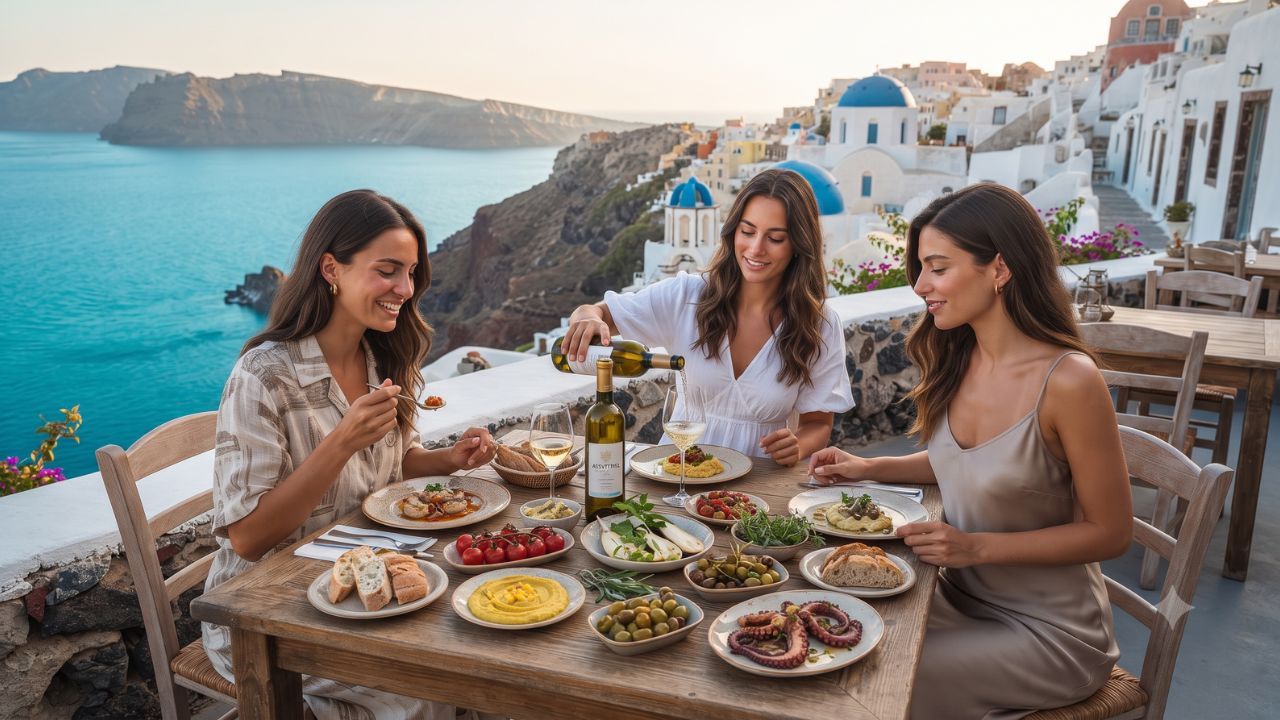
Generating €13.5 billion in international travel receipts across 20.4 million foreign arrivals during the first seven months of 2026, Greece's visitor economy is executing an intentional strategic pivot across its premier island destinations. Following deliberations at the GNTO Santorini Tourism Forum 2026 in October, tourism authorities and regional stakeholders in the Cyclades are dismantling the traditional dependency on mid-summer beach vacations. Instead, Santorini and Mykonos are repositioning their commercial profiles toward volcanic gastronomy, viticultural heritage, and cultural preservation, extending visitor dwell time into autumn and spring.
The policy shift addresses persistent peak-season congestion across the Aegean archipelago. Rather than measuring success by gross passenger volume entering the ports of Fira and Tourlos, the Greek National Tourism Organisation (GNTO) is prioritizing per-capita spending, geographic dispersion into inland farming villages, and environmental sustainability. By leveraging unique agricultural microclimates, Michelin-recognized culinary establishments, and prehistoric archaeological landmarks, Greek planners aim to transform volatile summer bottlenecks into resilient, year-round economic activity.
Overtourism Pressures and the GNTO Year-Round Gastronomy Mandate
As GNTO Secretary General Andreas Fiorentinos highlighted during the October 2026 forum, tourism remains a primary pillar of national gross domestic product. Official data released in collaboration with the Bank of Greece indicates that international travel spending grew steadily through July 2026, injecting €13.5 billion directly into the domestic service economy. However, extreme seasonality has historically concentrated this revenue into an eight-week midsummer peak, overwhelming municipal water supplies, waste management grids, and narrow caldera roads.
To counter this saturation, GNTO officials—including Stavroula Skaltza, head of the organisation's operations across Germany, Austria, Switzerland, Hungary, and Slovakia—have outlined targeted marketing initiatives tailored to distinct European source markets. Rather than promoting generic coastal images, promotional campaigns emphasize seasonal grape harvests, olive oil production, cooking masterclasses, and historic village trails. This demographic approach recognizes that Northern and Western European travelers increasingly seek active, non-inclusive holidays outside peak heat periods.
Agricultural preservation forms the technical core of the strategy. Santorini's volcanic soil, rich in ash and pumice, yields native crops with concentrated flavors found nowhere else in the Mediterranean, including sweet white aubergines, dry-farmed yellow split peas (fava), and thick-skinned cherry tomatoes. In viticulture, indigenous Assyrtiko grapes produce world-renowned dry whites celebrated for high acidity and volcanic minerality. To survive fierce Aegean gales and intense sun exposure, island winemakers maintain the ancient Kouloura technique, weaving vines into low-lying circular ground baskets that shelter grape clusters. The culinary stature of these products was formally recognized by the MICHELIN Guide, which expanded its Greek portfolio to evaluate Santorini alongside Athens and Thessaloniki.
European Market Demographics, Heritage Anchors, and Shoulder-Season Airlift
The operational feasibility of extending the tourism calendar depends heavily on feeder market preferences and airline scheduling. The table below analyzes how major European source demographics correspond to Greece's specialized cultural offerings and expanding flight routes.
| Feeder Market / Sector | Inbound Traveler Profile & Demand Priorities | Strategic Island Tourism Assets | Verified Commercial & Airline Timetable |
|---|---|---|---|
| United Kingdom | Largest overall market volume; high demand for bespoke culinary experiences | Fine dining, private vineyard tours, and hands-on cooking classes | Jet2 scheduled 2027 operations running May to October; new weekly Leeds-Bradford flight |
| France | Primarily couples and solo independent travelers preferring active travel | Shoulder-season hiking, heritage walks, and independent wine tasting | Transavia extended direct flights from Paris (Orly), Nantes, and Lyon through November 2026 |
| Germany & Switzerland | High proportion of mature repeat visitors seeking authentic rural routines | Agrisafaris, protected natural trails, and regional craft cooperatives | Strong seasonal demand extending through October across regional hubs |
| Austria | Emerging market recording +7% year-over-year arrival growth | Farm-to-table dining, architectural history, and village immersion | Rapid growth in non-coastal regional explorations |
| Terroir & Gastronomy | Unique volcanic agricultural heritage | Santorini sweet white aubergine, yellow fava, cherry tomatoes, Assyrtiko wine | Kouloura vine basket technique; official inclusion in MICHELIN Guide Greece |
| Cultural Heritage (UNESCO World Heritage) | Archaeological and sacred ancient monuments | Akrotiri Bronze Age settlement; sacred Delos sanctuary; Panagia Tourliani | Daily short-ferry access from Mykonos; preserved Minoan ash layers |
| Inland Village Life | Non-caldera traditional architectural enclaves | Megalochori (Santorini) and Ano Mera (Mykonos) craft districts | Disperses tourist spending away from congested caldera rim walkways |
| Digital Storytelling | Global multi-channel marketing rollout | 32 short video reels showcasing pottery, harvests, and kitchen craft | GNTO targeted digital campaign active across European digital networks |
To support cultural dispersion away from congested coastal rims, tourism boards are promoting inland sanctuaries. In Santorini, travelers are guided toward Megalochori, a preserved village characterized by winding stone pathways, neoclassical mansions, and historic bell towers. In Mykonos, itineraries steer visitors inland toward Ano Mera and the sixteenth-century Panagia Tourliani Monastery, with its elaborate marble bell tower and wood-carved iconostasis.
For ancient history enthusiasts, Akrotiri—frequently described as the Aegean Pompeii—offers an extraordinary look at an advanced Bronze Age Minoan town buried beneath volcanic ash during the Thera eruption around 1600 BCE. Travelers basing themselves in Mykonos can take short ferry excursions to the neighboring uninhabited island of Delos, a sacred UNESCO World Heritage site revered in antiquity as the birthplace of Apollo and Artemis. Artisan workshops, including ceramic studios and the Santorini Arts Factory, provide hands-on creative experiences that complement archaeological visits.
Airline operators are responding with schedule expansions. Low-cost French carrier Transavia extended its direct services from Paris Orly, Nantes, and Lyon into November 2026, facilitating extended autumn city-break and wine-harvest travel. In the United Kingdom, leisure airline Jet2 unveiled an expanded schedule for 2027 running continuously from May through October, introducing weekly direct flights linking Leeds-Bradford Airport to the Cyclades.
Expert Analysis: The Economic and Capacity Mechanics Behind the Cyclades Culinary Shift
For travelers visiting the Cyclades, the direct consequence of Greece's gastronomy pivot is a noticeable shift in travel timing, accommodation availability, and daily expenses. By promoting October and November travel, the GNTO is helping travelers experience cooler weather, lower accommodation rates, and uncrowded historical sites without the extreme heat and packed crowds typical of July and August.
The pricing pressure this creates means that five-star boutique resorts and Michelin-starred restaurants can maintain steady pricing without resorting to deep off-season discounts. While mass-market beach clubs face seasonal closures by late September, wine-tasting rooms, farm-to-table tavernas, and cultural centers can operate well into November. This flattens the seasonal revenue curve, providing steady employment for hospitality workers and giving local farmers, fishermen, and winemakers reliable demand for high-quality produce.
However, scaling high-end gastronomy introduces practical challenges. Because Santorini's agricultural footprint is constrained by volcanic geography and water scarcity, local production of native crops like cherry tomatoes and Assyrtiko grapes is strictly limited. Wineries cannot simply double bottle output without compromising wine quality and stressing historic vineyards. Preserving authentic island gastronomy requires strict origin certification and consumer education to prevent counterfeit imports from diluting protected local brands.
Key Takeaways
- Greece generated €13.5 billion in travel receipts across 20.4 million foreign arrivals during the first seven months of 2026, establishing a strong base for off-season growth.
- The GNTO Santorini Tourism Forum 2026 formalized a transition away from summer beach tourism toward year-round gastronomy, viticulture, and heritage exploration.
- Agricultural specialties—including white aubergines, yellow fava, cherry tomatoes, and Assyrtiko wine cultivated via the Kouloura method—anchor Santorini's Michelin Guide inclusion.
- Transavia extended direct flights from Paris, Nantes, and Lyon through November 2026, while Jet2 scheduled flights from Leeds-Bradford for May through October 2027.
- Cultural initiatives direct visitors toward inland settlements like Megalochori and Ano Mera, the Bronze Age site of Akrotiri, and the sacred island of Delos.
FAQ: Santorini and Mykonos Tourism Transformation 2026
Why are Santorini and Mykonos changing their tourism approach in 2026?
To combat extreme mid-summer overtourism, Greek authorities are shifting marketing toward authentic culinary traditions, wine tourism, and cultural heritage that attract visitors outside the summer peak.
What native agricultural products are celebrated in Santorini's gastronomy?
Santorini's nutrient-rich volcanic soil produces distinctive indigenous crops, including sweet white aubergines, sun-concentrated yellow fava, flavorful cherry tomatoes, and mineral-rich Assyrtiko wine grapes.
What is the Kouloura vine-training technique used in Santorini vineyards?
It is a traditional viticultural method where grapevines are pruned into round, low-lying ground baskets to protect delicate fruit from severe Aegean winds and intense summer heat.
Which airlines are extending flights to the Cyclades into the shoulder season?
Transavia extended direct flights from Paris, Nantes, and Lyon through November 2026, while Jet2 expanded its flight schedule connecting Leeds-Bradford from May through October 2027.
By replacing postcard clichés with the deep realities of volcanic soil and ancient craft, Greece is building a sustainable, year-round future for the Aegean.
Related Travel Guides
Disclaimer
This article is for informational and educational purposes only. It does not constitute legal, financial, or professional advice. While we strive to provide accurate and up-to-date information, travel policies, regulations, and conditions change rapidly. Always verify information with official sources before making travel decisions. Nomad Lawyer makes no representations about the accuracy, reliability, completeness, or suitability of the information provided. Readers should consult qualified professionals for advice specific to their circumstances. The views expressed in this article are those of the author and do not necessarily reflect the views of Nomad Lawyer.
Raushan Kumar
Founder & Lead Developer
Full-stack developer with 11+ years of experience and a passionate traveller. Raushan built Nomad Lawyer from the ground up with a vision to create the best travel and law experience on the web.
Learn more about our team →