
San Francisco-Oakland-Fremont
San Francisco-Oakland-Fremont

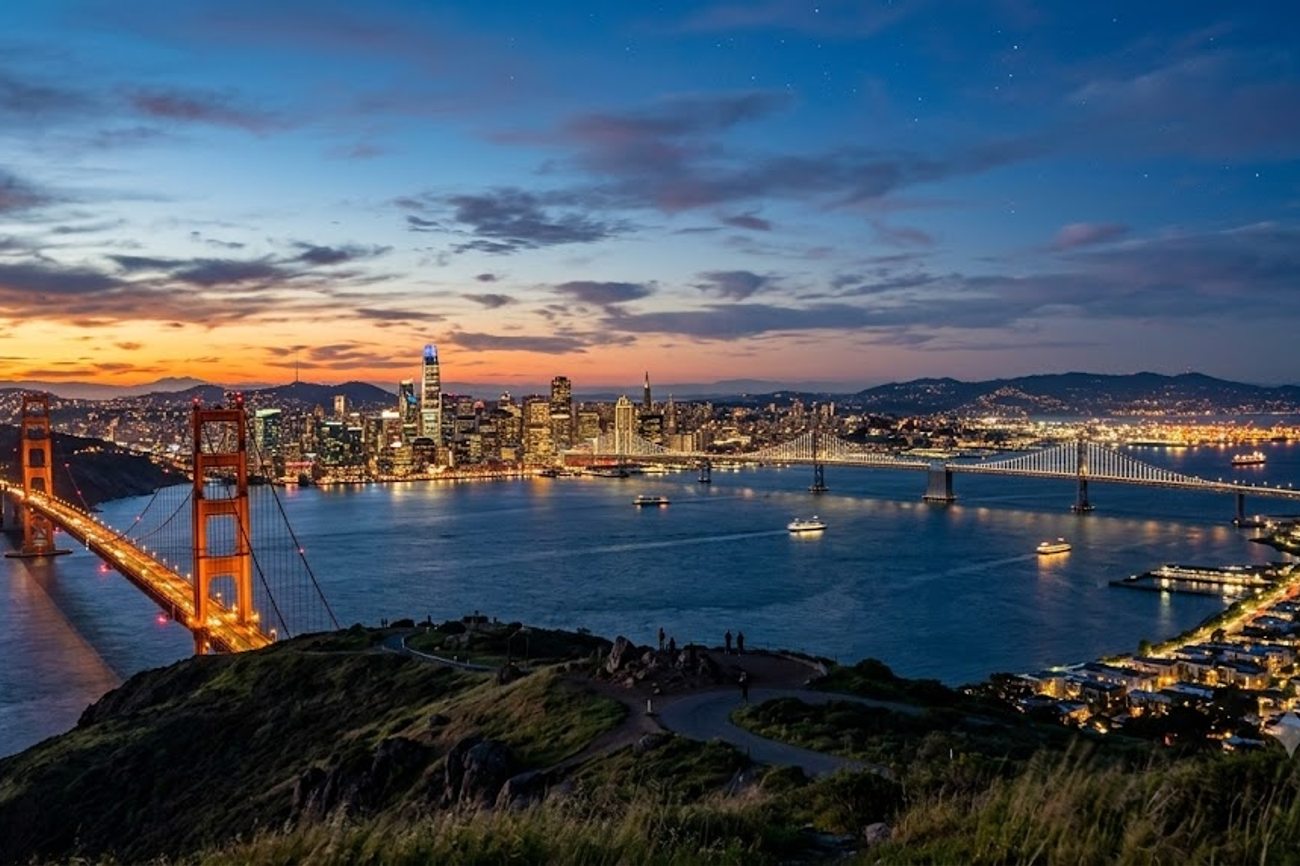
Image generated by AI
A worker in the San Francisco-Oakland-Fremont metro area loses nearly 11 full days of their life every year just sitting in traffic. This staggering figure is part of a broader economic reality where the Bay Area has become the most expensive place in the United States to simply move from home to the office.
The High Price of Bay Area Movement
California is currently the epicenter of America's most expensive daily journeys. According to a recent ConsumerAffairs analysis of the 100 largest US metropolitan areas, the San Francisco-Oakland-Fremont region leads the nation with an estimated annual commuting cost of $10,902 per worker. This is not just a measure of what is spent at the pump, but a calculation of "opportunity cost"—the monetary value of unpaid time spent in transit.
The San Jose-Sunnyvale-Santa Clara metro follows closely behind at $10,636. In total, California claims four of the ten most expensive metropolitan commutes in the country. For the nomad lawyer or the high-net-worth traveler, these figures reveal a critical insight: in the Bay Area, distance is a deceptive metric. The actual cost of movement is driven by a volatile mix of high median wages, steep fuel prices, and chronic congestion.
Nationally, the average annual cost of commuting sits at approximately $6,770. However, the Bay Area's figures are skewed by the sheer economic value of the time lost. In San Francisco, the average round-trip journey takes 62 minutes, totaling roughly 259 hours annually. When you apply the region's median hourly wage of $35.70, the "cost" of that time becomes a massive financial burden that exists entirely off the payslip.
What Makes the Bay Area Different
The economic geography of Northern California creates a unique paradox where high earnings actually increase the "cost" of travel. This is most evident in San Jose. While its average round-trip commute of 53.2 minutes is shorter than that of San Francisco, the financial impact is nearly as severe.
This happens because San Jose boasts the highest median hourly wage in the entire national study at $40.41. Consequently, the uncompensated time cost for a San Jose worker is estimated at $8,993 per year. Essentially, because the workers earn more per hour, every minute spent idling on the 101 or the 280 is mathematically more expensive.
Interestingly, this data challenges the long-held belief that Los Angeles is the most expensive commute in the US. While LA is famous for its gridlock, the Los Angeles-Long Beach-Anaheim metro is estimated at $8,270 annually. Even Stockton-Lodi, at $8,362, is more costly than LA. This proves that traffic intensity and financial burden are not the same thing; the Bay Area's extreme wage ceiling pushes its travel costs into a league of their own.
Visitor Insider Tips
Navigating these high-cost corridors requires a strategy that avoids the traps locals spend thousands to escape.
Timing the Transit Avoid the "commuter crush" at all costs. The Metropolitan Transportation Commission notes that 13% of Bay Area commuters spend at least one hour each way in their cars. If you are visiting San Francisco or San Jose, schedule your inter-city movements between 10:00 AM and 2:00 PM. Attempting to cross the Bay Bridge or navigate the Silicon Valley arteries during the 7:00 AM to 9:00 AM or 4:00 PM to 7:00 PM windows will result in the same time-loss that costs locals $10,902 a year.
The Neighborhood Base To minimize the "commute tax," choose your base strategically. If your business is in Silicon Valley, stay in the Sunnyvale or Santa Clara pockets to avoid the longest stretches of the 101. For those visiting the city, prioritize neighborhoods with high walkability or direct access to BART (Bay Area Rapid Transit) to bypass the fuel and parking premiums.
The San Francisco-Oakland-Fremont region is a major hub for air travel, with three international airports serving the area, including San Francisco International Airport (SFO), Oakland International Airport (OAK), and Norman Y. Mineta San Jose International Airport (SJC). For flight information and schedules, visitors can check the official website of the San Francisco International Airport for the latest updates. This airport is a major gateway to the region, offering a wide range of domestic and international flights.
Transport Hacks While the ConsumerAffairs data focuses on fuel and time, visitors should remember that tolls and parking are additional burdens not included in those statistics. Use the Visit California resources to plan multimodal trips. For those venturing beyond the city, consider the Caltrain for the SF-to-San Jose corridor; it is often more productive than fighting the traffic that creates these high annual costs.
Regional Specialties When stuck in the inevitable slows of the East Bay or South Bay, seek out the authentic Vietnamese corridors of San Jose or the diverse food trucks of Oakland. These are the areas where local culture thrives away from the high-cost corporate hubs.
Cultural and Environmental Context
The staggering cost of commuting in California is a symptom of a deeper struggle between housing affordability and job location. As wages in the tech sector soared, housing prices followed, pushing the workforce further away from the urban cores. This creates a cycle where people earn high wages but spend a significant portion of their "life-time" and income just to reach their workplace.
There is a concerted effort to break this cycle. In 2025, the California Transportation Commission approved $3 billion in allocations aimed at improving safety, mobility, and road rehabilitation. A significant portion of this—$2 billion—comes from the federal Infrastructure Investment and Jobs Act, with another $663 million from California’s SB 1 programme.
These investments are not just about adding lanes to highways, which often leads to "induced demand" (where more roads simply attract more cars). Instead, the focus is shifting toward multimodal travel—integrating cycling infrastructure and expanded public transit to reduce the reliance on the private vehicle. The goal is to lower the "opportunity cost" of movement and make the region more sustainable for both the resident and the visitor. For those interested in the preservation of the surrounding natural beauty, the National Park Service provides guidance on accessing the outskirts of these metros without contributing to the urban congestion.
FAQ: Visiting California 2025
What is the best time to visit the Bay Area? Spring (March to May) and Fall (September to November) offer the best weather and slightly more manageable traffic than the peak summer tourist season or the winter holiday rush.
How do I get from San Francisco to San Jose efficiently? While driving is common, the Caltrain is the most reliable way to avoid the high-cost congestion of the 101. For a faster but more expensive option, consider a ride-share during off-peak hours.
Is it safe for solo travelers in these metro areas? Yes, both San Francisco and San Jose are generally safe for solo travelers. However, like any major US city, exercise standard urban caution and avoid leaving valuables in parked cars to prevent "smash-and-grab" thefts.
Do I need a rental car to visit the Bay Area? In San Francisco, a car is often a liability due to parking costs and traffic. However, for San Jose and the wider Silicon Valley area, a rental car is highly recommended as public transit is less dense.
In the Bay Area, the most expensive thing you can spend is your time.
Related Travel Guides
- Consolidated Travel Strengthens Australia Tourism Network With New Appointment of Former Webjet OTA CEO
- Kempegowda International Airport In India Unveils New Groundbreaking Terminal 1 Special Assistance Facility To Enhance Passenger Experience
- Taiwan Expands US Tourism Push as Strong Air Connectivity and Repeat Visitors Drive Growth
Disclaimer
This article is for informational and educational purposes only. It does not constitute legal, financial, or professional advice. While we strive to provide accurate and up-to-date information, travel policies, regulations, and conditions change rapidly. Always verify information with official sources before making travel decisions. Nomad Lawyer makes no representations about the accuracy, reliability, completeness, or suitability of the information provided. Readers should consult qualified professionals for advice specific to their circumstances. The views expressed in this article are those of the author and do not necessarily reflect the views of Nomad Lawyer.
Naina Thakur
Contributor & Travel Specialist
Travel enthusiast and legal writer covering visa regulations, responsible tourism, and cultural journeys across global destinations.
Learn more about our team →