
Ryanair Hit with €25,000 Legal Blow Over Inflight Accidents as Rapid Turnaround Tactics Threaten Operational Safety and Travel Chaos: Latest Airline News
As rapid-fire turnaround times trigger serious inflight accidents, a Dublin court slaps Ryanair with nearly €25,000 in payouts, exposing a hidden risk of travel chaos.

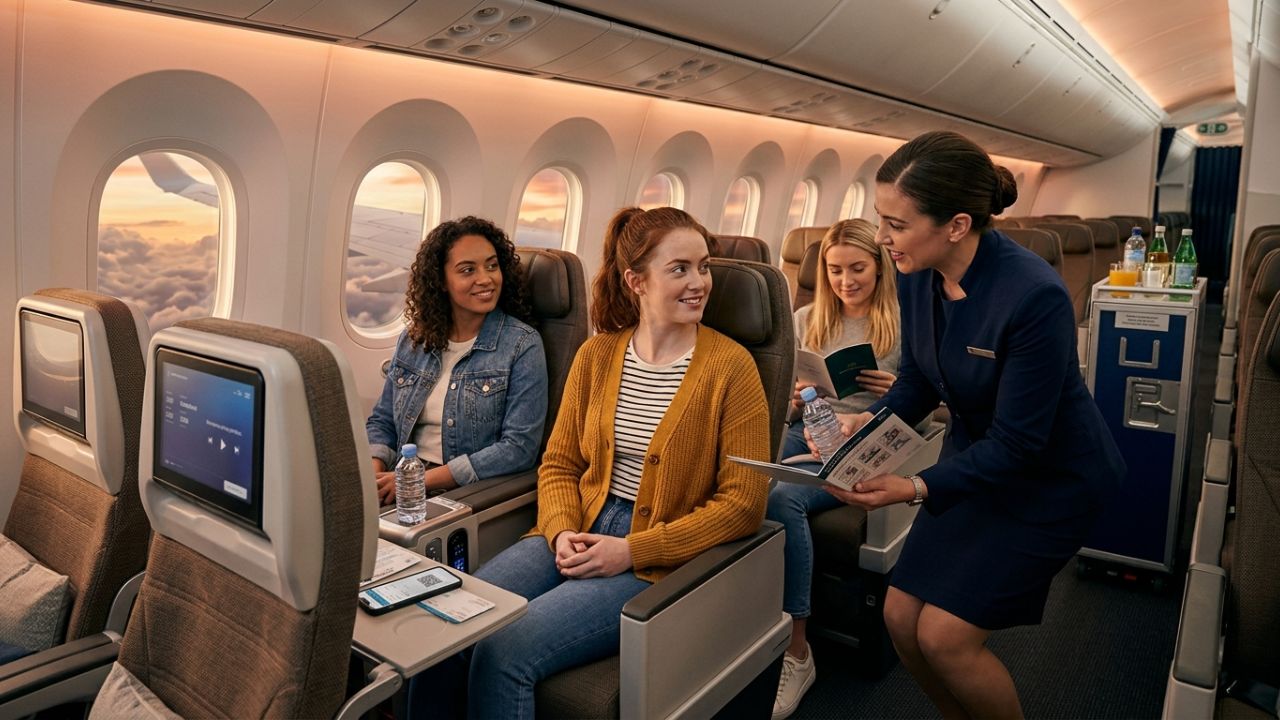
Image generated by AI
In a definitive legal reckoning that brutally exposes the hidden physical risks associated with the aggressive operational speed of low-cost carriers—a relentless pace that frequently triggers compounding travel chaos across European networks—the Irish Circuit Civil Court in Dublin has finalized settlements approaching €25,000 across two separate passenger injury lawsuits against Ryanair. Reported on June 19, 2026, these high-stakes cases highlight the severe consequences of cramped cabin environments and ultra-fast turnaround times. As airlines attempt to squeeze maximum ancillary revenue out of every flight, the resulting cabin congestion is directly causing physical harm to passengers, leading to medical diversions and unannounced flight cancellations. By leveraging the powerful strict liability protections of the 1999 Montreal Convention, ordinary travelers are now aggressively holding massive aviation corporations accountable, transforming a standard personal injury claim into today's most crucial headline in breaking airline news and essential global aviation updates.
By introducing direct passenger coordination and dynamic scheduling backups, the regional aviation hubs target growing passenger demand across vital commerce sectors. The choice to coordinate flight departures in phases helps to manage gate capacity, supporting the country's broader regional transportation network.
Context: The Hidden Cost of Rapid Turnarounds
For the global tourism and European aviation industry, the legal fallout from these Ryanair inflight accidents serves as a stark warning regarding the direct correlation between extreme operational speed and severe travel chaos.
Historically, mainstream financial and travel outlets completely misinterpret these legal payouts as standard "goodwill" concessions. They are not. Low-cost carriers operate on razor-thin margins, demanding incredibly fast 25-minute ground turnarounds to maximize aircraft utilization. This relentless pressure carries directly into the cabin environment, where flight attendants must execute rapid-fire food service and duty-free trolley pushes through highly compressed aisles. When this aggressive operational speed results in a severe passenger injury, the aircraft is often forced to execute a sudden medical diversion. These emergency landings instantly paralyze the airline's meticulously timed schedule, stranding the aircraft and crew at an alternate airport, and directly triggering massive airport disruptions and cascading delays for thousands of subsequent passengers waiting at destination hubs.
To view live flight schedules, verify the active delay status of your specific European itinerary, or to track potential route disruptions, travelers must consult official aviation directories. For direct updates regarding how this corporate safety crisis impacts current flight cancellations out of major hubs like Dublin and Shannon, travelers should aggressively utilize the official portals of Ryanair. To explore live flight tracking and monitor the exact severity of the cascading bottlenecks across competitor hubs navigating similar low-cost pressures, passengers can consult the official FlightAware tracking service.
Section-Wise Breakdown: The Twin Settlements
The Athens to Dublin Scalding Incident
The first major settlement finalized by the court involved a devastating incident on a flight routing from Athens directly to Dublin. The passenger, Eoin Long, who was just six years old at the time of the event, was severely injured when a cabin crew member inadvertently spilled scalding hot tea across his right arm and right thigh during standard service. Despite receiving immediate assistance from a nearby nurse and flight staff, the child experienced extreme physical pain. After legal navigation and medical reviews confirming no permanent scarring, Ryanair opted to settle the case before a prolonged trial, paying a court-approved settlement of €12,000.
The Shannon to Wroclaw Trolley Collision
The second lawsuit stemmed from a flight operating between Shannon and Wroclaw just before Christmas 2024. Krzysztof Matkowski, a 40-year-old professional driver, filed a massive damages claim originally valued at €60,000. He alleged that a rapidly moving cabin sales trolley violently collided with his left knee, causing severe soft-tissue damage that heavily impeded his ability to drive for work. Rather than risk a full public trial regarding its cabin safety protocols, Ryanair settled the matter for an undisclosed sum, officially structured within the €15,000 jurisdictional ceiling of the Irish District Court.
The Shield of the Montreal Convention
The airlines desperately attempt to keep the legal mechanism behind these victories hidden from the public. Both cases were won under the strict parameters of Article 17 of the Montreal Convention (1999). In standard domestic personal injury law, a passenger must painstakingly prove direct negligence by the employee. Under the Montreal Convention, a passenger must only prove that an unexpected, external "accident"—like a spilled beverage or a runaway trolley—occurred onboard the aircraft, triggering an automatic regime of strict liability.
Technical Roster: Legal Framework and Incident Data
To ensure absolute factual accuracy regarding the specific legal standards applied by the Irish courts to secure these payouts, the following matrix details the verified differences between standard liability and international aviation law:
Legal Liability Evaluation Matrix
| Element | Standard Personal Injury Claim | Montreal Convention (Article 17) |
|---|---|---|
| Burden of Proof | Must prove employee negligence/fault | Must prove an unusual, external event occurred |
| Applicable Zone | Anywhere on land / airport terminal | Onboard, embarking, or disembarking |
| Impact Threshold | Highly dependent on permanent impairment | Low; covers temporary soft-tissue & pain |
Data strictly reflects the legal thresholds evaluated during the Ryanair settlements, highlighting the immense power of the Montreal Convention in overriding domestic negligence requirements for inflight accidents.
Passenger Impact: The Threat of Cabin-Induced Diversions
For the millions of travelers crammed into the high-density cabins of European low-cost carriers, the airline industry's obsession with extreme operational speed introduces a direct, physical threat to their safety and severely increases the risk of travel chaos.
The immediate passenger impact of this hyper-commercialized cabin environment is the elevated probability of severe inflight accidents. When an airline drastically shrinks seat pitches to pack more revenue into a fuselage, the aisles become incredibly narrow. When flight attendants are simultaneously ordered to execute rapid-fire duty-free and food sales to hit ancillary revenue targets, collisions are inevitable. If a passenger suffers a severe burn or traumatic physical strike from a trolley midway over the English Channel, the pilot must legally execute a medical diversion to the nearest available runway. This single, cabin-induced emergency completely destroys the itinerary of every passenger onboard. Travelers miss their onward connections, business meetings are ruined, and due to the tight scheduling of low-cost carriers, the cascading delays will ravage the departure boards at the destination airport for the next 24 hours.
Industry Analysis: Accountability in the Aisles
Aviation safety and legal analysts view the nearly €25,000 in payouts mandated by the Dublin courts as a massive wake-up call for budget airlines attempting to operate highly congested cabins at unsafe speeds.
Analysts note that the absence of permanent physical scarring in these cases did not block the compensation paths; the Montreal Convention merely calibrated the final numbers. This proves that airlines cannot simply dismiss temporary soft-tissue damage or pain caused by their operational procedures. The legal precedent establishes that an airline’s strict liability remains intensely active the entire time a passenger is embarking, onboard, or disembarking.
Mr. Anup Kumar Keshan, Founder and Editor-in-Chief of Travel And Tour World (TTW), shared a definitive viewpoint on this structural aviation crisis: “These two Irish court settlements should serve as an immediate wake-up call for low-cost carriers globally. In an industry increasingly driven by ancillary revenue streams, the rapid-fire turnaround times for cabin food, duty-free sales, and scratch-card trolley pushes are creating highly congested aisles. When you squeeze seat pitches and compress service windows, the probability of cabin service collisions and spillages escalates drastically. What others miss is that these €12,000 and €15,000 payouts are not minor financial write-offs; they represent a growing willingness among ordinary passengers to utilize international treaties like the Montreal Convention to hold airlines accountable for tight, hyper-commercialized cabin spaces. Operational efficiency must never outpace foundational passenger safety.”
Actionable Advice for Securing Montreal Convention Protections
Because passengers cannot control an airline's rapid-fire cabin service protocols or the density of low-cost seating, you must execute this strategic survival checklist to actively secure your legal rights if an inflight accident threatens to trigger medical travel chaos:
- Demand an Inflight Incident Report: If you are injured by a spilled beverage or a trolley collision, do not wait until you land. Before the wheels touch down, aggressively demand that the senior cabin crew member (the No. 1) completes a formal, written Inflight Incident Report. Take a clear smartphone photograph of this document immediately. This creates an unalterable, time-stamped record proving the external event took place under the airline’s custody.
- Photograph the Untreated Injury: Before flight attendants apply soothing creams, bandages, or emergency dressings that obscure the visual severity of the wound, capture high-resolution photographs of the injury. This is critical visual evidence required to trigger the strict liability clauses of the Montreal Convention.
- Secure Immediate Local Medical Evaluation: Do not wait to return to your home country to visit a doctor. Secure a formal evaluation from an independent medical professional at your destination city within hours of landing. This explicitly connects the injury directly to the flight window, completely preventing the airline’s aggressive legal team from claiming the injury occurred in the airport terminal or hotel.
FAQ: Ryanair Inflight Accident Lawsuits
Why was Ryanair forced to pay nearly €25,000 in settlements?
The airline settled two separate passenger injury lawsuits in Dublin involving a six-year-old child scalded by hot tea (€12,000) and a professional driver struck by a cabin sales trolley (structured under €15,000).
What legal treaty forces airlines to pay for inflight accidents?
The cases were successfully fought under Article 17 of the Montreal Convention (1999), which imposes strict liability on airlines for bodily injury caused by unexpected, external events while onboard.
Do I have to prove the flight attendant was negligent to win?
No. Unlike domestic personal injury law, the Montreal Convention does not require proof of negligence. You only need to prove that an unusual, external accident occurred during the flight.
The Reality of Navigating Hyper-Commercialized Cabins
The massive legal settlements levied against Ryanair in the Dublin courts prove definitively that the modern low-cost aviation industry is facing a highly volatile collision between aggressive ancillary revenue tactics and fundamental passenger safety. By squeezing seat pitches and forcing rapid-fire trolley sales, airlines are directly creating dangerous cabin environments that routinely result in severe injuries, medical diversions, and compounding travel chaos. As thousands of passengers nervously navigate these cramped aisles to reach their destinations, they must accept a critical new reality: securing a safe journey requires an aggressive understanding of your international legal rights, a refusal to accept hollow airline apology vouchers, and the tactical readiness to invoke the powerful protections of the Montreal Convention the exact moment corporate efficiency compromises your physical safety.
Key Takeaways
- Massive Legal Payouts: Ryanair finalized settlements approaching €25,000 across two separate inflight passenger injury lawsuits in Dublin.
- The Scalding Incident: A six-year-old child received a €12,000 settlement after being scalded by hot tea spilled by a crew member on an Athens to Dublin flight.
- The Trolley Collision: A professional driver settled a €60,000 claim (structured under the €15,000 court ceiling) after a cabin trolley struck his knee on a Shannon to Wroclaw flight.
- Strict Legal Liability: Both cases were won using Article 17 of the Montreal Convention, bypassing standard negligence laws by proving an unexpected, external accident occurred onboard.
- Threat to Operational Stability: Analysts warn that the hyper-commercialized, rapid-fire cabin service demanded by low-cost carriers significantly increases the risk of severe injuries, medical diversions, and massive travel chaos.
Related Travel Guides
Massive Travel Chaos Paralyzes Chicago O'Hare with 1,425 Disruptions
Disclaimer
This article is for informational and educational purposes only. It does not constitute legal, financial, or professional advice. While we strive to provide accurate and up-to-date information, travel policies, regulations, and conditions change rapidly. Always verify information with official sources before making travel decisions. Nomad Lawyer makes no representations about the accuracy, reliability, completeness, or suitability of the information provided. Readers should consult qualified professionals for advice specific to their circumstances. The views expressed in this article are those of the author and do not necessarily reflect the views of Nomad Lawyer.
Kunal K Choudhary
Co-Founder & Contributor
A passionate traveller and tech enthusiast. Kunal contributes to the vision and growth of Nomad Lawyer, bringing fresh perspectives and driving the community forward.
Learn more about our team →