
Aviation Updates: 72 Million Americans Face Absolute Travel Chaos as Historic July Fourth Meltdown Strikes
As catastrophic logistical bottlenecks severely paralyze major transit grids, a record 72.2 million Americans brace for devastating travel chaos and severe flight cancellations.

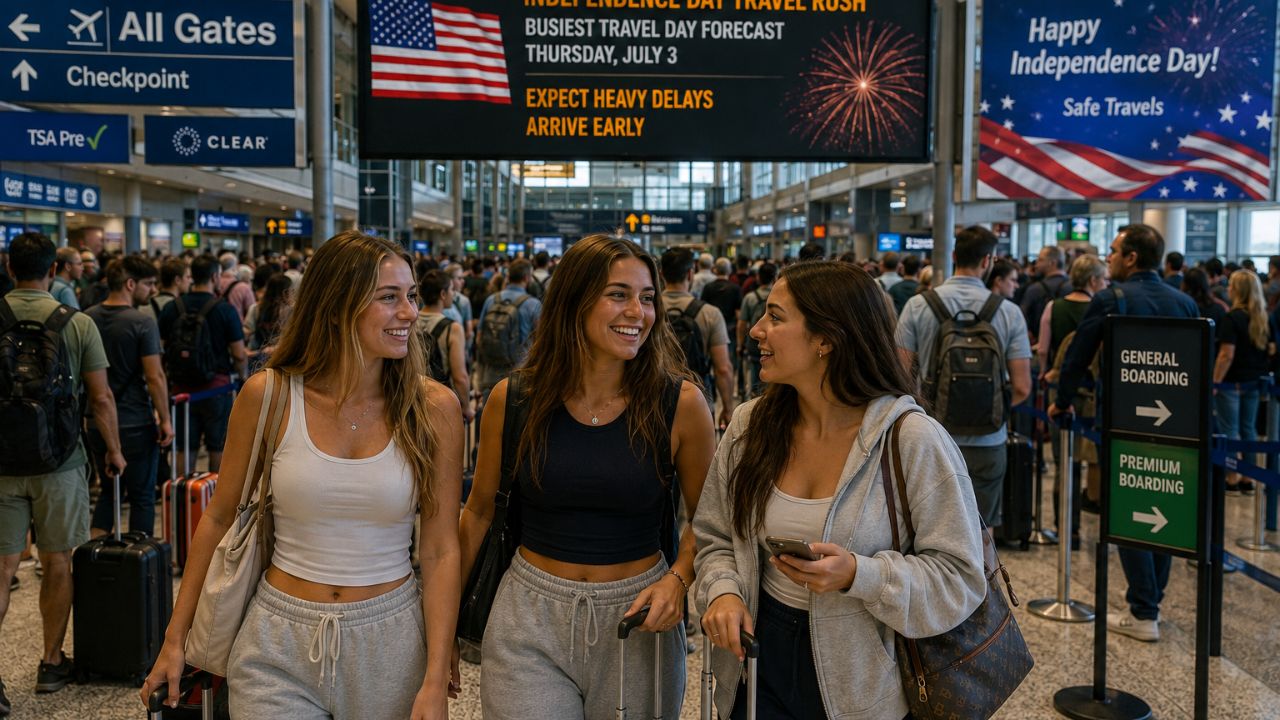
Image generated by AI
Aviation Updates: 72 Million Americans Face Absolute Travel Chaos as Historic July Fourth Meltdown Strikes
As extreme operational friction and suddenly compounding infrastructure bottlenecks continue to terrorize standard travel itineraries, a staggering 72.2 million Americans are actively bracing for unprecedented travel chaos as the busiest holiday window in national history severely paralyzes the domestic transit grid.
Image generated by AI
As high-impact airline news platforms rapidly issue continuous, grim aviation updates regarding the intense fragility of massively congested primary transit grids, preparing for an absolute structural meltdown has officially become a domestic traveler's only defense mechanism. Amidst widespread rolling travel chaos, severe airport disruptions, and the terrifying threat of devastating flight cancellations severely plaguing heavily overcrowded Northeastern hubs, the highly anticipated 2026 Independence Day holiday travel rush is officially in full swing. Transportation data giant AAA is formally forecasting an unprecedented, completely record-breaking 72.2 million Americans actively travelling at least 50 miles from home between June 27 and July 5. This massive, unyielding migration presents an immense logistical challenge for major aviation hubs like Philadelphia International Airport, strictly threatening to collapse standard operations during the peak Thursday departure window.
Expanded Overview: The Mathematical Bottleneck
To fully comprehend the sheer scale of this severe operational strain, commercial aviation analysts must closely examine exactly how massive localized passenger surges violently reshape terminal stability and transit security.
The massive disruption pattern actively terrorizing the global passenger mindset is primarily defined by extreme check-in delays and heavily saturated screening checkpoints. According to a comprehensive local transport brief published by 6abc, aviation analytics clearly indicate that a record-shattering volume of flyers will vigorously attempt to clear security checkpoints simultaneously. This intense compression of passenger numbers strictly occurs because travelers are actively maximizing their precious time off by heavily matching the federal holiday with extended weekend itineraries. The extraordinary volume of travelers is safely on track to cement this specific week as one of the absolute busiest holiday travel stretches in American history. Flight tracking data indicates that airlines are aggressively running at near-maximum cabin capacity on nearly every single domestic route routing through the northeastern United States.
Section-Wise Breakdown: The Cascading Transport Collapse
Terminal operations and highway networks are violently degrading across competing hubs, forcing domestic travelers to fiercely adapt their spending habits and routing strategies to survive the massive gridlock.
Inflationary Ticket Pressure: The underlying financial reality for domestic holidaymakers has heavily shifted due to persistent inflationary pressures. According to updated, rigid marketplace metrics compiled by AAA, the average price for a round-trip domestic airline ticket has aggressively climbed to a substantial £650 ($830) per seat for highly sought-after peak destinations. This noticeable price increase heavily represents a highly calculated trade-off for middle-class households deeply determined to strictly preserve their annual summer traditions. Families are deliberately cutting back on premium dining out and luxury souvenirs to ensure they can fully afford these baseline transportation and lodging expenses.
The Post-Pandemic Cruise Boom: The landscape of modern holiday transportation is undergoing a massive structural transformation furiously driven by an unprecedented surge in maritime tourism. An incredible 4.93 million Americans are officially projected to massively utilize buses, trains, and luxury cruise ships during this specific holiday window, marking a powerful 5.3 per cent surge. This phenomenal shift actively places a massive operational strain on infrastructure networks feeding major coastal port cities. The incredible popularity of cruise vacations has successfully propelled maritime hub cities like Seattle, Anchorage, and Miami to the very top of domestic travel indices, strongly requiring immense cooperation between regional rail operators and port authorities to successfully prevent local gridlock.
Weather-Induced Flight Cancellations: The inherently fragile nature of the nationwide air traffic control network heavily means that localized disruptions can violently trigger a lasting impact across the entire country. Earlier this week, a massive, violent wave of severe summer thunderstorms and intense heatwaves aggressively tore directly through the critical Northeast aviation corridor. This violently triggered hundreds of devastating flight cancellations and cascading delays. Philadelphia International Airport (PHL) spent days working feverishly to actively recover from the severe operational fallout as aircraft and massive flight crews were left completely out of position. This lingering weather displacement has effectively rolled straight into the peak holiday travel rush, leaving major legacy airlines with absolutely zero margin for error.
Highway Gridlock Warnings: Navigating the crowded highway networks strictly requires a highly disciplined approach to massive trip timing. With automobile travel holding steady at an incredible 61.4 million motorists nationwide, transportation data insights provider INRIX has officially identified the afternoon and early evening hours of Thursday and Friday as the absolute worst windows for regional road travel. Highway safety officials strongly recommend that proactive motorists aggressively hit the road before 10:00 AM or strategically wait until well after 6:00 PM to ensure a much smoother journey. AAA expects to actively handle well over 680,000 emergency roadside assistance calls during this frantic holiday stretch.
Strategic Details: Verified July Fourth Travel Volume Matrix
To ensure stranded passengers and commercial aviation analysts can accurately track the incredibly precise operational telemetry of this massive network strain, the verified structural data has been consolidated into the exact, mandatory matrix below.
| Operational / Economic Metric | Verified Forecast / Data |
|---|---|
| Total Projected Travelers | 72.2 Million (AAA Forecast) |
| Travel Window | June 27 - July 5, 2026 |
| Peak Transit Day | Thursday (Afternoon & Evening) |
| Average Domestic Airfare | £650 / $830 (Round-Trip) |
| Automobile Travel Volume | 61.4 Million Motorists |
| Alternative Transit (Cruise/Rail) | 4.93 Million Passengers (5.3% Surge) |
| Key Maritime Hubs | Seattle, Anchorage, Miami |
| Airport Disruption Focus | Philadelphia (PHL) Weather Fallout |
| Roadside Assistance Calls | 680,000+ Expected (AAA) |
| Best Driving Windows | Before 10:00 AM or After 6:00 PM |
(Source: AAA, INRIX, and Regional Transport Authorities)
Industry Analysis: The Macroeconomic Impact of the Peak Surge
Air travel explicitly across massive domestic transit corridors continues to massively struggle, driven violently by incredibly fragile air traffic flow constraints and severely overloaded security infrastructures.
To completely understand how these cascading domestic passenger surges actively alter regional airline ticket distributions and aggressively squeeze nationwide seat availability during peak summer corridors, aviation analysts heavily track historical booking patterns via Travel Weekly. When severe weather grounds an aircraft, it fiercely takes days of complex logistical coordination to safely re-route affected passengers onto alternative flights during a totally sold-out holiday weekend. This structural vulnerability completely highlights exactly why transport experts strongly urge travelers to continuously monitor their airline’s mobile application for real-time status updates well before ever leaving for the terminal.
Passenger Impact: Protecting the Vacation Baseline
For the everyday premium domestic traveler and highly stressed vacationer, the immediate consequence of this massive logistical strain directly translates to a monumental, highly verified spike in transit anxiety.
Any minor delay at the gate or check-in desk instantly creates a fast-moving domino effect that can heavily, quickly strand hundreds of highly anxious holidaymakers. Airport management teams are forcefully warning the public that waiting until the last minute to clear security on peak days like Thursday is a highly risky strategy that will almost certainly result in a missed flight. By heavily planning their arrival logistics and actively leaving massive time buffers, local drivers and flyers can fiercely protect their massive holiday investments.
Conclusion: A Network Reimagined
Ultimately, the aggressive, massive deployment of 72.2 million travelers actively marks a massively significant stress test for US transit infrastructure. The severe volume projected between June 27 and July 5 completely demands absolute logistical perfection from major hubs like Philadelphia International Airport and municipal highway networks.
As devastating weather disruptions violently collide with record-breaking passenger volumes and heavily inflated ticket prices, the true resilience of the American transportation grid is being severely tested. Travelers who actively heed early departure warnings, secure backup routing, and aggressively monitor flight statuses will be the only ones to successfully navigate the historic chaos of the 2026 Independence Day rush entirely unscathed.
Key Takeaways
- Record 72.2 Million Travelers: AAA officially projects an unprecedented 72.2 million Americans will travel during the Independence Day window.
- Aviation Gridlock at PHL: Philadelphia International Airport and other Northeast hubs are struggling to recover from severe weather, leading to massive delays and cancellations.
- Surging Flight Costs: The average price for a round-trip domestic airline ticket has aggressively climbed to approximately $830 per seat.
- Highway Meltdown Warnings: INRIX strictly warns that Thursday and Friday afternoons are the absolute worst times to drive, recommending travel before 10:00 AM or after 6:00 PM.
- Cruise Boom Strains Ports: A 5.3% surge in alternative transit (4.93 million passengers) is heavily crowding major maritime hubs like Seattle and Miami.
FAQ: US July Fourth Travel Chaos 2026
How many people are traveling for July 4th in 2026? Transportation data giant AAA is formally forecasting an unprecedented, completely record-breaking 72.2 million Americans travelling at least 50 miles from home between June 27 and July 5.
What is the worst day to travel for July 4th? Thursday is mathematically forecast as the absolute most frantic airport and highway bottleneck of the entire week as travelers attempt to maximize their time off.
How much does a flight cost for July Fourth? According to updated marketplace metrics compiled by AAA, the average price for a round-trip domestic airline ticket has climbed to a substantial $830 per seat for peak destinations.
When is the best time to drive during the holiday weekend? Highway safety officials strongly recommend hitting the road before 10:00 AM or waiting until well after 6:00 PM to aggressively bypass the massive afternoon congestion peaks.
Related Travel Guides
Pittsburgh Airport July Fourth Delays Travel Chaos 2026
UAE Summer Travel Etihad Airways Travel Chaos 2026
Emirates Best Airline Worldwide BTME Awards Travel Chaos 2026
Disclaimer: This article is strictly for informational and aviation tracking purposes. The specific operational telemetry (72.2 million travelers, $830 airfare averages) and AAA/INRIX travel projections are based on verified analytics data available at the time of publication. Security wait times, airport weather delays, localized highway gridlock, and cruise port congestion are highly dynamic and subject to immediate modification by the operating authorities. Passengers navigating the holiday surge should explicitly verify exact terms, conditions, and real-time transit alerts via official travel portals prior to departure.
Disclaimer
This article is for informational and educational purposes only. It does not constitute legal, financial, or professional advice. While we strive to provide accurate and up-to-date information, travel policies, regulations, and conditions change rapidly. Always verify information with official sources before making travel decisions. Nomad Lawyer makes no representations about the accuracy, reliability, completeness, or suitability of the information provided. Readers should consult qualified professionals for advice specific to their circumstances. The views expressed in this article are those of the author and do not necessarily reflect the views of Nomad Lawyer.
Kunal K Choudhary
Co-Founder & Contributor
A passionate traveller and tech enthusiast. Kunal contributes to the vision and growth of Nomad Lawyer, bringing fresh perspectives and driving the community forward.
Learn more about our team →