
Efficiency Drive: Ryanair Cuts Pre-Flight Safety Briefing by 40 Seconds
Ryanair introduces a shorter recorded safety briefing across its European network, saving 40 seconds to improve aircraft turnaround times.

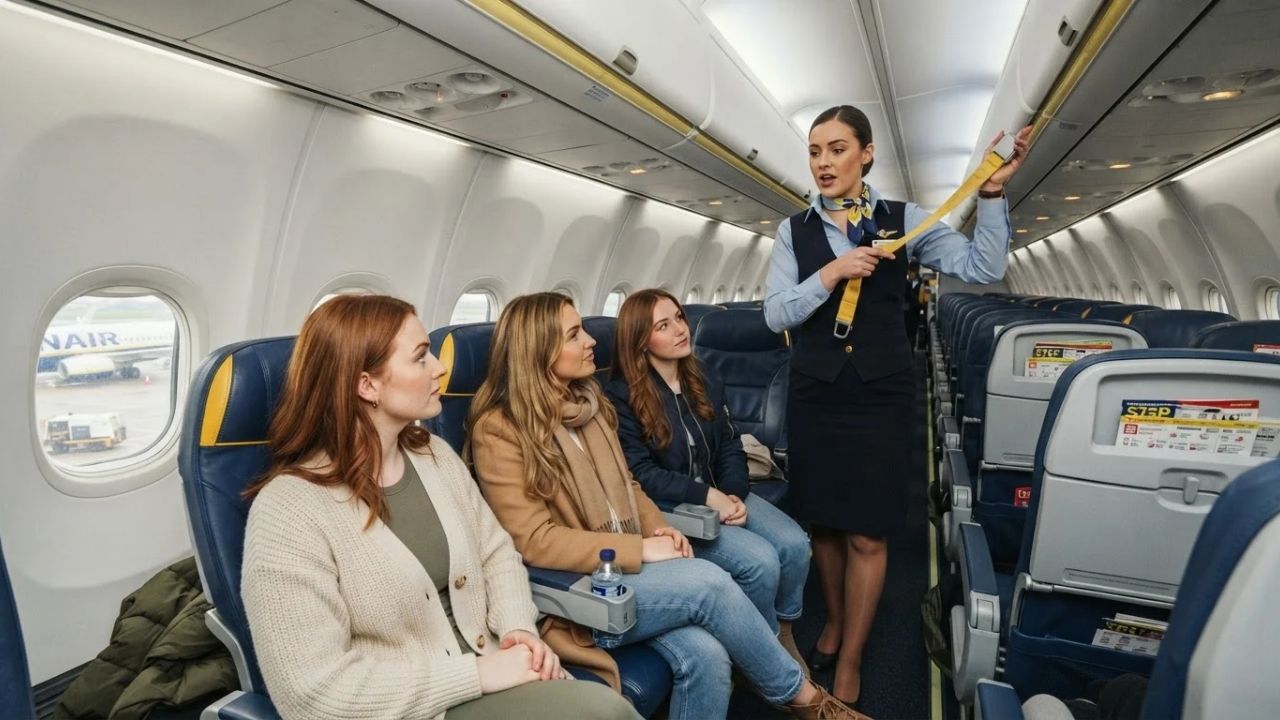
Image generated by AI
Ryanair has shortened its pre-flight safety announcement by 40 seconds across its entire European network, requiring cabin crew to synchronize their physical demonstrations with a faster audio sequence. This update aims to improve turnaround times and operational efficiency, prompting conversations about safety communication standards.
The Pursuit of Turnaround Efficiency in Low-Cost Aviation
A major trend in low-cost commercial aviation is the optimization of aircraft turnaround times. In short-haul operations, reducing the time an aircraft spends parked at the gate is central to maintaining profitability. From paperless flight decks to boarding systems, carriers review every phase of ground preparation to identify potential time savings.
Shaving 40 seconds off the mandatory pre-flight safety briefing represents a new level of operational optimization. By introducing a faster recorded announcement, the airline hopes to streamline the boarding-to-takeoff transition. However, the change requires cabin crew to perform safety demonstrations at a quicker pace while ensuring the instructions remain clear and understandable.
Operational Impact on Cabin Crew and Passenger Safety
The safety demonstration is one of the most important preparation steps before takeoff. Cabin crew show passengers how to:
- Fasten and adjust seat belts
- Locate the nearest emergency exits
- Retrieve and fit oxygen masks
- Access life vests and understand emergency equipment
Under the updated system, crew members must complete these physical actions alongside a faster audio recording. This change places a demand on precision and coordination, as crew members must move between demonstration points in the cabin within a reduced timeframe. While experienced crew members are familiar with the safety routine, adjusting the timing requires adapting established muscle memory to the faster sequence.
Balancing Turnaround Speed with Safety Communication
The transition to a shorter briefing has generated discussion within the aviation industry. The primary goal of the demonstration is ensuring that passengers—including first-time flyers and non-native speakers—understand what to do during an emergency.
While saving 40 seconds per flight supports operational punctuality across a large network, critics note that safety communication should not be rushed. National regulators like the Irish Aviation Authority (IAA) and the European Union Aviation Safety Agency (EASA) establish strict standards for safety briefings, requiring all essential details to be communicated clearly before departure.
Dublin and the Scale of Ryanair's Operations
As one of Europe's largest low-cost carriers, Ryanair's operational changes have a broad impact on the regional market:
- Headquarters Base: Dublin remains the airline's primary base and administrative headquarters.
- Network Reach: Because the airline operates thousands of flights daily across Europe and neighboring regions, even minor procedural adjustments affect millions of passenger journeys.
- Operational Standards: Changes introduced at the carrier's Dublin hub are rolled out across its entire fleet, setting a precedent for other low-cost operators in the region.
The success of the new safety briefing format will depend on whether passengers continue to understand the instructions and whether cabin crew can perform their demonstrations accurately under the updated schedule.
Passenger and Route Operational Data
The table below summarizes the key details of the updated safety briefing:
| Briefing Aspect | Prior Standard | New Standard | Operational Objective |
|---|---|---|---|
| Duration | Standard length | Reduced by ~40 seconds | Improve gate turnaround times |
| Audio Sequence | Standard pace | Quicker recorded audio | Streamline pre-departure checks |
| Crew Coordination | Standard pacing | Faster physical actions | Maintain alignment with fast audio |
| Applicability | Select bases | Network-wide (Europe) | Ensure uniform fleet procedures |
| Main Hub | Dublin Airport | Dublin Airport | Headquarter hub implementation |
This adjustment shows how airlines analyze every minute of the ground cycle to increase fleet utilization.
Ecotourism and Economic Value of Airline Efficiency
For the visitor, the real impact of increased airline efficiency is the preservation of affordable regional connectivity. By maintaining fast turnarounds, low-cost carriers keep ticket prices accessible, allowing travelers to visit secondary destinations across Europe.
This connectivity supports local economies, directing tourist spending to independent guesthouses, regional transport operators, and family-owned restaurants in destinations that rely on seasonal tourism. Additionally, reducing the time aircraft spend parked with their Auxiliary Power Units (APUs) running helps lower emissions at airport terminals, supporting local environmental conservation goals.
For example, you can explore the changing dynamics of Consumer Rights: Vietnam Enforces Strict Timelines for Airline Passenger Refunds to see how regulatory compliance is managed. For budget-conscious travelers, aligning slow city travel with municipal transit options mirrors similar regional initiatives, such as the Free Admission at Select US State Parks programs. This trend is similar to the tourism growth seen in other destinations, as detailed in our guide on how Utica, New York Emerges as an Affordable Northeast Tourism Hub.
Visitor Insider Tips: Flying on Short-Haul Routes
If you are planning to travel on short-haul European flights under the updated safety briefing guidelines, keep these tips in mind:
- Pay Close Attention to the Briefing: Since the recorded announcement is faster, avoid distractions during the demonstration. Note the locations of your nearest exits, which can vary by aircraft type (e.g., Boeing 737-800 vs. 737 MAX 8-200).
- Locate Your Nearest Exit: Count the rows to your nearest exit (both in front and behind you) as soon as you take your seat.
- Review the Safety Card: Familiarize yourself with the passenger safety card located in the seatback pocket before takeoff.
- Pack Hand Luggage Efficiently: Store bags under the seat in front of you or in the overhead bins quickly to support on-time departures.
- Respect Crew Instructions: Follow cabin crew directions during boarding and preparation to ensure a safe, organized departure.
Long-Term Outlook for Airline Operational Safety
The long-term outlook for aviation safety is focused on the integration of digital safety briefings and automated cabin checks. As airlines continue to look for ways to improve efficiency, the use of mobile apps to deliver safety instructions before arrival may become more common.
By maintaining high safety standards and supporting operational punctuality, airlines can ensure that travel remains safe, affordable, and accessible.
FAQ
Why did Ryanair shorten its safety briefing?
The airline reduced the briefing by 40 seconds to improve turnaround times and increase operational efficiency across its flight network.
What is the impact on cabin crew?
Crew members must perform their physical safety demonstrations at a faster pace to remain synchronized with the quicker recorded audio.
Where does this change apply?
The updated pre-flight safety briefing is being implemented network-wide across Ryanair's European operations, including its main base at Dublin Airport.
Are the safety details different?
No. The shortened briefing contains all the essential safety instructions required by aviation regulators, delivered at a faster pace.
Stay updated on the airline routes and aviation safety regulations shaping European travel.
Related Travel Guides
Disclaimer
This article is for informational and educational purposes only. It does not constitute legal, financial, or professional advice. While we strive to provide accurate and up-to-date information, travel policies, regulations, and conditions change rapidly. Always verify information with official sources before making travel decisions. Nomad Lawyer makes no representations about the accuracy, reliability, completeness, or suitability of the information provided. Readers should consult qualified professionals for advice specific to their circumstances. The views expressed in this article are those of the author and do not necessarily reflect the views of Nomad Lawyer.
Raushan Kumar
Founder & Lead Developer
Full-stack developer with 11+ years of experience and a passionate traveller. Raushan built Nomad Lawyer from the ground up with a vision to create the best travel and law experience on the web.
Learn more about our team →