
China Southern Airlines Accelerates Sustainability Push with A320neo, 787-9, and Homegrown C919 Fleet Expansion
China Southern Airlines modernizes fleet with fuel-efficient Airbus A320neo, Boeing 787-9, and COMAC C919 aircraft, targeting carbon-neutral operations and reducing emissions by 636,200 tonnes annually.

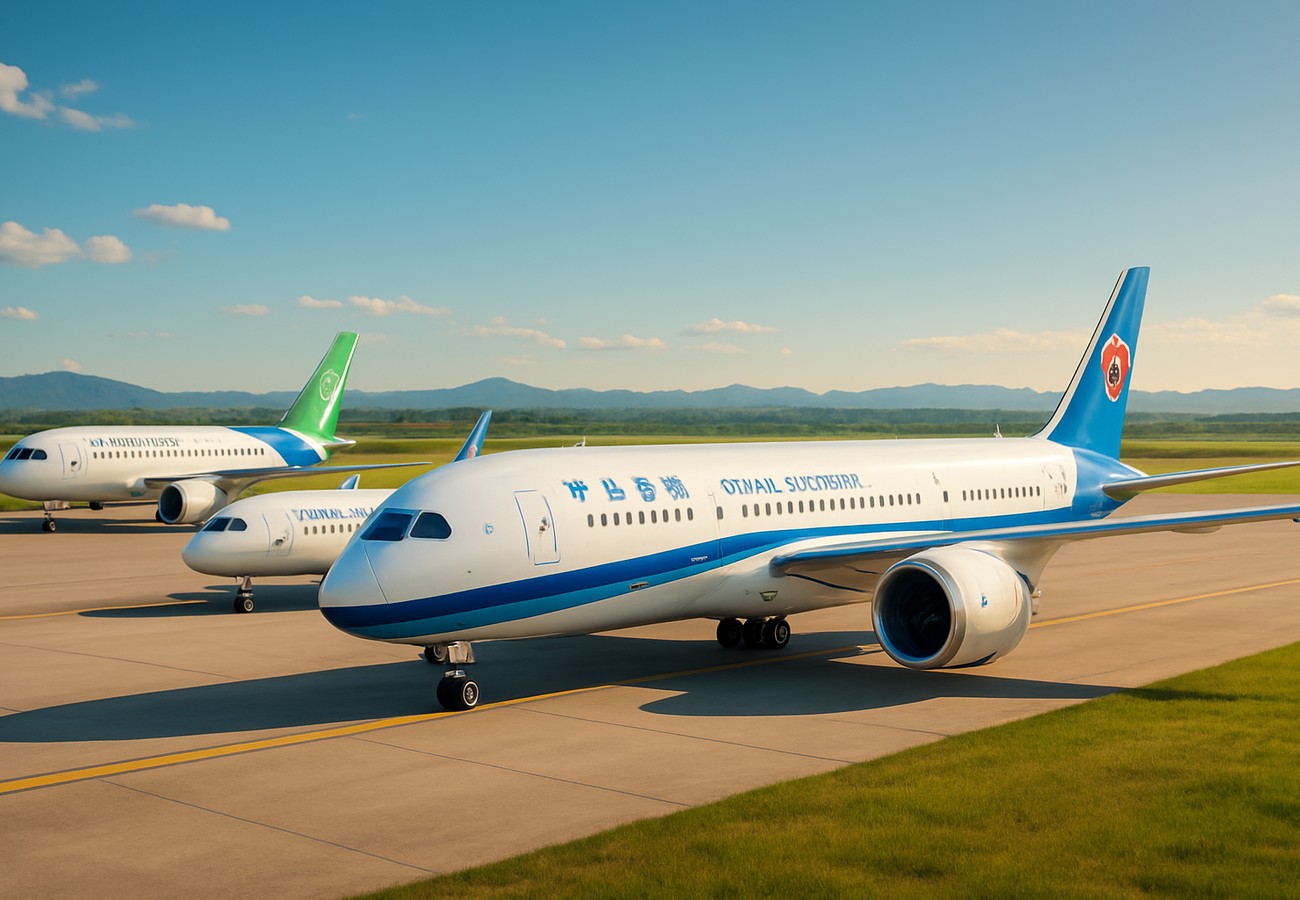
Image generated by AI
China Southern Airlines Charts Ambitious Course Toward Carbon-Neutral Operations with Next-Generation Fleet Overhaul
China Southern Airlines, one of the world's largest carriers, is fundamentally reshaping its operational footprint by deploying three transformative aircraft platforms designed to slash fuel consumption and environmental impact. The carrier's aggressive fleet modernization strategy—integrating the Airbus A320neo, Boeing 787-9 Dreamliner, and domestically manufactured COMAC C919—represents a watershed moment for sustainable aviation in Asia and signals intensifying pressure across the global airline industry to address mounting fuel prices and climate accountability.
The initiative arrives as aviation stakeholders worldwide grapple with escalating operational costs tied to volatile fuel markets and regulatory mandates demanding measurable emissions reductions. According to the airline's latest sustainability disclosures, China Southern has already eliminated approximately 636,200 tonnes of CO₂ emissions while conserving 201,900 tonnes of jet fuel through its fleet optimization efforts—a quantifiable achievement that underscores how next-generation aircraft directly impact both environmental performance and airline profitability in an era of constrained margins.
The A320neo: Redefining Short-to-Medium Haul Economics
The Airbus A320neo family represents a decisive competitive advantage for carriers seeking to optimize regional and domestic networks. The aircraft's "neo" designation—New Engine Option—delivers approximately 15-20% superior fuel efficiency relative to legacy A320 variants, a performance differential that compounds dramatically across thousands of annual flight cycles. For China Southern, which operates extensive networks throughout mainland China and Southeast Asia, the A320neo's enhanced aerodynamics, advanced winglet design, and noise-reduction capabilities address multiple operational priorities simultaneously: lower airline fees through reduced fuel surcharges, diminished noise pollution at congested urban airports, and improved passenger comfort on high-frequency routes.
The efficiency gains translate directly into competitive pricing power. As fuel prices impact airlines' ability to maintain competitive fares, the A320neo's superior fuel economy enables carriers to absorb cost volatility without proportional ticket price increases—a critical advantage in price-sensitive Asian markets where low-cost carriers dominate market share.
Boeing 787-9 Dreamliner: Long-Haul Sustainability Breakthrough
China Southern's integration of the Boeing 787-9 Dreamliner fundamentally transforms intercontinental operations, particularly on routes spanning Europe, North America, and Australia. The wide-body aircraft achieves a remarkable 20% reduction in fuel consumption compared to conventional long-haul jets through revolutionary composite materials, advanced aerodynamic design, and next-generation engine technology. This efficiency advantage proves especially consequential on ultra-long-range routes where fuel represents 25-30% of total operating costs.
The 787-9's lightweight carbon-fiber construction and optimized cabin pressurization systems enable carriers to transport more passengers across greater distances while consuming proportionally less fuel per seat-kilometer—a metric increasingly scrutinized by corporate travel procurement teams and environmentally conscious passengers. According to IATA sustainability frameworks, such technological advances are essential to aviation's pathway toward net-zero emissions by 2050, positioning early adopters like China Southern as industry leaders in addressing global aviation's environmental footprint.
COMAC C919: China's Strategic Pivot Toward Aviation Self-Sufficiency
The introduction of the COMAC C919 marks a geopolitical and industrial inflection point for Chinese aviation. This narrow-body, medium-haul aircraft—developed by the Commercial Aircraft Corporation of China—represents Beijing's determination to reduce dependence on Western aircraft manufacturers while establishing domestic technological capabilities. China Southern received its first C919-100STD aircraft in August 2024, with 92 additional aircraft currently on order, signaling confidence in the platform's commercial viability and environmental credentials.
From an operational standpoint, the C919 delivers fuel efficiency comparable to the A320neo through advanced engine technology and lightweight composite structures, enabling China Southern to standardize operations across its domestic network while supporting China's broader industrial policy objectives. The aircraft's entry into service simultaneously addresses three strategic imperatives: reducing air travel costs through improved fuel economy, advancing China's technological sovereignty in aerospace manufacturing, and contributing to measurable carbon emissions reductions across Asia's fastest-growing aviation market.
Quantified Environmental Impact: From Sustainability Rhetoric to Measurable Results
China Southern Airlines has transcended aspirational sustainability messaging by publishing concrete environmental metrics. The carrier's reported elimination of 636,200 tonnes of CO₂ emissions and conservation of 201,900 tonnes of jet fuel in the preceding fiscal year demonstrates that fleet modernization directly translates into environmental outcomes. These figures gain additional significance when contextualized against global aviation's total emissions—approximately 2.5% of worldwide CO₂ output according to UNWTO aviation sustainability data—underscoring how individual carrier initiatives aggregate into meaningful sectoral progress.
The economic implications prove equally compelling. Reduced fuel consumption directly lowers airline fees and operational expenses, enabling carriers to maintain competitive pricing while improving profit margins. For passengers, this translates into more stable fares less vulnerable to fuel price volatility—a critical consideration given crude oil's historical price swings and geopolitical supply disruptions.
What This Means for Travelers
Passengers booking flights on China Southern Airlines increasingly benefit from modernized aircraft offering superior comfort, reliability, and environmental responsibility. The carrier's fleet transition reduces exposure to fuel surcharges that typically spike during periods of elevated crude prices, potentially stabilizing ticket costs across domestic and international routes. Additionally, newer aircraft feature enhanced cabin pressurization, improved air filtration systems, and optimized seating configurations—tangible amenities that elevate the passenger experience beyond sustainability metrics alone.
For corporate travel managers and environmentally conscious travelers, China Southern's commitment to next-generation aircraft provides measurable assurance that booking decisions support verifiable emissions reductions. The carrier's transparent reporting of environmental savings—636,200 tonnes of CO₂ avoided annually—enables travelers to quantify their individual carbon footprint reduction when selecting airlines, a growing priority for institutional and leisure passengers alike.
Industry insight: Fleet modernization represents the most immediate pathway for carriers to achieve measurable emissions reductions while simultaneously improving financial performance—a rare alignment of environmental and economic incentives that explains accelerating aircraft replacement cycles across global aviation.
Forward Momentum in Global Aviation's Sustainability Transition
China Southern Airlines has positioned itself at the vanguard of aviation's environmental transformation, demonstrating that aggressive fleet modernization delivers simultaneous benefits across sustainability, operational efficiency, and passenger experience dimensions. As fuel prices continue exerting pressure on airline profitability and regulatory frameworks increasingly mandate emissions accountability, carriers worldwide will inevitably follow China Southern's trajectory toward next-generation aircraft platforms.
The carrier's strategic embrace of the domestically manufactured COMAC C919 additionally signals a broader realignment in global aviation supply chains, with emerging markets asserting technological capabilities previously concentrated among Western manufacturers. This competitive diversification may ultimately benefit passengers through expanded aircraft options, enhanced innovation competition, and more resilient supply chains less vulnerable to geopolitical disruptions. For travelers monitoring airline sustainability commitments and fuel cost dynamics, China Southern Airlines exemplifies how strategic capital investment in modern aircraft translates into tangible environmental progress and operational resilience.
Related Travel Guides
Disclaimer
This article is for informational and educational purposes only. It does not constitute legal, financial, or professional advice. While we strive to provide accurate and up-to-date information, travel policies, regulations, and conditions change rapidly. Always verify information with official sources before making travel decisions. Nomad Lawyer makes no representations about the accuracy, reliability, completeness, or suitability of the information provided. Readers should consult qualified professionals for advice specific to their circumstances. The views expressed in this article are those of the author and do not necessarily reflect the views of Nomad Lawyer.
Kunal K Choudhary
Co-Founder & Contributor
A passionate traveller and tech enthusiast. Kunal contributes to the vision and growth of Nomad Lawyer, bringing fresh perspectives and driving the community forward.
Learn more about our team →