
Russia Expands Wilderness Travel Regulations as Eco-Friendly Stays Cross Twenty Million Nights Across Siberia, Altai, and Baikal: What Every Traveller Must Know
Nature-focused accommodation surpasses 20 million overnight stays in Russia as modular glamping, e-visas, and strict national park controls reshape Siberian travel.

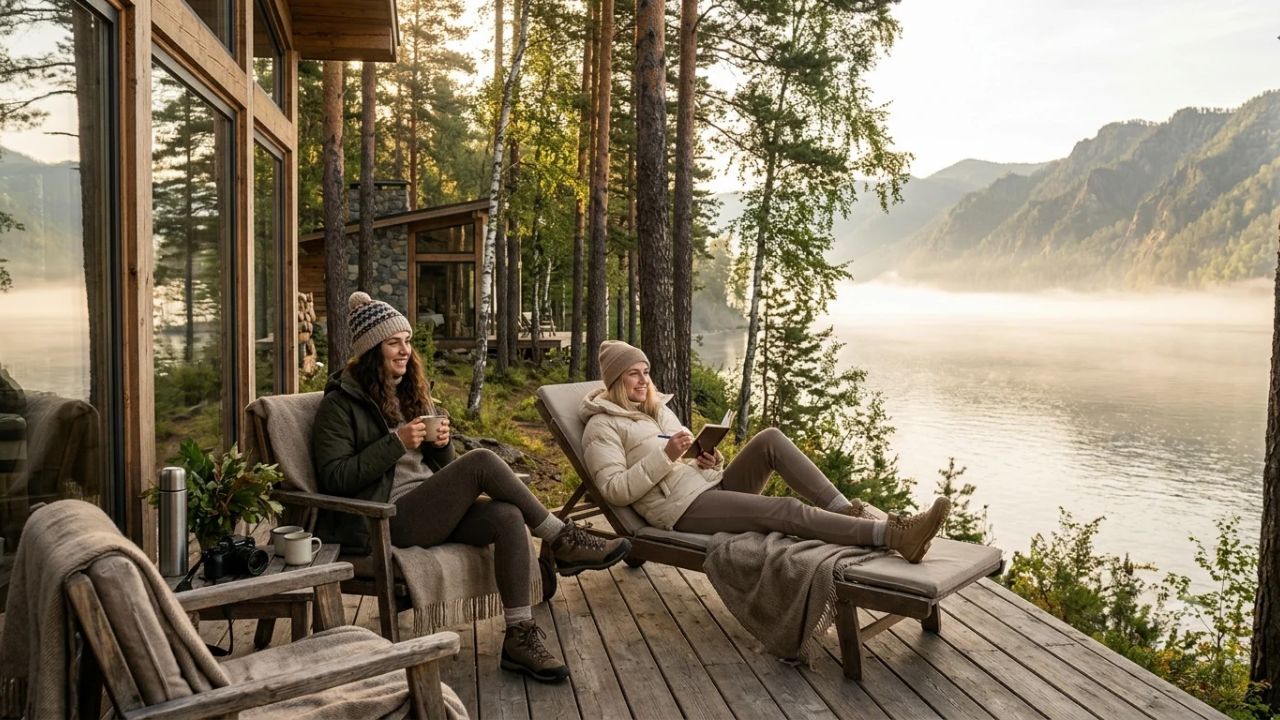
Image generated by AI
A structural surge in wilderness travel is transforming Russia’s domestic and international tourism landscape, as nature-focused accommodation facilities surpass twenty million overnight stays across ecologically sensitive corridors. Driven by federal investments under the National Project "Tourism and Hospitality Industry" and coordinated by the Ministry of Natural Resources and Environment, travelers are rapidly transitioning away from metropolitan city breaks toward modular glamping along the Katun River in Altai, the Lake Baikal Basin, and volcanic routes across Kamchatka Krai. To accommodate this unprecedented influx while preventing ecological degradation, authorities have instituted strict Visitor Management Systems across more than 100 protected reserves, demanding that independent explorers, road-trippers, and international e-Visa holders adapt to structured registration protocols and designated trail networks.
[!NOTE] Quick Summary: Key Developments at a Glance
- 20 Million Wilderness Milestone: Overnight stays in eco-friendly and nature-focused accommodation facilities exceeded 20 million nights, anchoring a national total of 90.07 million guests across certified collective lodging.
- Rapid Glamping Infrastructure: Developers deployed over 60,000 new lodging rooms, with non-hotel recreation bases (Bazy Otdykha) expanding 2.3 times faster than traditional urban hotels over a four-year tracking period.
- Ecological Preservation Controls: Modernized visitor management systems across 100+ Specially Protected Natural Areas (SPNAs) cut the unmanaged wilderness camping footprint by 35%, mitigating forest fire hazards and trail erosion.
- Inbound International Rebound: International visitors in collective accommodations reached 5.15 million—a 42.4% year-over-year surge—fueled by unified electronic visas (e-Visas) and group visa-free corridors with China, India, Iran, the UAE, and Saudi Arabia.
- Macroeconomic Capital Influx: Tourism’s direct contribution to Russian GDP surpassed 3% (targeting 5% by 2030), backed by 3.5 trillion rubles in mobilized state-private capital and 280 billion rubles generated from paid hospitality services.
Official performance data released by the Federal State Statistics Service (Rosstat) highlights a decisive pivot toward sustainable, off-grid adventure travel. Rather than concentrating exclusively in traditional urban centers like Moscow and St. Petersburg, holidaymakers are targeting high-biodiversity regional frontiers. Supported by state subsidies, preferential business loans, and digital entry corridors, regional destinations historically considered remote are emerging as mainstream, high-yield eco-tourism corridors.
Over 20 Million Eco-Tourism Stays: Modular Glamping Boom Across Siberia and the Far East
The rapid deployment of prefabricated, lightweight modular lodging units has become the primary operational engine unlocking Siberia and the Russian Far East. Rosstat metrics document that national collective accommodation facilities—spanning certified hotels, health sanatoriums, holiday bases, and eco-lodges—accommodated 90.07 million total guests, including 83.6 million domestic vacationers. Through targeted federal micro-grants and subsidized financing, regional operators erected more than 60,000 modern lodging rooms without relying on concrete-heavy foundations that damage delicate permafrost or riverbed topsoil.
This building boom has catalyzed the growth of non-hotel holiday bases (Bazy Otdykha), which outpaced conventional city hotels by a factor of 2.3 times in growth velocity over four years. In the Altai Republic and Altai Krai, luxury modular glamping properties have proliferated along the rocky banks of the Katun River and the shoreline of Lake Teletskoye, offering high-end amenities amidst rugged mountain valleys. Similar infrastructure rollouts have transformed the Lake Baikal Basin across Irkutsk Oblast and the Republic of Buryatia, alongside northern outposts in the Sakha Republic (Yakutia).
In the Far East and South, adventure corridors are scaling rapidly. Kamchatka Krai has experienced surging demand for volcano trekking, wilderness heli-expeditions, and geothermal lodge stays. Meanwhile, the Caucasus mountain range and Krasnodar Krai continue to log heavy year-round visitation through enhanced national park access.
| Destination Region | Geographic Focus | Key Eco-Tourism Infrastructure | Overnight Stay & Visitor Metrics | Primary Natural Attraction |
|---|---|---|---|---|
| Altai Republic & Altai Krai | Southern Siberia | Prefabricated modular glamping, eco-paths | Rapid expansion along Katun River | Lake Teletskoye, Chuya Highway (R256) |
| Lake Baikal Basin | Irkutsk & Buryatia | Elevated boardwalks, digital registration | Part of 20M+ national nature stays | Deepest freshwater lake, endemic wildlife |
| Kamchatka Krai | Russian Far East | Geothermal eco-resorts, backcountry camps | High-growth volcanic expedition hub | Active volcanoes, Paratunka thermal springs |
| Krasnodar Krai (Sochi Cluster) | Northern Caucasus | Multi-season alpine resorts, hiking trails | 7.6M annual visitors (36.7% summer share) | Rosa Khutor, Caucasian State Nature Reserve |
| Caucasian Mineral Waters | Stavropol Krai | Specialized balneological sanatoriums | High wellness demand (56.6% female share) | Mineral springs, preventive health retreats |
| Kola Peninsula & Karelia | Murmansk & Karelia | Youth nature camps, educational eco-routes | Part of 11.83M child/youth traveler cohort | Subarctic tundra, glacial lake networks |
Demographic analyses indicate that consumer demand is diversifying. Female travelers now account for 52.5% of all domestic tourists, demonstrating an exceptionally high concentration in wellness and balneological centers: 56.6% of all visitors to Stavropol Krai in the Caucasian Mineral Waters region and 64.1% of arrivals in the coastal Kaliningrad Region are female travelers seeking health and therapeutic stays.
Ecological Protection, Visitor Caps, and Fire Risk Controls in Protected Natural Areas
The sudden influx of over twenty million overnight stays into pristine wilderness environments has necessitated strict environmental interventions to protect fragile flora, fauna, and water basins. The Ministry of Natural Resources and Environment responded by overhauling operational rules across more than 100 Specially Protected Natural Areas (SPNAs):
- 35% Reduction in Unmanaged Camping: By constructing designated eco-campsites equipped with proper waste management, greywater filtration, and centralized campfire pits, park authorities successfully curtailed spontaneous, unmanaged backcountry camping by 35%, drastically decreasing wild campfire ignitions and habitat fragmentation.
- Elevated Boardwalks and Marked Eco-Paths: To halt the erosion of delicate shoreline soils and subalpine meadows, federal reserves installed hundreds of kilometers of raised timber boardwalks, notably within the fragile Lake Baikal Basin and the Sayano-Shushensky Nature Reserve.
- Digital Quotas and Visitor Carrying Capacities: Park authorities deployed automated online registration portals to enforce strict daily visitor caps, preventing overcrowding along iconic routes in the Caucasian State Nature Reserve and Kamchatka's volcano trails.
- Regulated Waste and Recycling Systems: Modern refuse-separation and compacting stations were introduced at key trailheads, eliminating open refuse pits that previously attracted brown bears and disrupted regional wildlife patterns.
These containment measures ensure that sensitive ecological zones absorb high visitor volumes without surpassing biological carrying capacities.
Federal Directives and Ministry Policies Shaping Wilderness Infrastructure
Behind this wilderness tourism expansion lies an aggressive state funding model. Under the National Project "Tourism and Hospitality Industry," the Russian Federal Government, in collaboration with private financial consortiums, has mobilized more than 3.5 trillion rubles in cumulative capital investments. These allocations have modernized regional transportation arteries, funded renewable energy microgrids for remote lodges, and subsidized interest rates on commercial hospitality loans.
Direct commercial yields from paid accommodation facilities and authorized travel services climbed to 280 billion rubles, providing substantial liquidity to regional municipal budgets. Consequently, tourism’s direct contribution to Russian Gross Domestic Product crossed the 3% threshold, with federal economic directives establishing a statutory target of 5% of national GDP by 2030.
In the alpine sector, the federal government allocated over 100 billion rubles in preferential financing specifically to transform seasonal ski resorts into year-round active outdoor centers. Mountain resorts in Krasnodar Krai, centered on Rosa Khutor and the Sochi cluster, welcomed 7.6 million annual visitors, with off-season summer trekking accounting for 36.7% of peak travel during July and August. Similar multi-season investments are revitalizing the Elbrus Region in Kabardino-Balkaria, Sheregesh in Kemerovo Oblast, and Dombay in Karachay-Cherkessia.
Practical Travel Advice for Russia Wilderness Eco-Tourism and E-Visa Corridors
Independent adventurers and international travelers planning expeditions into regional wilderness reserves must navigate evolving operational protocols:
- Obtain SPNA Electronic Entry Permits in Advance: Entry into Specially Protected Natural Areas requires a registered permit from the Ministry of Natural Resources or the individual reserve administration. Secure permits online prior to arrival, particularly for high-demand zones around Lake Baikal, Altai, and Kamchatka.
- Utilize Streamlined E-Visa Corridors: Citizens of eligible countries—including China, India, Saudi Arabia, the United Arab Emirates, and Iran—can leverage the unified electronic visa (e-Visa) system, which provides single-entry tourist access for up to 16 days. Ensure your passport is valid for at least six months from the application date.
- Plan Around Road-Trip Logistics on Iconic Corridors: With over 30 million annual automotive journeys taking place under the Concept for the Development of Automotive Tourism, key routes like the Chuya Highway (R256) through Altai and the Golden Ring Route feature expanded service stations. However, travelers venturing into northern frontiers like the Yamalo-Nenets Autonomous District or Chukotka must carry auxiliary fuel and satellite communication hardware.
- Reserve Modular Eco-Lodges Months in Advance: Due to high seasonal demand and strict physical room caps at eco-friendly Bazy Otdykha, accommodation along the Katun River and Lake Teletskoye regularly sells out 60 to 90 days ahead of peak summer and autumn foliage windows.
- Pack for Rapid Subarctic Weather Fluctuations: Even during peak summer, alpine and Siberian destinations experience severe diurnal temperature swings. Equip expeditions with multi-layered thermal apparel, waterproof outer shells, and certified GPS navigation devices when stepping off marked boardwalks.
Macroeconomic Shifts: Automotive Tourism, Wellness Sanatoriums, and Family Expeditions
The wilderness boom is underpinned by three transformative structural trends that are altering how people travel across Northern Eurasia:
1. The Automotive and Campervan Revolution
Following the state approval of the Concept for the Development of Automotive Tourism until 2035, self-drive overland travel reached 30 million annual journeys. The expansion of roadside rest hubs, EV charging points, and dedicated caravan pitches extended the average duration of domestic trips to 4.7 days nationally. On extreme northern and far-eastern routes—such as itineraries across the Yamalo-Nenets Autonomous District and Chukotka—average trip lengths stretched to between 6.5 and 6.9 days, funneling travel expenditure directly into remote roadside economies.
2. Balneological and Health Sanatorium Expansion
The convergence of active outdoor recreation with natural mineral spring therapies fueled a major health tourism surge, pushing sanatorium-resort visits to 18.8 million stays—a 1.8-fold increase over pre-expansion baselines. In Kamchatka Krai, the Paratunka Thermal Zone has become a world-renowned base where mountaineers recuperate in geothermally heated mineral waters after demanding backcountry volcano ascents.
3. Family and Educational Youth Expeditions
Youth and family cohorts are leading the shift toward structured ecological education. Stays recorded across children's recreation facilities and nature lodges surged to 11.83 million young travelers, accounting for 13.1% of all registered guests nationwide. Concurrently, travelers under 30 years old represented 15% of all domestic tourist traffic. Regions such as the Republic of Karelia, Murmansk Oblast on the Kola Peninsula, and the Crimean Peninsula have developed wilderness survival courses and interactive conservation programs tailored to school and university groups.
The Road to 2030: 140 Million Target and Multi-Season Alpine Transformation
The long-term roadmap for Russian travel infrastructure centers on the ambitious milestones established by the National Project "Tourism and Hospitality Industry." State directives mandate scaling domestic travel volumes to 140 million trips annually by 2030, requiring sustained capital injection into non-metropolitan transport networks and modular hospitality assets.
On the international front, inbound foreign arrivals in collective accommodations recovered to 5.15 million visitors, logging an annual surge of 42.4%. Key international feeder corridors have pivoted decisively toward partner nations across the BRICS bloc, led by travelers from China, India, Iran, and the Gulf states. Transit gateways such as Vladivostok in Primorsky Krai are evolving into specialized hubs connecting Asian eco-travelers directly to Far Eastern wilderness and maritime expeditions.
By balancing rigorous ecological conservation systems with state-backed modular lodging and modernized overland routes, regional destinations are establishing a durable, sustainable template for wilderness tourism that protects fragile ecosystems while providing resilient economic growth.
Frequently Asked Questions: Russian Wilderness Eco-Tourism and National Parks
How many overnight stays were recorded in nature-focused Russian accommodation?
Overnight hotel stays in eco-friendly and nature-focused lodging facilities surpassed 20 million nights, contributing to an aggregate figure of 90.07 million total guests accommodated across certified collective facilities nationwide.
What are the leading regional destinations driving Russia's eco-tourism growth?
The primary wilderness destinations spearheading growth include the Altai Republic and Altai Krai (Katun River and Lake Teletskoye), the Lake Baikal Basin across Irkutsk and Buryatia, Kamchatka Krai, and the mountain reserves of the Caucasus and Krasnodar Krai.
How are national park authorities protecting fragile ecosystems from tourist overcrowding?
The Ministry of Natural Resources and Environment implemented Visitor Management Systems across more than 100 Specially Protected Natural Areas. These measures include elevated wooden boardwalks, digital visitor quotas, regulated waste facilities, and designated campsites, which collectively reduced the unmanaged wilderness camping footprint by 35%.
What is the national domestic tourism target for 2030?
Under the federal National Project "Tourism and Hospitality Industry," the Russian government aims to achieve 140 million domestic tourist trips annually by 2030, while expanding tourism's direct contribution to Gross Domestic Product from over 3% to 5%.
How can international travelers visit Russian wilderness destinations using electronic visas?
Citizens from eligible nations (including China, India, Saudi Arabia, the UAE, and Iran) can apply online for a unified electronic visa (e-Visa), which permits a single entry stay of up to 16 days for tourism, business, or humanitarian purposes, providing streamlined access to entry hubs like Moscow, St. Petersburg, Kazan, and Vladivostok.
Related Travel Guides
Disclaimer
This article is for informational and educational purposes only. It does not constitute legal, financial, or professional advice. While we strive to provide accurate and up-to-date information, travel policies, regulations, and conditions change rapidly. Always verify information with official sources before making travel decisions. Nomad Lawyer makes no representations about the accuracy, reliability, completeness, or suitability of the information provided. Readers should consult qualified professionals for advice specific to their circumstances. The views expressed in this article are those of the author and do not necessarily reflect the views of Nomad Lawyer.
Raushan Kumar
Founder & Lead Developer
Full-stack developer with 11+ years of experience and a passionate traveller. Raushan built Nomad Lawyer from the ground up with a vision to create the best travel and law experience on the web.
Learn more about our team →