
China and Russia Build New Eurasian Mobility Architecture with Visa-Free Travel and Rail Integration 2026
China and Russia are integrating rail, customs, and aviation infrastructure to create a new Eurasian mobility architecture, marked by mutual visa-free access and expanded border connectivity.

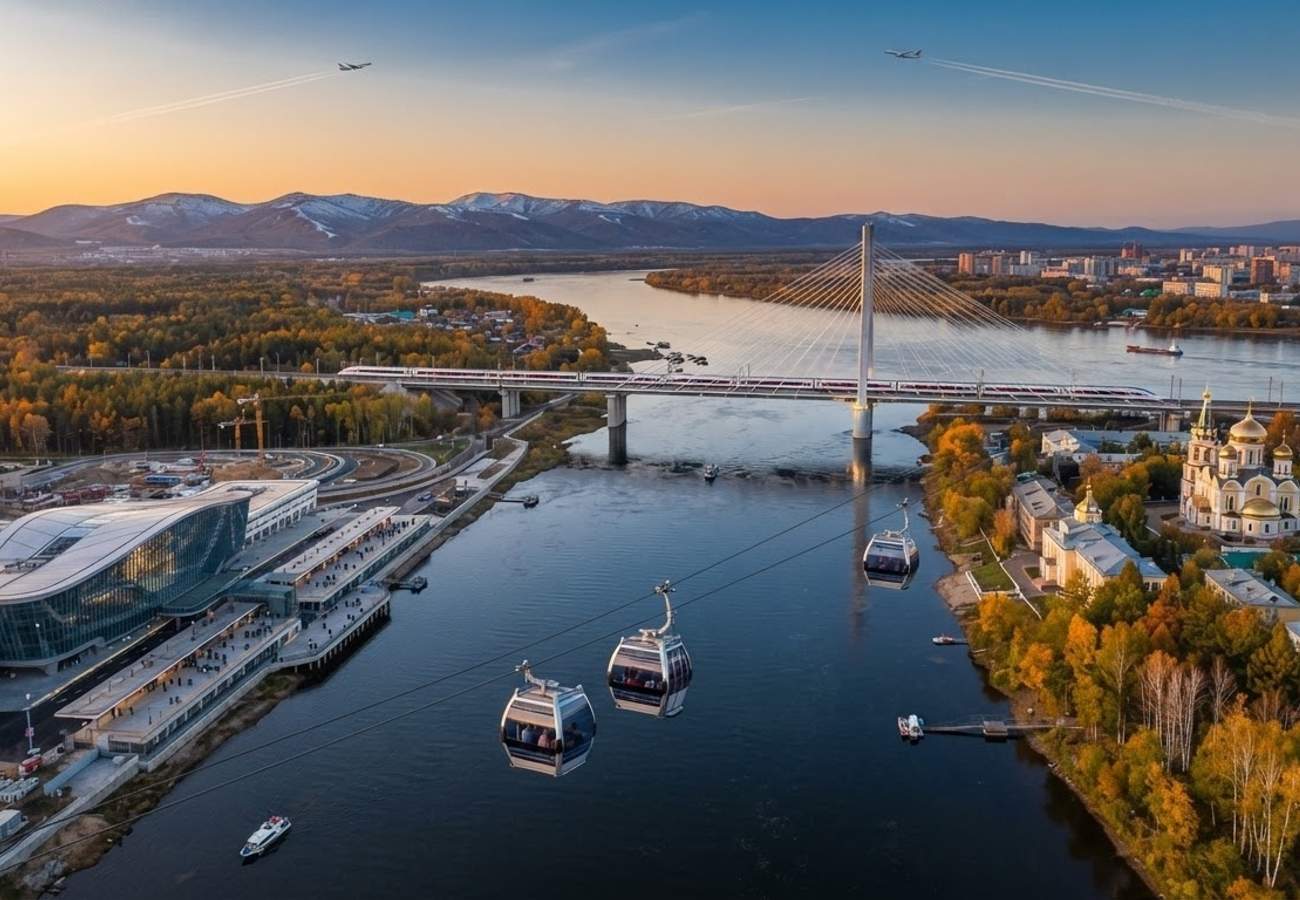
Image generated by AI
China and Russia are fundamentally restructuring how people move across their borders, shifting from temporary tourism agreements to a permanent "Eurasian mobility architecture." This integration combines visa-free regimes, expanded aviation capacity, and high-capacity border infrastructure to merge economic cooperation with physical travel.
The strategic alignment between Beijing and Moscow has evolved beyond diplomacy and energy trade. It is now manifesting in the physical systems of movement. By integrating railways, customs protocols, and aviation networks, both nations are creating a framework that reduces "travel friction" and encourages long-term mobility.
This shift is particularly evident in the Northeast of China and the Russian Far East, where new infrastructure is transforming isolated border towns into integrated hubs for business and leisure.
Reciprocal Visa-Free Access Until 2027
The cornerstone of this new mobility framework is the removal of administrative barriers. Both nations have implemented aggressive visa-free policies to stimulate short-term travel for business, tourism, and cultural exchange.
On May 20, 2026, China’s Ministry of Foreign Affairs announced that Russian ordinary passport holders can enter China visa-free for up to 30 days. This policy, which follows a September 2025 pilot program, has been extended through December 31, 2027.
Russia has mirrored this move. On July 20, 2026, President Vladimir Putin extended the visa-free policy for Chinese ordinary-passport holders, also valid until December 31, 2027.
These measures do more than help tourists; they facilitate rapid business negotiations and cultural exchanges, allowing tour operators to design itineraries without the delays of traditional visa processing.
Measuring the Impact: The Shanghai Gateway
The effectiveness of these policies is most visible in major transit hubs. Shanghai, despite being thousands of kilometers from the Russian border, has seen a surge in Russian arrivals.
According to the Shanghai General Station of Immigration Inspection, 318,000 Russian travelers entered through Shanghai ports by May 21, 2026. This represents a 67.8% year-on-year increase, with over 90% of these travelers utilizing the visa-free arrangement.
This growth follows a strong trend from 2025, where Shanghai recorded 196,000 Russian arrivals—a 56% increase over the previous year. To manage this influx, Shanghai authorities have implemented:
- Increased Russian-language assistance.
- Optimized online arrival-card procedures.
- Adjusted border staffing to match passenger demand.
Aviation Growth and Network Expansion
Air connectivity is scaling to meet the rising demand created by simplified border rules. Russian airlines have seen significant growth in passenger volumes and flight frequencies.
In 2025, Russian airlines transported over 1.6 million passengers between Russia and China, a 27% increase from 2024. Flight schedules also expanded, moving from 228 weekly flights in the summer of 2025 to 239 weekly flights in the subsequent winter season.
This aviation surge is part of a broader shift in Russia's inbound tourism. In 2025, Russia welcomed 4.8 million foreign tourists (up 15%), with a noticeable pivot away from traditional European markets toward faster-growing Asian partners.
Aviation and Tourism Metrics (2025-2026)
| China-Russia Aviation Indicator | Latest Official Figure |
|---|---|
| Passengers carried by Russian airlines (2025) | More than 1.6 million |
| Year-on-year passenger growth | 27% |
| Weekly flights (Summer 2025) | 228 |
| Weekly flights (Following Winter Season) | 239 |
| Total Russian foreign tourists (2025) | 4.8 million |
| Total foreign tourist arrival growth | 15% |
The Heihe-Blagoveshchensk Integration Model
The most tangible example of this new architecture is the connection between Heihe (China) and Blagoveshchensk (Russia). These cities, separated by the Amur River, are transitioning from trade outposts to a fully integrated cross-border zone.
Following the 2022 opening of the Heihe-Blagoveshchensk highway bridge, a new passenger ropeway is now nearing completion. Reported by China’s State Council Information Office on August 3, 2026, the ropeway features:
- A cross-river span of approximately 970 meters.
- Two cabins with a capacity of 110 passengers each.
- A designed annual one-way capacity of 2.6 million travelers.
By combining a highway bridge, ferry services, and the new ropeway, the region is creating a multi-modal transport network that makes the Russian Far East and Northeast China more accessible for extensive tours.
Key Takeaways
- Policy Shift: China and Russia have established mutual visa-free travel for ordinary passport holders through December 31, 2027.
- Passenger Surge: Russian arrivals in Shanghai grew by 67.8% year-on-year as of May 2026.
- Aviation Scaling: Russian airlines saw a 27% increase in China-bound passengers in 2025, reaching over 1.6 million people.
- Infrastructure Innovation: The Heihe-Blagoveshchensk ropeway will provide a high-capacity (2.6 million annual passengers) alternative to road and ferry crossings.
FAQ
How long is the visa-free stay for Russians in China? Russian citizens with ordinary passports can enter China visa-free for up to 30 days for tourism, business, or family visits.
Until when are the current visa-free policies valid? Both China and Russia have extended their respective visa-free arrangements for ordinary passport holders until December 31, 2027.
What is the capacity of the new Heihe-Blagoveshchensk ropeway? The system is designed to handle 2.6 million one-way passengers annually, utilizing cabins that hold 110 people each.
A strategic realignment of borders is transforming the Eurasian map into a seamless corridor for movement.
Related Travel Guides
Disclaimer
This article is for informational and educational purposes only. It does not constitute legal, financial, or professional advice. While we strive to provide accurate and up-to-date information, travel policies, regulations, and conditions change rapidly. Always verify information with official sources before making travel decisions. Nomad Lawyer makes no representations about the accuracy, reliability, completeness, or suitability of the information provided. Readers should consult qualified professionals for advice specific to their circumstances. The views expressed in this article are those of the author and do not necessarily reflect the views of Nomad Lawyer.
Raushan Kumar
Founder & Lead Developer
Full-stack developer with 11+ years of experience and a passionate traveller. Raushan built Nomad Lawyer from the ground up with a vision to create the best travel and law experience on the web.
Learn more about our team →