
Royal Caribbean Legend of the Seas Debuts at Port Everglades: Icon-Class Data and 2026 Trends
Royal Caribbean's Legend of the Seas brings 250,000 gross tons of capacity to Fort Lauderdale, signaling a shift toward high-tech immersive dining and segmented neighborhood design for 7,600 passengers.

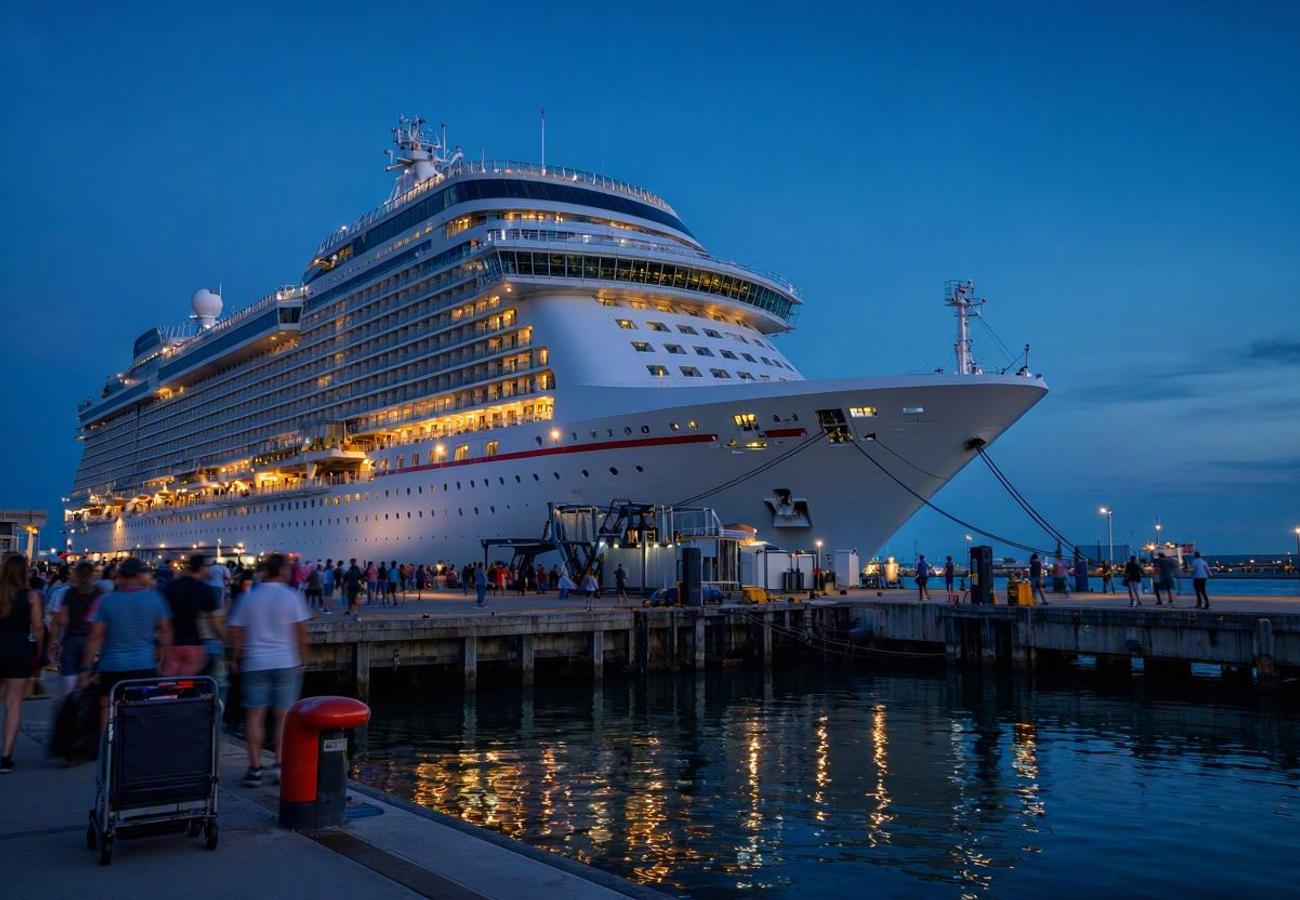
Image generated by AI
Cruise capacity at Port Everglades has shifted significantly with the introduction of 250,000 gross tons of engineering in a single hull—marking the third vessel in the Icon-class series to enter service since 2024. This deployment represents a strategic move by Royal Caribbean to challenge the mega-ship dominance of nearby Miami by placing a technologically advanced vacation platform directly in the Fort Lauderdale market.
The Icon-Class Scale in Numbers
The Legend of the Seas, officially welcomed to the fleet in July 2026 after construction at the Meyer Turku shipyard in Finland, operates on a scale that redefines maritime logistics. The vessel is designed to accommodate a maximum capacity of over 7,600 passengers when every berth is occupied, supported by a footprint of more than 2,800 staterooms.
To prevent the logistical friction typically associated with such high passenger densities, the ship employs a "neighborhood" architectural strategy. By dividing the 7,000+ guest load into eight distinct zones, the carrier mitigates crowd congestion. This is particularly evident in the Category 6 waterpark on Thrill Island, which maintains its status as the largest waterpark at sea with six record-breaking slides.
Comparative Market Context: Icon-Class Evolution
While the structural specifications of the Legend of the Seas mirror its predecessors, Icon of the Seas and Star of the Seas, the 2026 iteration shows a clear pivot toward "edutainment" and immersive technology. The shift is most visible in the transition from traditional dining to simulated experiences.
The following table illustrates the shift in onboard programming and capacity management for the Icon-class fleet heading into the 2026-2027 winter season.
| Feature | Icon/Star of the Seas (Baseline) | Legend of the Seas (2026) | Market Impact |
|---|---|---|---|
| Gross Tonnage | 250,000 GT | 250,000 GT | Stabilized Scale |
| Max Capacity | 7,600+ Passengers | 7,600+ Passengers | High-Density Load |
| Signature Dining | Traditional Specialty | Royal Railway: Silk Route | Immersive Tech Shift |
| Main Theater Show | Wizard of Oz | Charlie & the Chocolate Factory | Content Refresh |
| Primary Hub | Port Miami | Port Everglades | Regional Diversification |
This evolution aligns with broader industry data from the World Tourism Organization (UNWTO), which indicates a growing consumer preference for experiential travel over passive sightseeing.
What This Means for Travelers
For passengers booking seven-night Caribbean itineraries from Fort Lauderdale, the data suggests that the "onboard experience" is now a competitive commodity that requires precise planning.
- Reservation Lead Times: The Royal Railway – Legend Station, specifically the Silk Route journey, utilizes a high-demand model with only two train cars seating approximately 24 people each. Because this is a five-course immersive experience, reservations often vanish months before the sail date.
- Digital-First Logistics: Access to the Hollywoodland Supper Club and other specialty venues is now gated by the mobile app. Travelers should synchronize their bookings the moment the window opens to avoid missing signature venues.
- Zoning Strategy: To avoid "ship fatigue" among the 7,600-person crowd, travelers should adopt a zoning approach—limiting exploration to one or two neighborhoods (e.g., Central Park or the AquaDome) per day.
For more information on passenger rights and maritime regulations, travelers can refer to the International Air Transport Association (IATA) for integrated travel guidelines or the Cruise Lines International Association (CLIA) for industry standards.
Forward Projection: The Future of Mega-Cruising
The deployment of Legend of the Seas suggests that Royal Caribbean is moving toward a "platform" model where the ship's hardware remains constant, but the software—dining, entertainment, and digital storytelling—is updated annually. The replacement of Wizard of Oz with Charlie & the Chocolate Factory in the Royal Theater proves that content rotation is the primary tool for driving repeat bookings among luxury cruisers.
As the 2026-2027 winter season progresses, expect further integration of augmented reality (AR) within the "neighborhood" concept to further streamline guest flow and reduce perceived crowding in high-traffic areas like the Royal Promenade.
FAQ: Legend of the Seas 2026
Is the Royal Railway dining experience worth the extra cost? It depends on your preference for "edutainment." It offers a highly choreographed five-course meal with digital scenery and actors, making it a premium experience rather than a standard dinner.
How does the ship manage 7,600 passengers without overcrowding? The ship is split into eight distinct neighborhoods, such as Surfside for families and Thrill Island for adrenaline seekers, which distributes the guest load across the vessel.
When should I book dining reservations for the Legend of the Seas? Immediately. High-demand venues like the Silk Route train cars are limited to 24 people per car and typically sell out months in advance via the mobile app.
What makes this ship different from the Icon of the Seas? While the size is identical, the Legend of the Seas features updated interior programming, including the Royal Railway dining and a new Broadway-caliber production of Charlie & the Chocolate Factory.
The era of the cruise ship as a mere transport vessel has ended; it is now a floating city of curated, data-driven experiences.
Related Travel Guides
Disclaimer
This article is for informational and educational purposes only. It does not constitute legal, financial, or professional advice. While we strive to provide accurate and up-to-date information, travel policies, regulations, and conditions change rapidly. Always verify information with official sources before making travel decisions. Nomad Lawyer makes no representations about the accuracy, reliability, completeness, or suitability of the information provided. Readers should consult qualified professionals for advice specific to their circumstances. The views expressed in this article are those of the author and do not necessarily reflect the views of Nomad Lawyer.
Preeti Gunjan
Contributor & Community Manager
A passionate traveller and community builder. Preeti helps grow the Nomad Lawyer community, fostering engagement and bringing the reader experience to life.
Learn more about our team →