
Roane County and Buncombe Lead Multi-State Surge in County-Level US Tourism Growth

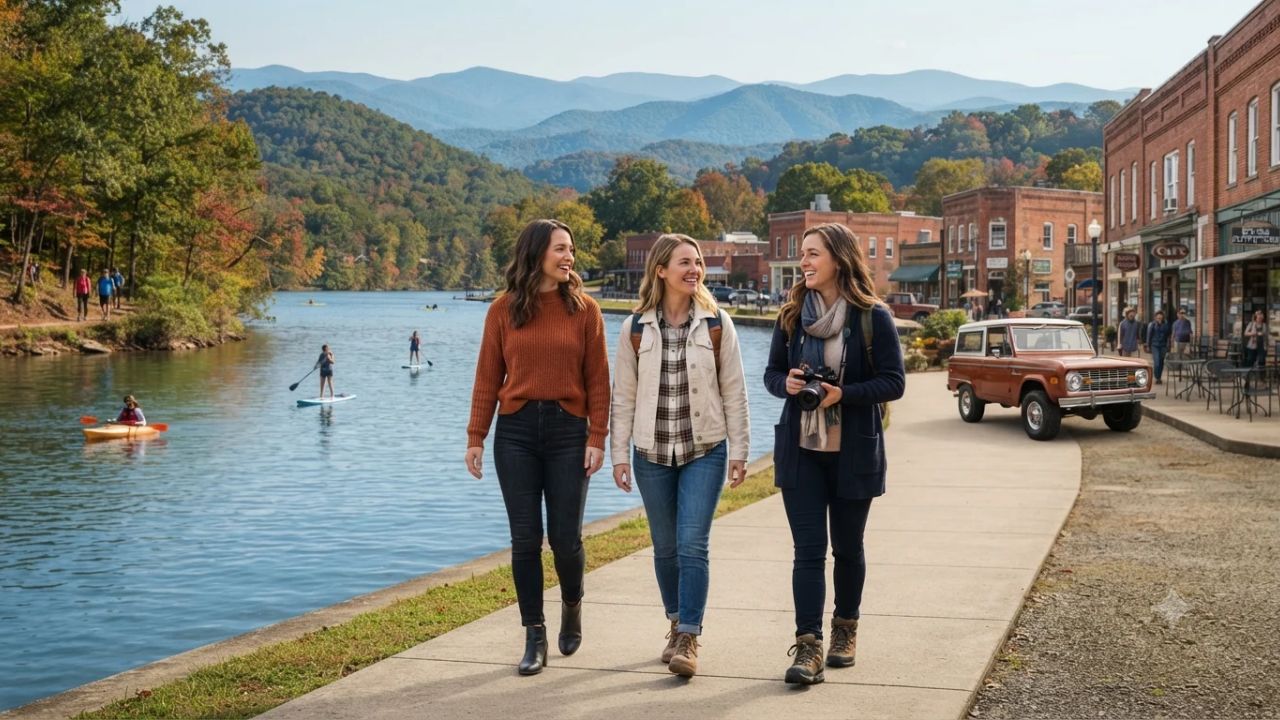
Image generated by AI
Propelled by 147 million annual travelers generating a record $31.7 billion in direct visitor spending across Tennessee and $36.7 billion across North Carolina, non-metropolitan counties have emerged as the primary growth engine of American domestic travel. From river recreation in Roane County to lakefront escapes in Michigan’s Manistee County—where 704,000 visitors generated $172.8 million in local economic impact—county-level destinations are rewriting the national playbook on outdoor leisure and regional economic resilience.
Decentralized Domestic Mobility: The Rise of the Non-Metropolitan Leisure Engine
For decades, the standard measurement of American tourism health was dictated by the performance of primary metropolitan hubs. State tourism offices focused their promotional capital on iconic skyline metropolises, assuming that secondary and rural counties would passively absorb fractional economic spillover. However, structural shifts in post-pandemic consumer behavior have fundamentally inverted this model.
Travelers are actively avoiding congested airport corridors, soaring urban parking rates, and dense metropolitan centers in favor of open-air recreation, navigable waterways, and historic mountain towns. According to statewide benchmarks established by the Tennessee Department of Tourist Development, visitor spending is decentralizing rapidly into non-urban corridors. Rural counties that once functioned strictly as agricultural or manufacturing centers are transforming their natural water networks and historic downtown districts into high-yield hospitality destinations.
This dispersion is supported by a massive federal economic tailwind. Economic analyses from the National Park Service confirm that park visitors contributed over $29 billion in direct spending to gateway communities in 2024. As national parks and protected recreation areas operate near seasonal capacity, adjacent counties like Roane in East Tennessee and Buncombe in North Carolina are capturing the resulting overflow, turning day excursions into multi-night vacation stays.
County-Level Metrics and Impact Breakdown: Regional Titans Outperforming Expectations
The growing economic stature of non-metropolitan destinations is revealed through granular county-level tax receipts and employment figures. While mega-cities measure success through gross visitor volume, county administrations prioritize spending density, hotel occupancy tax collections, and long-term private job creation.
Across the Appalachian spine, the Great Lakes basin, and the American Midwest, secondary counties are posting double-digit gains in visitor expenditures, outpacing state averages.
| County & State Jurisdiction | 2024–2025 Economic Yield | Primary Visitor Anchors | Overnight Retention Rate | Regional Employment Impact |
|---|---|---|---|---|
| Roane County, Tennessee | Statewide $31.7B direct yield | Watts Bar Lake, Tennessee River, Kingston heritage | Elevated multi-night fishing & boating stays | Sustains regional hospitality & marine trade |
| Buncombe County, North Carolina | Multi-billion regional impact | Asheville culinary core, Blue Ridge Mountains, craft arts | High-density weekend & holiday stays | Dominates Western NC leisure employment |
| Manistee County, Michigan | $172.8 Million direct output | Lake Michigan shoreline, Manistee River, historic core | 70% overnight stay ratio (704,000 visitors) | Supports 1,048 full-time equivalent jobs |
| Dare County, North Carolina | Leading coastal revenue generator | Cape Hatteras National Seashore, Outer Banks beaches | Multi-week family cottage rentals | Drives coastal North Carolina tourism payrolls |
| Gaston & Ashe Counties, NC | Double-digit annual spend growth | Blue Ridge Parkway, Charlotte perimeter recreation | Rapidly expanding weekend cabin stays | Emerging local retail and outfitter jobs |
| Iowa Non-Metro Counties | Statewide $7.5B direct yield | Agro-tourism trails, state parks, river heritage | Steady domestic regional road-tripper base | Sustains 71,918 statewide hospitality jobs |
In Michigan, data from the Manistee County Tourism Authority showcases how focused municipal branding can yield massive returns for small populations. By attracting 704,000 visitors who generated $172.8 million and supported 1,048 jobs, Manistee proved that an exceptional natural asset—the Lake Michigan coastline paired with historic riverwalks—can anchor a self-sustaining tourism economy that protects local tax bases.
Similarly, in North Carolina, where Visit North Carolina tracked a historic $36.7 billion in statewide visitor spending, growth was recorded across 71 of 100 counties. Outlying jurisdictions such as Gaston, Ashe, Cleveland, Burke, and Iredell demonstrated that proximity to mountain byways or metropolitan perimeter recreation creates immediate economic windfalls when modern outdoor infrastructure is in place.
Road-Trip Geography and Waterway Access: How Secondary Corridors Capture Multi-Day Spend
The underlying catalyst uniting Roane, Buncombe, and Manistee is their strategic geographic placement along regional road-trip corridors. Modern domestic road-trippers reject single-destination vacations; instead, they construct multi-stop regional loops that combine mountain hiking, river kayaking, and small-town culinary exploration.
Roane County serves as a prime case study in East Tennessee. Positioned along the convergence of the Tennessee, Clinch, and Emory Rivers, and anchored by the vast recreational expanse of Watts Bar Lake, the county offers world-class bass fishing, recreational boating, and lakeside camping within an easy 40-minute drive of Knoxville. Travelers exploring the Great Smoky Mountains increasingly utilize Roane as a less congested, cost-effective basecamp, avoiding the heavy vehicular gridlock of commercial gateway strips.
This transit accessibility is mirrored in Western North Carolina's Buncombe County. While Asheville functions as an established artistic and culinary beacon, the surrounding county terrain channels visitors outward into the Blue Ridge Parkway, pisgah national forests, and regional river outfitters. By distributing foot traffic across dozens of small trailheads and community commercial districts, the region preserves its natural environment while ensuring that visitor dollars flow directly to local guides, independent diners, and craft artisans.
Expert Analysis: Gateway Saturation, Direct Spending Density, and the Rural Tax Base Dividend
For municipal leaders, regional hospitality developers, and domestic travelers, the direct consequence of this county-level boom is an immediate structural rebalancing of local economies. For decades, rural communities across the American South and Midwest struggled with de-industrialization and shrinking property tax bases. Tourism has emerged as a non-polluting, sustainable economic alternative that directly funds local infrastructure.
The pricing pressure this creates means that rural vacation markets are experiencing sudden real-estate and hospitality adjustments. Standard short-term cabin rentals and limited select-service hotel rooms in counties like Roane and Manistee now command peak summer and autumn rates that rival suburban business hotels. For local governments, the collection of local occupancy taxes provides non-debt municipal revenue, funding modern emergency medical services, road resurfacing, and municipal park improvements without raising residential property taxes.
However, rapid expansion introduces serious infrastructure challenges. Narrow two-lane mountain passes and rural lake access roads were never engineered to absorb thousands of visiting boat trailers and recreational vehicles every weekend. Volunteer fire departments and small county sheriff offices face operational strain when regional trail emergencies spike.
To navigate this evolving environment effectively, travelers must embrace responsible stewardship. Mid-week travel between Monday and Thursday provides significantly lower accommodation costs and crowd-free river access. By practicing Leave No Trace principles, patronizing locally owned independent businesses, and respecting rural community norms, visitors can ensure that America's small counties remain vibrant, welcoming sanctuaries for generations of road-trippers to come.
Key Takeaways
- Decentralized Economic Scale: Tennessee recorded 147 million visitors and $31.7 billion in direct spend, while North Carolina posted $36.7 billion, driven by double-digit growth in non-metropolitan counties.
- Manistee County Blueprint: With 704,000 visitors generating $172.8 million and supporting 1,048 jobs, Manistee demonstrates the economic potency of nature-based lakefront tourism.
- National Park Multipliers: The National Park Service confirms $29 billion in direct gateway community spending, driving visitor overflow into adjacent rural counties.
- Corridor Diversification: Destinations like Roane County, Tennessee, successfully position their riverways and lakes as tranquil, affordable alternatives to saturated commercial gateways.
- Tax Base Transformation: Visitor spending delivers vital non-resident tax revenues to small municipal budgets, funding public infrastructure while placing pressure on rural emergency services.
FAQ: County-Level US Tourism Growth 2026
Why is Roane County, Tennessee, experiencing rapid tourism growth?
Roane County attracts visitors through its extensive water recreation along Watts Bar Lake and the Tennessee River, historic Kingston landmarks, and its strategic location as an uncrowded gateway near Knoxville.
How much do national park visitors contribute to gateway communities?
According to the National Park Service, national park visitors generated $29 billion in direct economic output within surrounding gateway communities, supporting local lodging, restaurants, and outfitters.
What are the key drivers of tourism in Manistee County, Michigan?
Manistee County's $172.8 million tourism economy is driven by pristine Lake Michigan beaches, extensive river recreation, historic downtown shopping, and a high 70 percent overnight visitor stay rate.
Which North Carolina counties posted the strongest tourism gains?
While Buncombe and Dare counties anchor billions in mountain and coastal spend, smaller jurisdictions like Gaston, Ashe, Cleveland, Burke, and Iredell recorded double-digit spending growth in 2024.
Along the winding river bends of Tennessee and the quiet freshwater shores of Michigan, America’s small counties are proving that the heart of national travel beats strongest where nature, heritage, and open roads converge.
Related Travel Guides
Morristown Festival on the Green & Historic Downtown Guide
Alexandria and US Destinations Reach Billion-Dollar Tourism Milestones
Disclaimer
This article is for informational and educational purposes only. It does not constitute legal, financial, or professional advice. While we strive to provide accurate and up-to-date information, travel policies, regulations, and conditions change rapidly. Always verify information with official sources before making travel decisions. Nomad Lawyer makes no representations about the accuracy, reliability, completeness, or suitability of the information provided. Readers should consult qualified professionals for advice specific to their circumstances. The views expressed in this article are those of the author and do not necessarily reflect the views of Nomad Lawyer.
Raushan Kumar
Founder & Lead Developer
Full-stack developer with 11+ years of experience and a passionate traveller. Raushan built Nomad Lawyer from the ground up with a vision to create the best travel and law experience on the web.
Learn more about our team →