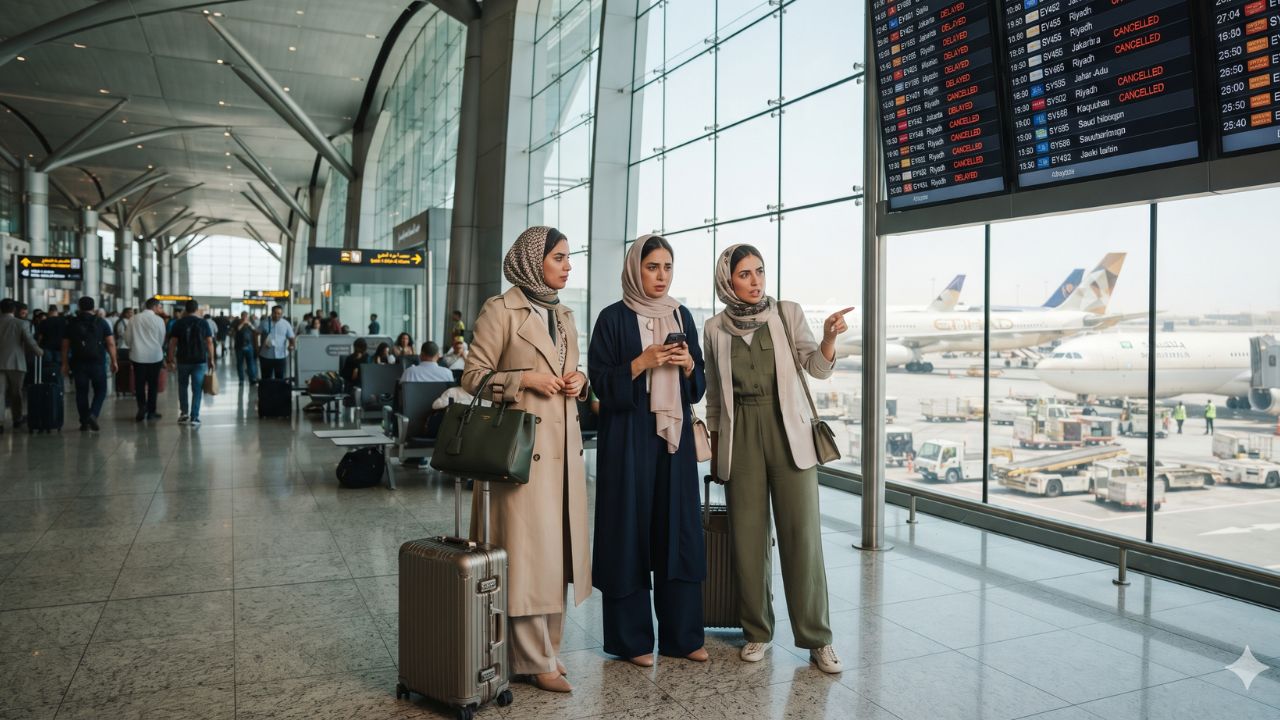
Gulf Travel Alert: Riyadh and Bahrain Security Warnings Trigger Airline Suspensions into 2027

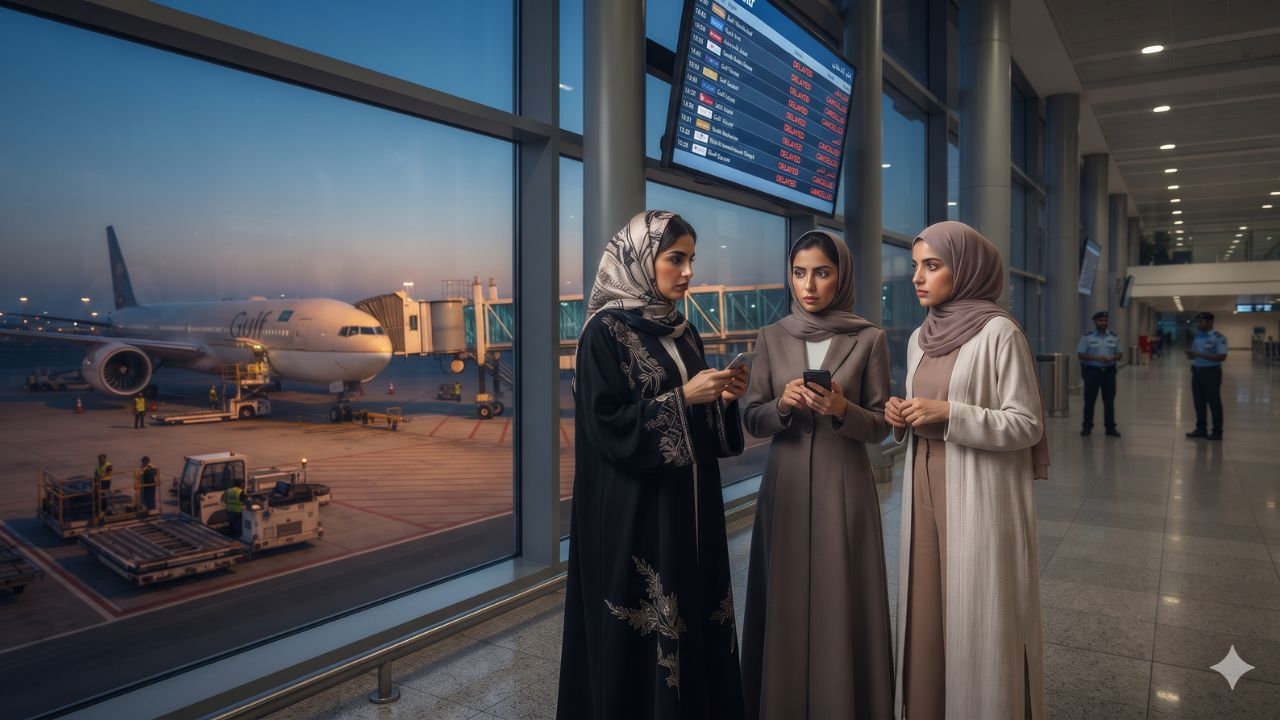
While regional air defense batteries intercepted two ballistic missiles over Riyadh and seven hostile drones across Makkah, Madinah, and the Eastern Province in a single day on 15 November 2026, Qatar Airways simultaneously began restoring scheduled daily services linking Doha with the Saudi capital. Following subsequent aerial drone interceptions near Al-Rifaa in Bahrain and an urgent security advisory issued by the United States Embassy in Manama on 16 November, international and regional airlines are recalibrating their Middle Eastern schedules, pushing planned route resumptions and flight launches into early 2027.
The escalation across the Arabian Peninsula has placed international aviation under intense scrutiny, directly affecting routes operating through King Khalid International Airport (RUH) in Riyadh, King Abdulaziz International Airport (JED) in Jeddah, King Fahd International Airport (DMM) in Dammam, and Bahrain International Airport (BAH). With the European Union Aviation Safety Agency (EASA) formally extending its Conflict Zone Information Bulletins through 31 January 2027, long-haul travelers, expatriates, and regional business professionals face a patchwork of airline cancellations, reroutings, and selective corridor resumptions.
Gulf Aviation Fractures: Missile Interceptions and Airline Network Freezes
The operational disruption began unfolding over the weekend of 15 November 2026. Saudi-led coalition spokesperson Major General Turki Al-Maliki confirmed that military air defenses successfully engaged and destroyed two ballistic missiles aimed at Riyadh, an attack attributed to Yemen’s Houthi movement. Concurrently, defensive batteries brought down two drones over the Makkah region, two over the Madinah region, and three over the Eastern Province, bringing the single-day total to seven intercepted unmanned aircraft.
Across the causeway in Bahrain, the Ministry of Interior issued two public security alerts on 15 November, instructing residents to seek shelter and monitor official government bulletins following claims by Iran’s Islamic Revolutionary Guard Corps (IRGC) that six drones had targeted a US radar installation at Al-Rifaa. While Bahrain confirmed intercepting several aerial targets, following earlier US military interceptions of two Iranian drones, the US Embassy in Bahrain released a formal security advisory on 16 November 2026, cautioning American citizens about heightened regional tensions, airspace closures, and flight cancellations.
The response from international aviation authorities was immediate. On 16 November, the European Union Aviation Safety Agency revised its Conflict Zone Information Bulletins (CZIBs), extending airspace risk advisories through 31 January 2027 for Saudi Arabia, Bahrain, Kuwait, Qatar, the United Arab Emirates, and Oman, alongside ongoing notices for Iran, Iraq, Jordan, and Lebanon.
Travelers can monitor civil aviation notices and domestic airport operating updates through the Saudi General Authority of Civil Aviation.
| Airline Carrier | Affected Middle East Routes | Current Operating Status & Resumption Timeline | Governing Safety Context |
|---|---|---|---|
| Air France | Paris Charles de Gaulle ↔ Riyadh | Suspended; earliest tentative return 12 December 2026 | Route tracker reviews pending regional safety |
| ITA Airways | Rome Fiumicino ↔ Riyadh | Suspended through 7 January 2027 | Airspace risk assessment alignment |
| British Airways | London Heathrow ↔ Riyadh | Postponed through 11 January 2027 | Winter schedule deferral |
| Cathay Pacific | Hong Kong ↔ Riyadh | Cancellations extended through 31 January 2027 | Long-haul Asian corridor avoidance |
| Delta Air Lines | Atlanta ↔ Riyadh (Nonstop) | Route launch deferred to March 2027 | Postponed inaugural transatlantic service |
| Singapore Airlines | Singapore Changi ↔ Riyadh | Route launch deferred to 28 March 2027 | Strategic scheduling reassessment |
| Air India / AI Express | India ↔ Riyadh & Dammam | Suspended through 30 November 2026 | Jeddah flights suspended through 21 Nov 2026 |
| IndiGo | India ↔ Riyadh & Dammam | Suspended through 30 November 2026 | Jeddah & Madinah suspended through 21 Nov 2026 |
| Akasa Air | India ↔ Riyadh & Jeddah | Suspended through 30 November 2026 | Subcontinental workforce corridor impact |
| Qatar Airways | Doha ↔ Riyadh & Dammam | Restored daily flights (Riyadh 13 Nov, Dammam 14 Nov) | Operating scheduled rotations via Doha hub |
What Makes the 2026–2027 Gulf Flight Network Different
The current aviation environment differs fundamentally from blanket airspace shutdowns. Rather than a total grounding, the Gulf presents an uneven operational split between conservative long-haul Western carriers and agile Gulf hub operators:
- The Long-Haul Deferral Strategy: Western legacy airlines have opted to protect aircraft rotations by completely cutting Riyadh from their winter schedules. Air France has extended its suspension toward mid-December, ITA Airways will not return until at least 7 January 2027, British Airways has set 11 January 2027 as its earliest target, and Cathay Pacific has cancelled services through 31 January 2027. Transatlantic flights on Delta Air Lines and trans-Pacific links on Singapore Airlines will not debut until late March 2027.
- The South Asian Labor Corridor Freeze: Indian carriers—including Air India, Air India Express, IndiGo, and Akasa Air—have grounded flights into Riyadh and Dammam through 30 November 2026, while pausing services to holy gateways in Jeddah and Madinah through 21 November 2026. This creates acute seat shortages for seasonal workers and religious travelers.
- The Doha Air Bridge Resilience: In contrast to European pauses, Qatar Airways restored daily Doha–Riyadh flights on 13 November and daily Doha–Dammam rotations on 14 November, with plans to increase weekly departures later in the month. Hamad International Airport in Doha currently functions as the primary operational conduit for international passengers transferring into eastern and central Saudi Arabia.
Travelers can examine tourism infrastructure updates and entry requirements on Visit Saudi.
Visitor Insider Tips: Navigating Gulf Transit, Rerouting, and Consular Alerts
For business executives, technical contractors, and leisure travelers with tickets to or through the Gulf region, standard airport routines must be adapted:
- Book Connecting Sectors on a Single Ticket: If you must reach Riyadh, Dammam, or Manama, book entire journeys through single-ticket carriers like Qatar Airways via Doha. Avoid booking separate itineraries (such as a European airline into Dubai or Kuwait combined with a separate regional hopper), because if the first carrier alters its flight path or cancels, the second airline will classify you as a no-show without compensation.
- Confirm Terminal and Airport Diversions: Ground handlers in Saudi Arabia may re-route flights away from affected air corridors toward secondary facilities. Monitor your flight number on tracking platforms 12 hours prior to departure, verifying whether arrivals are landing at King Khalid International in Riyadh or being diverted westward toward King Abdulaziz International in Jeddah.
- Utilize High-Speed Haramain Rail for Religious Travel: If your commercial flight into Madinah is cancelled, book international arrivals into Jeddah or Yanbu. From Jeddah's airport terminal, the high-speed Haramain rail line transports passengers directly to Mecca (35 minutes) and Medina (under two hours) on electric tracks entirely independent of regional airspace issues.
- Enroll in Diplomatic Alert Networks: American citizens traveling to Bahrain or Saudi Arabia should immediately register in the Smart Traveler Enrollment Program (STEP) through the US State Department. European nationals should register with their respective foreign ministry crisis portals to receive immediate consular push alerts regarding local shelter advisories or commercial evacuation advice.
- Review Strict Airline Refund Rights: If your flight was cancelled by European carriers departing EU airports, you are legally entitled to a full cash refund within seven days under EU261 regulations. Passengers booked on Indian carriers can claim full fee-free refunds or complimentary date changes under Directorate General of Civil Aviation passenger directives.
Cultural and Environmental Context: Preserving Heritage Corridors in Volatile Skies
The skies above the Arabian Peninsula represent some of the most historic and economically sensitive air corridors on Earth. Beneath modern high-altitude jetways lie ancient desert trade routes that once moved frankincense from southern Oman to Mediterranean ports, alongside traditional pilgrim trails that have guided millions toward the holy sanctuaries of western Arabia for fourteen centuries.
Maintaining civil aviation resilience across the Red Sea and Persian Gulf is essential not only for modern energy logistics and corporate investments, but for international cultural diplomacy.
Civil aviation authorities work closely with international military monitors to maintain strictly segregated, sanitized civilian flight channels that avoid sensitive military installations, such as naval bases in Manama and air defense perimeter zones around Riyadh. By routing passenger widebody jets over neutral waters and desert corridors, aviation agencies ensure that essential humanitarian, religious, and economic mobility continues despite heightened regional friction.
FAQ: Traveling Through Saudi Arabia and the Gulf in 2026
Why are international airlines cancelling flights to Riyadh?
Airlines have suspended flights due to heightened regional security tensions and airspace risks following ballistic missile and drone interceptions over Saudi Arabia and Bahrain, alongside updated EASA conflict zone bulletins.
How long will European airline suspensions to Saudi Arabia last?
Suspensions vary by carrier: Air France has paused services toward mid-December 2026, ITA Airways through 7 January 2027, British Airways through 11 January 2027, and Cathay Pacific through 31 January 2027.
Are flights between Qatar and Saudi Arabia currently operating?
Yes. Qatar Airways restored daily flights between Doha and Riyadh on 13 November 2026, and daily flights between Doha and Dammam on 14 November 2026.
Are US consular and visa services operating in Bahrain?
Yes. The US Embassy in Manama confirmed that routine consular and visa processing continues normally, despite issuing a heightened security advisory for American travelers.
Related Travel Guides
- International Air Passenger Rights and Flight Delay Compensation Standards
- Managing Flight Disruptions and Airport Delays Across Asian Hubs
- Boutique Heritage Trails and Middle Eastern Cultural Gateways
Across changing desert skies, informed travelers find safe passage by watching the flight paths and respecting the rhythms of the region.
This article is for informational purposes. Flight routes, passenger regulations, visa rules, and transit advisories are subject to change by airlines and aviation authorities. Readers are advised to verify schedules and travel documentation with relevant carriers and border agencies before departure.
Related Stories

UK Travel Warning for Gulf States: Impact on 2026 Formula One Bahrain, Qatar, and Saudi Arabia Races
Air India and Air India Express Suspend All Saudi Arabia Flights Amid Security Threats in 2026