
Riyadh Airport Shutdown Strands Thousands as International Airlines Halt Saudi Routes Through 2027
A formal aviation directive shuttering King Khalid International Airport through 17 October triggers carrier groundings and multi-nation emergency consular deployments across the Gulf.

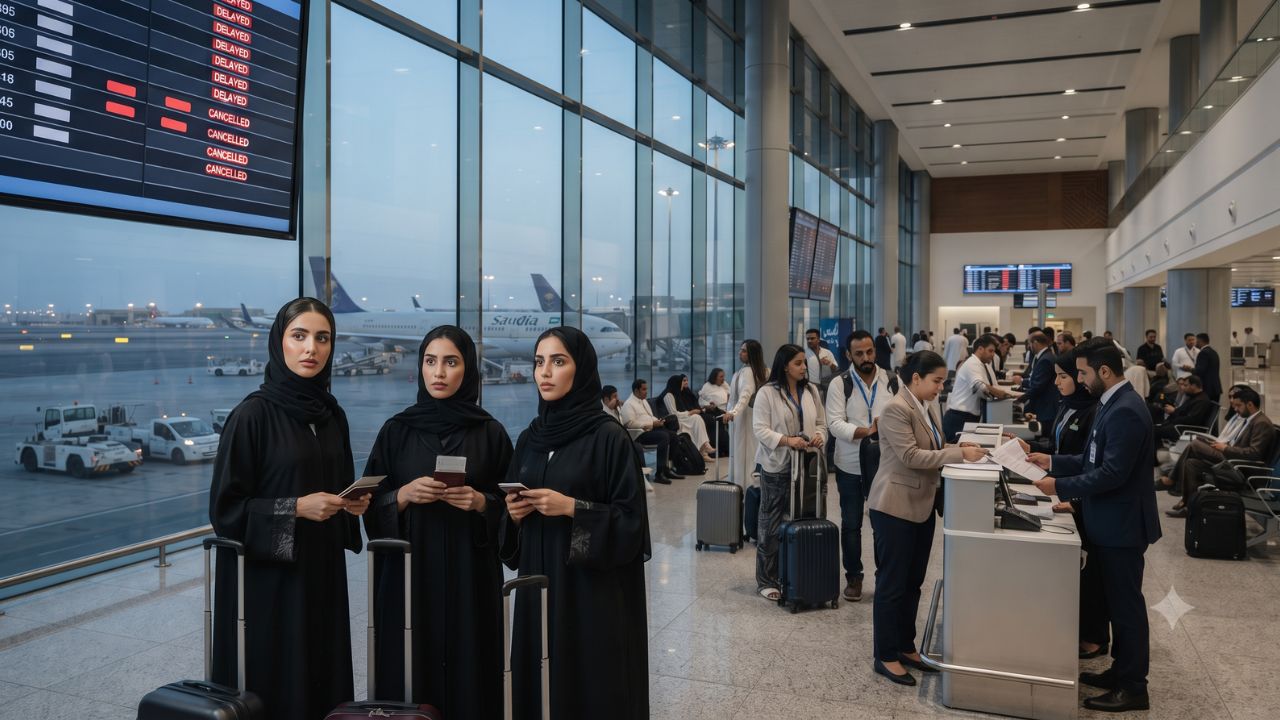
An aviation directive extending the complete operational closure of King Khalid International Airport until 17 October at 21:00 GMT has left over 5,418 ticketed passengers stranded across 51 grounded flights from Bangladesh alone, triggering emergency diplomatic activations across Asia and Australasia. The indefinite suspension of commercial traffic follows coordinated missile and drone strikes on Riyadh's primary air gateway on 10 and 11 October 2026. The strikes caused casualties, including the death of a resident from Hyderabad, India, and a Pakistani national, alongside hundreds of reported injuries. With terminal infrastructure compromised and safety inspections ongoing, global flag carriers are issuing schedule cancellations extending well beyond the immediate emergency window into early 2027.
The aviation crisis has created an unprecedented divide between standard consular assistance and emergency operational evacuations. While sovereign governments in Dhaka and Manila deployed direct shelter, bus convoys, and financial relief to vulnerable contract laborers, Western and East Asian missions in Hong Kong and Canberra have largely restricted their responses to emergency telephone hotlines and travel advisories. For travelers navigating transit itineraries through the Persian Gulf, the incident exposes severe contractual and logistical vulnerabilities in global aviation risk management.
Airspace Closures and Extended Airline Network Postponements
The military strikes on Riyadh have prompted airlines to reevaluate their risk models across the Arabian Peninsula. In East Asia, Cathay Pacific announced it would postpone the resumption of its scheduled passenger connections on both the Hong Kong–Riyadh and Hong Kong–Dubai corridors until 31 January 2027. This multi-month withdrawal reflects deep institutional concern over commercial operations within disputed airspace corridors. In the United States, Delta Air Lines responded by shelving its planned nonstop service between Atlanta and Riyadh until March 2027, illustrating how network planners are removing discretionary capital from volatile markets.
European and South Asian carriers have enacted rapid schedule cancellations. Lufthansa Group grounded all Riyadh rotations through 16 October, while Air France-KLM halted services through the end of October. Within the Gulf Cooperation Council, Etihad Airways cancelled Abu Dhabi–Riyadh flights through 19 October, and Gulf Air suspended Bahrain–Riyadh routes between 12 and 17 October. In South Asia, Air India and IndiGo suspended Riyadh operations through 15 October, while Akasa Air froze flights connecting both Riyadh and Jeddah. SriLankan Airlines halted Riyadh arrivals through 18 October while maintaining alternate services into Dammam, and Philippine Airlines issued an extended suspension lasting through 29 November.
To manage the passenger backlog, Saudi aviation authorities established terrestrial transit corridors. State-sponsored coach services mobilized to transfer stranded Saudi nationals across land borders from Dubai, the Northern Emirates, Qatar, and Kuwait. However, these dedicated road transfers were strictly reserved for Saudi passport holders, leaving thousands of third-country expatriates and connecting transit passengers reliant on individual consular missions.
Multi-Nation Consular Deployments and Passenger Relief Metrics
The severity of passenger disruption has varied sharply based on traveler nationality, immigration status, and carrier origin. The following breakdown details the verified scope of airline suspensions and state-level assistance measures deployed across affected source markets.
| Country / Territory | Verified Diplomatic & Welfare Deployment | Primary Airline & Operational Disruption | Impacted Passenger Footprint |
|---|---|---|---|
| Bangladesh | Emergency accommodation for ~100 travelers; 67 Umrah pilgrims bused to Jeddah; fee-free rebooking via Dammam & Madinah | 51 direct and connecting flights halted across domestic and foreign carriers | 5,418 passengers documented; high volume of contract workers facing visa expiry |
| Philippines | OWWA provided housing for 20 workers; 94 diverted travelers assisted in Jeddah; AKSYON & Emergency Repatriation Funds activated | Philippine Airlines extended Riyadh flight suspension through 29 November | 30 stranded workers identified in Riyadh; 94 diverted to Jeddah |
| Hong Kong | Immigration Department Assistance to Hong Kong Residents Unit (+852 1868 24-hour hotline) | Cathay Pacific postponed Hong Kong–Riyadh and Hong Kong–Dubai resumptions to 31 January 2027 | High-yield business and connecting passengers rerouted via alternative Asian hubs |
| Australia | Consular Emergency Centre (+61 2 6261 3305); official Smartraveller regional security directives | Widespread itinerary cancellations across Gulf codeshare and interline connections | Independent travelers advised to seek commercial rebooking without dedicated airlift |
| India | Embassy 24-hour emergency helplines; community welfare coordination for documentation and medical care | Air India & IndiGo halted flights through 15 October; Akasa Air suspended Riyadh & Jeddah | Fatality confirmed (Hyderabad resident); thousands of migrant workers facing transit delays |
| Sri Lanka | Diplomatic registration; migrant worker welfare support; alternate flight coordination through Eastern Province | SriLankan Airlines suspended Riyadh through 18 October; Dammam flights maintained | Contract laborers and transit passengers directed to overland Dammam departures |
| Saudi Arabia | Coordinated emergency cross-border bus transport from UAE, Qatar, and Kuwait to domestic cities | Complete commercial closure of King Khalid International Airport (RUH) through 17 October (21:00 GMT) | Thousands of inbound and outbound citizens redirected to domestic road transit |
| Germany / France | Diplomatic advisories; consular coordination for transit passengers across European hubs | Lufthansa halted flights through 16 October; Air France-KLM suspended services through end of October | European leisure and corporate travelers rerouted through Istanbul and Cairo |
| United States | State Department regional security notices; commercial carrier rebooking guidance | Delta Air Lines postponed planned Atlanta–Riyadh route launch to March 2027 | Long-term transatlantic network expansion delayed indefinitely |
The humanitarian response from Bangladesh and the Philippines demonstrates the acute vulnerability of migrant labor forces during regional emergencies. Unlike corporate executives who hold corporate credit lines for hotel accommodation, overseas contract workers often face rigid kafala sponsorship constraints, expiring exit-reentry visas, and limited cash reserves. By dispatching buses to transport 67 Umrah pilgrims from Riyadh to King Abdulaziz International Airport in Jeddah and rerouting hundreds through King Fahd International Airport in Dammam, Bangladeshi officials mitigated severe immigration penalties for their citizens.
Expert Analysis: Contractual Vulnerabilities in War-Risk Airspace Closures
For travelers holding tickets across the Gulf, the direct consequence of the King Khalid International Airport closure is a complete breakdown in statutory passenger protection schemes. Under standard international aviation conventions, missile strikes and military hostilities constitute extraordinary circumstances beyond an airline's control. This classification legally exempts carriers from paying statutory delay compensation under European Union Regulation (EC) No 261/2004 or equivalent consumer protection frameworks.
The pricing pressure this creates means that displaced passengers must absorb compounding financial burdens. While airlines are required to provide ticket refunds or alternative routing under guidelines from the International Air Transport Association (IATA), they are not obligated to subsidize indefinite luxury hotel accommodations once an airport closure is prolonged. As seat inventories tighten across secondary gateways like Dammam, Jeddah, and Muscat, last-minute economy fares to South Asia and Europe have escalated sharply, penalizing passengers whose original carriers cancelled operations outright.
Furthermore, Western consular frameworks maintain strict boundaries regarding financial aid. The Australian Department of Foreign Affairs and Trade (DFAT) and the Hong Kong Immigration Department provide communication channels and documentation assistance, but their mandates do not extend to booking commercial seats or financing accommodation for stranded citizens. Travelers who assume their embassies will organize charter evacuations face harsh realities: unless a state of total sovereign war is declared, governments instruct citizens to resolve cancellations directly with travel insurers and airlines.
Key Takeaways
- King Khalid International Airport remains closed to commercial flights until at least 17 October at 21:00 GMT following drone and missile attacks on 10 and 11 October 2026.
- International carriers have implemented sweeping cancellations, with Cathay Pacific suspending Gulf routes through 31 January 2027 and Delta postponing its Riyadh launch to March 2027.
- Over 5,418 passengers from Bangladesh were displaced across 51 cancelled flights, prompting state-funded accommodation and overland bus transfers to alternate airports.
- Philippine authorities deployed the AKSYON Fund and Emergency Repatriation Fund to support 124 stranded and diverted Filipino contract workers.
- Military conflict exemptions relieve airlines of statutory passenger compensation, leaving travelers reliant on travel insurance and commercial rebooking options.
FAQ: Riyadh Airport Shutdown and Travel Disruptions 2026
When will commercial flights resume at Riyadh's King Khalid International Airport?
Aviation authorities issued a closure notice through 17 October at 21:00 GMT, but resumptions remain contingent on safety inspections and structural repairs.
Are airlines legally required to provide cash compensation for war-related cancellations?
No. Missile strikes and airspace closures are classified as extraordinary circumstances, exempting airlines from paying statutory cash compensation under international passenger rights laws.
How can stranded passengers depart Saudi Arabia while Riyadh Airport is closed?
Travelers are utilizing overland road transit to alternate operational gateways, primarily King Fahd International Airport in Dammam and King Abdulaziz International Airport in Jeddah.
What assistance can international embassies provide to stranded travelers?
Embassies provide emergency documentation, safety updates, and welfare coordination, but standard consular services do not include free hotel lodging or government-funded charter flights.
When regional conflict shutters sovereign airspace, the true boundary between international airline liability and individual traveler resilience is laid bare.
Related Travel Guides
Disclaimer
This article is for informational and educational purposes only. It does not constitute legal, financial, or professional advice. While we strive to provide accurate and up-to-date information, travel policies, regulations, and conditions change rapidly. Always verify information with official sources before making travel decisions. Nomad Lawyer makes no representations about the accuracy, reliability, completeness, or suitability of the information provided. Readers should consult qualified professionals for advice specific to their circumstances. The views expressed in this article are those of the author and do not necessarily reflect the views of Nomad Lawyer.
Naina Thakur
Contributor & Travel Specialist
Travel enthusiast and legal writer covering visa regulations, responsible tourism, and cultural journeys across global destinations.
Learn more about our team →