
Global Aviation Talks at ICAO Confront Wheelchair Damage and Divided Passenger Rights
As ICAO, ACI, and IATA convene in Montréal, comparative data across the US, UK, Canada, and France reveals fragmented legal frameworks and continuing wheelchair mishandling risks for passengers with disabilities.

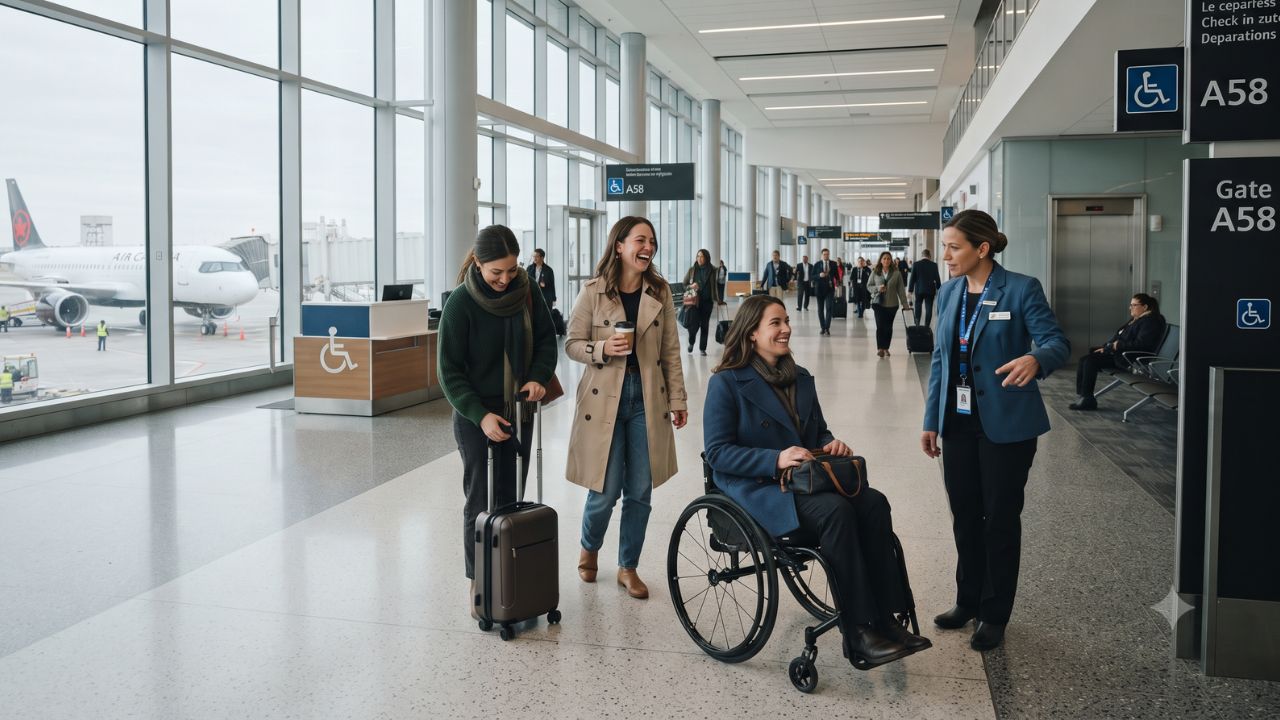
A mishandling rate of 1.19% across reporting US operating carriers in July 2026—resulting in 953 damaged or delayed wheelchairs and scooters in a single month—exposes the operational vulnerabilities facing passengers with disabilities as global aviation bodies convene in Montréal. Gathered at the headquarters of the International Civil Aviation Organization (ICAO) on 14–15 October 2026, regulators, airport directors, and airline executives are reviewing international standards under Annex 9 on facilitation. The second joint accessibility symposium, organized alongside Airports Council International (ACI) and the International Air Transport Association (IATA), follows the inaugural gathering of December 2024 to establish strategic priorities for 2026 through 2028.
However, while global assemblies formulate high-level guidance, international travelers must navigate fundamentally disjointed legal regimes. Across major aviation jurisdictions—including Canada, the United States, the United Kingdom, and France—legal accountability fractures along national borders. A passenger booking a transatlantic itinerary with connections confronts contradictory advance-notice deadlines, split liability between airlines and airport managing bodies, and inconsistent protections for essential personal mobility equipment.
Global Accessibility Architecture and the Montréal Framework
The Montréal symposium brings together technical committees to address universal terminal architecture, digital booking channels, safety protocols, and performance monitoring. According to the World Health Organization, more than 1.3 billion people—approximately 16% of the global population—live with significant disabilities. As aging demographics expand international travel volumes, demand for specialized airport assistance is outstripping broader passenger growth rates across primary western gateways.
Yet ICAO symposia produce policy consensus rather than self-executing global treaties. No binding international convention currently guarantees standardized disability protections across borders. Instead, international travel remains governed by fragmented domestic statutes. In North America, Canadian and American regulators enforce carrier-centric accountability models, whereas European Union and British statutory frameworks assign primary ground-handling responsibilities to airport operators.
This structural divide creates severe operational friction during multi-sector journeys. While digital reservation systems allow passengers to check a Special Service Request (SSR) code during initial booking, there is no standardized international data protocol ensuring that ground teams at connecting transit hubs actually receive, verify, and execute those instructions before an aircraft touches down.
Comparative Legal Mandates and Operational Incident Benchmarks
The regulatory divide across the four benchmark jurisdictions highlights why travelers with reduced mobility face unpredictable service quality during international journeys.
| Country / Jurisdiction | Primary Statutory Framework | Core Operational Mandates & Legal Timelines | Verified Operational Metric / Risk Indicator |
|---|---|---|---|
| United States (US Department of Transportation) | Air Carrier Access Act (ACAA) & 14 CFR Part 382 | Airlines liable for contractor services; 30-minute unattended limit; connecting gate transfers | 953 of 80,285 mobility devices mishandled in July 2026 (1.19% rate vs 1.13% in July 2025) |
| United Kingdom (UK Civil Aviation Authority) | UK Retained Passenger Rights & CAA Framework | Airports fund and manage terminal/boarding assistance; airlines manage inflight support; 48h notice | 5.9M assistance users in 2025 (+115.8% since 2015); 58% of disabled flyers report difficulties |
| Canada (Canadian Transportation Agency) | Accessible Transportation for Persons with Disabilities Regulations (ATPDR) | Covered carriers/airports must provide boarding & equipment aid; 48h to 96h notice rules | 0.04 air accessibility complaints per 100 flights (FY 2024–25); one-fare rule limited to domestic |
| France / European Union (EU Transport Framework) | EU Regulation (EC) No 1107/2006 | Airport managing body provides free terminal assistance; airlines provide onboard aid; 36h rule | 48h passenger notice must be forwarded to transit airports at least 36h before scheduled flight |
In the United States, the Department of Transportation's September 2026 Air Travel Consumer Report recorded 953 mishandled mobility devices out of 80,285 transported by reporting carriers in July 2026, climbing from 889 incidents out of 78,892 (1.13%) in July 2025. Concurrently, an August 2026 federal notice extended enforcement discretion on select wheelchair handling provisions through 30 April 2027. Under 14 CFR Part 382, airlines operating flights to, from, or within the US remain legally prohibited from leaving a passenger unattended for more than 30 minutes in a non-independent wheelchair, yet enforcement gaps persist across contract ground crews.
In the United Kingdom, CAA tracking published on 4 August 2026 showed that a record 5.9 million passengers utilized airport assistance in 2025. Demand for assisted travel rose 115.8% between 2015 and 2025, far outpacing the 23.9% expansion in overall passenger numbers. Although all 28 audited UK airports secured "good" or "very good" ratings, a CAA consumer survey revealed that 58% of disabled travelers experienced practical difficulties when flying, while satisfaction among accessibility users lagged general passengers at 82% versus 88%.
In Canada, the Canadian Transportation Agency's 2026–27 departmental plan focuses on mobility-aid damage reduction and accessibility training, recording an air complaint rate of 0.04 per 100 flights in fiscal 2024–25. Under Canadian advance-notice guidelines, carriers require 48 hours for standard requests, while specialized applications requiring medical documentation can require up to 96 hours. Furthermore, Canada's "one-person, one-fare" rule—requiring airlines to provide an extra seat without extra charge for an attendant—applies strictly to domestic itineraries, leaving international travelers exposed to commercial companion fares.
In France, EU Regulation 1107/2006 requires airport operators to provide free terminal, boarding, and baggage assistance, while airlines manage cabin needs. Crucially, European law establishes a strict 36-hour data handover rule: when an airline receives an assistance request 48 hours prior to departure, it must transmit those specifications to all departure, arrival, and connecting airports at least 36 hours before flight time.
Expert Analysis: The Multi-Leg Handover Deficit in Cross-Border Aviation
For travelers booking multi-sector international itineraries, the direct consequence of these divergent systems is a complete breakdown in end-to-end accountability during airport transfers. When an itinerary routes a traveler from Toronto through New York and London to Paris, the legal entity responsible for boarding chairs, baggage handling, and electric mobility aid stowage shifts at every border crossing. In New York, the operating airline bears statutory responsibility; in London and Paris, independent airport authorities take over ground operations.
The pricing pressure this creates means that airlines often outsource assistance to low-bid third-party ground contractors, resulting in high staff turnover and inadequate training for handling custom power wheelchairs costing upwards of $30,000. When an electric wheelchair with lithium-ion batteries is loaded into a cargo hold, baggage handlers unfamiliar with joystick mechanisms or battery disconnect procedures frequently cause structural damage. For an individual who relies on a custom wheelchair, a damaged device is not lost luggage—it is an immediate loss of mobility, dignity, and bodily autonomy.
Furthermore, advance notice rules create legal loopholes that allow carriers to deflect blame. If a traveler books a short-notice flight 36 hours before departure due to a family emergency, airlines in Canada and Europe are only obligated to make "reasonable efforts" rather than guarantee service. If a transfer chair fails to arrive at the aircraft door upon arrival, passengers find themselves stranded in aircraft seats for hours while airlines and airport contractors dispute contractual jurisdiction.
Key Takeaways
- International regulators from ICAO, ACI, and IATA are meeting in Montréal on 14–15 October 2026 to review international aviation accessibility under Annex 9.
- US Department of Transportation data revealed 953 mishandled wheelchairs and scooters in July 2026 alone, representing a 1.19% incident rate across reporting carriers.
- UK assistance demand climbed 115.8% over a decade to 5.9 million passengers in 2025, yet 58% of disabled consumers continue to report travel difficulties.
- Canada enforces 48- to 96-hour advance notice rules under ATPDR, while its one-person, one-fare rule remains limited to domestic air routes.
- EU Regulation 1107/2006 mandates that airlines transmit 48-hour assistance notices to transit airports at least 36 hours before departure.
FAQ: Global Aviation Accessibility and Airport Assistance 2026
Are global airline accessibility standards legally binding worldwide?
No. ICAO establishes international policy recommendations under Annex 9, but passenger rights and airport assistance rules are governed by distinct national and regional laws.
Is airport assistance free for disabled passengers on international flights?
Yes. In the United States, Canada, the United Kingdom, and the European Union, statutory regulations prohibit airlines and airports from charging fees for requested mobility assistance.
How far in advance must passengers request wheelchair assistance?
Travelers should request assistance at booking or at least 48 hours before departure. In Canada, complex requests involving medical assessments may require up to 96 hours.
Who is responsible if a wheelchair is damaged during an international flight?
The operating carrier that transported the mobility device is liable under applicable aviation consumer rules, though US enforcement discretion on select provisions extends to 30 April 2027.
Until international aviation treaties treat personal mobility devices with the same operational care as passenger safety, the promise of accessible global travel remains grounded.
Related Travel Guides
Disclaimer
This article is for informational and educational purposes only. It does not constitute legal, financial, or professional advice. While we strive to provide accurate and up-to-date information, travel policies, regulations, and conditions change rapidly. Always verify information with official sources before making travel decisions. Nomad Lawyer makes no representations about the accuracy, reliability, completeness, or suitability of the information provided. Readers should consult qualified professionals for advice specific to their circumstances. The views expressed in this article are those of the author and do not necessarily reflect the views of Nomad Lawyer.
Preeti Gunjan
Contributor & Community Manager
A passionate traveller and community builder. Preeti helps grow the Nomad Lawyer community, fostering engagement and bringing the reader experience to life.
Learn more about our team →