
Rhine and Danube River Cruise Disruptions 2026: Extreme Weather Lowers Water Levels Triggering Route Changes
Extreme summer heatwaves and reduced rainfall in 2026 have depleted water levels on the Rhine and Danube, forcing cruise operators to implement road transfers and itinerary modifications.

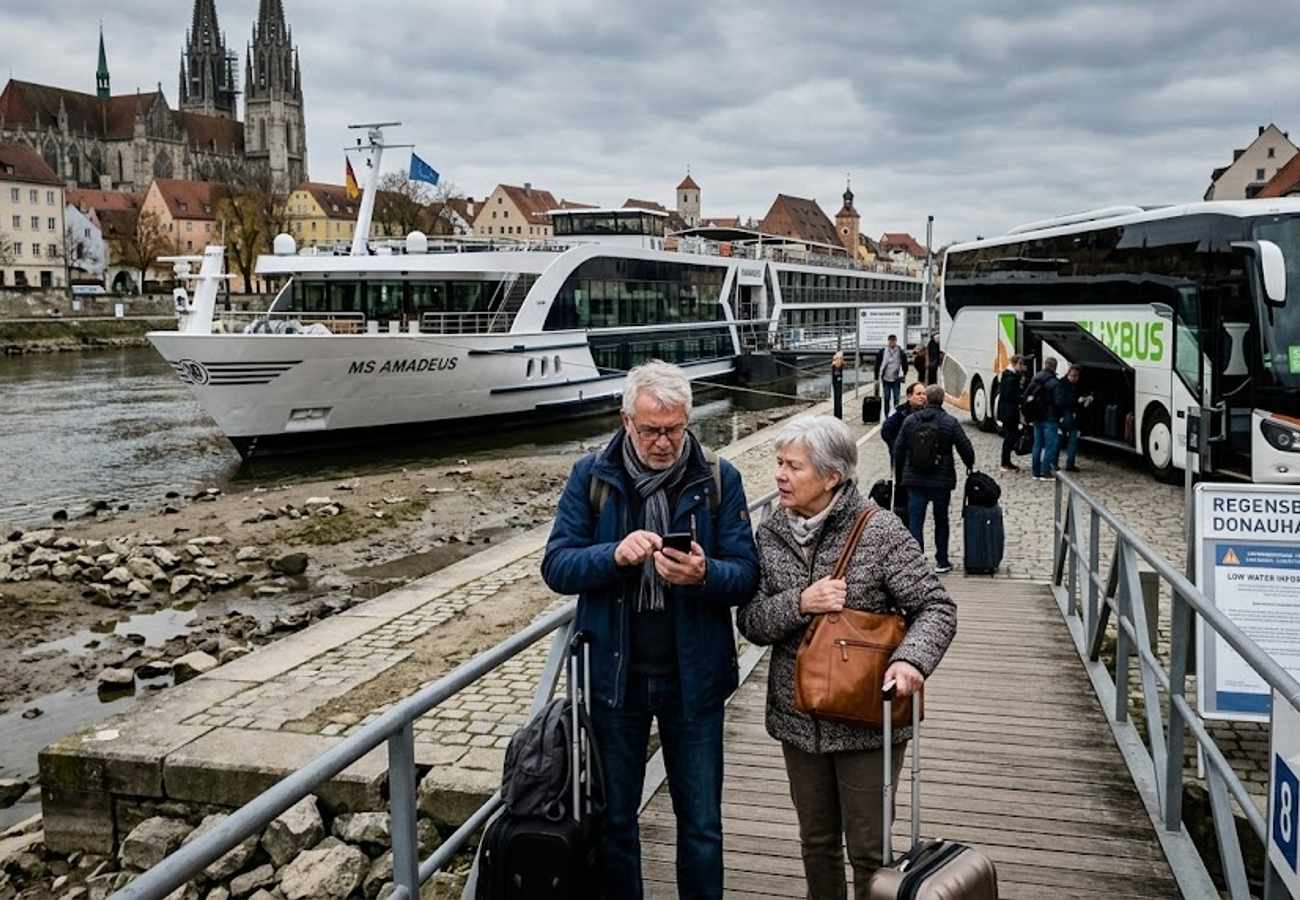
Image generated by AI
Extreme summer weather conditions in 2026 have led to critical water level drops across Europe's primary arterial waterways. This environmental shift is forcing major cruise operators to abandon traditional sailing schedules in favor of hybrid itineraries involving coach transfers.
The Core Transit Update: Navigational Constraints on Major Waterways
Persistent heatwaves and a significant deficit in rainfall have accelerated evaporation and reduced the natural flow of the Rhine and Danube rivers. These conditions have created shallow zones that prevent large cruise vessels from maintaining their standard drafts, leading to operational limits in several key sectors.
The disruption is not uniform across all routes; however, the impact is most severe in regions connecting Germany, Austria, Hungary, Slovakia, and Romania. Cruise lines are currently employing a "dynamic routing" strategy, which involves monitoring real-time river depths and diverting ships to deeper channels or substituting sailing legs with road-based transport.
Passengers are reporting a rise in "surprise transfers," where ships dock at the nearest navigable point, and travelers are transported via motorcoach to their intended destination. This is particularly prevalent for stops that require navigating narrow or shallow tributaries.
Affected Transit Hubs and Route Specifications
The following table outlines the primary regions and cities currently experiencing navigational disruptions and the resulting operational changes.
| Affected Waterway | Primary Impacted Cities | Primary Disruption Type | Mitigation Strategy |
|---|---|---|---|
| Rhine River | Regensburg, Nuremberg, Northern German Ports | Shallow channel navigation | Coach transfers to city centers; alternative docking |
| Danube River | Budapest, Bratislava | Reduced river depth | Revised excursion schedules; modified overnight stays |
| Trans-European | Germany $\rightarrow$ Austria $\rightarrow$ Hungary $\rightarrow$ Romania | Segmented navigation gaps | Hybrid sail-and-drive itineraries |
Traveler Logistics Guide: Navigating River Disruption
For passengers currently booked or planning a European river cruise during the 2026 summer peak, the following logistical adjustments are recommended to ensure a seamless transit experience.
1. Ticketing and Insurance Verification Review your travel insurance policy specifically for "itinerary interruption" or "force majeure" clauses. While cruise operators typically provide alternative transport, insurance is vital for recovering costs related to missed pre-cruise hotel stays or post-cruise flights if the ship's end-port changes.
2. Managing Connection Windows If your river cruise is part of a larger multi-modal journey (e.g., flight to Munich, cruise to Budapest, flight from Budapest), allow for a 24-hour buffer. Low-water disruptions can lead to "shifted" arrival times at the final port, which may jeopardize tight flight connections.
3. Digital Coordination and Updates Operators are increasingly using mobile apps for real-time itinerary shifts. Ensure you have the cruise line's official app installed and notifications enabled. In the event of a road transfer, these apps provide the most accurate boarding locations for coach buses.
4. Flexibility in Excursions Be prepared for "land-side" substitutions. If a ship cannot dock in the center of a city like Bratislava or Budapest, operators will often move the excursion to a different site or provide a shuttle. Maintain a flexible mindset regarding the timing and location of sightseeing.
Infrastructure Impact Assessment
The 2026 water crisis highlights a growing vulnerability in Europe's inland waterway infrastructure. The reliance on stable river depths for the "floating hotel" model is being challenged by more frequent and extreme weather patterns.
From a regional connectivity standpoint, the shift toward road transfers reduces the efficiency of river transit, increasing the carbon footprint of these journeys and putting additional pressure on local road networks in historic river towns. Port authorities and national ministries of transport are now tasked with evaluating long-term dredging projects and the potential for "low-draft" vessel designs to maintain the economic viability of river tourism in an era of climatic volatility.
Nature is currently rewriting the 2026 European cruise map, requiring travelers to trade seamless sailing for a more adaptive journey.
Related Travel Guides
Disclaimer
This article is for informational and educational purposes only. It does not constitute legal, financial, or professional advice. While we strive to provide accurate and up-to-date information, travel policies, regulations, and conditions change rapidly. Always verify information with official sources before making travel decisions. Nomad Lawyer makes no representations about the accuracy, reliability, completeness, or suitability of the information provided. Readers should consult qualified professionals for advice specific to their circumstances. The views expressed in this article are those of the author and do not necessarily reflect the views of Nomad Lawyer.
Preeti Gunjan
Contributor & Community Manager
A passionate traveller and community builder. Preeti helps grow the Nomad Lawyer community, fostering engagement and bringing the reader experience to life.
Learn more about our team →