Delta Air Lines Dramatically Expands Long-Haul Operations for Summer 2026, Signaling Peak Travel Demand Strategy

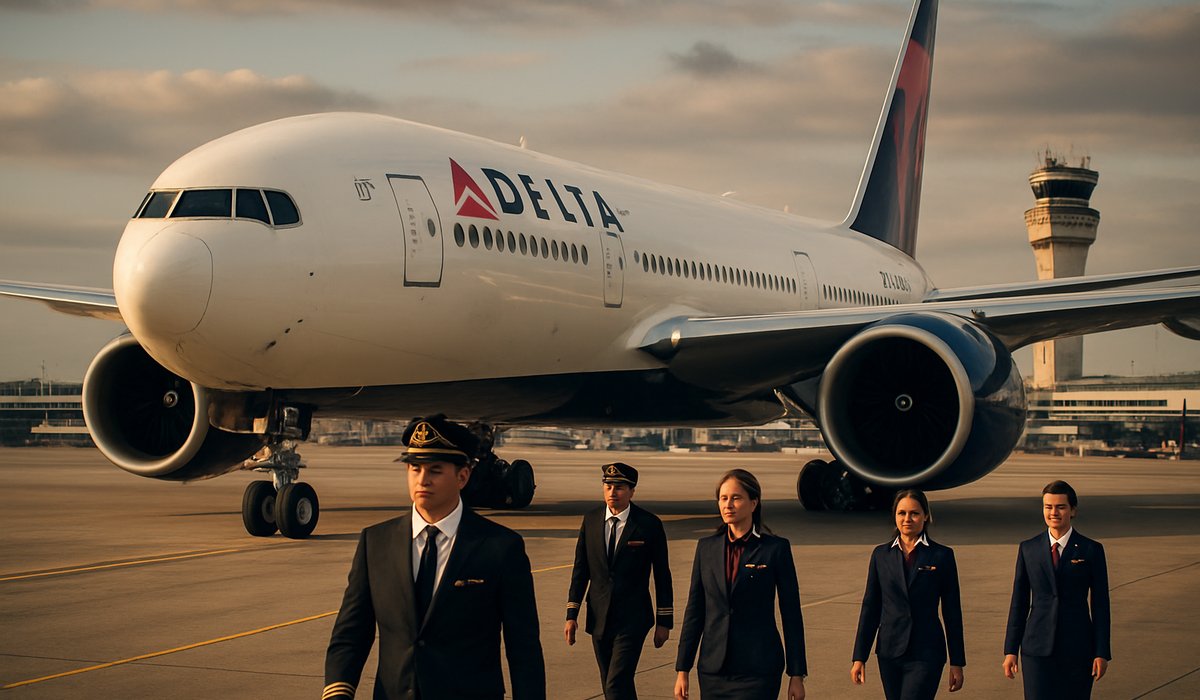
Image generated by AI
The carrier plans record-breaking international flight departures as airlines pursue aggressive revenue strategies during peak travel season
Record-Breaking Summer Expansion Underway
Delta Air Lines is preparing for its most ambitious long-haul international schedule in company history, planning nearly 12,000 long-haul departures from United States airports during the critical third quarter of 2026, according to flight operations data compiled by Cirium's Diio platform.
The unprecedented capacity expansion represents a 2% increase over the previous quarterly record, underscoring the airline's confidence in sustained international travel demand and its competitive positioning in the global aviation market during the lucrative summer travel period.
Why Q3 Remains Aviation's Revenue Engine
The third quarter—spanning July through September—consistently generates the highest yields for major carriers worldwide, driven by summer vacation patterns, family travel, and business conference schedules concentrated across the Northern Hemisphere. Airlines strategically frontload their most profitable long-haul routes during these months to maximize per-seat profitability and offset operational costs, particularly amid volatile jet fuel prices and labor agreements.
Delta's aggressive capacity planning reflects the airline industry's broader recovery trajectory and renewed confidence in international leisure and business travel markets, even as carriers carefully manage baggage fees, ancillary revenue streams, and seat surcharges to maintain profitability margins.
Strategic Route Deployment
The 11,895 planned departures span Delta's premium long-haul network, encompassing transatlantic, transpacific, and emerging leisure destinations. This expansion signals the carrier's bet on sustained demand for premium cabin experiences and elevated airfare pricing during peak season—a strategy deployed across the aviation industry as carriers respond to fluctuating fuel costs and competitive capacity constraints.
By deploying maximum frequency on its highest-revenue routes, Delta aims to capture market share during the period when business and leisure travelers demonstrate greatest willingness to pay premium fares, partially offsetting inflationary pressures in ground operations, crew costs, and maintenance expenses.
Broader Industry Implications
Delta's record scheduling reflects broader trends reshaping commercial aviation: recovery in international travel post-pandemic, rising per-capita spending on premium experiences, and airline confidence in the stability of transatlantic and transpacific markets despite geopolitical uncertainties and economic headwinds.
The expansion also signals that major carriers are confidently investing in long-haul capacity, contrasting with regional carrier retrenchment and underscoring the enduring profitability of premium international routes for full-service network carriers.
FAQ: Understanding Delta's Summer 2026 Strategy
What does Delta's record flight expansion mean for travelers? Increased frequency typically creates more booking options and potentially improved pricing through competition, though premium cabin availability may command higher fares during peak weeks.
Why is Q3 so crucial for airline profitability? The July-September period captures peak vacation demand when airlines can charge premium fares and fill seats more completely, generating disproportionate quarterly revenue compared to shoulder or winter seasons.
How do jet fuel prices impact long-haul expansion decisions? Rising fuel costs increase operational expenses per flight; Delta's expansion suggests confidence that ticket prices and load factors will exceed these marginal costs during peak season.
Will baggage and ancillary fees increase with expanded service? Airlines typically maintain consistent fee structures year-round, though premium cabin passengers benefit from included baggage on long-haul flights, incentivizing upgrades during high-demand periods.
Which routes will likely see the most frequency additions? Delta typically prioritizes European gateways (London, Paris, Frankfurt) and Asian hubs (Tokyo, Seoul) where premium cabin demand and business travel frequency justifies daily or double-daily service.
Related Travel Guides
- Alaska Airlines Expands California Network with New Santa Rosa Routes and Revived Long Beach to Seattle Flights for Your 2026 Luxury Escape
- Texas Airlines Bold Move: American Expands Dallas Fort Worth European Routes in 2026
- Historic US Travel Chaos: Thunderstorms Trigger 674 Flight Cancellations and Ground Southwest, American, and Delta Nationwide
This article is for informational purposes. Flight routes, passenger regulations, visa rules, and transit advisories are subject to change by airlines and aviation authorities. Readers are advised to verify schedules and travel documentation with relevant carriers and border agencies before departure.
Related Stories
Brazil Nears 100 Million Air Passengers in 2026 Amid Divergent Global Aviation Growth