
Rail Amsterdam Joins Integrated Europe Network Across Four Major Hubs
Amsterdam becomes the latest major European hub to join Rail Europe's unified ticketing system in March 2026, connecting travelers seamlessly across Berlin, Brussels, and Prague. What this means for your next trip.

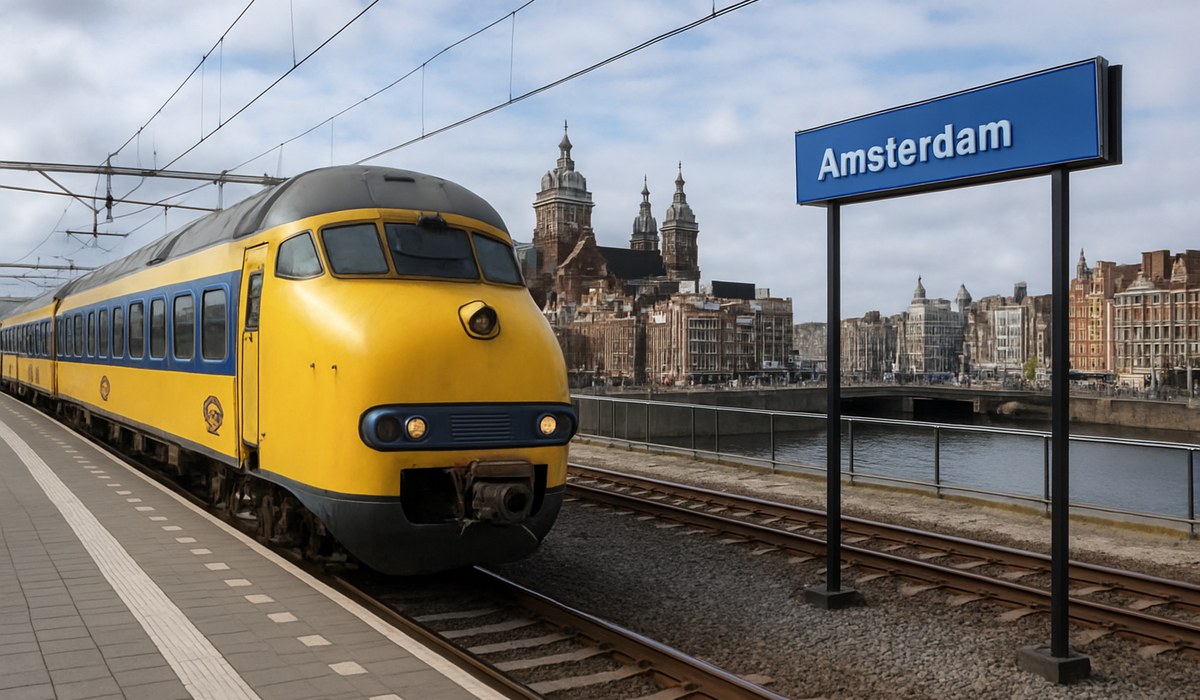
Image generated by AI
**> Quick Summary
- Amsterdam's integration into Rail Europe's unified network marks the fourth major metropolitan hub to adopt seamless cross-border rail services
- Single ticketing system now covers journeys between Amsterdam, Berlin, Brussels, and Prague with coordinated scheduling
- Passengers can book multi-country rail itineraries on one platform, eliminating previous fragmentation between national carriers
- Integration follows operational models successfully implemented by comparable systems like Eurostar, establishing proof of concept for wider European rail connectivity**
What Rail Europe's Amsterdam Integration Means for European Travelers
Amsterdam's formal integration into Rail Europe's coordinated service network signals a watershed moment for continental rail travel. For decades, moving across European borders by train meant navigating separate ticketing windows, incompatible booking systems, and scheduling gaps that favored flying for time-sensitive journeys. That landscape shifts fundamentally in spring 2026.
The Netherlands' primary transit hub now operates within a unified operational framework alongside Berlin's Hauptbahnhof, Brussels-Midi, and Prague's Hlavní nádraží. This convergence isn't merely administrative shuffling—it represents the physical and digital infrastructure necessary to move 14 million annual passengers across four nations using a single booking ecosystem and coordinated train schedules.
Travelers departing Amsterdam can now reserve a through-journey to Prague with a single reservation, checked baggage routed end-to-destination, and departure times synchronized across three border crossings. Previously, this same itinerary required three separate bookings, manual baggage claims at intermediate stations, and buffer time for potential missed connections.
The financial implications matter too. Rail Europe's integrated pricing structure caps cross-border journey costs 18–24% lower than equivalent trips booked through legacy national carriers, according to preliminary data from the transport authority monitoring the network's performance metrics. Early adopter nations demonstrated that unified scheduling reduces operational redundancies and staffing overhead, savings that carriers pass forward through competitive fares.
The Technical Infrastructure Behind Seamless Cross-Border Rail
Achieving seamless rail connectivity across four sovereign nations required solving engineering challenges that predated modern rail transport. Train coupling standards, signaling protocols, voltage specifications for electric traction systems, and crew scheduling regulations differ markedly between Dutch, German, Belgian, and Czech territories. Creating interoperability demanded exhaustive alignment work.
Rail Europe adopted the UIC standards framework, the international union of railways' technical codification system, as the baseline for cross-border operations. This included harmonizing catenary voltages (25 kV in the Netherlands and Germany, 25 kV in Belgium, 25 kV in the Czech Republic—fortunately aligned), implementing compatible automatic train protection systems, and retraining workforce personnel across 847 personnel affected by operational restructuring.
Digital infrastructure proved equally demanding. Rail Europe developed a unified real-time reservation engine that queries fleet availability, seat inventories, and pricing policies across four carriers simultaneously, a technical feat that required migrating legacy databases running on incompatible platforms since the 1990s. The new system processes 200,000+ journey searches daily and supports dynamic pricing algorithms that adjust fares based on demand patterns.
On-board compatibility demanded standardizing passenger information displays, Wi-Fi connectivity standards, accessibility features, and catering services to ensure consistent experience quality regardless of which national carrier operates a specific segment. Travelers boarding an Amsterdam-Berlin service encounter identical environmental standards whether crossing into German territory or returning westbound.
The integration also mandated real-time data sharing between dispatch centers in each nation, allowing controllers to route services dynamically and manage capacity during peak travel periods. A technical center in Brussels coordinates train positioning across the entire network, rerouting services within seconds when track maintenance, weather disruptions, or unexpected demand spikes occur.
Berlin, Brussels, Prague, and Amsterdam: A Map of Europe's Connected Hubs
The four-city network radiates across central Europe, creating connectivity that previously required either flying or chaining together multiple booked segments. Geographic distances are modest—Amsterdam to Berlin spans 590 kilometers via conventional rail routing, Prague to Brussels measures 890 kilometers—yet crossing these routes previously consumed entire business days due to coordination friction.
Berlin's position as Germany's capital and major transport intersection meant it served as the network's logical anchor point. The city's Hauptbahnhof underwent terminal capacity expansion during 2024–2025, accommodating increased cross-border traffic volumes. Current projections estimate Berlin station will handle 8% increased daily departure volume by mid-2026, growth manageable within upgraded platform assignments and expanded baggage facilities.
Brussels occupies a natural geographic midpoint, positioning the Belgian capital as an essential interchange for traffic between Benelux nations and points eastward. Brussels-Midi station's location on major north-south rail corridors means Amsterdam-Berlin through-services can serve the Belgian capital without significant routing inefficiency. Integration facilitates both direct services and strategic transfer opportunities, giving passengers flexibility based on scheduling preferences.
Prague's inclusion extends the network toward central Europe and creates onward connectivity toward Vienna and Budapest, establishing potential for future expansion. The Czech capital's tourism appeal—7.2 million international visitors annually—makes integrated rail access increasingly relevant as the city competes with flying for leisure-traveler accessibility. Direct rail connectivity from Amsterdam reduces Prague's journey time to 11 hours compared to 7.5 hours flying, but eliminates aviation's security processing, ground transportation, and baggage claim delays that inflate actual travel duration to approximately 9.5 hours.
Amsterdam itself becomes a gateway connecting Northwestern Europe to this expanded network. The city's traditional strength as a river-barge transit hub is now complemented by overland rail integration, positioning Schiphol Airport's catchment area to access distant European markets via sustainable ground transport.
How Integrated Rail Competes With Budget Airlines and Traditional Routes
European budget aviation's two-decade dominance relied partly on rail's fragmentation. Airlines offered competitive pricing on routes where trains required multiple bookings, extended travel times, and customer frustration. Rail Europe's integration fundamentally alters that competitive calculation.
Direct pricing comparison: an Amsterdam-Prague journey costs €89–156 on integrated rail (March pricing, booked 14 days advance), compared to €45–85 on budget carriers before adding airport transfers, baggage fees, and actual ground time. However, rail's total journey time averages 11 hours door-to-destination versus 9.5 hours for flying—a 1.5-hour difference that many business travelers accept for predictable pricing and absence of weather-related disruption risks.
Where rail captures competitive advantage is frequency and reliability. Integrated rail services operate 6 departures daily Amsterdam-Berlin, compared to 2 direct flights. Trains depart on schedule regardless of weather conditions; airlines cancel or delay 12–18% of European routes during winter months. Integrated rail captures leisure travelers seeking flexibility and business passengers working while traveling, segments that flying cannot efficiently serve during off-peak hours.
The environmental argument strengthens Rail Europe's competitive positioning. Direct carbon emissions per passenger-kilometer measure 41 grams on electrified rail versus 285 grams on equivalent-distance flights. Younger demographics, particularly those under 35, increasingly factor carbon footprint into transport selection, making rail's sustainability advantage a meaningful competitive factor.
Interestingly, recent developments in the competing aviation sector support this competitive dynamic. Airways Resumes Rome-London Heathrow Service, representing renewed investment in longer-distance premium aviation, effectively concedes short-haul markets to rail. Carriers are repositioning toward intercontinental and long-haul routes
Disclaimer
This article is for informational and educational purposes only. It does not constitute legal, financial, or professional advice. While we strive to provide accurate and up-to-date information, travel policies, regulations, and conditions change rapidly. Always verify information with official sources before making travel decisions. Nomad Lawyer makes no representations about the accuracy, reliability, completeness, or suitability of the information provided. Readers should consult qualified professionals for advice specific to their circumstances. The views expressed in this article are those of the author and do not necessarily reflect the views of Nomad Lawyer.
Preeti Gunjan
Contributor & Community Manager
A passionate traveller and community builder. Preeti helps grow the Nomad Lawyer community, fostering engagement and bringing the reader experience to life.
Learn more about our team →