
Travel Cairo Monorail Takes Egypt Forward with Landmark Links
Cairo's monorail elevates Egypt's transit infrastructure in 2026, connecting major landmarks while serving as a model for Middle Eastern cities modernizing ground transport amid regional challenges.

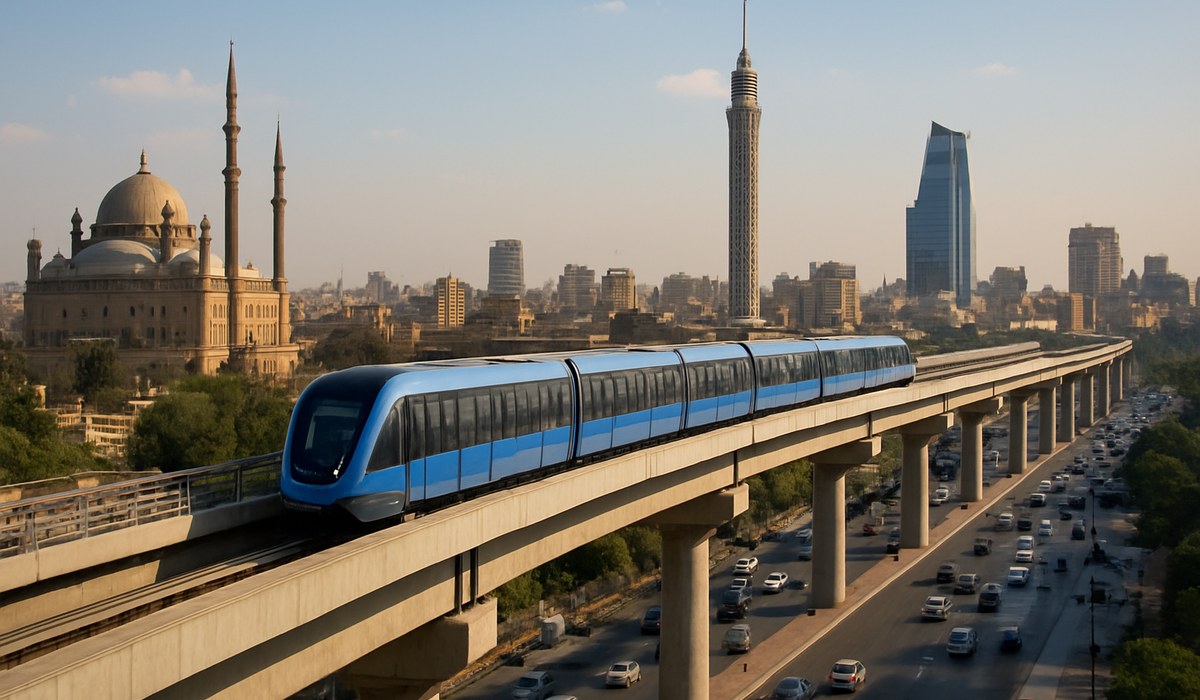
Image generated by AI
**> Quick Summary
- Cairo's new monorail system officially opens with multiple stations serving major cultural and business hubs across the metropolitan area
- The elevated railway bypasses road congestion, cutting travel times between landmarks by up to 40 percent
- International engineering standards ensure compatibility with future regional rail networks across North Africa
- Ground infrastructure investment gains urgency as Middle Eastern air routes face unprecedented scheduling pressures and cancellations**
Cairo's Monorail: A Ground-Level Answer to Regional Air Volatility
While airlines across the Middle East grapple with route uncertainty and capacity constraints, Cairo is demonstrating a different approach to connectivity. The city's ambitious monorail system represents far more than an engineering achievement—it signals a strategic pivot toward ground-based infrastructure at a moment when air travel reliability faces mounting pressure.
The elevated railway, which officially commenced operations in March 2026, fundamentally reshapes how millions of residents and visitors navigate Africa's most populous metropolitan area. Unlike traditional underground metro systems, the monorail operates on an aerial track, maintaining clean sightlines to Cairo's iconic architecture while delivering passengers across sprawling urban zones in a fraction of traditional road transit times.
Passenger demand projections suggest the network will handle approximately 450,000 daily riders within its first operational year. Officials at Egypt's Ministry of Transport have positioned the monorail as the cornerstone of a broader modernization agenda that extends beyond Cairo's borders, with initial planning phases already underway for comparable systems in Alexandria and Giza.
The timing proves strategically significant. With escalating Middle East flight disruptions affecting both leisure and business travel corridors, cities that invest in reliable ground connectivity gain competitive advantages in attracting international visitors and maintaining regional commerce flows. When EgyptAir's Chicago-Cairo nonstop service faces potential scheduling complications due to regional tensions, the monorail becomes an essential complement to air-based tourism infrastructure.
Connecting Landmarks, Enabling Growth: What the Project Delivers
The monorail's design centers on connectivity rather than mere point-to-point transit. The system features seventeen stations distributed across central Cairo and surrounding metropolitan zones, with routing specifically engineered to serve areas that traditional metro networks historically underserved.
Three primary corridors structure the network:
The Heritage Corridor connects the Egyptian Museum, Citadel of Saladin, and Al-Azhar Mosque—three of the world's most visited archaeological and cultural sites. Previously, visitors required multiple transportation changes or extended taxi journeys to experience these landmarks in succession. The monorail now enables this combination in under ninety minutes of cumulative travel time.
The Business District Connector links New Cairo's financial center with downtown commercial zones, addressing the daily commuting patterns of over 200,000 office workers. Real estate developers in these corridors have already announced expansion projects valued at approximately $2.3 billion USD, indicating market confidence in the monorail's capacity to stimulate economic activity.
The Future Cities Link extends toward satellite developments in New Administrative Capital projects and emerging residential zones, supporting Egypt's decentralization strategy while positioning the monorail network for eventual expansion into surrounding governorates.
Station architecture reflects contemporary Scandinavian and East Asian design principles—spacious platforms, weather-protected boarding areas, and integrated retail spaces that generate operational revenue. The system accommodates both luggage-carrying tourists and daily commuters, with dedicated seating for families and elderly passengers.
Global Rail Standards Meet Egyptian Innovation
The monorail's engineering specifications align with international protocols established by the International Union of Railways, the Geneva-based organization that coordinates compatibility standards across member nations. This adherence matters profoundly—it enables future interconnection with rail networks across North Africa and the Eastern Mediterranean, transforming Cairo from a terminus into a transit hub within a continental system.
The procurement process incorporated competitive bidding among European, Asian, and regional manufacturers. The ultimately selected consortium married German rail technology with Egyptian labor and local supply chains, resulting in a hybrid model that balances world-class reliability with economic accessibility.
Safety systems exceed European Union requirements in three critical areas: automated train control mechanisms prevent operator error, redundant power supplies ensure service continuation during grid fluctuations, and platform screen doors eliminate track-side hazards. Egypt's investment in these overengineered systems reflects governmental awareness that international passenger confidence depends on demonstrable commitment to safety standards.
When comparing Cairo's ambitions to frameworks like Eurostar's high-speed rail model, meaningful differences emerge. Eurostar operates within a mature, interconnected European network where passengers expect seamless transfers across borders. Cairo's monorail represents the foundational layer upon which such regional integration will eventually develop. The infrastructure design therefore incorporates redundancy and scalability features that anticipate future expansion toward Suez, the Red Sea resorts, and Mediterranean coastal cities.
The Economic Case: Why Ground Infrastructure Matters Now
Egypt's transport ministry projects $18 billion USD in direct and indirect economic benefits over the system's thirty-year operational lifespan. These projections account for reduced congestion costs, increased property values near stations, expanded tourism capacity, and improved workforce mobility that enhances business productivity.
The monorail's arrival intersects with broader patterns in international travel recovery. Following periods of uncertainty regarding escalating Middle East flight disruptions, cities offering multi-modal transportation options attract visitors seeking flexibility. A traveler whose international flight encounters delays no longer faces a cascading nightmare of missed domestic connections—the monorail enables spontaneous day trips and flexible itinerary adjustments that automobile and bus-dependent cities cannot accommodate.
Tourism revenue modeling suggests the monorail could increase annual international visitor arrivals to Cairo by twelve to fifteen percent. Current baseline figures hover near 3.5 million annual arrivals; even modest percentage gains translate to hundreds of millions in additional hospitality, retail, and cultural venue spending.
Property development follows infrastructure reliably. The monorail's elevated structure creates developable airspace beneath tracks, generating revenue through mixed-use projects combining retail, housing, and office space. Municipal authorities have already auctioned development rights for seven station environs, with completion timelines extending through 2029.
The network's operational costs remain manageable through fare revenue supplemented by value-capture mechanisms—developers pay premium fees for development rights near stations, and commercial operators in station retail areas pay percentage-of-revenue leases. This self-sustaining funding model contrasts with many developing-world infrastructure projects that depend perpetually on government subsidies.
FAQ: Planning Your Visit to Cairo with New Transit Options
Q: Which airport does the monorail serve, and how do I connect from international arrival terminals?
A: The monorail currently terminates at Central Cairo but does not directly serve Cairo International Airport (CAI). However, buses and taxis from airport terminals connect to Ramses Station and the Nile Hilton monorail hub within thirty to forty minutes. Travelers should budget ninety minutes total for airport-to-hotel transit when using combined airport shuttle and monorail services. Future phases may include direct airport connectivity.
Q: What are monorail operating hours, and can I purchase day passes or multi-journey tickets?
A: The monorail operates from 5:30 AM to midnight daily. Single journey fares cost approximately 25 Egyptian Pounds (USD $0.82 at current rates). Seven-day visitor passes are priced at 120 EGP and offer unlimited travel during the pass period. Tourist Information Centers at major hotels and the Cairo Tourism Authority office dispense passes and provide route maps in multiple languages.
**Q: How does the mon
Disclaimer
This article is for informational and educational purposes only. It does not constitute legal, financial, or professional advice. While we strive to provide accurate and up-to-date information, travel policies, regulations, and conditions change rapidly. Always verify information with official sources before making travel decisions. Nomad Lawyer makes no representations about the accuracy, reliability, completeness, or suitability of the information provided. Readers should consult qualified professionals for advice specific to their circumstances. The views expressed in this article are those of the author and do not necessarily reflect the views of Nomad Lawyer.
Kunal K Choudhary
Co-Founder & Contributor
A passionate traveller and tech enthusiast. Kunal contributes to the vision and growth of Nomad Lawyer, bringing fresh perspectives and driving the community forward.
Learn more about our team →