
Rafael Núñez Airport to La Boquilla: Easiest Beach Routes, Taxi Fares, and Transfer Guide 2026
Cartagena's Rafael Núñez Airport to La Boquilla is the easiest airport-to-sand transfer in Colombia. Here is the 2026 guide on taxis, Uber, and routes.

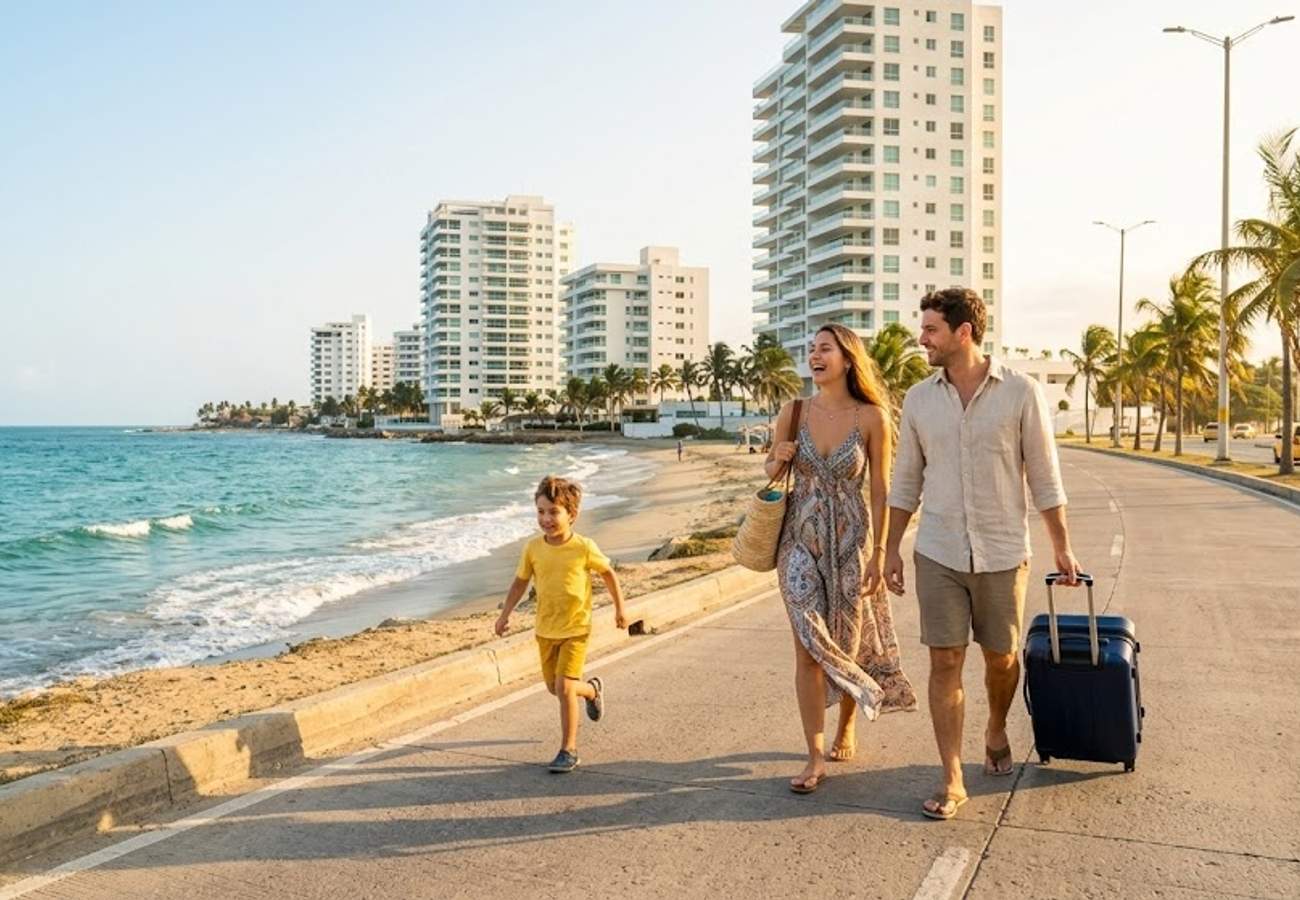
Image generated by AI
Landing at Rafael Núñez International Airport in Cartagena and heading straight to a beach hotel in La Boquilla is one of the easiest airport-to-sand transfers in Colombia. The airport sits on the same coastal strip as La Boquilla, allowing travelers to reach the sand in 15 to 25 minutes.
The Core Development
Landing at Rafael Núñez International Airport in Cartagena and heading straight to a beach hotel in La Boquilla offers a seamless arrival experience. The airport sits on the same coastal strip as La Boquilla. Travelers simply follow the shoreline north a few kilometers. With the right plan, you can be on the sand roughly 15 to 25 minutes after stepping out of arrivals.
Rafael Núñez International Airport is located in the Crespo neighborhood, on Cartagena’s northern shoreline between the Caribbean Sea and the Ciénaga de la Virgen lagoon. La Boquilla begins only a short drive further up the same coastal road. Most travelers heading for La Boquilla avoid the dense traffic and busy junctions that separate the airport from the historic center, Getsemaní, and Bocagrande. This translates into shorter, more predictable journeys with fewer bottlenecks.
Distances are compact. Depending on where your hotel is, La Boquilla is typically 6 to 9 kilometers from the airport by road. In normal daytime conditions, a taxi or Uber will often cover that in 15 minutes. This can stretch to around 25 minutes during rush hour or heavy weekend beach traffic. Reaching popular hotels in Bocagrande or the walled city can take significantly longer, especially when cruise ships are in port or during festivals.
La Boquilla is a straight shot from the terminal. Once you leave the airport grounds, the coastal highway quickly narrows into a single main axis. This runs between the beachfront high-rises of the Morros and Las Américas area on one side and the lagoon and traditional fishing village on the other. You are never far from the sea, and your driver has only a small number of turns to make. For tired arrivals on late-night flights, that simplicity is a major advantage.
The beach itself is one of the main reasons travelers choose to stay here. The shoreline in La Boquilla tends to feel more relaxed than the busy, vendor-heavy beaches in Bocagrande. Many hotels sit directly on the sand or just across the road. Once your driver drops you at the lobby you are only steps away from the water. This ease of access, combined with the short transfer, makes La Boquilla a practical base for families and couples who want to front-load their trip with some quiet beach time.
Understanding the La Boquilla Hotel Zones
La Boquilla stretches along the northern coast beyond the airport and includes a mix of resort-style towers, condo-hotels, and small local guesthouses. For transfers, it helps to think of the area in three overlapping zones. Closest to the airport are the large beachfront complexes around Hotel Las Américas and Sonesta Hotel Cartagena. Next are the cluster of modern Morros-branded apartment towers. Finally, there is the more traditional village core with smaller hotels and beach cabanas.
The “Las Américas / Zona Norte” segment is the most resort-like. Properties such as Hotel Las Américas Torre del Mar, Hotel Las Américas Casa de Playa, and Sonesta Hotel Cartagena offer large pools, kids’ areas, and direct beach access. Drivers at the airport are very familiar with these hotels. You can simply say “Las Américas” or “Sonesta en La Boquilla” and most taxi dispatchers will understand the destination immediately.
Further along the same road are the Morros developments. Many visitors book apartments or condo-style suites that operate similarly to hotels. Names such as Morros Eco, Morros Ultra, Morros Epic, and Morros Vitri show up frequently on booking platforms. They line the beach side of the road with private pools, small beach clubs, and direct sand access. Drivers usually recognize the Morros towers by name, but it is helpful to have the exact tower and street number ready on your phone.
North of the big towers, the scene becomes more village-like. Here you will find smaller hotels and guesthouses, such as simple beachfront inns and locally owned hostales, along with beach shacks and seafood restaurants. The addresses may be less precise, so travelers often show a pin from a map app or a screenshot of their booking. Even in this less formal stretch, the route remains straightforward. The main road hugs the beach, and your driver drops you directly at the nearest access point or side lane to your lodging.
Taxi Transfer Dynamics
Official taxis are the most straightforward and widely used option from Rafael Núñez Airport to La Boquilla. Outside the arrivals area you will find a clearly marked official taxi stand with dispatch staff. Fares are regulated by the city and updated periodically. In 2026 there is a specific tariff table for different city zones including La Boquilla. Rather than bargaining in the parking lot, you request your destination at the desk and receive a printed or written fare based on the official schedule.
For a typical ride from the airport to a hotel in the Las Américas or Morros sector of La Boquilla, recent travelers report paying in the range of around 25,000 to 35,000 Colombian pesos. This is roughly 6 to 9 US dollars at current exchange rates. Exact amounts vary with fuel adjustments and small zone differences. The key point is that the price is fixed before you get in the cab. You pay the driver in pesos at the end of the ride, and tipping is optional. Rounding up a couple of thousand pesos for good service is appreciated.
With luggage, taxis are particularly convenient. Most airport taxis are compact sedans, but there are also slightly larger vehicles in circulation. A couple with two large suitcases and hand luggage will generally fit comfortably in a standard yellow taxi. Families or groups carrying multiple large suitcases or sports equipment such as surfboards might prefer to request a larger vehicle in advance through their hotel. Alternatively, a prebooked private transfer with guaranteed trunk space is a smart choice.
Traffic between the airport and La Boquilla is usually light compared with central Cartagena routes, but peak hours can slow things down. Expect around 15 minutes in off-peak periods and 20 to 25 minutes around weekday rush hours and sunny weekend mornings when locals flock to the beach. Because the route does not require crossing the city’s main congestion points, even at busy times the taxi journey to La Boquilla tends to be less stressful and more predictable than rides to Bocagrande or the historic center.
Ride-Hailing and Uber Operations in 2026
Ride-hailing services such as Uber continue to operate in Cartagena in 2026. As in many parts of Colombia, they function within a somewhat gray regulatory framework. The Uber app lists Rafael Núñez Airport and includes instructions for pickup zones. Recent passengers report using Uber successfully between the airport and both city and beach neighborhoods. The app will show an estimated price for your ride to La Boquilla, often similar to, or slightly below, the official taxi rate for the same journey.
In practice, the availability of Uber vehicles at the airport varies by time of day and season. During busy evening arrival banks, especially when several international flights land close together, you may find multiple drivers nearby and short wait times. In quieter mid-afternoon or late-night windows, coverage can be thinner. Some travelers open both the Uber app and a local taxi app, such as one of the major Colombian ride platforms, and choose whichever shows the quickest pickup and clearest price.
When using ride-hailing at Rafael Núñez, expect your driver to suggest a slightly less visible meeting point than the front rank used by official taxis. Common practice is to walk a short distance to a nearby side street or designated pickup zone, following directions in the app. With luggage this is still manageable, as the distances are short. Payment by card through the app helps avoid currency confusion for newly arrived visitors. However, keeping some pesos on hand is wise in case the driver requests a small cash supplement for tolls or airport access.
Because La Boquilla lies directly north along the coast from the airport, the route is efficient for ride-hailing drivers. They can complete the trip quickly and often pick up another fare returning to the city center, making it an attractive route for them.
Key Facts Breakdown
- Airport Location: Crespo neighborhood, northern Cartagena coastline.
- Distance to La Boquilla: 6 to 9 kilometers by road.
- Average Transfer Time: 15 minutes off-peak, up to 25 minutes during rush hour.
- Official Taxi Fare: 25,000 to 35,000 Colombian pesos (roughly 6 to 9 US dollars).
- Primary Hotel Zones: Las Américas / Zona Norte, Morros towers, and the traditional village core.
La Boquilla Transfer Metrics
| Metric | Detail |
|---|---|
| Airport Name | Rafael Núñez International Airport |
| Destination Zone | La Boquilla |
| Road Distance | 6 to 9 kilometers |
| Off-Peak Duration | 15 minutes |
| Rush Hour Duration | 20 to 25 minutes |
| Official Taxi Cost | 25,000 - 35,000 COP ($6 - $9 USD) |
| Ride-Hailing Availability | Variable; best during evening arrival banks |
Why This Matters
For travelers on this route, the real impact is the preservation of vacation time. Cartagena's traffic can be notoriously unpredictable, particularly around the historic center and Bocagrande. By choosing La Boquilla, visitors effectively bypass the city's primary congestion points. Our analysis of the route map suggests that the single-axis coastal road design is the critical factor here. It removes the complexity of navigating multiple junctions. From a logistical perspective, this means families with heavy luggage or late-night arrivals face minimal friction. The fixed-fare taxi system also eliminates the haggling stress common in other tourist hubs. For digital nomads and leisure travelers alike, this transfer represents one of the most efficient airport-to-beach logistics in Latin America.
Industry Outlook
Market trends suggest that La Boquilla will continue to grow as a primary leisure hub for Cartagena. The presence of large resort complexes and condo-hotels like the Morros towers indicates sustained investment in the area. As international flight banks at Rafael Núñez Airport expand, the demand for quick, predictable transfers will rise. We expect ride-hailing services to formalize their airport operations further to compete with the efficient official taxi stand. Travelers should monitor local regulatory updates regarding ride-hailing apps, as the gray area could shift. For now, the dual strategy of checking official taxi rates and ride-hailing apps simultaneously remains the most effective approach for 2026 arrivals.
[Plan your arrival for off-peak hours to maximize beach time and minimize transfer stress.]
Related Travel Guides
Disclaimer
This article is for informational and educational purposes only. It does not constitute legal, financial, or professional advice. While we strive to provide accurate and up-to-date information, travel policies, regulations, and conditions change rapidly. Always verify information with official sources before making travel decisions. Nomad Lawyer makes no representations about the accuracy, reliability, completeness, or suitability of the information provided. Readers should consult qualified professionals for advice specific to their circumstances. The views expressed in this article are those of the author and do not necessarily reflect the views of Nomad Lawyer.
Kunal K Choudhary
Co-Founder & Contributor
A passionate traveller and tech enthusiast. Kunal contributes to the vision and growth of Nomad Lawyer, bringing fresh perspectives and driving the community forward.
Learn more about our team →