
Radio Fault Triggers Widespread Rail Disruption Across Southern England May 2026
A critical GSM-R radio fault triggers widespread rail disruption across southern England on May 7, 2026, forcing cancellations and delays affecting thousands of commuters traveling through London hubs and major intercity routes.

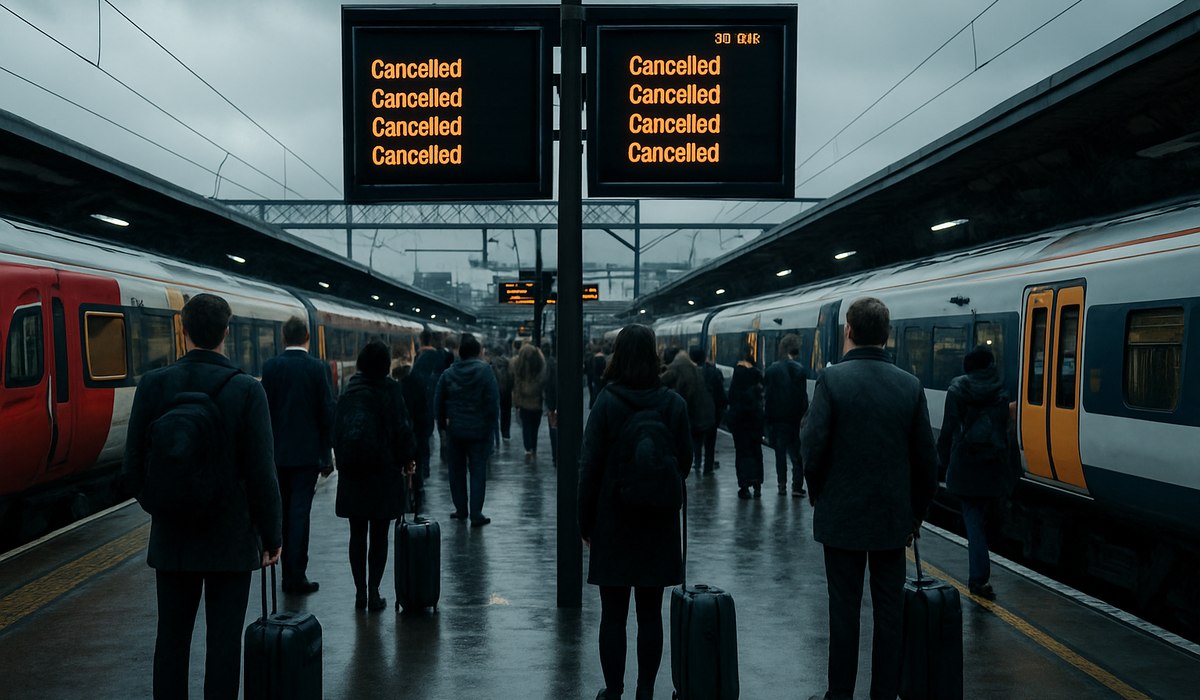
Image generated by AI
GSM-R Network Failure Paralyzes Southern England Rail Services
A critical radio fault triggers widespread service failures across southern England's rail network on May 7, 2026, stranding thousands of passengers and exposing vulnerabilities in the UK's digital rail infrastructure. The breakdown in the GSM-R communication system—a dedicated radio network connecting train drivers and signallers—forced operators to impose safety restrictions, halt trains at signals, and cancel services across multiple major routes. The disruption cascaded rapidly through London's principal termini, including Waterloo and Victoria, as operators from South Western Railway, Great Western Railway, Southern, Thameslink, Gatwick Express, and London Overground struggled to maintain safe operations without reliable driver-signaller contact.
GSM-R Network Failure: What Happened
The GSM-R (Global System for Mobile Communications—Railway) network forms the backbone of voice communication between train cabs and signalling control centers across the UK mainline. On the morning of May 7, 2026, a technical fault in this critical system rendered communications unreliable, forcing National Rail and individual operators to activate precautionary safety protocols.
Standard operating procedures require trains to operate at reduced speed or remain stationary when driver-signaller radio contact cannot be guaranteed. This safety-first approach, while necessary, instantly compressed network capacity across southern England. Technical teams identified the core fault by late morning, but restoring systems and clearing the backlog of delayed rolling stock and displaced staff took considerably longer.
The incident underscores how modern rail operations depend entirely on digital infrastructure. A single point of failure in GSM-R propagates across dozens of routes simultaneously. Passengers faced not only the initial radio fault but hours of residual delays as train diagrams fell out of sync and operators worked to reposition locomotives and crews. For detailed information on service recovery timelines, visit National Rail.
Cascading Disruption Across Operators and Routes
The radio fault triggers disruption affecting seven major train operators sharing critical southern England infrastructure. South Western Railway services linking London to Surrey, Hampshire, Dorset, Wiltshire, and Devon experienced widespread cancellations. Great Western Railway reported significant delays between London and the Thames Valley. Southern Railway's networks into Sussex and Surrey ground to near-standstill during peak hours.
Thameslink services, which cross London on a north-south axis, faced particular strain as trains queued behind signal holds. Gatwick Express and London Overground services also suffered cascading delays. CrossCountry trains heading toward the Midlands and beyond were similarly affected. The morning timing—just before the 07:00-09:30 commuter surge—meant thousands of passengers encountered disruption while already in transit.
Social media filled with reports of overcrowded platforms, standing-room-only replacement buses, and passengers walking between stations. Many chose to abandon journeys, work from home, or seek alternative transport entirely. Real-time journey planners struggled to update fast enough, leaving travelers uncertain whether to wait or reroute. Check live updates via Trainline for current service status and ticket rebooking options.
Safety Protocols and Capacity Constraints
When radio fault triggers safety concerns, rail operators must default to manual signalling protocols and reduced-speed working. These conservative measures protect passengers but drastically cut how many trains can move through busy corridors. A network designed to handle 20 trains per hour might safely accommodate only 8–10 during emergency procedures.
Capacity constraints meant that even minor delays at one location rippled across entire regions. A 10-minute hold at London Waterloo created 40-minute delays at suburban stations 20 miles away. Operators face an impossible choice: maintain strict safety margins (risking mass cancellations) or carefully increase traffic (accepting elevated delay risk). On May 7, most chose cancellation over risk, removing around 30–40% of scheduled services at peak times.
Recovery required more than fixing the radio system—teams had to reposition displaced trains, reunite crews with their assigned locomotives, and rebuild orderly train diagrams. Until those operational elements aligned, cancellations and delays persisted even after GSM-R connectivity returned.
Recovery Timeline and Ongoing Impact
Technical teams brought the core GSM-R fault under control by approximately 10:30 AM on May 7. However, the residual impact continued throughout the operating day. Evening peak services remained heavily delayed; some routes saw cancellations through the final train of the night. Compensation eligibility applied to passengers experiencing 15-minute or greater delays on standard fares and advance purchase tickets.
By Friday morning, most services had returned to normal timetables, though cautious operators maintained slightly reduced scheduling to prevent cascading delays from restarting. Industry bodies initiated immediate inquiries into GSM-R system resilience, backup protocols, and contingency planning. Rail operators issued statements reaffirming their commitment to infrastructure investment and digital safety measures.
The incident prompted debate about whether the UK should accelerate transition to newer communication systems or invest in GSM-R redundancy. Until upgrades complete, similar disruptions remain possible. Travelers should expect occasional disruptions on southern routes for several months while infrastructure reviews conclude.
Key Data Table: May 7, 2026 Rail Disruption Summary
| Metric | Details |
|---|---|
| Fault Type | GSM-R radio network driver-signaller communication failure |
| Primary Location | Southern England: London Waterloo, Victoria, and connected routes |
| Operators Affected | 7 major operators (South Western Railway, Great Western Railway, Southern, Thameslink, Gatwick Express, London Overground, CrossCountry) |
| Onset Time | Approximately 06:45 AM, May 7, 2026 |
| Fault Contained | ~10:30 AM (3 hours 45 minutes) |
| Full Service Recovery | By 05:00 AM, May 8, 2026 |
| Peak Disruption | 30–40% service cancellations; 45–90 minute delays on operating trains |
| Estimated Affected Passengers | 150,000+ across all operators |
| Compensation Eligibility | 15+ minute delays on all fare types |
| Root Cause | Technical fault in dedicated GSM-R safety-critical communication system |
What This Means for Travelers
The May 7 radio fault triggers important lessons for anyone relying on southern England rail services:
-
Monitor Live Updates Constantly: Journey planners update every 2–3 minutes during major disruptions. Check National Rail and your operator's app continuously rather than relying on printed timetables.
-
Claim Compensation Proactively: Keep digital photos of delay notifications and ticket stubs. Most operators process compensation claims for 15+ minute delays within 6–8 weeks; delayed filing may forfeit eligibility.
-
Consider Flexible Booking: Advance purchase tickets offer lower fares but no flexibility during disruptions. Standard Open tickets cost more but permit free rerouting on competitor services.
-
Build Extra Journey Time: Until infrastructure reviews complete, add 15–20 minutes to critical appointments when traveling southern routes during rush hours.
-
Explore Operator Alternatives: When one operator's line closes, other firms often operate parallel routes. South Western Railway delays? Try Thameslink or Great Western for some destinations.
-
Work Remotely When Possible: If major disruption warnings appear, postponing non-urgent commutes avoids crowded replacement services and extended delays.
How to Book the Best Fare
Selecting the right ticket type balances cost savings against
Disclaimer
This article is for informational and educational purposes only. It does not constitute legal, financial, or professional advice. While we strive to provide accurate and up-to-date information, travel policies, regulations, and conditions change rapidly. Always verify information with official sources before making travel decisions. Nomad Lawyer makes no representations about the accuracy, reliability, completeness, or suitability of the information provided. Readers should consult qualified professionals for advice specific to their circumstances. The views expressed in this article are those of the author and do not necessarily reflect the views of Nomad Lawyer.
Kunal K Choudhary
Co-Founder & Contributor
A passionate traveller and tech enthusiast. Kunal contributes to the vision and growth of Nomad Lawyer, bringing fresh perspectives and driving the community forward.
Learn more about our team →