
Queenstown Airport Bus Guide 2026: Orbus Bee Card Budget Tips, Fares, and Transit Hacks
Master the Queenstown Airport Orbus network with our 2026 guide to Bee Card fares, Frankton Bus Interchange transfers, and budget travel tips.

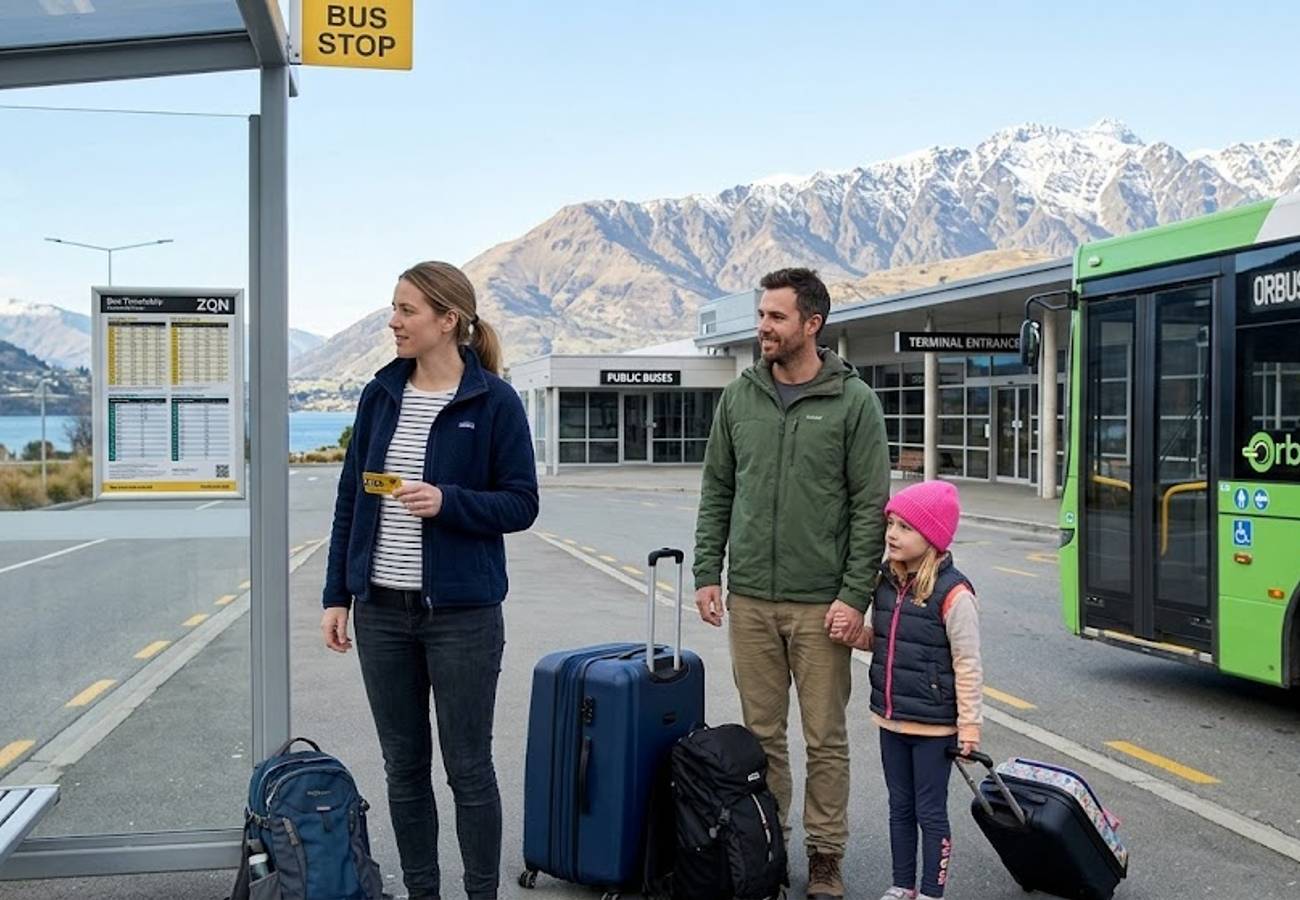
Image generated by AI
Cut your Queenstown Airport transfer cost from NZ$10 to NZ$2.50 by riding the Orbus Route 1 with a Bee Card. This local transit option connects the terminal to the town centre in 20 to 25 minutes, bypassing peak taxi queues while directly supporting regional eco-tourism.
The Local Trend Revealed: Smart Transit Over Private Transfers
Landing at Queenstown Airport and heading into town by public bus is one of the best-value airport transfers in New Zealand. Queenstown Airport sits in Frankton, about 8 kilometres from central Queenstown, and is directly served by the Orbus network. The key service for arrivals is Route 1, which runs between Queenstown Airport, the Frankton Bus Interchange, and Queenstown town centre.
Buses typically run every 15 minutes during the day, with less frequent services early in the morning and later at night. In normal traffic, the ride from the airport to the centre of town takes around 20 to 25 minutes, but at busy times such as Saturday afternoons in ski season, it can push closer to 35 minutes.
The airport bus stop is directly outside the terminal on Sir Henry Wigley Drive. When you leave the arrivals hall, follow the signs for "Public Buses" to find a clearly marked Orbus stop with timetable information. Drivers are accustomed to dealing with visitors fresh off long-haul flights. If you are not sure whether the bus goes where you need, simply tell the driver the name of your hotel or street, and they will confirm the best stop.
For a real-world example: if you land at 10:30 in the morning and walk out of the terminal by 10:45, you will usually find a Route 1 bus within 10 to 20 minutes. By the time you load your bags, tag on with your Bee Card, and sit down, you can reasonably expect to be getting off near the Queenstown waterfront around 11:15 if traffic is flowing well. For many visitors, this works out faster and far cheaper than waiting in the taxi queue or for a rideshare driver to reach the airport during peak times.
Cultural & Environmental Value: Riding with the Locals
Orbus is a regular city bus, not a dedicated airport shuttle. This means locals and workers use it alongside visitors, creating a shared transit experience that directly reduces the carbon footprint of regional tourism. By choosing public transport, travelers support the Otago Regional Council's initiatives to manage vehicle congestion and lower emissions in an environmentally sensitive area.
For the visitor, the real impact is twofold: you save money, and you contribute to the sustainability goals outlined by local tourism bodies like Destination Queenstown. Keeping private vehicle numbers down helps preserve the air quality around Lake Wakatipu and the surrounding alpine regions. There are multiple stops between the airport and town, integrating travelers directly into the daily rhythm of Frankton and Queenstown rather than isolating them in private transfer vehicles.
Bee Card vs Cash: Understanding Fares from the Airport
The single biggest factor in how much you pay for the airport bus is whether you use a Bee Card or pay cash. As of mid-2026, an adult fare from Queenstown Airport on Orbus with a Bee Card is around NZ$2.50, while the adult cash fare from the airport is NZ$10. Children and youth also pay much less with a Bee Card compared with the cash price.
In practice, this means a family of two adults and two teenagers can ride into town for roughly NZ$8 total with Bee Cards, compared with NZ$36 or more in cash for the same journey. The Bee Card is a reusable pre-pay smart card used across multiple regions in New Zealand. You load credit onto the card and "tag on" when you board the bus and "tag off" when you get off. The correct fare is deducted automatically.
Cards and contactless bank payments are not accepted on Orbus at the time of writing, which is a surprise to many international visitors who are used to tapping a credit card to ride public transport.
Imagine you have just arrived from Sydney and did not have time to organise a Bee Card beforehand. If you pay NZ$10 cash each for two adults from the airport to town, that is NZ$20 one way. If instead you buy a Bee Card at the airport for NZ$5, add a NZ$5 minimum top-up, and repeat for your partner, your upfront cost is NZ$20 in total for two cards with NZ$10 of stored value. Your first two adult bus trips at NZ$2.50 each will only use NZ$10, and you will still have working cards that can be used all over Queenstown and in other New Zealand regions later in your trip. Even if you are staying just one night in Queenstown, a Bee Card still often pays for itself after a single return trip.
Where and How to Get a Bee Card in Queenstown
There are three main ways most visitors get a Bee Card in Queenstown: at the airport, at the Otago Regional Council office in Frankton, and from bus drivers. The most convenient option if you are flying into Queenstown is usually to buy your card inside the terminal before you walk out to the bus stop. Look for signage for public transport information desks or general airport information. Staff can sell you a Bee Card, load your initial credit, and answer basic questions like "How much do I need for four days of buses?"
If you forget to buy one in the terminal or arrive when internal desks are closed, you may still be able to purchase a Bee Card directly from the Orbus driver using cash, although this depends on stock and is not guaranteed during very busy periods. Drivers can also top up existing cards with cash on board. Online top-ups via the Bee Card website are useful once you have the card, especially for longer trips that also include cities like Dunedin or Hamilton where the same card works on local buses.
A solo traveller arriving in the evening who cannot see a Bee Card retailer inside the airport could simply board the bus, tell the driver "I need a Bee Card and a top-up," pay NZ$10 in cash to cover the card cost and initial credit, then tag on with the new card. Their adult airport fare will be deducted at the cheaper Bee Card rate on that very first ride.
Frankton Bus Interchange: The Hub Between Airport and Town
The Frankton Bus Interchange, sometimes called the Frankton Bus Hub, is the main transfer point for the Orbus network between the airport and the rest of the Queenstown area. It sits near the Queenstown Events Centre and major retail areas in Frankton. Nearly all Orbus services, including those to Arrowtown and the residential suburbs, pass through this interchange.
On the airport route, buses usually stop at Frankton within about 5 to 10 minutes of leaving the terminal. You can stay on the same bus if you are continuing into central Queenstown, or hop off and transfer to another route if you are heading to places such as Arrowtown, Fernhill, or some of the newer suburbs. Transfers between Orbus services are typically free within a set window when you are using a Bee Card, as long as you tag off one bus and tag on to the next within the allowed time limit. The interchange is open-air and functional rather than scenic, but it is well signposted. Each platform has clear timetable information.
Visitor Insider Tips
- Off-Peak Travel Windows: Avoid traveling between 15:00 and 17:00 on Saturday afternoons during the ski season. Traffic congestion can push a 20-minute ride to 35 minutes. Mid-morning and early afternoon rides are the most reliable.
- Local Dining Specialties: Before boarding at the Frankton Bus Interchange, grab a traditional New Zealand meat pie or a fresh sandwich from one of the nearby Frankton bakeries. It is a local habit to pick up lunch here before heading into the more expensive town centre.
- Transit Etiquette: If you need to buy a Bee Card or top up from the driver with cash, have the exact amount ready. Cash top-ups are slower at busy stops, so it is courteous to step aside briefly after you pay to let other passengers board.
- Hidden Under-the-Radar Spots: If you get off at the town centre, skip the crowded waterfront and walk 10 minutes to the Queenstown Gardens. The rose garden and the frisbee golf course offer quiet views of Lake Wakatipu away from the main tourist throngs.
Tourism Outlook
The long-term impact of accessible, affordable public transit like the Orbus network is a more sustainable distribution of tourist footfall. By making it financially viable for budget travelers to use local infrastructure, Queenstown can manage the strain on its road networks and reduce the environmental impact of private shuttle fleets. As New Zealand continues to prioritize eco-tourism, regional networks like the Otago Regional Council's Orbus will play a central role in shaping how visitors interact with high-demand destinations.
Smart transit is the new luxury—travel lighter, pay less, and see Queenstown like a local.
Related Travel Guides
Disclaimer
This article is for informational and educational purposes only. It does not constitute legal, financial, or professional advice. While we strive to provide accurate and up-to-date information, travel policies, regulations, and conditions change rapidly. Always verify information with official sources before making travel decisions. Nomad Lawyer makes no representations about the accuracy, reliability, completeness, or suitability of the information provided. Readers should consult qualified professionals for advice specific to their circumstances. The views expressed in this article are those of the author and do not necessarily reflect the views of Nomad Lawyer.
Kunal K Choudhary
Co-Founder & Contributor
A passionate traveller and tech enthusiast. Kunal contributes to the vision and growth of Nomad Lawyer, bringing fresh perspectives and driving the community forward.
Learn more about our team →