
Queensland Tourism Transformation: Innovation and Brisbane 2032 Infrastructure Reshaping Travel 2026
Queensland shifts from traditional sightseeing to a high-yield, experience-based model integrating smart technology and marine science ahead of the Brisbane 2032 Games.

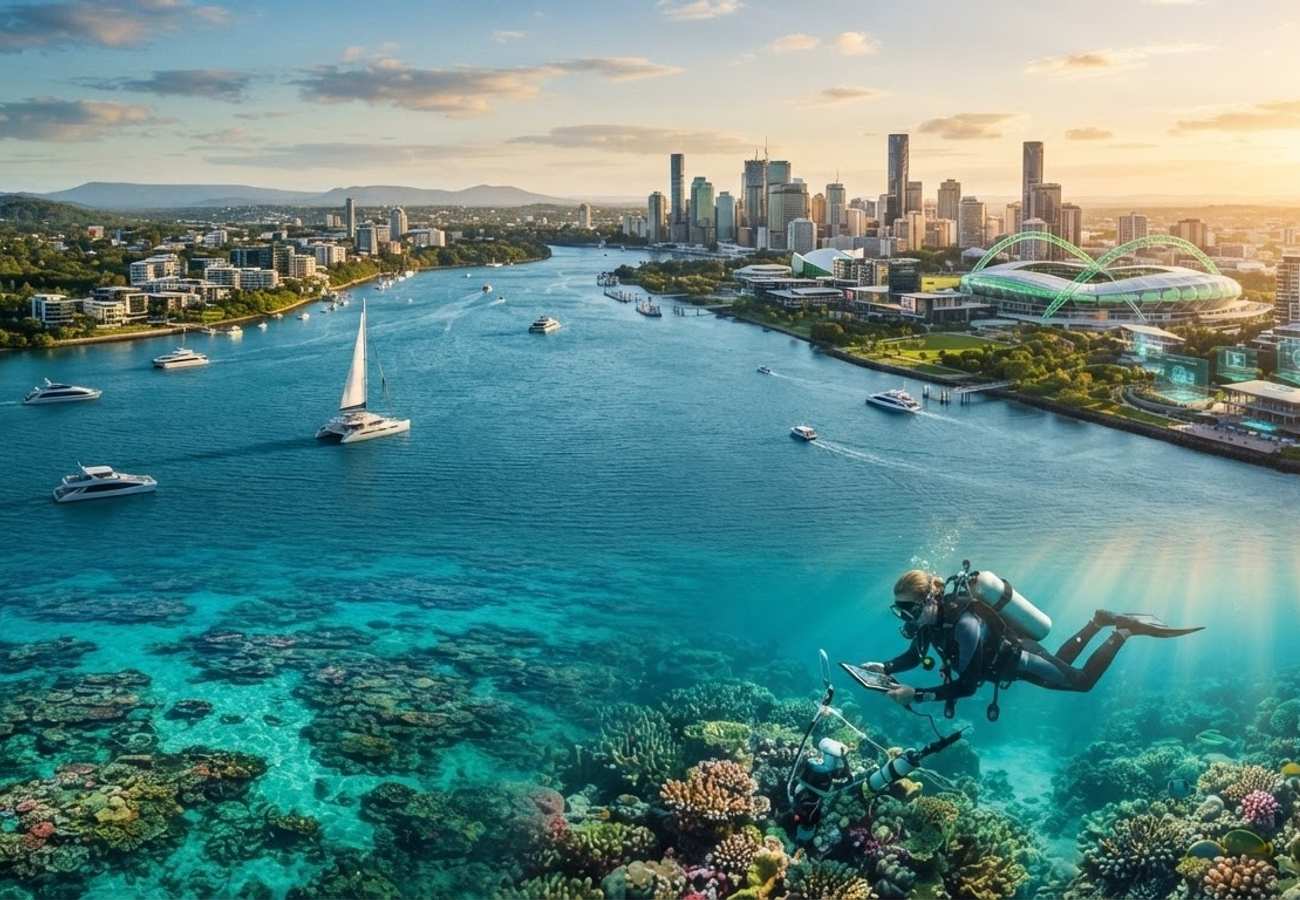
Image generated by AI
Queensland is executing a structural pivot from passive sightseeing to a high-yield, innovation-led travel framework. This transformation is accelerated by the decade-long preparation for the Brisbane 2032 Olympic and Paralympic Games.
The Shift to Experience-Based Travel
The global tourism landscape has moved toward transformative, active experiences over static sightseeing. Queensland has responded by overhauling its visitor model, replacing the traditional sale of geographic landmarks with multi-layered, interactive journeys.
State policy now prioritizes intellectual and emotional engagement. By integrating local history, biological conservation, and bespoke luxury, operators are targeting higher-yielding visitor segments. This strategy is designed to increase daily expenditure and extend the average length of stay across coastal hubs and regional inland destinations.
Smart Tourism and Digital Integration
Central to this redesign is the deployment of smart tourism technology across the entire consumer lifecycle. Destination management organizations are implementing real-time data feeds, augmented reality (AR), and location-aware digital guides to remove travel friction.
Key technological deployments include:
- AR Interpretation: Deployed at national parks and cultural sites to provide storytelling without physical infrastructure.
- Personalized Itineraries: Data-driven routing for culinary trails, nature adventures, and cultural heritage.
- Seamless Booking: Integrated systems for micro-credentials, eco-tours, and regional transit to distribute spending into local economies.
Data-Driven Management and Quality Control
Tourism and Events Queensland (TEQ) and the Department of Tourism, Sport and Innovation now utilize real-time analytics to monitor visitor flows and mitigate over-tourism.
A primary tool in this effort is the Best of Queensland Experiences Program (BOQE). This automated framework evaluates thousands of operators annually based on digital presence, consumer reviews, and accreditation standards to ensure strict quality control.
| Operational Model | Primary Strategic Focus | Visitor Engagement Mechanism | Primary Economic Driver |
|---|---|---|---|
| Traditional Sightseeing | Passive landmark viewing | Mass-market itineraries | Volume-based arrivals |
| Experience-Driven | Citizen science & immersion | Personalized digital journeys | High-yield expenditure |
| Data-Led Management | Flow optimization | BOQE scoring & analytics | Value optimization |
Commercializing Marine Science as a Tourism Asset
Queensland is converting environmental research into export-ready tourism products, specifically regarding the Great Barrier Reef. The 2,300-kilometer World Heritage site is now positioned as an active laboratory for marine conservation.
Tourism operators have integrated scientific lectures, underwater laboratory tours, and coral propagation workshops into commercial itineraries. This allows businesses to command premium pricing by offering certified scientific research as part of the guest experience.
The Master Reef Guide and Citizen Science Network
The Master Reef Guides program, a collaboration between the Great Barrier Reef Marine Park Authority (GBRMPA), TEQ, and the Association of Marine Park Tourism Operators, provides the human infrastructure for this shift.
Current distribution of the 166 certified Master Reef Guides:
- Cairns and reef-wide operations: 42 guides
- Townsville and Whitsundays: 31 guides
- Far North region: 16 guides
- Southern reef destinations: 15 guides
Additionally, the "Eye on the Reef" mobile platform allows tourists to upload real-time observations of megafauna and coral health directly into GBRMPA geospatial databases. This is complemented by projects like CQUniversity’s Coastal Marine Ecosystems Research Centre, where volunteers have collected over one million seagrass seeds.
Passenger Rights & Advisory: Navigating the New Queensland Model
For the affected passenger or traveler, the shift toward "experience-based" and "smart" tourism changes how you interact with service providers and your legal standing regarding bookings.
Our analysis of the current transition suggests the following for travelers:
- Booking Terms: As operators move toward "micro-credentials" and bespoke eco-tours, review your cancellation policies carefully. These specialized experiences often have stricter non-refundable clauses than standard hotel bookings.
- Data Privacy: With the increase in "location-aware digital guides" and real-time data tracking, travelers should review the privacy settings of official Queensland tourism apps to control how their movement data is harvested.
- Certification Verification: When booking "regenerative" or "eco-certified" tours, verify that the operator holds an EarthCheck or BOQE accreditation. This ensures the premium price paid for "scientific" tourism is backed by actual accreditation rather than "greenwashing."
Industry Analyst View
The integration of the Brisbane 2032 roadmap into current tourism infrastructure is a strategic hedge against the volatility of mass tourism. By shifting the KPI from "visitor volume" to "yield per visitor," Queensland is reducing the environmental strain on the Great Barrier Reef while increasing economic resilience. The move to commercialize science transforms a liability (environmental degradation) into a product (conservation participation), which is a sophisticated evolution in destination management.
Queensland is no longer just selling a view; it is selling the opportunity to save the destination.
Related Travel Guides
Disclaimer
This article is for informational and educational purposes only. It does not constitute legal, financial, or professional advice. While we strive to provide accurate and up-to-date information, travel policies, regulations, and conditions change rapidly. Always verify information with official sources before making travel decisions. Nomad Lawyer makes no representations about the accuracy, reliability, completeness, or suitability of the information provided. Readers should consult qualified professionals for advice specific to their circumstances. The views expressed in this article are those of the author and do not necessarily reflect the views of Nomad Lawyer.
Preeti Gunjan
Contributor & Community Manager
A passionate traveller and community builder. Preeti helps grow the Nomad Lawyer community, fostering engagement and bringing the reader experience to life.
Learn more about our team →