
Tourism Travel 2045: Queensland Boosts Eco-Tourism with $500K Science Grants
Queensland launches $500,000 Engaging Science Grants program in March 2026 to revolutionize nature-based tourism travel 2045 through innovative sustainability projects across the state.

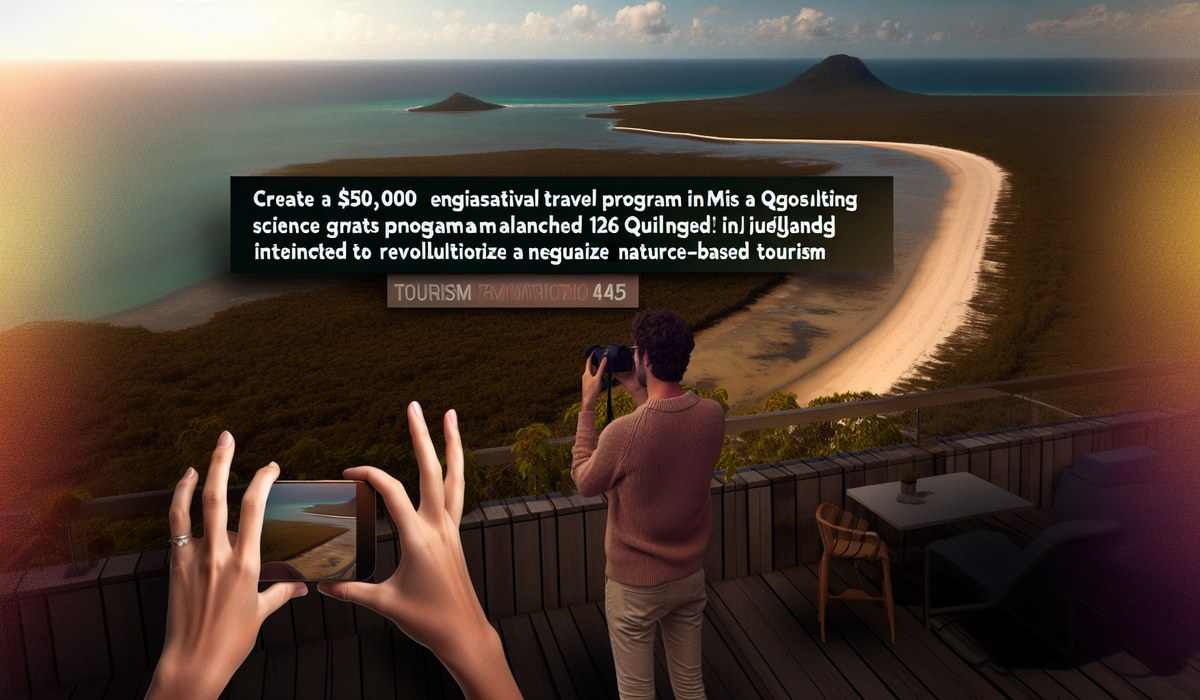
Image generated by AI
Quick Summary
- Queensland Government: Allocates $500,000 through Engaging Science Grants for nature-based tourism innovation projects
- Impact: Five hundred traveler-facing eco-tourism initiatives across Queensland regions launching between March 2026 and December 2027
- Traveler Action: Book Great Barrier Reef eco-tours with grant-funded science experiences starting April 2026
- What's Next: Grant recipients announced May 2026 with pilot programs operational by Australian winter season
Queensland Tourism has announced a landmark $500,000 investment in eco-tourism innovation through its Engaging Science Grants program, positioning the state as a leader in tourism travel 2045 sustainability initiatives. The grants, unveiled on March 19, 2026, will fund nature-based travel experiences that integrate cutting-edge environmental science with authentic cultural tourism across Queensland's diverse ecosystems from the Great Barrier Reef to the Daintree Rainforest.
Queensland Boosts Nature-Based Tourism Through Five Hundred Thousand Dollar Science Initiative
The Engaging Science Grants program represents Queensland's strategic response to growing global demand for conservation tourism experiences. The $500,000 funding pool will support between fifteen and twenty-five individual projects that merge scientific research with visitor experiences. According to Tourism and Events Queensland, applications opened March 18, 2026, targeting universities, research institutions, and eco-tourism operators who can demonstrate measurable environmental impact alongside enhanced visitor engagement. Each grant ranges from $15,000 to $50,000, with priority given to projects incorporating Indigenous bush tucker tourism elements and real-time data collection that travelers can observe during guided experiences.
Great Barrier Reef and Rainforest Regions Receive Priority Funding Focus
Five hundred distinct Queensland locations have been identified as potential grant implementation sites, with the Great Barrier Reef Marine Park and Wet Tropics World Heritage Area receiving allocation priority. The program specifically targets projects that allow travelers to participate in citizen science activities—from coral health monitoring at Cairns dive sites to cassowary habitat tracking in the Daintree. Tourism operators in Port Douglas, Mission Beach, and the Whitsunday Islands can apply for grants supporting reef restoration experiences where visitors assist marine biologists with coral planting and fish population surveys, creating what Lonely Planet describes as "participatory conservation travel."
How Engaging Science Grants Will Revolutionize Queensland Travel Experiences in 2045
The grants align with Queensland's Destination 2045 roadmap, which projects 50% of all state tourism revenue will derive from sustainability-focused experiences within two decades. Projects funded through this initiative must demonstrate scalability and educational value that extends beyond individual visitor encounters. Examples include augmented reality trail systems in Lamington National Park where hikers access real-time ecosystem data through smartphone apps, and nocturnal wildlife monitoring programs in the Atherton Tablelands where tourists assist with endangered species population studies. The Queensland Department of Environment and Science will provide technical support to grant recipients, ensuring scientific rigor while maintaining commercially viable tourist experiences.
Bush Tucker Tourism and Indigenous Cultural Integration Requirements
Each grant application must include partnerships with Traditional Owners, reflecting Queensland's commitment to authentic cultural tourism experiences. Five Indigenous Land and Sea Ranger groups across Cape York, the Torres Strait, and Central Queensland have been designated as preferred collaborators. Projects incorporating traditional ecological knowledge—such as seasonal fish breeding patterns or medicinal plant identification—receive bonus scoring in the grant evaluation process. The Ewamian, Kuku Yalanji, and Quandamooka peoples have already expressed interest in co-designing experiences that teach visitors about songlines, traditional fire management, and ancient navigation techniques relevant to modern conservation challenges.
Timeline and Application Process for Tourism Operators and Research Institutions
Applications close April 30, 2026, with successful recipients announced during Queensland Tourism Week in May 2026. The Queensland Government's Department of Tourism requires applicants to submit three-year project plans demonstrating visitor capacity projections, environmental monitoring protocols, and revenue sustainability beyond the grant period. Funded projects must launch pilot experiences by July 2026—coinciding with Australian school holidays—and achieve full operational status by December 2026. Grant recipients will present findings at the annual Queensland Eco-Tourism Conference in March 2027, contributing to peer-reviewed research that informs future tourism travel 2045 policy development across Australia.
Best Time to Visit Queensland for New Eco-Tourism Experiences
The optimal period to experience grant-funded programs spans May through October 2026, during Queensland's dry season when weather conditions favor outdoor activities and wildlife visibility peaks. Temperatures in coastal regions average 20-25°C (68-77°F), ideal for reef snorkeling and rainforest hiking. The Great Barrier Reef experiences excellent water clarity from June through August, while the Daintree Rainforest offers peak bird-watching opportunities during September migration periods. Travelers should book eco-tourism experiences three to four months in advance, as grant-funded programs will likely have limited initial capacity. The Queensland winter months (June-August) provide comfortable conditions for multi-day hiking expeditions in the Gondwana Rainforests, where several Engaging Science Grant projects will establish base camps for citizen science participants.
| Program Element | Specific Details |
|---|---|
| Total Funding Allocation | $500,000 AUD distributed across 15-25 projects |
| Application Period | March 18 – April 30, 2026 |
| Grant Range Per Project | $15,000 – $50,000 based on scope and reach |
| Priority Geographic Zones | Great Barrier Reef Marine Park, Wet Tropics, Cape York, Whitsunday Islands |
| Required Indigenous Partnership | Minimum one Traditional Owner group collaboration per project |
| First Pilot Experiences Launch | July 2026 (Australian winter school holidays) |
| Full Program Operational | December 2026 with ongoing monitoring through 2027 |
| Expected Annual Visitor Impact | 75,000-100,000 travelers participating in grant-funded experiences by 2027 |
What This Means for Travelers
Travelers planning Queensland visits between mid-2026 and 2027 should:
- Monitor Queensland Tourism's official website starting May 2026 for the complete list of grant-funded experiences with booking links and capacity information
- Book eco-tourism packages early as initial program capacities will accommodate 10-30 participants per session, with popular Great Barrier Reef programs likely selling out months in advance
- Budget additional $150-300 AUD per person for multi-day citizen science experiences that include equipment, expert guidance, and accommodation in research stations
- Obtain dive certifications before arrival if interested in reef restoration programs, as most underwater grant projects require PADI Open Water certification minimum
- Schedule trips during May-October 2026 to coincide with pilot program launches and optimal weather conditions across Queensland's diverse climate zones
- Combine multiple grant-funded experiences by planning 10-14 day itineraries spanning coastal and inland regions for comprehensive exposure to Queensland's conservation tourism innovations
Frequently Asked Questions
What is tourism travel 2045 and how do Queensland's grants support this vision? Tourism travel 2045 refers to Queensland's strategic planning framework for creating a fully sustainable tourism economy by 2045. The $500,000 Engaging Science Grants directly advance this goal by funding nature-based experiences that generate conservation outcomes while providing economically viable tourist attractions. Each grant recipient must demonstrate measurable environmental improvements, Indigenous partnership benefits, and scalable business models that can function independently after grant funding concludes.
How can international travelers participate in Queensland's new eco-tourism travel 2045 programs? International visitors can book grant-funded experiences through participating tour operators listed on the Queensland Tourism website from May 2026. Most programs welcome travelers aged twelve and above with basic fitness levels. No prior scientific training is required, as expert guides provide instruction. Popular programs include three-day Great Barrier Reef coral monitoring expeditions departing from Cairns ($450-650 AUD) and five-day Daintree Rainforest biodiversity surveys ($800-1,200 AUD including accommodation).
Which Queensland regions will receive the five hundred thousand dollars in eco-tourism grants? The $500,000 allocation prioritizes Queensland's World Heritage Areas: Great Barrier Reef Marine Park, Wet Tropics Rainforest, and Gondwana Rainforests. Secondary funding targets Cape York Peninsula, Whitsunday Islands, Fraser Island (K'gari), and the Atherton Tablelands. Urban fringe projects near Brisbane and the Gold Coast focusing on koala habitat restoration and wetland conservation also qualify. Applicants must demonstrate their project occurs in regions accessible to domestic and international tourists year-round.
When do the first Queensland boosts to eco-tourism become available for travelers? Pilot experiences launch in July 2026 following the May grant announcement. Early programs include weekend reef monitoring workshops from Port Douglas and Cairns, bush tucker foraging tours in the Daintree with Kuku Yalanji guides, and nocturnal wildlife surveys in Lamington National Park. Full-scale multi-day immersive programs commence in October 2026 after operators complete training and equipment installation. By December 2026, Queensland expects twenty operational grant-funded tourism experiences across the state.
How to Get There
International Access: Brisbane Airport (BNE) serves as Queensland's primary international gateway with direct flights from North America, Asia, and the Pacific. Qantas and Virgin Australia operate daily services to Brisbane from Los Angeles, San Francisco, and Vancouver, with flight times averaging 13-15 hours. From Brisbane, domestic connections to Cairns (CNS) take 2.5 hours, providing access to northern Queensland eco-tourism programs.
Regional Transportation: Queensland's coastal regions connect via efficient bus and train networks. The Spirit of Queensland rail service operates twice weekly between Brisbane and Cairns (approximately 24 hours), offering scenic access to multiple eco-tourism zones. Rental vehicles provide flexibility for multi-destination itineraries—book 4WD vehicles for Cape York and remote rainforest access points. Most grant-funded programs include pickup services from regional airports and accommodation hubs.
Domestic Transfers: Travelers already in Australia can reach Queensland via frequent flights from Sydney (SYD), Melbourne (MEL), and Adelaide (ADL) to Brisbane, Gold Coast, or Cairns. Budget carriers including Jetstar offer competitive fares with advance booking. For visitors combining grant-funded experiences across multiple regions, Queensland's drive distances require planning: Brisbane to Cairns spans 1,700 kilometers (approximately 20 hours driving), making domestic flights more practical for time-constrained itineraries.
Related Travel Guides
Great Barrier Reef Conservation Travel Experiences 2026
Australian Indigenous Tourism Destinations and Cultural Experiences
Sustainable Travel in Queensland: Complete Eco-Tourism Guide
Disclaimer
This article is for informational and educational purposes only. It does not constitute legal, financial, or professional advice. While we strive to provide accurate and up-to-date information, travel policies, regulations, and conditions change rapidly. Always verify information with official sources before making travel decisions. Nomad Lawyer makes no representations about the accuracy, reliability, completeness, or suitability of the information provided. Readers should consult qualified professionals for advice specific to their circumstances. The views expressed in this article are those of the author and do not necessarily reflect the views of Nomad Lawyer.
Raushan Kumar
Founder & Lead Developer
Full-stack developer with 11+ years of experience and a passionate traveller. Raushan built Nomad Lawyer from the ground up with a vision to create the best travel and law experience on the web.
Learn more about our team →