
Qatar Records Highest Verified Global PM2.5 Levels
Official UN data reveals Qatar has the highest verified PM2.5 levels globally at 59.6 µg/m³, nearly 12x the WHO guideline. Travel and health advisory.

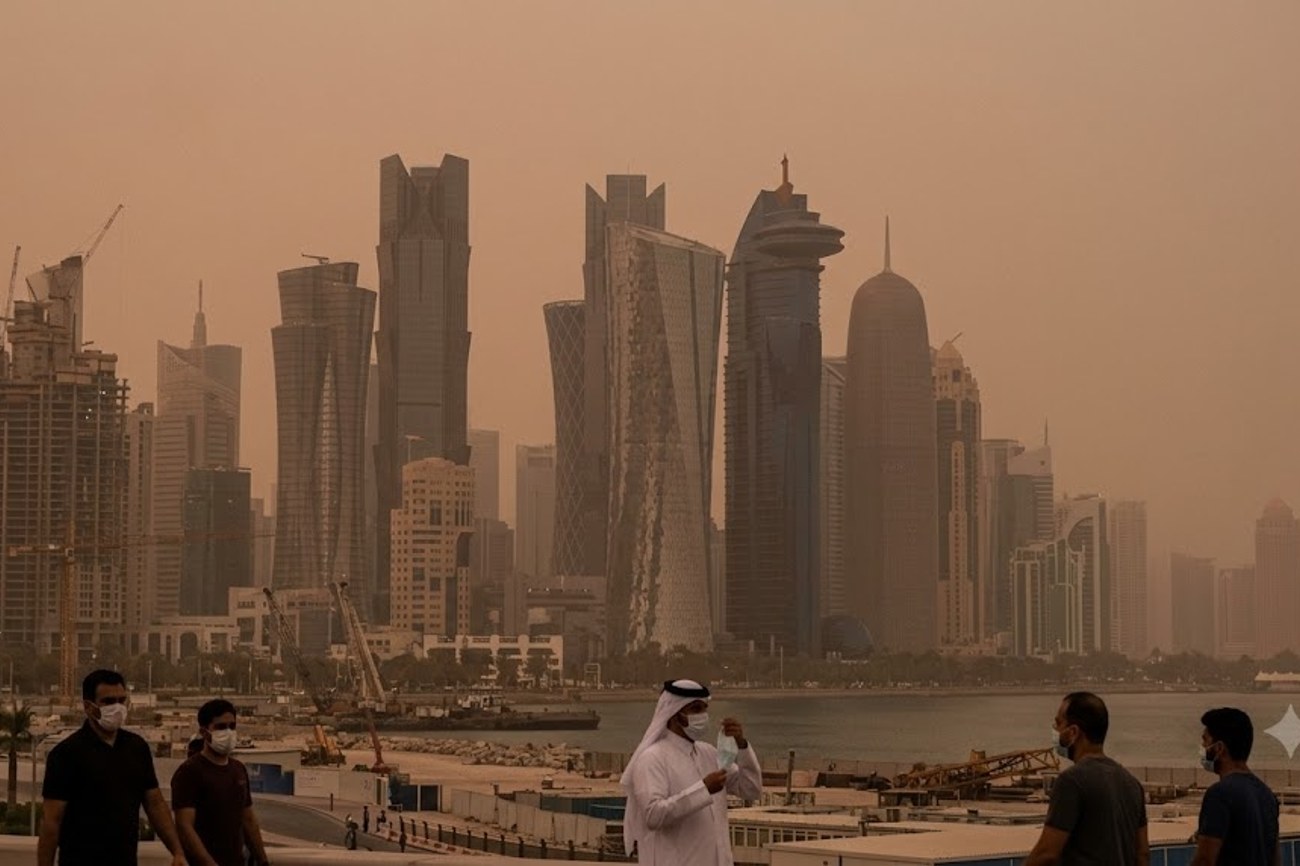
Image generated by AI
Recent analysis of United Nations Sustainable Development Goal country profiles reveals that Qatar recorded the highest official annual population-weighted PM2.5 concentration of any nation. The verified 2023 figure stands at 59.6 µg/m³, placing the country at the top of the latest harmonized official annual comparison available as of September 2026.
PM2.5 refers to atmospheric particulate matter with a diameter of 2.5 micrometres or smaller. These microscopic particles, stemming from road traffic, industrial activity, construction, and natural dust events, are capable of penetrating deep into the pulmonary system.
Global PM2.5 Concentration Rankings (2023 Data) Our analysis of the official data indicates the following top five concentrations:
- Qatar: 59.6 µg/m³ (11.9x WHO guideline)
- Niger: 58.3 µg/m³ (11.7x WHO guideline)
- Afghanistan: 55.6 µg/m³ (11.1x WHO guideline)
- Egypt: 55.0 µg/m³ (11.0x WHO guideline)
- Nigeria: 53.5 µg/m³ (10.7x WHO guideline)
For context, the World Health Organization (WHO) maintains an annual PM2.5 guideline of 5 µg/m³. Qatar’s verified level is more than double the global population-weighted urban average of 26 µg/m³.
Passenger Rights & Health Advisory
For the traveler, expatriate, or business visitor entering Qatar, these figures necessitate specific health and operational precautions.
Health Mitigation for Travelers:
- Vulnerable Groups: Passengers with pre-existing respiratory conditions (asthma, COPD) should consult medical providers regarding the use of N95 or FFP2 masks, as standard surgical masks do not filter PM2.5 particles.
- Real-time Monitoring: Travelers should distinguish between annual PM2.5 data and the daily Air Quality Index (AQI). Use local AQI tools to determine daily outdoor activity levels.
- Environmental Triggers: Be aware that dust events and low-wind conditions can cause rapid spikes in particulate matter, regardless of the annual average.
Travel Disruption Analysis: While air quality levels typically do not trigger flight cancellations, extreme dust storms associated with high particulate matter can lead to visibility-related delays at Hamad International Airport (DOH). Passengers should monitor official aviation notices during periods of high dust activity.
Industry Analyst View
The discrepancy between live AQI maps and official UN rankings highlights a critical gap in global environmental monitoring. As noted in the WHO Ambient Air Quality Database Version 8.0 (June 2026), raw monitoring data can be skewed by the density and placement of stations.
The use of population-weighted exposure estimates—combining satellite data and atmospheric modelling—provides a more accurate representation of long-term health risks than daily snapshots. Qatar's position at the top of this list underscores the significant impact of regional geography and industrialization on air quality.
Related Travel Guides
Disclaimer
This article is for informational and educational purposes only. It does not constitute legal, financial, or professional advice. While we strive to provide accurate and up-to-date information, travel policies, regulations, and conditions change rapidly. Always verify information with official sources before making travel decisions. Nomad Lawyer makes no representations about the accuracy, reliability, completeness, or suitability of the information provided. Readers should consult qualified professionals for advice specific to their circumstances. The views expressed in this article are those of the author and do not necessarily reflect the views of Nomad Lawyer.
Preeti Gunjan
Contributor & Community Manager
A passionate traveller and community builder. Preeti helps grow the Nomad Lawyer community, fostering engagement and bringing the reader experience to life.
Learn more about our team →